A wide variety of strategies have been used to create agents in the growing field of real-time strategy AI. However, a frequent problem is the necessity of hand-crafting competencies, which becomes prohibitively difficult in a large space with many corner cases. A preferable approach would be to learn these competencies from the wealth of expert play available. We present a system that uses the Generalized Sequential Pattern (GSP) algorithm from data mining to find common patterns in StarCraft:Brood War replays at both the micro- and macro-level, and verify that these correspond to human understandings of expert play. In the future, we hope to use these patterns to learn tasks and goals in an unsupervised manner for an HTN planner.
Joint attention refers to the shared focal points of attention for occupants in a space. In this work, we introduce a computational definition of joint attention for the automated editing of meetings in multi-camera environments from the AMI corpus. Using extracted head pose and individual headset amplitude as features, we developed three editing methods: (1) a naive audio-based method that selects the camera using only the headset input, (2) a rule-based edit that selects cameras at a fixed pacing using pose data, and (3) an editing algorithm using LSTM (Long-short term memory) learned joint-attention from both pose and audio data, trained on expert edits. The methods are evaluated qualitatively against the human edit, and quantitatively in a user study with 22 participants. Results indicate that LSTM-trained joint attention produces edits that are comparable to the expert edit, offering a wider range of camera views than audio, while being more generalizable as compared to rule-based methods.
Goal reasoning is maturing as a field, but it lacks a model with clear semantics in a readily available implementation that researchers can build upon. This paper presents contributions that address this gap. First, we formalize goal reasoning with crisp semantics by extending a recent formalism called goal-task network planning. Second, we describe an open source package, called A C T O R S I M , that partially implements the semantics of the formal model. Finally, we use ActorSim in a study to examine whether a machine learning technique can improve subgoal selection using goal reasoning in the game of Minecraft. The study reveals that simple mechanisms for gathering experience improve over less knowledge intensive or random approaches for the domain we study.
While Hierarchical Task Networks are frequently cited as flexible and powerful planning models, they are often ignored due to the intensive labor cost for experts/programmers, due to the need to create and refine the model by hand. While recent work has begun to address this issue by working towards learning aspects of an HTN model from demonstration, or even the whole framework, the focus so far has been on simple domains, which lack many of the challenges faced in the real world such as imperfect information and real-time environments. I plan to extend this work using the domain of real-time strategy (RTS) games, which have gained recent popularity as a challenging and complex domain for AI research.
State-of-the-art agents in the real-time strategy game domain currently rely on hand-crafted scripted strategies, and as a result are inflexible, responding poorly to unexpected events brought on by the actions of their adversary. A self-introspective agent with goal reasoning could overcome this challenge, allowing an agent to consider how its strategy has succeeded or failed and what must be modified as a result of this. We demonstrate such an agent in its initial development, and show that it performs well against weak to medium strength opponents, though still falls short against wellscripted play. In addition, we discuss possible extensions and research areas that can be explored with this base system.
One of the critical problems in adversarial and imperfect information domains is modeling an opponent's state from the information available to the acting agent. In the domain of real time strategy games, this information consists of the portion of the map and enemy units visible to the agent at any given point in the match. From this, we wish to infer the true values of the opponent's state, to inform both current actions and planning ahead. We present a graphical model for opponent modeling in StarCraft: Brood War that uses observed quantities to infer distributions for unseen features. We train and test this model using replays of professional play, and show that our results improve upon prior work. In addition, we present a new metric for measuring aggregate performance of a model within this domain. Finally, we consider possible use cases and extensions for this model.
One of the major weaknesses of current real-time strategy (RTS) game agents is handling spatial reasoning at a high level. One challenge in developing spatial reasoning modules for RTS agents is to evaluate the ability of a given agent for this competency due to the inevitable confounding factors created by the complexity of these agents. We propose a simplified game that mimics spatial reasoning aspects of more complex games, while removing other complexities. Within this framework, we analyze the effectiveness of classical reinforcement learning for spatial management in order to build a detailed evaluative standard across a broad set of opponent strategies. We show that against a suite of opponents with fixed strategies, basic Q-learning is able to learn strategies to beat each. In addition, we demonstrate that performance against unseen strategies improves with prior training from other distinct strategies. We also test a modification of the basic algorithm to include multiple actors, to speed learning and increase scalability. Finally, we discuss the potential for knowledge transfer to more complex games with similar components.
The impressive advances in robotic spatial reasoning over the past decade have relied primarily on rich sensory data provided by laser range finders. Relative to cameras, however, lasers are heavy, bulky, power-hungry, and expensive. This work proposes and evaluates an image-segmentation pipeline that produces range scans from ordinary webcameras. Starting with a nearest-neighbor classification of image patches, we investigate the tradeoffs in accuracy, resolution, calibration, and speed that come from estimating range-to-obstacles using only single images. Experiments atop the low-cost iRobot Create platform demonstrate the accessibility and power of this pixel-based alternative to laser scans.
The problem of finding a robot's range-to-obstacles is a fundamental one with an elegant solution: the laser range finder (LRF). This work has developed algorithms for replacing a laser with a camera for indoor applications. Our approach uses machine learning algorithms to segment the groundplane from single images flexibly, quickly, and robustly. We then transform those segmentations into laserscan-like estimates of local conditions. Current work is investigating whether off-the-shelf algorithms for mapping, localization, and navigation with LRFs work without alteration using these “pixel”-scans.
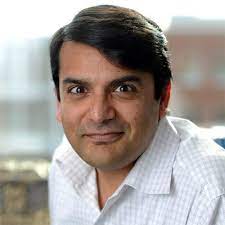 Arnav Jhala合作论文数Automated Reasoning for Narratives and Visuals Lab, Department of Computer Science, College of Engineering, North Carolina State University6
 Mark Roberts合作论文数Naval Research Laboratory2
 Zachary Dodds合作论文数Computer Science Department, Harvey Mudd College2
 Max A. Korbel合作论文数2Ron Alford合作论文数1Kenny Lei合作论文数1Nicole Lesperance合作论文数1
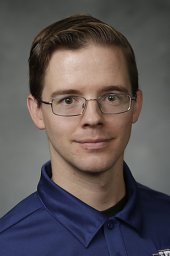 Tory S. Anderson合作论文数1Mark A. Wilson合作论文数Naval Res Lab, US Navy1
 Kathryn Kasmarik合作论文数Univ New South Wales, Sch Engn & Informat Technol, Canberra, ACT, Australia1Dan Cerys合作论文数DOLL Labs, Lexington, MA 02421 USA1
 Trevor Santarra合作论文数UC Santa Cruz1Rolando Vargas合作论文数1Hui-Yin Wu合作论文数1Stephanos Matsumoto合作论文数Carnegie Mellon University1
 Ugur Kuter合作论文数University of Maryland College Park1
 Mark H. Burstein合作论文数SIFT, Inc.1Paul Robertson合作论文数1Vikas Shivashankar合作论文数IIT Madras1
 Matthew Molineaux合作论文数AES Division1
 Kellen Gillespie合作论文数Department of Computer Science and Engineering, Lehigh University1
 Benjamin Bengfort合作论文数1
 Ashok K. Goel合作论文数School of Interactive Computing, Georgia Institute of Technology;College of Computing, Georgia Institute of Technology;Center for 21st Century Universities1Swaroop Vattam合作论文数Technology Square Research Building1
 David William Aha合作论文数Naval Research Laboratory1
 Michael Cox合作论文数College of Computing;Georgia Institute of Technology;College of Computing, Georgia Institute of Technology1
 Hector Muñoz-Avila合作论文数Computer Science & Engineering,Lehigh University1
 Dustin Dannenhauer合作论文数lehigh university1Steve Matsumoto合作论文数1
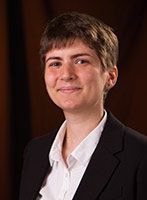 Alexandra Coman合作论文数ECCS Department1
 Spencer Rugaber合作论文数College of Computing;Georgia Institute of Technology1
 Lee Martie合作论文数Department of Informatics, University of California1
 Robert P. Goldman合作论文数Computer Science Research1
 Michael W. Floyd合作论文数Department of Systems and Computer Engineering, Carleton University1




