In texts, films, paintings and speeches, New Deal policymakers and allied intellectuals deployed biblical language and images to evoke contrition for environmental "sins." The sins of the fathers, namely the exploitative land use on the part of settlers and agro-capitalists, were now being visited on the Depression generation in the catastrophes not only of wind-born soil erosion (as in the Dust Bowl) but also the more extensive threat of gullying and water-born erosion. New Deal uses of the Bible, we argue, were not an instrumental conceit designed to manipulate hearts and minds. Rather, New Deal environmental thought, even at its seemingly most technocratic, was profoundly embedded within Christian imaginaries of sin and redemption. Scientific and religious modes of authority merged with the offices of state. As such, the soil Jeremiad is one illustration of both the need for and potential benefit of thickening "inter-field" religious and environmental methodologies-a potential we explore in this essay. In historicizing the soil Jeremiad, we also offer an example of how we might better understand the importance of religion for the history of the environmental movement beyond stories from activists' biographies and move toward a religious-environmental history of the public sphere itself.
Abstract In texts, films, paintings and speeches, New Deal policymakers and allied intellectuals deployed biblical language and images to evoke contrition for environmental “sins.” The sins of the fathers, namely the exploitative land use on the part of settlers and agro-capitalists, were now being visited on the Depression generation in the catastrophes not only of wind-born soil erosion (as in the Dust Bowl) but also the more extensive threat of gullying and water-born erosion. New Deal uses of the Bible, we argue, were not an instrumental conceit designed to manipulate hearts and minds. Rather, New Deal environmental thought, even at its seemingly most technocratic, was profoundly embedded within Christian imaginaries of sin and redemption. Scientific and religious modes of authority merged with the offices of state. As such, the soil Jeremiad is one illustration of both the need for and potential benefit of thickening “inter-field” religious and environmental methodologies—a potential we explore in this essay. In historicizing the soil Jeremiad, we also offer an example of how we might better understand the importance of religion for the history of the environmental movement beyond stories from activists’ biographies and move toward a religious-environmental history of the public sphere itself.
Throughout the "Age of Aid" (1944-1989)4 development has been seen as essentially economic in nature. Increasingly, however, it has become apparent that it is economic only in its consequences. It is something else - entitlements, democratization...social capital - that makes development possible. A different paradigm is therefore needed, and we begin by sketching that by way of the various "experiments" - nationalization, privatization and communitization - with Nepal's forests over the past half-century. Nationalization and privatization turned out to be abysmal failures; communitization a great, and continuing, success. We relate all this to the differing patterns of interaction between four fundamental forms of social solidarity - individualism (eg markets), hierarchy (eg governments and aid donors), egalitarianism (eg activist groups) and fatalism (eg carriers of the "double burden": poverty and social exclusion) - and go on to show that only when each is (a) able to make its "voice" heard and (b) is following its dharma5 (acting according to its distinctive morality rather than undermining it) do we get development. REDD+6, we then show, using examples of its implementation in Africa, is unremittingly hierarchical and does not satisfy these two conditions. We conclude with some suggestions for remedying these policy defects.
ABSTRACT The conditions for development that we have set out in our Part 1 – each solidarity able to make its contribution and each then acting according to its distinctive dharma – were markedly absent in the case of the Finnish-funded Bara Forest Management Plan. We here go on to show that REDD+ is essentially a re-run of that privatization fiasco. Being the creation of actors from just one solidarity (in this case, the hierarchical one), REDD+ is over-elegant and has excluded the voices and concerns of those who uphold the other three solidarities: the individualist, the egalitarian and the fatalist. There are two ways of remedying this: we can restore the dharma (by progressively clumsifying REDD+, as has been happening to some extent) or we can simply discard it and start again, in the right (i.e., clumsy and multi-voice) place this time. Since REDD+ is nested within the similarly over-elegant UNFCCC climate change policy frame, we recommend the latter of these alternatives.
Throughout the Age of Aid (1944-1989) development has been seen as essentially economic in nature. Increasingly, however, it has become apparent that it is economic only in its consequences. It is something else – entitlements, democratization ... social capital – that makes development possible. A different paradigm is therefore needed, and we begin by sketching that by way of the various “experiments” – nationalization, privatization and communitization – with Nepal’s forests over the past half-century. Nationalization and privatization turned out to be abysmal failures; communitization a great, and continuing, success. We relate all this to differing patterns of interaction between four fundamental forms of social solidarity – individualism (e.g., markets), hierarchy (e.g. governments and aid donors), egalitarianism (e.g. activist groups) and fatalism (e.g. carriers of the “double burden”: poverty and social exclusion). Only when each is (a) able to make its contribution and (b) is following its dharma (acting according to its distinctive morality rather than undermining it) do we get development.
Increasing resilience has become the favoured approach in efforts to curb the impact of disasters. It is central to the United Nations' International Strategy for Disaster Risk Reduction and to its Sustainable Development Goals, and it is now championed by most of the nations and civil society organisations working with hazards. But who decides what resilience looks like? We explore this question through the Nepali phrase ke garne? (what to do?). Often seen as an expression of fatalism, its true meaning is pretty much the opposite: resilience in the face of adversity. Drawing on the theory of plural rationality, we show how the proponents of Disaster Risk Reduction in Nepal, in making the invalid fatalist assumption, are bent on bestowing resilience on a social and cultural system that unbeknown to them is already, of its very nature, resilient: unnecessary at best; positively harmful at worst. This is not to say that they should not intervene; only that they need to first understand what it is that they are intervening in. And central to that understanding is the indigenous knowledge – in the case of landslides, the ethnogeomorphology – of those they have mistakenly assumed to be fatalistic.
In his article, ‘Social constructionism and climate science denial’, Hansson claims to present empirical evidence that the cultural theory developed by Dame Mary Douglas, Aaron Wildavsky and ourselves (among others) leads to (climate) science denial. In this reply, we show that there is no validity to these claims. First, we show that Hansson’s empirical evidence that cultural theory has led to climate science denial falls apart under closer inspection. Contrary to Hansson’s claims, cultural theory has made significant contributions to understanding and addressing climate change. Second, we discuss various features of Douglas’ cultural theory that differentiate it from other constructivist approaches and make it compatible with the scientific method. Thus, we also demonstrate that cultural theory cannot be accused of epistemic relativism.
The importance of applying the systems approach to cities and urban policies is illustrated using the circular economy. Cities are laboratories for innovation and have the entrepreneurial impetus and links to citizens to generate the social, environmental, and economic benefits of innovation and experimentation. Many cities are implementing circular economy strategies to maintain a healthy and regenerative economy, while promoting environmental sustainability and liveability. City infrastructures have to be re‑engineered and re-operated to rectify environmental "bads", for example degraded water. If cities are to be forces of good for the environment, the traditional systems approach may not suffice. Conventional policy analysis contains four precepts that should be reversed. Do not: insist on a single and agreed definition of the problem; distinguish facts from values; set up a single metric for comparing and assessing options; optimise around the most promising option.
This chapter looks at several interpretive models that help to define and explains the equity debates about responses to climate change. It discusses equity issues in climate discourses, distributional principles and allocational issues, procedural fairness, and the relationship of equity issues to social solidarity. A two-dimensional map of human values provides a tool for bringing equity issues into integrated assessment. The chapter deals with suggestions for ways to incorporate equity concerns into integrated assessment. The assumption that decision-makers are responsive to prices underlies the economic modules of all integrated assessment models. Efficiency, unlike equity, is inherent in the very idea of integrated assessment. Historical responsibility as an equity principle has strong support in the literature and politically in developing countries, but there are also valid counter-arguments. Issues of equity in climate change serve to highlight the central importance of the concept of social solidarity to understanding the social and political discourses about climate.
 Aaron Wildavsky合作论文数20michiel schwarz合作论文数college of science and technology16Christoph Mandl合作论文数15Hermann Atz合作论文数14Joanne Linnerooth合作论文数14
 Howard Kunreuther合作论文数Department of Operations and Information and Decisions, The Wharton School, University of Pennsylvania;Earth Institute, Columbia University;National Bureau of Economic Research14
 John Lathrop合作论文数14Sally Macgill合作论文数13Michael Bruce Beck合作论文数Warnell School of Forest Resources;University of Georgia;Warnell School of Forest Resources, University of Georgia9AV Pakhomov合作论文数7Steven Ney合作论文数7
 Marco Verweij合作论文数Institute for Subatomic Physics, Utrecht University7
 Dipak Gyawali合作论文数6
 Katherine Homewood合作论文数Anthropology, Faculty of Social & Historical Sciences, University College London6andrew v pakhomov合作论文数6Ikechukwu Umejesi合作论文数5
 Mohammed Said合作论文数Department of Resource Surveys and Remote Sensing, PO Box 47146 Nairobi, Kenya5
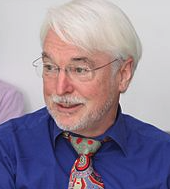 Steve Rayner合作论文数Oxford Martin School, University of Oxford;Institute for Science, Innovation and Society, University of Oxford5S Serneels合作论文数4
 Don Allen Gregory合作论文数Department of Physics And Astronomy, The University of Alabama in Huntsville4
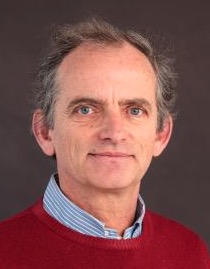 Eric Lambin合作论文数Department of Earth System Science, Doerr School of Sustainability, Stanford University;Woods Institute for the Environment, Stanford University;Université Catholique de Louvain4Kenneth A. Herren合作论文数4
 Joanne Linnerooth-Bayer合作论文数4Suzanne Serneels合作论文数4Richard Ellis合作论文数3jun lin合作论文数3
 Mary Douglas合作论文数UNIV LONDON, UNIV COLL3m warburton合作论文数2
 Susanne Lohmann合作论文数Department of Political Science, College of Social Sciences, University of California2
 Mario Herrero合作论文数Department of Global Development, Cornell University;Cornell Atkinson Center for Sustainability, Cornell University2
 Jun Lin合作论文数Nanyang Technological University, Nanyang Technological Univ2
 Masoud Yazdanpanah合作论文数Dept. of Agricultural Extension and Education, Khuzestan Ramin Agricultural and Natural Resources University;IIASA - International Institute for Applied Systems Analysis;IIASA - International Institute for Applied Systems Analysis, Khuzestan Ramin Agricultural and Natural Resources University2
 Frank Hendriks合作论文数Tilburg School of Politics and Public Administration;Tilburg University;Tilburg School of Politics and Public Administration, Tilburg University2Gholam Hosein Zamani合作论文数2
 Anna Scolobig合作论文数Institute of International Sociology of Gorizia (ISIG), Via Mazzini 13, 34170 Gorizia, Italy2Pippa Chenevix Trench合作论文数2
 Dariush Hayati合作论文数College of Agriculture, Shiraz University2Sally M Macgill合作论文数2Kath Cochrane合作论文数2
 Maren Radeny合作论文数International Livestock Research Institute2
 Shauna B. Burnsilver合作论文数Natural Resource Ecology Laboratory, Colorado State University2
 Patti Kristjanson合作论文数International Livestock Research Institute2David a Ingram合作论文数2
 Ernestina Coast合作论文数Department of International Development, London School of Economics and Political Science2G. Brough合作论文数1K Dake合作论文数1Richard M. Coughlin合作论文数1Jordan Smith合作论文数1g p chapman合作论文数1




