The name Algebraic Geometry comes from the fact that in this part of Mathematics one tries to study geometric objects (mainly) through algebraic techniques. This combination of algebra and geometry is extremely fruitful, and as a result the field of Algebraic Geometry has become big and very diverse. There are many connections to other areas/techniques in mathematics, such as Number Theory, Differential Geometry, Topology, Category Theory, Cryptography, Mathematical Physics, and so on. All in all, it’s better to think of Algebraic Geometry as indicating a sub-area of mathematics as a whole, rather than a very precisely defined subfield.
© Publications mathématiques de l’I.H.É.S., 1966, tous droits réservés. L’accès aux archives de la revue « Publications mathématiques de l’I.H.É.S. » (http:// www.ihes.fr/IHES/Publications/Publications.html) implique l’accord avec les conditions générales d’utilisation (http://www.numdam.org/legal.php). Toute utilisation commerciale ou impression systématique est constitutive d’une infraction pénale. Toute copie ou impression de ce fichier doit contenir la présente mention de copyright.
At VillecunStarting in 1973, Alexander Grothendieck lived in Villecun, a hamlet near Lodève (about 60 km from Montpellier), in an old and shabby house.The house lacked comfort, but, as he said, it had a soul.I used to go there to do mathematics or simply to visit.Evenings were lit with an old oil lamp, and there was goat's milk and locally produced organic food, which Alexander used to eat with chopsticks, a habit he acquired in Vietnam.He was mainly vegetarian.His house was open to everyone: students, ecologist pals, and sometimes a Buddhist monk with his prayerdrum.
The root of noncommutative algebra goes back to 1843 when Hamilton discovered the quaternions. The subject of abstract algebra has been developed since the early twentieth century by Wedderburn, Artin, Brauer, Noether, and later by Amitsur, Jacobson, Kaplansky, Goldie, Herstein and many others. New research topics in noncommutative algebra and its interplay with other fields such as Lie theory, geometry and physics has emerged in recent years. The structure of noncommutative algebras has been understood by the use of algebraic, combinatorial, geometric and homological means. Noncommutative algebraic geometry is an interdisciplinary subject that arises from the interaction between noncommutative algebra and algebraic geometry. Originated by Artin, Schelter, Tate and Van den Bergh [6, 9, 10], noncommutative projective geometry has grown from the basic principle that the global techniques of classical projective algebraic geometry furnish powerful methods and intuition for the study of noncommutative graded algebras. Specifically, the category of graded modules modulo those of finite length over a noetherian connected graded algebra form an appropriate analogue for the category of coherent sheaves on a projective variety [12]. This technique has been particularly successful in understanding important classes of noncommutative algebras. Over the last fifteen years, noncommutative projective curves have been ”understood” by Artin and Stafford [7, 8] in terms of graded algebras of Gelfand-Kirillov dimension two and by Reiten and Van den Bergh [40] in terms of proper categories of global dimension two. More recently, noncommutative projective surfaces have been studied extensively by many researchers. The birational theory of noncommutative projective surfaces was extended in the work of Chan and his coauthors [23, 24, 25, 27, 26] using ideas of Mori’s minimal model program. The moduli of Azumaya algebras on surfaces have been studied by Artin and de Jong [5]. Various explicit and interesting examples of noncommutative surfaces have been examined. Regular algebras of global dimension three were classified by Artin, Schelter, Tate and Van den Bergh in 1980’s [6, 9, 10]. There have been many recent developments in the classification of regular algebras of global dimension four (or their associated quantum projective three spaces) in papers by Lu, Palmieri, Shelton, Stephenson Vancliff, Wu and Zhang [44, 45, 35, 53] and others. Many new techniques have been introduced and used in noncommutative algebra and noncommutative algebraic geometry. Also applications of noncommutative algebraic geometry have been found. Stacks, derived
This is the final report by the organizers of the workshop on Interactions between noncommutative algebra and algebraic geometry, held at the Banff International Research Station September 10 - 15, 2005. The workshop was attended by 36 mathematicians from eight different countries (Australia, Canada, China, France, Great Britain, Israel, Norway, and the United States). This report is subdivided into three parts. In the first part we introduce the subject matter of the work- shop and briefly discuss its history, from the beginning of the 20th century to the present. In the second part we describe some of the currently active research topics which involve the use of algebro-geometric methods in noncommutative algebra or conversely, topics in algebraic geometry (and related mathemati- cal physics), where noncommutative algebra plays an important role. These topics formed the core of the scientific content of the workshop. The third part consists of summaries of lectures given at the workshop.
The main object of this paper is to relate a certain type of graded algebra, namely the regular algebras of dimension 3, to automorphisms of elliptic curves. Some of the results were announced in [V]. A graded algebra A is called regular if it has finite global dimension, polynomial growth, and is Gorenstein. The precise definitions are reviewed in Section 2. As was shown in [A-S], there are two basic possibilities for a regular algebra A of (global) dimension 3 which is generated in degree 1. Either A can be presented by 3 generators and 3 quadratic relations, or else by 2 generators and 2 cubic relations. Throughout this paper, A will denote an algebra so presented, over a ground field k.
Let S be a scheme and f a ternary cubic form whose ten coefficients are sections of OS without common zero. The equation f=0 defines a family of plane cubic curves X⊂PS2→S parametrized by S. We prove that the family of generalized Jacobians of those cubic curves is a group scheme J/S which is the locus of smoothness of a scheme f*=0, where f* is a Weierstrass cubic formf*=f*(x,y,z)=y2z+a1xyz+a2yz2-x3-a2x2z-a4xz2-a6z3, in which the coefficient ai is a homogeneous polynomial with integral coefficients, of degree i in the ten coefficients of f, which we give explicitly. A key ingredint of the proof is a characterization, over sufficiently nice bases, of group algebraic spaces which can be described by such a Weierstrass equation.
We give a proof of Artin's vanishing theorem in characteristic zero, based on Deligne's Riemann-Hilbert correspondence.
In analogy with classical projective algebraic geometry, Hilbert functors can be defined for objects in any Abelian category. We study the moduli problem for such objects. Using Grothendieck's general framework. We show that with suitable hypotheses the Hilbert functor is representable by an algebraic space locally of finite type over the base field. For the category of the graded modules over a strongly Noetherian graded ring, the Hilbert functor of graded modules with a fixed Hilbert series is represented by a commutative projective scheme. For the projective scheme corresponding to a suitable noncommutative graded algebra, the Hilbert functor is represented by a countable union of commutative projective schemes.
Semiprime, noetherian, connected graded k-algebras R of quadratic growth are described in terms of geometric data. A typical example of such a ring is obtained as follows: Let Y be a projective variety of dimension at most one over the base field k and let E be an OY-order in a finite dimensional semisimple algebra A over K=k(Y). Then, for any automorphism τ of A that restricts to an automorphism σ of Y and any ample, invertible E-bimodule B, Van den Bergh constructs a noetherian, “twisted homogeneous coordinate ring” B=⊕H0(Y,B⊗···⊗Bτn−1). We show that R is noetherian if and only if some Veronese ring R(m) of R has the form k+I, where I is a left ideal of such a ring B and where I=B at each point p∈Y at which σ has finite order. This allows one to give detailed information about the structure of R and its modules.
Letk be an algebraically closed field, and letR be a finitely generated, connected gradedk-algebra, which is a domain of Gelfand-Kirillov dimension two. Write the graded quotient ringQ(R) ofR asD[z,z−1; δ], for some automorphism δ of the division ringD. We prove thatD is a finitely generated field extension ofk of transcendence degree one. Moreover, we describeR in terms of geometric data. IfR is generated in degree one then up to a finite dimensional vector space,R is isomorphic to the twisted homogeneous coordinate ring of an invertible sheaf ℒ over a projective curveY. This implies, in particular, thatR is Noetherian, thatR is primitive when |δ|=∞ and thatR is a finite module over its centre when |δ|<∞. IfR is not generated in degree one, thenR will still be Noetherian and primitive if δ has infinite order, butR need not be Noetherian when δ has finite order.
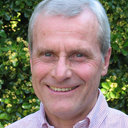 Hanspeter Kraft合作论文数10
 Reinhold Remmert合作论文数10W. Schelter合作论文数7Jian Zhang合作论文数University of Washington5
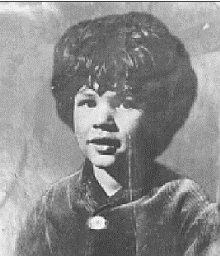 Alexander Grothendieck合作论文数Department of Mathematics, Univ. Montpellier 2 PI.3
 John Tate合作论文数Harvard University3
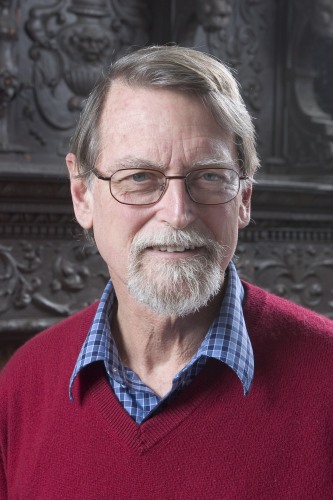 David Mumford合作论文数Division of Applied Mathematics, Brown University3J. L. Verdier合作论文数2W.A.J. Luxemburg合作论文数2
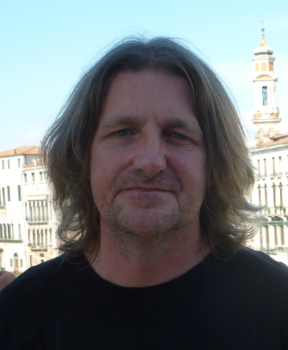 Michel Van Den Bergh合作论文数University of Hasselt;Free University of Brussels2
 Jim Stasheff合作论文数Mathematic, University of North Carolina2M VANDENBERGH合作论文数1B. Mazur合作论文数1meyer jerison合作论文数1allyn jackson合作论文数1Stephen Lichtenbaum合作论文数1
 Reinhard Schultz合作论文数Department of Mathematics, University of California, Riverside1
 Alan Weinstein合作论文数Department of Mathematics, University of California, Berkeley1J. Tate合作论文数1J. P. Serre合作论文数1
 Felix Browder合作论文数Rutgers University1
 Lawrence Zalcman合作论文数Department of Mathematics, Bar-Ilan University1
 Barry Mazur合作论文数Department of the History of Science, Harvard University;Department of Mathematics, Harvard University1G. Winters合作论文数1H. P. F. Swinnerton-Dyer合作论文数1
 Irving Kaplansky合作论文数Mathematical Sciences Research Institute1J. Toby Stafford合作论文数1
 Claudio Procesi合作论文数1
 Pierre Lochak合作论文数Centre de Mathématiques de Jussieu, Université Paris Pierre et Marie Curie1
 Christel - Rotthaus合作论文数1
 Leila Schneps合作论文数1
 Donald E. Sarason合作论文数Department of Mathematics, University of California, Berkeley1
 James S. Milne合作论文数1Robert Lee Wilson合作论文数1R. R. Phelps合作论文数1Lance W. Small合作论文数University of Chicago1
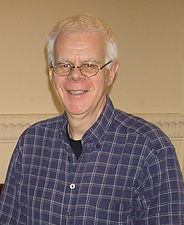 Jan Denef合作论文数Department of Mathematics, Katholieke Universiteit Leuven1Colin Ingalls合作论文数1
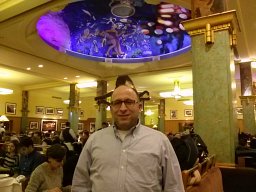 Amnon Yekutieli合作论文数Ben Gurion University1
 Joseph A. Wolf合作论文数Department of Mathematics, University of California1Shiing Shen Chern合作论文数1David M. Goldschmidt合作论文数1
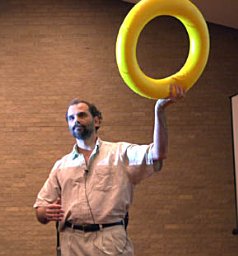 Fernando Rodriguez-Villegas合作论文数at Austin, The University of Texas1




