Three-dimensional ultrasound provides enhanced visualization of the carotid artery (CA) anatomy and volumetric flow, offering improved accuracy for cardiovascular diagnosis and monitoring. However, fully populated matrix transducers with large apertures are complex and costly to implement. Computational ultrasound imaging (cUSi) offers a promising alternative by enabling simplified hardware design through model-based reconstruction and spatial field encoding. In this work, we present a 3-D cUSi system tailored for CA imaging, consisting of a 240-element matrix probe with a 40 & times; 24 mm(2) large aperture and a spatial encoding mask. We describe the system's design, characterization, and image reconstruction. Phantom experiments show that computational reconstruction using matched filtering (MF) significantly improves volumetric image quality over delay-and-sum (DAS), with spatial encoding enhancing lateral resolution at the cost of reduced contrast ratio (CR). Least-squares with QR (LSQR)-based reconstruction was demonstrated to further improve resolution and suppress artifacts. Using both Hadamard and 16-angle plane wave transmission schemes, the system achieved high-resolution images with reasonable contrast, supporting the feasibility of 4-D CA imaging applications.
Computational ultrasound imaging (cUSi) with few elements and spatial field encoding can provide high-resolution volumetric B-mode imaging. In this work, we extend its application to 4D carotid artery (CA) flow imaging using a custom large-aperture 240-element matrix probe. We implemented a frequency band-based matched filtering strategy that balances resolution and contrast. The system's inherent imaging capabilities were evaluated and validated in flow phantom and human CA experiments. In the phantom study, 3D/4D power Doppler image and speckle-tracking analyses confirmed the system's ability to resolve flow structures and hemodynamics. In the human study, the CA bifurcation flow structure and its local pulsatile flow dynamics were successfully reconstructed. These results demonstrate the feasibility of using a large-footprint, few-element cUSi system for 4D CA flow assessment.
Beamforming is a well-known technique to combine signals from multiple sensors. It has a wide range of application domains. This paper introduces the Tensor-Core Beamformer: a generic, optimized beamformer library that harnesses the computational power of GPU tensor cores to accelerate beamforming computations. The library hides the complexity of tensor cores from the user, and supports 16-bit and 1-bit precision. An extensive performance evaluation on NVIDIA and AMD GPUs shows that the library outperforms traditional beamforming on regular GPU cores by a wide margin, at much higher energy efficiency. In the 16-bit mode, it achieves over 600 TeraOps/s on an AMD MI300X GPU, while approaching 1 TeraOp/J. In the 1-bit mode, it breaks the 3 PetaOps/s barrier and achieves over 10 TeraOps/J on an NVIDIA A100 GPU. The beamforming library can be easily integrated into existing pipelines. We demonstrate its use for medical ultrasound and radio-astronomical instruments.
Imagine being able to study the human brain in real-world scenarios while the subject displays natural behaviors such as locomotion, social interaction, or spatial navigation. The advent of ultrafast ultrasound imaging brings us closer to this goal with functional ultrasound imaging (fUSi), a mobile neuroimaging technique. Here, we present real-time fUSi monitoring of brain activity during walking in a subject with a clinically approved sonolucent skull implant. Our approach uses personalized 3D-printed fUSi helmets for stability, optical tracking for cross-modal validation with functional magnetic resonance imaging, advanced signal processing to estimate hemodynamic responses, and facial tracking of a lick licking paradigm. These combined efforts allowed us to show consistent fUSi signals over 20 months, even during high motion activities such as walking. These results demonstrate the feasibility of fUSi for monitoring brain activity in real-world contexts, marking an important milestone for fUSi-based insights in clinical and neuroscientific research.
Ultrasonography could allow operator-independent examination and continuous monitoring of the carotid artery (CA) but normally requires complex and expensive transducers, especially for 3-D. By employing computational ultrasound imaging (cUSi), using an aberration mask and model-based reconstruction, a monitoring device could be constructed with a more affordable simple transducer design comprising only a few elements. We aim to apply the cUSi concept to create a CA monitoring system. The system's possible configurations for the 2-D imaging case were explored using a linear array setup emulating a cUSi device in silico, followed by in vitro testing and in vivo CA imaging. Our study shows enhanced reconstruction performance with the use of an aberrating mask, improved lateral resolution through proper choice of the mask delay variation, and more accurate reconstructions using least-squares with QR (LSQR) decomposition compared to matched filtering (MF). Together, these advancements enable B-mode reconstruction and power Doppler imaging (PDI) of the CA with sufficient quality for monitoring using a configuration of 12 transceivers coupled with a random aberration mask with a maximum delay variation of four wave periods (WPs).
Four-dimensional ultrasound imaging of complex biological systems such as the brain is technically challenging because of the spatiotemporal sampling requirements. We present computational ultrasound imaging (cUSi), an imaging method that uses complex ultrasound fields that can be generated with simple hardware and a physical wave prediction model to alleviate the sampling constraints. cUSi allows for high-resolution four-dimensional imaging of brain hemodynamics in awake and anesthetized mice.
Computational ultrasound imaging (cUSi) offers high-resolution 3D imaging with simpler hardware by relying on computational power. Central to cUSi is a large model matrix that stores all pulse-echo signals. For 3D imaging this matrix easily surpasses 1 terabyte, hindering in-memory storage and real-time processing. This paper presents a solution for cUSi through an aberrating layer by introducing a virtual array concept, which uses transfer functions to map data from the real to a virtual array, enabling the use of conventional reconstruction techniques like delay-and-sum (DAS). We demonstrate the mathematical similarity of this approach to using a full model matrix and validate it with promising imaging results.
Fast imaging methods are needed to promote clinical adoption of ultrasound tomography (UST), and more widely available UST hardware could support the experimental validation of new measurement configurations. In this work, an open-source 256-element transducer ring array was developed (morganjroberts.github. io/open-UST) and manufactured using rapid prototyping, for only £2k. Novel manufacturing techniques were used, resulting in a 1.17° mean beam axis skew angle, a $104 \mu \text{m}$ mean element position error, and a $\pm 13.6 \mu \text{m}$ deviation in matching layer thickness. The nominal acoustic performance was measured using hydrophone scans and watershot data, and the 61.2 dB signal-to-noise ratio (SNR), 55.4° opening angle, 10.2 mm beamwidth, and 54% transmit–receive bandwidth (−12 dB) were found to be similar to existing systems and compatible with state-of-the-art full-waveform-inversion image reconstruction methods. The interelement variation in acoustic performance was typically < 10% without using normalization, meaning that the elements can be modeled identically during image reconstruction, removing the need for individual source definitions based on hydrophone measurements. Finally, data from a phantom experiment were successfully reconstructed. These results demonstrate that the open-UST system is accessible for users and is suitable for UST imaging research.
It has been previously demonstrated that applying an aberrating mask for 2D compressive imaging using a low number of sensors (elements) can significantly improve image resolution, as evaluated via the point spread function. Here we investigate the potential to apply a similar approach for 3D flow monitoring. We conducted a 3D k-Wave simulation using a 5x5 sensor array coupled to a physical coding mask, performing B-mode and power Doppler imaging on a 3D carotid artery flow model. An approximately three times smaller lateral PSF was achieved at the cost of increased background clutter level and slightly increased axial PSF. A better definition of the vessel border and finer flow speckle were observed in power Doppler imaging. Our results suggest that 3D compressive imaging using a very low sensor count of 25 with spatial coding mask has the potential to monitor 3D carotid artery flow.
In recent years high-resolution 3D printing has enabled a diverse range of new, low-cost, methods for ultrasonic wave-front shaping. Acoustic holograms, particularly, allow for the generation of arbitrary, diffraction limited, acoustic fields at MHz frequencies from single element transducers. These are phase plates that function as direct acoustic analogues to thin optical holograms. In this work it is shown that, by using multiple polymer 3D printing, acoustic analogues to 'thick' or volume optical holograms can also be generated. First, an analytic approach for designing a volume hologram that diffracts a set of input fields onto a desired set of output fields is briefly summarised. Next, a greedy optimisation approach based on random downhill binary search able to account for the constraints imposed by the chosen fabrication method is introduced. Finally, an experimental test-case designed to diffract the field generated by a 2.54 cm, planar, PZT transducer onto 8 distinct patterns dependent on the direction of the incident field is used to validate the approach and the design method. Field scans of the 8 target fields demonstrate that acoustic analogues of optical volume holograms can be generated using multi-polymer printing and that these allow the multiplexing of distinct fields onto different incident field directions.
Advances in additive manufacturing have enabled the realisation of inexpensive, scalable, diffractive acoustic lenses that can be used to generate complex acoustic fields via phase and/or amplitude modulation. However, the design of these holograms relies on a thin-element approximation adapted from optics which can severely limit the fidelity of the realised acoustic field. Here, we introduce physics-based acoustic holograms with a complex internal structure. The structures are designed using a differentiable acoustic model with manufacturing constraints via optimisation of the acoustic property distribution within the hologram. The holograms can be fabricated simply and inexpensively using contemporary 3D printers. Experimental measurements demonstrate a significant improvement compared to conventional thin-element holograms.
We intend to develop an ultrasound compressive imaging device to perform carotid artery (CA) function and flow monitoring/imaging by using just a few single element transducers equipped with spatial coding masks. The spatially unique impulse responses can be exploited in compressive reconstructions. To explore the potential of different configurations, in this study we emulated such a device using a linear array system. We combined its elements with individual digital delays into a small number of groups. The results suggest our spatial coding mask approach based on reconstructions regularized with a least squares method has potential for CA monitoring with only 10 to 12 sensors.
Progress towards fast accurate Ultrasound Tomog-raphy (UST) requires experimental validation of new methods, creating a need for low-cost UST hardware, which can be achieved using in-house manufacture. However, a key challenge for transducer manufacture is controlling the composition and thickness of matching layers. For this work, a new low-cost deposition technique was developed, which is part of the open-UST manufacturing framework. To assess the technique, 8 16-element UST transducer modules were built, and the inter-element variation in their electrical input impedance, impulse response, and transmit-receive response was measured. The acoustic performance was highly uniform with no defective elements. The −40 dB transmit-receive bandwidth was 146 %, with a mean SNR of 60.5 dB, and the standard deviation in amplitude at the 1.21 MHz fundamental frequency, was very low (σ= ± 7.1 %, without using normalisation. The high uniformity is significant, because it means that the elements can be assumed to be identical during image reconstruction, which simplifies the assumptions required, and removes the need for extensive hy-drophone calibration. The open-UST manufacturing framework could therefore lower the barrier to entry for researchers, and accelerate preliminary UST research.
Researchers in the Ultrasound Tomography community face a high barrier to entry, due to the high cost and lead times associated with custom transducer arrays. For this work, 16-element linear array transducer modules have been developed for an open-source, low-cost, ring array with low interelement variation. A module prototype was characterised using a hydrophone to measure the pressure field from each element, and the transmit frequency response. The measured average elevation and lateral plane skews were 0.41° and 2.07°, the elevation beamwidth was 8.1 mm ± 0.23 mm, and after normalisation the standard deviation in transmit amplitude spectrum between elements was 8%, averaged across all frequencies. The low interelement variation in these parameters suggests that an ideal transducer model could be used to represent the elements during image reconstruction, which could be based on measurements from only a subset of elements, simplifying preliminary UST work for end users.
Over the past decade, the range of applications in biomedical ultrasound exploiting 3D printing has rapidly expanded. For wavefront shaping specifically, 3D printing has enabled a diverse range of new, low-cost approaches for controlling acoustic fields. These methods rely on accurate knowledge of the bulk acoustic properties of the materials; however, to date, robust knowledge of these parameters is lacking for many materials that are commonly used. In this work, the acoustic properties of eight 3D-printed photopolymer materials were characterised over a frequency range from 1 to 3.5 MHz. The properties measured were the frequency-dependent phase velocity and attenuation, group velocity, signal velocity, and mass density. The materials were fabricated using two separate techniques [PolyJet and stereolithograph (SLA)], and included Agilus30, FLXA9960, FLXA9995, Formlabs Clear, RGDA8625, RGDA8630, VeroClear, and VeroWhite. The range of measured density values across all eight materials was 1120-1180 kg · m-3, while the sound speed values were between 2020 to 2630 m · s-1, and attenuation values typically in the range 3-9 dB · MHz-1· cm-1.
Acoustic holograms can be used to form complex distributions of pressure in 3D at MHz frequencies from simple inexpensive ultrasound sources. The generation of such fields is vital to a diverse range of applications in physical acoustics. However, at present, the application of acoustic holograms is severely hindered by the static nature of the resulting fields. In this work, it is shown that by intentionally reducing the diffraction efficiency of each hologram, it is possible to create stackable acoustic holograms that can be repositioned to reconfigure the combined acoustic field. An experimental test-case consisting of two holograms, each designed to generate a distinct distribution of acoustic foci, is used to demonstrate the feasibility of this approach. Field scans taken for four different positions of the two holograms confirm that the individual patterns for each hologram can be arbitrary translated relative to one another. This allows for the generation of a much greater range of fields from a single transducer than could be created using a single hologram.
Acoustic holograms are a low cost method for generating arbitrary diffraction limited pressure distributions in 3 dimensions. However, at present, the creation of complex fields using this approach is limited by the inability of these holograms to independently modulate both the phase and amplitude of an incident wave. In this work, it is shown that this limitation can be circumvented by using two phase holograms, designed using an iterative Fourier transform algorithm, to form the phase conjugate of a back-propagated target pattern over a predefined surface. An experimental test-case, designed to generate the letters UCL with the uniform amplitude and phase, is prepared to demonstrate the feasibility of this technique. Field measurements from this sample show that the modulation of both the phase and amplitude of the acoustic field can be achieved with this approach.
The number of ultrasound detectors required to produce photoacoustic tomography images can be reduced significantly by fully enclosing the imaging target in an acoustically reverberant cavity and exploiting the multiple reflections. This is demonstrated experimentally.
Precise control over the temporal and spatial properties of acoustic fields in 2 or 3-D is essential for nearly all modern, biomedical applications of ultrasound. At present, piezoelectric arrays dominate, however, despite their ubiquity they have a number of drawbacks that compromise the fidelity with which the output field can be manipulated, particularly at high frequencies and in three dimensions. The development of new novel alternatives for manipulating acoustic fields in 3-D is therefore essential. This thesis presents several new techniques through which this can be achieved using both the optical generation of ultrasound and single element piezoelectric transducers. First, the use of multiple Q-switch laser sources in combination with binary amplitude holograms is investigated for the generation of single and multi-focal acoustic fields. The conditions required for the generation of a focus are established numerically and the method is validated experimentally. Next, two approaches are developed for the generation of arbitrary spatial distributions of pressure using a single optical pulse. The first employs multi-layer optical absorbers: structures composed of several absorbing layers each individually patterned such that the field constructively interferes at a set of target points. The second uses tailored optically absorbing surface profiles: arbitrary surface shapes, fabricated through 3-D printing, designed to geometrically focus over a continuous pattern. Finally, the last chapter of the thesis investigates the use of multi-frequency kinoforms for mapping the field of single element piezoelectric transducers onto multiple complex target distributions. The properties of these kinoforms are explored in depth numerically and experimentally it is shown that multiple complex distributions can be generated in a target plane using this approach.
 Ben Cox合作论文数Department of Medical Physics and Biomedical Engineering, University College London14
 Bradley Treeby合作论文数Medical Physics and Biomedical Engineering, Faculty of Engineering Sciences, University College London10
 Pieter Kruizinga合作论文数Thorax Center, Erasmus MC;c;Thorax Center, Erasmus MC9
 Didem Dogan合作论文数Circuits & Syst Grp, Delft Univ Technol5
 Antonius F. W. van der Steen合作论文数Department of Biomedical Engineering, Thorax Centre, Erasmus Medical Center, Rotterdam, The Netherlands;5
 Eleanor M Martin合作论文数Department of Medical Physics and Bioengineering, University College London4
 Bradley E. Treeby合作论文数Department of Medical Physics and Biomedical Engineering, Faculty of Engineering Science, University College London4
 G.J.T. Leus合作论文数Department of Microelectronics, Faculty of Electrical Engineering, Mathematics and Computer Science, Delft University of Technology4Geert Leus合作论文数3
 Morgan Roberts合作论文数3
 Guillaume Ferin合作论文数3
 Geert Springeling合作论文数2
 Chris de Zeeuw (CI)合作论文数Department of Neuroscience, Erasmus MC2
 J.G. (Hans) Bosch合作论文数Department of Biomedical Engineering, Erasmus MC2
 S. K. E. Koekkoek合作论文数Department of Neuroscience, Erasmus University Rotterdam2E. Z. Zhang合作论文数1
 Bram Veenboer合作论文数1
 Stephanie Dijkhuizen合作论文数1Luuk Verhoef合作论文数1
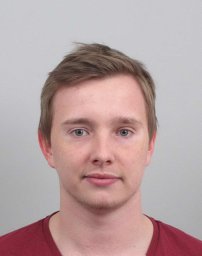 Bastian Generowicz合作论文数Center for Ultrasound and Brain imaging at Erasmus MC (CUBE),, Erasmus Medical Center1Johan G. Bosch合作论文数Radiology, Leiden University1
 Sadaf Soloukey合作论文数Erasmus MC, Dept Neurosci, Rotterdam, Netherlands1
 Marina Bakaric合作论文数1Department of Medical Physics and Biomedical Engineering, University College London, Gower Street, London, WC1E 6BT UK.1
 Antonio Stanziola合作论文数Medical Physics and Biomedical Engineering, Faculty of Engineering Sciences, University College London1
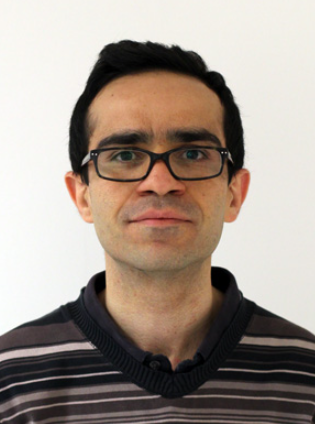 Ashkan Javaherian合作论文数Biomedical Ultrasound Group, Department of Medical Physics and Biomedical Engineering, University College London1
 Paul Beard合作论文数Department of Medical Physics and Biomedical Engineering, Faculty of Engineering Sciences, University College London1
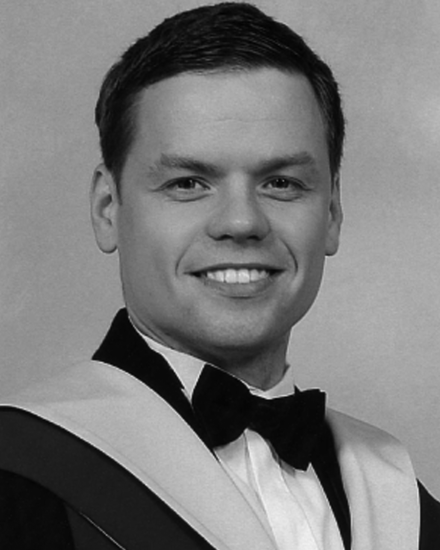 Nikitichev Daniil I合作论文数1Vincent Arnaud合作论文数1
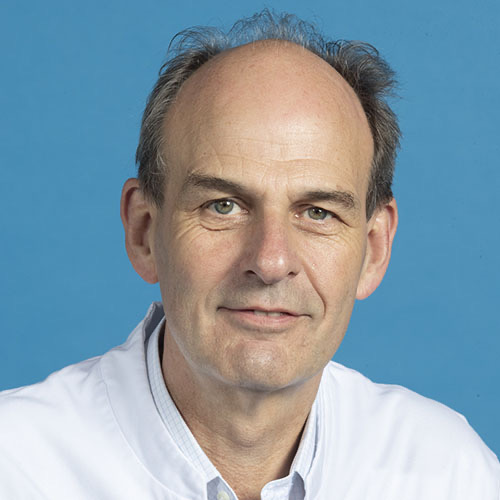 C. M. F. (Clemens) Dirven合作论文数Department of Neurosurgery, Brain Tumor Center, Erasmus MC;Department of Neurosurgery, Erasmus University Rotterdam1
 Djaina Satoer合作论文数Department of Neurosurgery, Erasmus MC - University Medical Center Rotterdam1
 Thomas Allen合作论文数Department of Medical Physics and Biomedical Engineering, University College London1
 Piero Miloro合作论文数The BioRobotics Institute, Scuola Superiore Sant'Anna1
 Marion Smits合作论文数Erasmus MC, Univ Med Ctr Rotterdam1
 Frits Mastik合作论文数Thorax Centre, Erasmus Medical Centre Rotterdam1
 Christos Strydis合作论文数Erasmus Medical Center Rotterdam Netherlands1
 Borbála Hunyadi合作论文数Department of Microelectronics, Faculty of Electrical Engineering, Mathematics and Computer Science, Delft University of Technology1
 Jiri Jaros合作论文数Brno University of Technology1
 John W. Romein合作论文数1




