Permite construir circuitos com resistores, capacitores, indutores e fonte de corrente alternada e continua. Pode-se analisar o grafico da corrente e tensao em funcao do tempo
While enrollment and retention figures often grab headlines for Massively Open Online Courses (MOOCs), the more telling measures of MOOCs' effectiveness may be found in the educational outcomes.The performance of students enrolled in the University of Colorado Physics I MOOC was evaluated with the use of numerous instruments.These instruments include exams, homework assignments, the FMCE and the CLASS.The performance of students in the MOOC was tracked across the semester and compared with that of students in similar "Brick and Mortar" classes at the University of Colorado.For some measures (FMCE) their performance was compared with the results from large scale studies.On all measures the MOOC students performed at least as well as and had learning gains at least as great as those in more traditional settings including interactive engagement.This may be due, in part, to a massive self-selection process skewing the MOOC population over time.
This article reviews Feynman's Tips on Physics (2nd ed.). by Richard P. Feynman, Michael A. Gottlieb, Ralph Leighton 197 pp. , 2013. Price: $16.99 (paper) ISBN 978-0-465-02797-2.
In the fall of 2013, we taught the calculus-based introductory physics course at the University of Colorado at Boulder and, at the same time we taught a MOOC version of the same course, through Coursera. Students in both courses received identical lectures, homework assignments, and timed exams. We present data on participation rates and exam performance for the two groups. We find that the MOOC is like a drug targeted at a very specific population. When it works, it works well, but it works for very few. This MOOC worked well for older, well-educated students, who already have a good understanding of Newtonian mechanics.
When education researchers describe newly developed curricular materials, they typically concentrate on the research base behind their design, and the efficacy of the final products, but do not highlight the initial stages of creating the actual materials. With the aim of providing useful information for faculty engaged in similar projects, we describe here our development of a set of in-class tutorials for advanced undergraduate electrodynamics students, and discuss factors that influenced their initial design and refinement. Among the obstacles to be overcome was the investigation of student difficulties within the short time frame of our project, and devising ways for students to engage in meaningful activities on advanced-level topics within a single 50-minute class period. We argue for a process that leverages faculty experience and classroom observations, and present several guidelines for tutorial development and implementation in upper-division physics classrooms.
Favorable outcomes from ongoing research at the University of Colorado Boulder on student learning in junior-level electrostatics (E&M I) have led us to extend this work to upper-division electrodynamics (E&M II). We describe here our development of a set of research-based instructional materials designed to actively engage students during lecture (including clicker questions and other in-class activities); and an instrument for assessing whether our faculty-consensus learning goals are being met. We also discuss preliminary results from several recent implementations of our transformed curriculum, plans for the dissemination and further refinement of these materials, and offer some insights into student difficulties in advanced undergraduate electromagnetism.
Permite investigar os modelos classicos e quânticos do atomo de hidrogenio e analisar o diagrama de niveis de energia e espectro emitido
Many upper-division courses at the University of Colorado now regularly use peer instruction in the form of clicker questions during lectures. Particular attention has been paid to developing and implementing clicker questions in junior-level E&M and Quantum mechanics. These transformed classes largely follow traditional local norms of syllabus and content coverage, but are designed to address broader learning goals (e.g developing math-physics connections) that our faculty expect from physics majors in these courses. Concept-tests are designed to align with these goals, and have altered the dynamic of our classes. Coupled with other course transformations, we find measurable improvement in student performance on targeted conceptual post-tests. Here, we discuss classroom logistics of upper-division clickers, purposes of clicker questions, aspects of student engagement facilitated by concept-tests, and observations of and challenges to sustainability of this activity.
We developed a freely available interactive simulation of optical traps and their biological applications (phet. colorado. edu). The target audience is undergraduate majors as well as more advanced researchers. The simulation has three panels: optical traps, manipulating DNA, and measuring molecular motors. Each panel has options that allow students to interactively explore key physical ideas. For instance, viscosity can be turned off to see the critical aspect of dissipation, or time can be slowed down to see the oscillating electric field and the induced charge separation. An overview of the simulation and specific exercises suitable for an undergraduate class are discussed.
 Katherine K Perkins合作论文数12Kathy Perkins合作论文数11
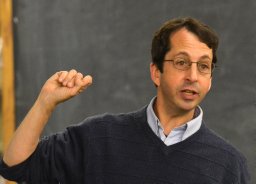 Steven J Pollock合作论文数Department of Physics;University of Colorado;Department of Physics, University of Colorado10
 Carl Wieman合作论文数Department of Physics, Graduate School of Education, Stanford University7Carl E. Wieman合作论文数Department of Physics|University of Colorado , Boulder7
 Noah Finkelstein合作论文数Department of Physics, College of Arts and Sciences, University of Colorado at Boulder6
 Stephanie Chasteen合作论文数College of Arts and Sciences, University of Colorado Boulder;Chasteen Educational Consulting6Ron LeMaster合作论文数5
 Sarah Busby Mckagan合作论文数Seattle Pacific University;McKagan Enterprises5Christopher S. Malley合作论文数4Danielle Harlow合作论文数4Chris Malley合作论文数4Sam Reid合作论文数4
 Paul Beale合作论文数Department of Physics;University of Colorado;Department of Physics, University of Colorado4
 Wendy Adams合作论文数Atoms Consulting, LLC.;Department of Physics, Colorado School of Mines4Archie Paulson合作论文数3
 Thomas Perkins合作论文数JILA - University of Colorado Boulder2Rachel E. Pepper合作论文数Department of Physics, Harvard University2
 Chandra Turpen合作论文数Department of Physics;University of Colorado;Department of Physics, University of Colorado2Charles Baily合作论文数Department of Physics;University of Colorado;Department of Physics, University of Colorado2Nicholas Schneider合作论文数University of Colorado2David Lieberman合作论文数2Christopher V. Malley合作论文数1martin burger合作论文数1Steve Goldhaber合作论文数1
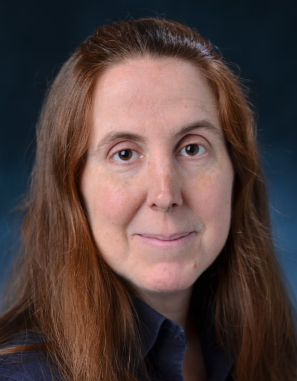 Meredith Betterton合作论文数Department of Physics, College of Arts and Sciences, University of Colorado Boulder1Steve Osterman合作论文数1




