This paper presents spectroscopy of supernovae discovered in the first season of the Sloan Digital Sky Survey-II Supernova Survey. This program searches for and measures multi-band light curves of supernovae in the redshift range z = 0.05 - 0.4, complementing existing surveys at lower and higher redshifts. Our goal is to better characterize the supernova population, with a particular focus on SNe Ia, improving their utility as cosmological distance indicators and as probes of dark energy. Our supernova spectroscopy program features rapid-response observations using telescopes of a range of apertures, and provides confirmation of the supernova and host-galaxy types as well as precise redshifts. We describe here the target identification and prioritization, data reduction, redshift measurement, and classification of 129 SNe Ia, 16 spectroscopically probable SNe Ia, 7 SNe Ib/c, and 11 SNe II from the first season. We also describe our efforts to measure and remove the substantial host galaxy contamination existing in the majority of our SN spectra.
The Sloan Digital Sky Survey-II (SDSS-II) has embarked on a multi-year project to identify and measure light curves for intermediate-redshift (0.05 < z < 0.35) Type la supernovae (SNe Ia) using repeated five-band (ugriz) imaging over an area of 300 sq. deg. The survey region is a stripe 2.5 degrees wide centered on the celestial equator in the Southern Galactic Cap that has been imaged numerous times in earlier years, enabling construction of a deep reference image for the discovery of new objects. Supernova imaging observations are being acquired between September I and November 30 of 2005-7. During the first two seasons, each region was imaged on average every five nights. Spectroscopic follow-up observations to determine supernova type and redshift are carried out on a large number of telescopes. In its first two three-month seasons, the survey has discovered and measured light curves for 327 spectroscopically confirmed SNe Ia, 30 probable SNe Ia, 14 confirmed SNe Ib/c, 32 confirmed SNe 11, plus a large number of photometrically identified SNe la, 94 of which have host-galaxy spectra taken so far. This paper provides an overview of the project and briefly describes the observations completed during the first two seasons of operation.
We report the serendipitous detection of a very bright, very nearby microlensing event. In late 2006 October, an otherwise unremarkable A0 star at a distance of ~1 kpc (GSC 3656–1328) brightened achromatically by a factor of nearly 40 over the span of several days and then decayed in an apparently symmetrical way. We present a light curve of the event based on optical photometry from the Center for Backyard Astrophysics and the All Sky Automated Survey, as well as near-infrared photometry from the Peters Automated Infrared Imaging Telescope. This light curve is well fit by a generic microlensing model. We also report optical spectra and Swift X-ray and UV observations that are consistent with the microlensing interpretation. We discuss and reject alternative explanations for this variability. The lens star is probably a low-mass star or brown dwarf, with a relatively high proper motion of ≳20 mas yr−1, and may be visible using precise optical/infrared imaging taken several years from now. A modest, all-sky survey telescope could detect ~10 such events per year, which would enable searches for very low mass planetary companions to relatively nearby stars.
We expand our Bayesian Monte Carlo method for analyzing the light curves of gravitationally lensed quasars to simultaneously estimate time delays and quasar structure including their mutual uncertainties. We apply the method to HE1104-1805 and QJ0158-4325, two doubly-imaged quasars with microlensing and intrinsic variability on comparable time scales. For HE1104-1805 the resulting time delay of (Delta t_AB) = t_A - t_B = 162.2 -5.9/+6.3 days and accretion disk size estimate of log(r_s/cm) = 15.7 -0.5/+0.4 at 0.2 micron in the rest frame are consistent with earlier estimates but suggest that existing methods for estimating time delays in the presence of microlensing underestimate the uncertainties. We are unable to measure a time delay for QJ0158-4325, but the accretion disk size is log(r_s/cm) = 14.9 +/- 0.3 at 0.3 micron in the rest frame.
 Christopher W. Morgan合作论文数Department of Astronomy;Ohio State University;Department of Astronomy, Ohio State University7
 Frederic Courbin合作论文数ICREA - Institució Catalana de Recerca i Estudis Avançats;Ecole Polytechnique Fédérale de Lausanne;Universitat de Barcelona4
 Georges Meylan合作论文数École Polytechnique Fédérale de Lausanne4
 Christopher S. Kochanek合作论文数Department of Astronomy, College of Arts and Sciences, The Ohio State University3
 José Luis Prieto合作论文数Instituto de Estudios Astrofísicos, Facultad de Ingeniería y Ciencias, Universidad Diego Portales3
 Linda C. Watson合作论文数3Emilio E Falco合作论文数3Ben Dilday合作论文数2Katie Schlesinger合作论文数2
 W. Ketzeback合作论文数2Yutaka Ihara合作论文数2Gabrelle Saurage合作论文数2Fritz DeJongh合作论文数2C. Vuissoz合作论文数2daniel c long合作论文数2e eulaers合作论文数2
 Craig J. Hogan合作论文数Department of Astronomy and Astrophysics, The University of Chicago;Enrico Fermi Institute, The University of Chicago2Nicholas D. Morgan合作论文数2Stephanie A. Snedden合作论文数2Jennifer L. Marshall合作论文数2
 Masao Sako合作论文数Department of Physics and Astronomy, School of Arts & Sciences, University of Pennsylvania2
 Ryan J Foley合作论文数Astronomy & Astrophysics Department, UC Santa Cruz2
 Joshua A. Frieman合作论文数Department of Astronomy and Astrophysics, University of Chicago2
 Alastair Edge合作论文数Centre for Extragalactic Astronomy, Department of Physics, Durham University2
 J. Craig Wheeler合作论文数Department of Astronomy, College of Natural Sciences, The University of Texas at Austin;The Wootton Center for Astrophysical Plasma Properties, College of Natural Sciences, The University of Texas at Austin2
 Jesper Sollerman合作论文数Department of Astronomy, Stockholm University;Oskar Klein Centre2Michael Harvanek合作论文数2Hubert Lampeitl合作论文数2
 Donald G. York合作论文数The Department of Astronomy and Astrophysics, The University of Chicago2
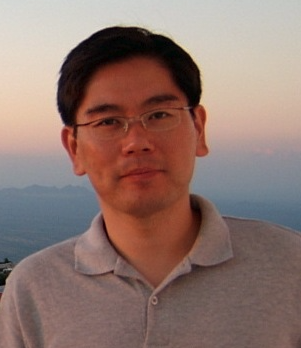 Myungshin Im合作论文数Center for the Exploration of the Origin of the Universe, Department of Physics & Astronomy, Seoul National University2Chen Zheng合作论文数X-Tech2
 Stephan Frank合作论文数College of Arts and Sciences, The Ohio State University2
 Bob Nichol合作论文数School of Mathematics and Physics, Faculty of Engineering and Physical Sciences, University of Surrey2
 Ariel Marcelo Goobar合作论文数Oskar Klein Centre for Cosmoparticle Physics, Stockholm University2
 Saurabh W. Jha合作论文数Department of Physics and Astronomy, School of Arts and Sciences, Rutgers, the State University of New Jersey2
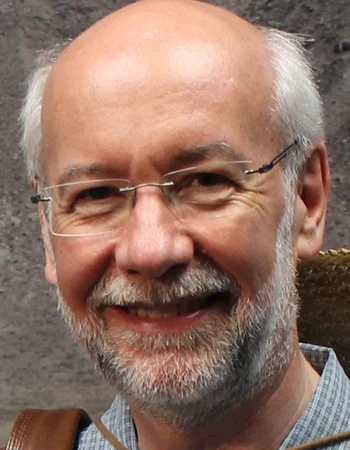 Ralf Bender合作论文数Max Planck Institute for Extraterrestrial Physics;Fakultät für Physik, Ludwig-Maximilians-Universität München2Ulrich Hopp合作论文数2
 Pierre Magain合作论文数Département d'astrophysique, géophysique et océanographie, Faculté des Sciences, Université de Liège2
 David Cinabro合作论文数College of Liberal Arts and Sciences, Wayne State University;U.S. Department of Energy2
 Andrew C Becker合作论文数Astronomy Department, University of Washington2John Marriner合作论文数2
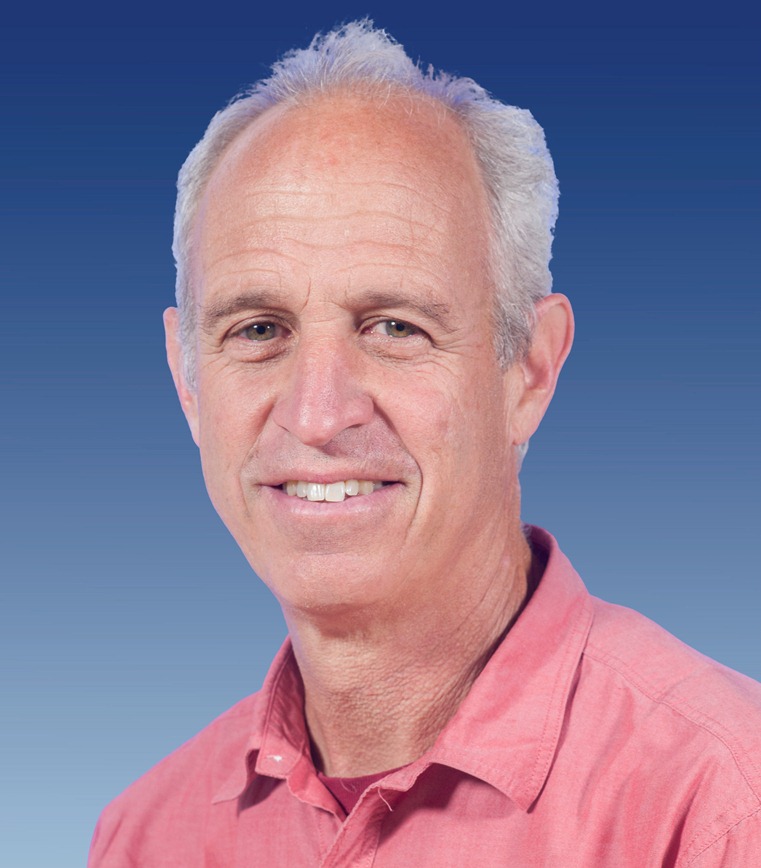 Jon Holtzman合作论文数Department of Astronomy, New Mexico State University2D. L. Depoy合作论文数2Naoki Yasuda合作论文数Kavli Inst Phys & Math Universe WPI, Univ Tokyo2
 Alexei V. Filippenko合作论文数Department of Astronomy, University of California, Berkeley2
 John C. Barentine合作论文数Department of Astronomy;University of Texas at Austin;Department of Astronomy, University of Texas at Austin2
 Kurt J. van der Heyden合作论文数2Nobuaki Takanashi合作论文数2Howard Brewington合作论文数2




