Many protected areas worldwide increasingly resemble habitat isolates embedded in human-modified landscapes. However, establishing linkages among protected areas could significantly reduce species-loss rates. Here we present a novel method having broad applicability for assessing enhanced regional connectivity on persistence of mammal diversity. We combine theoretically-derived species relaxation rates for mammal communities with empirically-derived pathways. We assess the value of enhanced regional connectivity for two hypothetical networks of national parks in western North America: the Yellowstone-Glacier network and the Mount Rainier-North Cascades network. Linking the Yellowstone and Glacier park assemblages by eliminating barriers to movement in identified mammal dispersal pathways and by incorporating adjacent wilderness areas and known ungulate migratory routes into a protected area network would greatly enlarge available habitat. This would enhance medium to large mammal species persistence time by factor of 4.3, on average, or ~ 682 generations relative to individual parks. Similarly, linking Mount Rainier and North Cascades park assemblages would enhance mammal species persistence time by a factor of 4.3, on average, or ~305 generations relative to individual parks. Enhancing regional connectivity among western North America parks could serve as an important template for landscape-scale conservation in the 21st century.
Recent reports of insect declines have caused concern among scientists and the public. Declines in insect abundance and biomass are ubiquitous across many climatic zones and have been largely attributed to anthropogenic land use intensification and climate change. However, there are few examples of long-term continuous data in relatively undisturbed environments, as opposed to agricultural landscapes. We sampled insects weekly from 1986 to 2020 in a protected subalpine meadow in Colorado, which is embedded in an undisturbed natural landscape. During the study period, summers became warmer, while winters became drier. Insect biomass declined by & SIM;47% and abundance declined by & SIM;61.5% over the last 35 years. Insect declines occurred in concert with changes in climate, as some climate factors were correlated with insect abundance and biomass. Specifically, insect abundance was lower during years with less summer precipitation and winter snowfall, and to a lesser degree with warmer temperatures. In subalpine systems, changes in precipitation and warmer temperatures are expected to continue under climate change; thus, continued insect declines might be expected even in relatively undisturbed habitats.
There has been much recent interest in the concept of rewilding as a tool for nature conservation, but also confusion over the idea, which has limited its utility. We developed a unifying definition and 10 guiding principles for rewilding through a survey of 59 rewilding experts, a summary of key organizations' rewilding visions, and workshops involving over 100 participants from around the world. The guiding principles convey that rewilding exits on a continuum of scale, connectivity, and level of human influence and aims to restore ecosystem structure and functions to achieve a self-sustaining autonomous nature. These principles clarify the concept of rewilding and improve its effectiveness as a tool to achieve global conservation targets, including those of the UN Decade on Ecosystem Restoration and post-2020 Global Biodiversity Framework. Finally, we suggest differences in rewilding perspectives lie largely in the extent to which it is seen as achievable and in specific interventions. An understanding of the context of rewilding projects is the key to success, and careful site-specific interpretations will help achieve the aims of rewilding.
Predators can have dramatic and lethal effects on individual prey, but they can also have subtle yet powerful effects on non-prey species via webs of indirect interactions. Top predators may, for example, suppress the activity of smaller predators and in turn provide a net benefit for the prey of the smaller predators; they can also reduce the impacts of herbivores and thus indirectly alter vegetation dynamics. Species that have such pervasive effects on their communities, and the broader ecosystems to which they belong, are termed ‘strongly interactive’. Here, we begin by reviewing the kinds of effects that theoretically can be engendered by the presence of strongly interactive carnivores, and then present examples of such species among the native reptiles, birds and mammals of Australia. The examples include elapid snakes, varanid (monitor) lizards, day-active raptors and owls, dasyurid marsupials and the dingo. The dingo, in particular, has been shown in many studies to suppress the activity of smaller mesopredators and herbivores and to have broadly beneficial effects on biodiversity and ecosystem function. Using the dingo as a case study, we propose that this important but persecuted species should be maintained in areas where it still occurs and that immediate consideration should be given to reintroducing it to areas from which it has been banished. We conclude that strongly interactive carnivores are key components of many ecosystems and should be retained where they still occur and reintroduced, where possible, elsewhere.
Abstract:The distribution of native, chaparral‐requiring bird species was determined for 37 isolated fragments of canyon habitat ranging in size from 0.4 to 104 hectares in coastal, urban San Diego County, California The area of chaparral habitat and canyon age (time since isolation of the habitat fragment) explains most of the variation in the number of chaparral‐requiring bird species. In addition, the distribution of native predators may influence species number. There is statistical evidence that coyotes control the populations of smaller predators such as foxes and domestic cats. The absence of coyotes may lead to higher levels of predation by a process of mesopredator release. The distance of canyons from other patches of chaparral habitat does not add significantly to the explained variance in chaparral‐requiring species number–probably because of the virtual inability of most chaparral‐requiring species to disperse through developed areas and nonscrub habitats. These results and other lines of evidence suggest that chaparral‐requiring birds in isolated canyons have very high rates of extinction, in part because of their low vagility. The best predictors of vulnerability of the individual species are their abundances (densities) in undisturbed habitat and their body sizes; together these two variables account for 95 percent of the variation in canyon occupancy. A hypothesis is proposed to account for the similarity between the steep slopes of species‐area curves for chaparral‐requiring birds and the slopes for some forest birds on small islands or in habitat fragments. The provision of corridors appears to be the most effective design and planning feature for preventing the elimination of chaparral‐requiring species in a fragmented landscape.
In his response to my recent editorial (Soule 2013), Kareiva (2014) seeks to “correct some misimpressions” while seeking common ground. I am grateful for Kareiva's collegial response and his agreement that nature (biodiversity) must be protected and conserved for its own sake as well as for utilitarian reasons.1 Kareiva celebrates the achievements of his employer, The Nature Conservancy (TNC), globally the most influential conservation NGO. TNC has been a powerful actor and an effective implementer of habitat protection as well as a key voice for educating the public about the threats to nature. Its scientists, staff, and donors deserve our gratitude. If TNC did not exist, conservationists would need to invent such an organization. Not only do I harbor no hostility to the hundreds of dedicated staff of TNC, I salute their manifold contributions to conservation. Another point of agreement is that protected areas, by themselves, are too limited in size. Combined they constitute only about 13% of Earth (Le Saout et al. 2013), considered far too little to achieve comprehensive biodiversity protection (Noss et al. 2012). The solution is to create more protected areas and to improve their management when possible. We agree, as well, that lands subject to resource extraction, agriculture, grazing, and logging must be managed in ways that minimize damage to biodiversity, in part because diverse ecosystems are more stable and resilient (Tilman 2012). But wishing does not make it so. Not nearly enough sensitively managed wildlife habitat is effectively protected in the Unites States or elsewhere to arrest the extinction crisis. In addition, ecological degradation is exacerbated by some government agencies such as the U.S. Department of Agriculture's Wildlife Services antipredator program and The U.S. Bureau of Land Management's aggressive leasing of public lands for fossil fuel exploration and extraction in Wyoming and other states (Beckman et al. 2012). Globally and for the foreseeable future, biodiversity (flora, fauna, and ecosystems) will continue on a downward, dissipative slope. Although this conclusion is often expressed in rather crude, sexual terms, its essence is that biodiversity and wildness are being ravaged, plundered, and not-so-sensitively annihilated (Soule 1995). This is the consensus view of conservation biologists to whom I have spoken, including the most prominent members of the profession. I would hazard that this gloomy vista occupies much of “the common ground” on which we stand (or wobble) (Doak et al. 2013). To the extent that Kareiva retreats from his adamantly anthropocentric statements in the past, the extent of common ground increases. I believe that some other issues distinguishing the views of Kareiva and myself rest on nearly irreconcilable, beliefs and ideologies not amenable to testing by empirical science. One of these beliefs is the notion that wild things and places have incalculable intrinsic value, at least as salient as the value of humanity. I am most grateful to T. Butler, R. Noss, and J. Berger for their generous and sage advice.
RECENTLY MY WIFE AND I spied on some female endangered leatherback sea turtles depositing their Ping-Pong-ball-sized eggs at Trinidad’s Grande Riviere, on the famous “turtle beach” where the river enters the Atlantic.
 Elliott A. Norse合作论文数7
 James A. Estes合作论文数Department of Ecology and Evolutionary Biology, University of California, Santa Cruz6
 Reed Noss合作论文数Center for Landscape Conservation Planning, University of Florida;Conservation Science, Inc.;Southeastern Grasslands Institute, Austin Peay State University6
 John Terborgh合作论文数Center for Tropical Conservation, Duke University;Division of Environmental Natural Sciences, Nicholas School of the Environment, Duke University5
 Joel Berger合作论文数Department of Fish, Wildlife and Conservation Biology, Warner College of Natural Resources, Colorado State University;Wildlife Conservation Society4
 William Ripple合作论文数Department of Forest Ecosystems and Society, College of Forestry, Oregon State University4Mercedes S. Foster合作论文数National Museum of Natural History Museum Section, U.S. Fish and Wildlife Service4
 John C. Z. Woinarski合作论文数Department of Infrastructure;Planning and Environment;Department of Infrastructure|Planning and Environment3
 Harry Frederick Recher合作论文数3
 Brendan G. Mackey合作论文数Canadian Forest Service;Australian National University;Agriculture and Agri-Food Canada;Canadian Forest Service, Australian National University3Gary Lease合作论文数3
 Larry Crowder合作论文数Department of Oceans, Stanford University;Stanford Doerr School of Sustainability, Stanford University;Woods Institute for the Environment, Stanford University3
 David Johns合作论文数3
 Menna E. Jones合作论文数School of Natural Sciences, University of Tasmania3Robert Lesslie合作论文数2Arian D. Wallach合作论文数2kenyon fields合作论文数2Anthony R. E. Sinclair合作论文数2
 Tim Essington合作论文数School of Aquatic and Fishery Sciences, College of the Environment, University of Washington2
 Ellen Pikitch合作论文数Institute for Ocean Conservation Science, School of Marine and Atmospheric Sciences, Stony Brook University2
 Robert J. Marquis合作论文数Department of Biology, University of Missouri - St. Louis2
 L. Scott Mills合作论文数University of Montana2
 Andrew Dobson合作论文数Department of Ecology & Evolutionary Biology, Princeton University2Lauri Oksanen合作论文数Department of Biology, University of Turku2
 Justin Brashares合作论文数Department of Environmental Science, Policy & Management, College of Natural Rausser, University of California2
 Katherine Ralls合作论文数Smithsonian Institution;University of California, Santa Cruz2
 Daniel Simberloff合作论文数Department of Ecology and Evolutionary Biology, College of Arts & Sciences, University of Tennessee2
 Stephen R. Carpenter合作论文数Center for Limnology, College of Letters and Science, University of Wisconsin-Madison2
 Jonathan Shurin合作论文数Department of Ecology, Behavior & Evolution, School of Biological Sciences, University of California, San Diego2
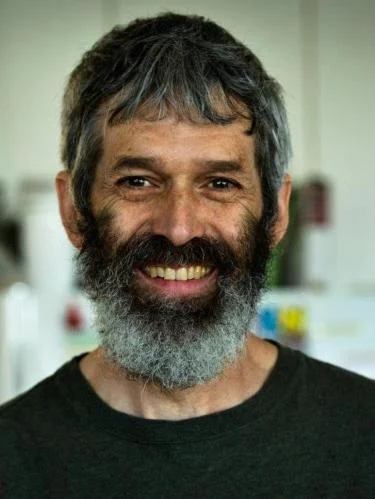 Dan Doak合作论文数Department of Environmental Studies, College of Arts and Sciences, University of Colorado Boulder2
 Hugh Possingham合作论文数Centre for Biodiversity and Conservation Science, Faculty of Science, The University of Queensland;Accounting for Nature Ltd2
 David Wardle合作论文数Department of Ecology and Environmental Science, Umeå University2
 Rodolfo Dirzo合作论文数Stanford Woods Institute for the Environment, Department of Biology, Stanford University2
 Risto Virtanen合作论文数Department of Biology;Botanical Museum;University of Oulu;University of Oulu, University of Oulu2
 M (Marten) Scheffer合作论文数Department of Aquatic Ecology and Water Quality Management, Wageningen University & Research2Tarja Oksanen合作论文数2
 Jeremy B. C. Jackson合作论文数Department of Paleontology, American Museum of Natural History;Smithsonian Tropical Research Institute;Scripps Institution of Oceanography2
 Euan G. Ritchie合作论文数School of Marine;James Cook University;School of Marine, James Cook University2
 Bruce A. Wilcox合作论文数2
 Thomas W. Schoener合作论文数College of Biological Sciences, University of California, Davis;Department of Evolution & Ecology, University of California, Davis2
 Al S Glen合作论文数2
 William Bond合作论文数Department of Biological Sciences, University of Cape Town2
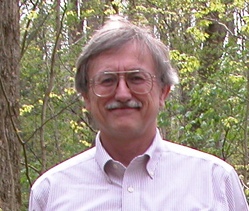 Robert D. Holt合作论文数Department of Biology, College of Liberal Arts and Sciences, University of Florida2H. A. Nix合作论文数2
 Mary Eleanor Power合作论文数Department of Integrative Biology, College of Letters & Science, University of California, Berkeley;California Biodiversity Center2Dave Foreman合作论文数2Sarah E. Reed合作论文数1Brian Miller合作论文数1




