Noise is a major challenge for current quantum computers. It can be broadly categorized into bit-flip and phase-flip errors. These two types do not necessarily affect the executed algorithm, thus also the application, in the same way. We illustrate this general effect for the example of the quantum approximate optimization algorithm (QAOA) applied to a small instance of the flight-gate assignment (FGA) problem. We compare bit-flip and phase-flip Pauli noise under both layer-level and gate-level noise models, using two circuit decompositions of the same ideal QAOA unitary: a CNOT-based decomposition and a native-R_ZZ decomposition. In the simulations, bit-flip noise produces the larger degradation in the performance of the quantum optimization. The asymmetry is most visible in the layer-level and native-R_ZZ simulations. We explain this by how the errors affect mixing, final measurements, and how they propagate inside the circuit. We then exploit these insights to tackle noise particularly efficiently using asymmetric error-correcting codes. As an illustration, we use the quantum parity code (QPC), a generalization of the 9-qubit Shor code, and show that a smaller asymmetric code can achieve nearly the same improvement as a larger symmetric choice. This demonstrates that error-correction resources should be assigned not only according to physical error rates, but also according to how strongly each error channel affects the application. As a result, asymmetric quantum error correction proves useful even in cases where the noise model is symmetric. Finally, we discuss how information about the noise obtained through calibration can be exploited in our approach.
Phase-only pattern synthesis is a long-standing and hard to solve problem in antenna engineering. Due to its nonlinear nature, this kind of optimization problem is classically approached with iterative algorithms, where the convergence time depends on the problem topology. Often these heuristic solution routines get stuck in local optima and yield suboptimal results. This article addresses phase-only pattern synthesis by using a variational quantum algorithm, the quantum approximate optimization algorithm. In this context, a mathematical approach is presented, which discretizes the optimization variables and allows representing the original nonlinear functional as a higher order polynomial. In contrast to other series expansion techniques it turns out that this polynomial has finite length without introducing any approximations. This makes phase-only patterns synthesis problems suitable to be solved on quantum computers with standard gate sets. The mathematical treatment of this optimization problem is complemented by a complexity analysis and a performance analysis. Finally, the challenges regarding future deployment of quantum approximate optimization for phase-only pattern synthesis are discussed.
The interface between the quantum and the classical is an intriguing and, at times, hotly contested subject of ongoing research. The quantum regime is characterized by interference, made possible by the superposition principle, while such phenomena are absent in macroscopic, everyday experience. Here, we investigate the link of this absence (or, as we will argue, unobservability) to computational complexity. We show how the assumption that quantum systems cannot solve NP-complete problems efficiently implies that certain formally valid quantum measurements on finite-dimensional systems are unperformable. We study several consequences of this restriction. First, Pauli matrices in an inconveniently transformed basis are a simple example of unobservables. Furthermore, some quantum states are not connected by any physically realizable time evolution. Finally there are quantum states whose coherence cannot be observed, i.e. superpositions of pure quantum states which are indistinguishable from mixtures. We discuss the connection of this phenomenon to the presence of superselection sectors. Our results suggest that the apparent classicality of macroscopic systems may be partly due to limitations on measurements and time evolutions imposed by computational complexity.
Complex numbers play a crucial role in quantum mechanics. However, their necessity remains debated: whether they are fundamental or merely convenient. Recently, it was shown that any real-number quantum theory satisfying certain postulates can be falsified with multipartite experiments. In this Letter we show that a physically motivated postulate about composite quantum systems allows us to construct quantum mechanics based on real numbers that reproduces predictions for all multipartite quantum experiments. Thus, we argue that real-valued quantum mechanics cannot be falsified, and therefore the use of complex numbers is a matter of convenience.
The use of algebraic frameworks based on complex Clifford algebras for the representation and simulation of quantum circuits has been discussed in the literature. Recently, an alternative algebraic approach employing hard-core bosons has been proposed. Hard-core bosons provide a natural representation of multi-qubit systems, in which the tensor-product structure is realized directly and no sign corrections are required, in contrast to realizations based on complex Clifford algebras. Although both approaches are formally equivalent, the hard-core boson formulation exhibits computational advantages. This work reviews and extends the hard-core boson algebra for circuit simulation and presents an efficient implementation. A performance comparison with IBM Qiskit shows substantially improved execution times for simulations. Moreover, a new application is introduced in which the hard-core boson formalism is combined with genetic algorithms for quantum circuit synthesis.
We present an improved version of a quantum amplitude encoding scheme that encodes the N entries of a unit classical vector v=(v_1,..,v_N) into the amplitudes of a quantum state. Our approach has a quadratic speed-up with respect to the original one. We also describe several generalizations, including to complex entries of the input vector and a parameter M that determines the parallelization. The number of qubits required for the state preparation scales as 𝒪(Mlog N). The runtime, which depends on the data density ρ and on the parallelization paramater M, scales as 𝒪(1/√(ρ)N/Mlog (M+1)), which in the most parallel version (M=N) is always less or equal than 𝒪(√(N)log N). By analysing the data density, we prove that the average runtime is 𝒪(log ^1.5 N) for input vectors that are uniformly sampled on the N-sphere. We present numerical evidence that this favourable runtime behaviour also holds for real-world data, such as radar satellite images. This is promising as it allows for an input-to-output advantage of the quantum Fourier transform.
Variational algorithms such as the Quantum Approximate Optimization Algorithm have attracted attention due to their potential for solving problems using near-term quantum computers. The $ZZ$ interaction typically generates the primitive two-qubit gate in such algorithms applied for a time, typically a variational parameter, $\gamma$. Different compilation techniques exist with respect to the implementation of two-qubit gates. Due to the importance of the $ZZ$-gate, we present an error analysis comparing the continuous-angle controlled phase gate (CP) against the fixed angle controlled $Z$-gate (CZ). We analyze both techniques under the influence of coherent over-rotation and depolarizing noise. We show that CP and CZ compilation techniques achieve comparable $ZZ$-gate fidelities if the incoherent error is below $0.03 \, \%$ and the coherent error is below $0.8 \, \%$. Thus, we argue that for small coherent and incoherent error a non-parameterized two-qubit gate such as CZ in combination with virtual $Z$ decomposition for single-qubit gates could lead to a significant reduction in the calibration required and, therefore, a less error-prone quantum device. We show that above a coherent error of $0.04 \pi$ ($2 \, \%$), the CZ gate fidelity depends significantly on $\gamma$.
Quantum state preparation, also known as encoding or embedding, is a crucial initial step in many quantum algorithms and often constrains theoretical quantum speedup in fields such as quantum machine learning and linear equation solvers. One common strategy is amplitude encoding, which embeds a classical input vector of size N=2n in the amplitudes of an n-qubit register. For arbitrary vectors, the circuit depth typically scales linearly with the input size N, rapidly becoming unfeasible on near-term hardware. We propose a general-purpose procedure with sublinear average depth in N, increasing the window of utility. Our amplitude encoding method encodes arbitrary complex vectors of size N=2n at any desired binary precision using a register with n qubits plus 2 ancillas and a sublinear number of multi-controlled NOT (MCX) gates, at the cost of a probabilistic success rate proportional to the sparsity of the encoded data. The core idea of our procedure is to construct an isomorphism between target states and hypercube graphs, in which specific reflections correspond to MCX gates. This reformulates the state preparation problem in terms of permutations and binary addition. The use of MCX gates as fundamental operations makes this approach particularly suitable for quantum platforms such as ion traps and neutral atom devices. This geometrical perspective paves the way for more gate-efficient algorithms suitable for near-term hardware applications.
Quantum computing (QC) is gaining considerable attention from industry and academia alike. It has been making great progress in recent years, and quantum computers are increasingly available to a larger community. It is foreseeable that the technology will become established for specific use cases in optimization, machine learning (ML), or material simulation.
Variational algorithms such as the quantum approximate optimization algorithm have attracted attention due to their potential for solving problems using near-term quantum computers. The ZZ interaction typically generates the primitive two-qubit gate in such algorithms applied for a time, typically a variational parameter, γ. Different compilation techniques exist with respect to the implementation of two-qubit gates. Due to the importance of the ZZ-gate, we present an error analysis comparing the continuous-angle controlled phase gate (CP) against the fixed angle controlled Z-gate (CZ). We analyze both techniques under the influence of coherent over-rotation and depolarizing noise. We show that CP and CZ compilation techniques achieve comparable ZZ-gate fidelities if the incoherent error is below 0.03% and the coherent error is below 0.8%. Thus, we argue that for small coherent and incoherent error a non-parameterized two-qubit gate such as CZ in combination with virtual Z decomposition for single-qubit gates could lead to a significant reduction in the calibration required and, therefore, a less error-prone quantum device. We show that above a coherent error of 0.04π (2%), the CZ gate fidelity depends significantly on γ.
Quantum error correction can reduce the effects of noise in quantum systems, e.g. in metrology or most notably in quantum computing. Typically, this requires making measurements that provide information about the errors that have occurred in the system. However, these syndrome measurements themselves introduce noise into the system, for example by using noisy gates. A complete characterization of the measurements is very costly. Here we describe a calibration method to obtain the syndrome statistics taking into account the additional noise sources. All calibration data are extracted from a single experiment in which the syndrome measurement is performed twice in a row. Thus, our method allows an accurate evaluation of syndrome measurements with significantly less effort than existing methods. We give examples of the application of this method to noise estimation and error correction. Finally, we discuss the results of experiments performed on an IBM quantum computer.
The rapid advancements in quantum computing necessitate a scientific and rigorous approach to the construction of a corresponding software ecosystem, a topic underexplored and primed for systematic investigation. This chapter takes an important step in this direction: It presents scientific considerations essential for building a quantum software ecosystem that makes quantum computing available for scientific and industrial problem solving. Central to this discourse is the concept of hardware-software co-design, which fosters a bidirectional feedback loop from the application layer at the top of the software stack down to the hardware. This approach begins with compilers and low-level software that are specifically designed to align with the unique specifications and constraints of the quantum processor, proceeds with algorithms developed with a clear understanding of underlying hardware and computational model features, and extends to applications that effectively leverage the capabilities to achieve a quantum advantage. We analyze the ecosystem from two critical perspectives: the conceptual view, focusing on theoretical foundations, and the technical infrastructure, addressing practical implementations around real quantum devices necessary for a functional ecosystem. This approach ensures that the focus is towards promising applications with optimized algorithm-circuit synergy, while ensuring a user-friendly design, an effective data management and an overall orchestration. Our chapter thus offers a guide to the essential concepts and practical strategies necessary for developing a scientifically grounded quantum software ecosystem.
The First Working Seminar on Quantum Software Engineering (WSQSE 2022) took place on December 15 and 16, 2022 in Innsbruck, Austria. An audience of 33 quantum computing and software engineering researchers and practitioners joined the two-day event. The workshop enabled us to foresee short-term and longterms perspectives of Quantum Software Engineering, as well as a set of requirements, issues, and challenges for architecting, programming, and testing Quantum Software Engineering applications. In this report, we provide the summary of the workshop, by reporting on the structure of the event and the main results coming from the sessions and working groups.
We describe rules to simplify quantum circuits at their boundaries, i.e. at state preparation and measurement. There, any strictly incoherent operation may be pushed into a pre- or post-processing of classical data. The rules can greatly simplify the implementation of quantum circuits and are particularly useful for hybrid algorithms on noisy intermediate-scale quantum hardware, e.g. in the context of quantum simulation. Finally we illustrate how circuit cutting can enable the rules to be applied to more locations.
In a previous version of this document we misinterpreted the runtime of a part of the described algorithm. Indeed, the runtime is not better than the Grover-Algorithm. We therefor withdraw this work. We present a novel algorithmic approach to find a proper vertex colouring of a graph with d colours, if it exists. We associate a d-dimensional quantum system with each vertex and the initial state is a mixture of all possible colourings, from which we obtain a random proper colouring of the graph by measurements. The non-deterministic nature of the quantum measurement is tackled by a reset operation, which can revert the effect of unwanted projections. As in the classical case, we find that the runtime scales exponentially with the number of vertices. However, we provide numerical evidence that the average runtime of the problem-specific part of the algorithm scales polynomially in the number of edges.
Quantum information degrades over distance due to the unavoidable imperfections of the transmission channels, with loss as the leading factor. This simple fact hinders quantum communication, as it relies on propagating quantum systems. A solution to this issue is to introduce quantum repeaters at regular intervals along a lossy channel, to revive the quantum signal. In this work we study unitary one-way quantum repeaters, which do not need to perform measurements and do not require quantum memories, and are therefore considerably simpler than other schemes. We introduce and analyze two methods to construct Hamiltonians that generate a repeater interaction that can beat the fundamental repeaterless key rate bound even in the presence of an additional coupling loss, with signals that contain only a handful of photons. The natural evolution of this work will be to approximate a repeater interaction by combining simple optical elements.
Many typical Bell experiments can be described as follows. A source repeatedly distributes particles among two spacelike separated observers. Each of them makes a measurement, using an observable randomly chosen out of several possible ones, leading to one of two possible outcomes. After collecting a sufficient amount of data one calculates the value of a so-called Bell expression. An important question in this context is whether the result is compatible with bounds based on the assumptions of locality, realism and freedom of choice. Here we are interested in bounds on the obtained value derived from quantum theory, so-called Tsirelson bounds. We describe a simple Tsirelson bound, which is based on a singular value decomposition. This mathematical result leads to some physical insights. In particular the optimal observables can be obtained. Furthermore statements about the dimension of the underlying Hilbert space are possible. Finally, Bell inequalities can be modified to match rotated measurement settings, e.g. if the two parties do not share a common reference frame.
The laws of quantum mechanics allow for the distribution of a secret random key between two parties. Here we analyse the security of a protocol for establishing a common secret key between N parties (i.e. a conference key), using resource states with genuine N-partite entanglement. We compare this protocol to conference key distribution via bipartite entanglement, regarding the required resources, achievable secret key rates and threshold qubit error rates. Furthermore we discuss quantum networks with bottlenecks for which our multipartite entanglement-based protocol can benefit from network coding, while the bipartite protocol cannot. It is shown how this advantage leads to a higher secret key rate.
Losses of optical signals scale exponentially with the distance. Quantum repeaters are devices that tackle these losses in quantum communication by splitting the total distance into shorter parts. Today two types of quantum repeaters are subject of research in the field of quantum information: Those that use two-way communication and those that only use one-way communication. Here we explain the details of the performance analysis for repeaters of the second type. Furthermore we compare the two different schemes. Finally we show how the performance analysis generalizes to large-scale quantum networks.
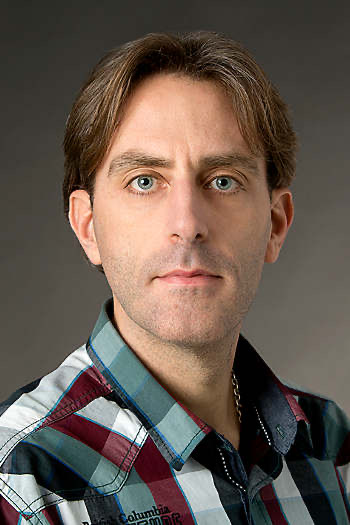 Hermann Kampermann合作论文数Institut für Theoretische Physik III, Heinrich-Heine-Universität Düsseldorf11
 Dagmar Bruß合作论文数Institut für Theoretische Physik III, Heinrich-Heine-Universität Düsseldorf9
 David Headley合作论文数Joint Quantum Ctr JQC Durham Newcastle, Univ Durham2
 Jochen Szangolies合作论文数Cologne2
 Michael Felderer合作论文数Institute of Computer Science, University of Innsbruck2D Bruss合作论文数2Malte Lochau合作论文数1B. Fauseweh合作论文数1Schuhmacher Peter K.合作论文数1
 Gary Schmiedinghoff合作论文数1Oliver Marty合作论文数1
 Elisabeth Lobe合作论文数1
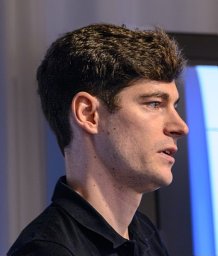 Benjamin Weder合作论文数Univ Stuttgart, Inst Architecture Applicat Syst, Univ Str 38, D-70569 Stuttgart, Germany1Tobias Stollenwerk合作论文数1
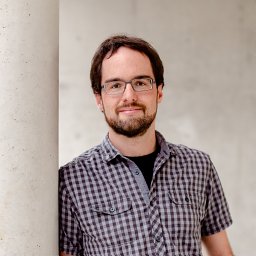 Alexander Weinert合作论文数German Aerosp Ctr DLR, Intelligent & Distributed Syst, Cologne, Germany1
 Melven Rohrig-Zollner合作论文数1
 Martin B Plenio合作论文数Institut für Theoretische Physik, Universitat Ulm1
 Tao Yue (岳涛)合作论文数School of Computer Science and Engineering, Beihang University1
 Norbert Lutkenhaus合作论文数Institute for Quantum Computing, University of Waterloo;Department of Physics & Astronomy, University of Waterloo;evolutionQ1
 Marcus Cramer合作论文数Institut fur Physik;Universitat Potsdam;Institut fur Physik, Universitat Potsdam1
 Filippo M. Miatto合作论文数Department of Physics;University of Strathclyde;Department of Physics, University of Strathclyde1
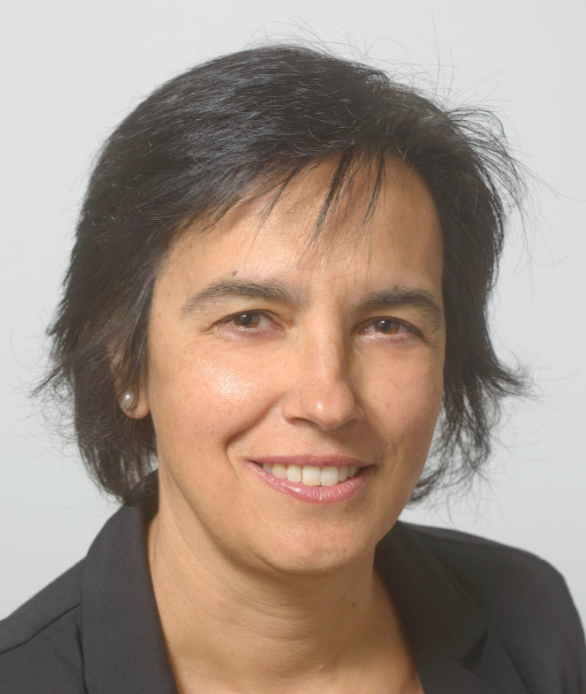 Chiara Macchiavello合作论文数University of Pavia1
 Fabio Palomba合作论文数Software Engineering Lab, Department of Computer Science, University of Salerno1
 Anton Trushechkin合作论文数Steklov Mathematical Institute;Russian Academy of Sciences;Steklov Mathematical Institute, Russian Academy of Sciences1
 Caslav Brukner合作论文数Faculty of Physics, Quantum Optics, Quantum Nanophysics and Quantum Information, University of Vienna;Institute for Quantum Optics and Quantum Information Vienna, Austrian Academy of Sciences1
 Achim Basermann合作论文数C&C Research Laboratories, NEC Europe Ltd.1
 Davide Taibi合作论文数Universita degli Studi dell'Insubria, Varese, Italy1




