We present the first global geospace simulation to reproduce auroral giant undulations (GUs). To identify their magnetospheric drivers, we employ the MAGE (Multiscale Atmosphere-Geospace Environment) model in a case study of a geomagnetic storm for which there were spacecraft- and ground-based observations of GUs. The model reproduces the spatial and temporal scales of the GUs as well as the presence of duskside subauroral polarization streams (SAPS) and plasmapause undulations. Based on our modeling, we are able to identify the magnetospheric drivers of GUs as mesoscale ring current injections which, after drifting westward, create inverted regions of flux-tube entropy (FTE) and subsequent interchange instability. Outward-protruding interchange fingers disrupt shielding of the inner magnetosphere, creating longitudinally-localized ripples in magnetospheric convection equatorward of the magnetospheric instability, which structure the plasmapause and duskside diffuse precipitation. While not causal, SAPS and plasmapause undulations are a consequence of the unstable magnetospheric configuration.
The fast Van Allen radiation belt electron dynamics during geomagnetic storms have not yet been fully explained, in part due to limitations of standard satellite missions in both orbit and the number of spacecraft. Here we overcome these limitations using measurements from the Global Positioning System (GPS) constellation during an acceleration event on 26 August 2018. We show that the acceleration of relativistic electrons occurs in two distinct bursts, each dominated by a different acceleration mechanism. The first burst enhances the radiation belt electrons by four orders of magnitude in 2 hr and is consistent with ULF-wave radial diffusion. The second burst is likely caused by the local acceleration and delivers an order-of-magnitude increase in 20 min. This work demonstrates how distributed, operational measurements can be used to resolve phenomena not observable with previous capabilities, and that rapid energization of the radiation belt can occur much faster than previously reported. In this paper, we present a detailed analysis of terrestrially-trapped electron space radiation during the August 2018 geomagnetic storm. This event is characterized by a very fast enhancement in the trapped electron population that increases particle counts by more than a factor of a thousand over only 6 hr. Such fast dynamics cannot be resolved by typical survey missions due to their long orbital periods. We instead use measurements from 20 satellites in the Global Positioning System (GPS) constellation, which allows us to perform an analysis of the space radiation dynamics on much shorter timescales. These GPS data reveal that the fast enhancement during the August 2018 storm occurred in two distinct bursts. By introducing a novel technique for GPS particle data analysis, we also determine that each of the bursts is governed by different physical processes that act on different timescales. The revealed fast dynamics of near-Earth trapped radiation point toward a need to reevaluate the classic paradigm that the changes in the radiation levels are slow and can be revealed by surveys with a low number of spacecraft. Indeed, we foresee a critical role for constellation measurements, such as from GPS, in the future of radiation belt science. Constellation measurements of the Van Allen radiation belt electrons can be used to reveal fast nonadiabatic changes at sub-orbit timescales Electron acceleration during the August 2018 storm consists of two distinct acceleration bursts governed by different physical processes ULF-wave radial diffusion and local acceleration can significantly alter radiation belt electron content on timescales of minutes to hours
We compared the performance of DREAM3D simulations in reproducing the long-term radiation belt dynamics observed by Van Allen Probes over the entire year of 2017 with various boundary conditions (BCs) and model inputs. Specifically, we investigated the effects of three different outer boundary conditions, two different low-energy boundary conditions for seed electrons, four different radial diffusion (RD) coefficients (DLL), four hiss wave models, and two chorus wave models from the literature. Using the outer boundary condition driven by GOES data, our benchmark simulation generally well reproduces the observed radiation belt dynamics inside L* = 6, with a better model performance at lower mu than higher mu, where mu is the first adiabatic invariant. By varying the boundary conditions and inputs, we find that: (a) The data-driven outer boundary condition is critical to the model performance, while adding in the data-driven seed population doesn't further improve the performance. (b) The model shows comparable performance with DLL from Brautigam and Albert (2000, ), Ozeke et al. (2014, ), and Liu et al. (2016, ), while with DLL from Ali et al. (2016, ) the model shows less RD compared to data. (c) The model performance is similar with data-based hiss models, but the results show faster loss is still needed inside the plasmasphere. (d) The model performs similarly with the two different chorus models, but better capturing the electron enhancement at higher mu using the Wang et al. (2019, ) model due to its stronger wave power, since local heating for higher energy electrons is under-reproduced in the current model. Relativistic electrons in the outer radiation belt are very dynamic involving various acceleration and loss processes under the influence of radial diffusion (RD), hiss, and chorus waves. The physical processes are regarded as diffusive in behavior. The DREAM3D code solves the Fokker-Plank equation to investigate the radiation belt dynamics in the aspect of the diffusive dynamics of electrons. A variety of empirical models and boundary conditions have been developed and included in the simulations in the literature. In this study, we compare the DREAM3D performance in reproducing the observed radiation belt dynamics with various empirical models of the RD coefficients, hiss and chorus wave, and boundary conditions. In conclusion, we find the data-driven outer boundary condition is very important to reproduce the observed radiation belt variations. For the RD coefficients, all DLL exhibit comparable performances while DLL from Ali et al. (2016, ) shows slower RD due to its smaller magnitude. All the hiss wave models lead to effective loss inside the plasmasphere, but stronger losses are needed. For the chorus wave models, the two models are comparable with a small difference in model performance due to the different levels of wave power. This work compares the performance of long-term radiation belt simulations using various inputs and boundary conditions Using GOES outer boundary condition, the benchmark simulations reproduce the radiation belt dynamics inside L* = 6 observed by Van Allen Probes The data-driven OB condition is critical to the model performance, and stronger loss inside the plasmasphere could improve the performance
Much of what we know about the solar wind’s interaction with the Earth’s magnetosphere has been gained from isolated in-situ measurements by single or multiple spacecraft. Based on their observations, we know that reconnection, whether on the dayside magnetopause or deep within the Earth’s magnetotail, controls the bulk flow of solar wind energy into and through the global system and that nightside activity provides the energized particles that power geomagnetic storms. But by their very nature these isolated in-situ measurements cannot provide an instantaneous global view of the entire system or its cross-scale dynamics. To fully quantify the dynamics of the coupled solar wind-magnetosphere requires comprehensive end-to-end global imaging of the key plasma structures that comprise the magnetosphere which have spatial resolutions that exceeds anything possible with multi-point or constellation situ measurements. Global, end-to-end, imaging provides the pathway to understanding the system as a whole, its constituent parts, and its cross-scale processes on a continuous basis, as needed to quantify the flow of solar wind energy through the global magnetospheric system. This paper describes how a comprehensively-instrumented single spacecraft in a high-altitude, high-inclination orbit coupled with ground-based instruments provides the essential observations needed to track and quantify the flow of solar wind energy through the magnetosphere. This includes observations of the solar wind plasma and magnetic field input, the magnetopause location in soft X-rays, the auroral oval in far ultraviolet, the ring current in energetic neutrals, the plasmasphere in extreme ultraviolet, the exosphere in Lyman-α, and the microstructure of the nightside auroral oval from ground-based all sky cameras.
Energetic particle fluxes that are part of the Earth's ring current and radiation belts can intensify significantly during space weather events like geomagnetic storms and could cause severe damage to satellite-based technologies. Understanding the physical processes that control their dynamics and improving our capability for their prediction is thus extremely important. In the context of space weather applications and user needs, this paper provides a brief description of our kinetic ring current-atmosphere interactions model with self-consistent magnetic field (RAM-SCB) and its further extension to implement a self-consistent electric (E) field. Specific examples that demonstrate RAM-SCB capabilities and limitations to reproduce the near-Earth space weather environment are given. The current status of RAM-SCB is assessed and plans for its further improvement are discussed.
Turbulent and compressed sheath regions preceding interplanetary coronal mass ejections strongly impact electron dynamics in the outer radiation belt. Changes in electron flux can occur on timescales of tens of minutes, which are unlikely to be captured by a two‐satellite mission. The recently released Global Positioning System (GPS) data set generally has shorter revisit times (at L ∼ 4–8) owing to the large number of satellites in the constellation equipped with energetic particle detectors. Investigating electron fluxes at energies from 140 keV to 4 MeV and sheaths observed in 2012–2018, we show that the flux response to sheaths on a timescale of 6 hr, previously reported from Van Allen Probes (RBSP) data, is reproduced by GPS measurements. Furthermore, GPS data enables derivation of the response on a timescale of 30 min, which further confirms that the energy and L ‐shell dependent changes in electron flux are associated with the impact of the sheath. Sheath‐driven loss is underestimated over longer timescales as the electrons recover during the ejecta. We additionally show the response of electron phase space density (PSD), which is a key quantity in identifying non‐adiabatic loss from the system and electron energization through wave‐particle interactions. The PSD response is calculated from both RBSP and GPS data for the 6 hr timescale, as well as from GPS data for the 30 min timescale. The response is divided based on the geoeffectiveness of the sheaths revealing that electrons are effectively accelerated only during geoeffective sheaths, while loss commonly occurs during all sheaths.
The auroral streamer is a type of auroral form commonly observed during geomagnetic substorms. Previous studies suggested a coupling between auroral streamers and channels of bursty bulk flows in the plasma sheet. However, whether one flow channel can map to multiple streamers is unclear. Here, we present an event containing consecutive auroral streamer subevents. The event features similar spatial and temporal development of auroral streamers in conjugate hemispheres. In most of the subevents, we observed that what an in‐space auroral camera saw as one streamer actually consisted of multiple streamers (i.e., a streamer bundle). A coordinated analysis of near‐earth injections and ionospheric currents suggests that one overall flow channel (or bubble) can map to a streamer bundle. Multiple streamer bundles and thus multiple overall flow channels can occur simultaneously at different local times. Evidence supports that the overall flow channel may consist of or split into several narrower flow channels and each maps to a streamer and causes a particle injection.
The cold particle populations (with energy less than ~100 eV) of the Earth's magnetosphere are sparsely measured and very poorly understood but play critical roles in the dynamics of the magnetosphere-ionosphere-thermosphere system, both locally and globally.A research plan combining the development of new measurement techniques, data analysis, and theory and modeling, culminating with a dedicated space mission, is necessary to definitively understand the cold particle populations and should be one of the focuses of the next decade.Without such understanding, the magnetosphere-ionosphere system cannot be fully understood.
Spacecraft charging is a major topic of space-weather research since charging can lead to spacecraft anomalies, ranging from inconsequential to catastrophic. Spacecraft surface charging calculations use sophisticated numerical codes and are typically performed with a direct (forward) approach: the local properties of the space environment, the spacecraft geometry, and the spacecraft material properties are the input, while the electric field on and around the spacecraft and the corresponding plasma particle distributions are the output. This approach can be limited or highly inaccurate when some of the critical input parameters are either unknown or have large uncertainties. For instance, the Van Allen Probes spacecraft, also known as RBSP, is an example of a modern spacecraft with state-of-the-art measurements. Predicting the RBSP spacecraft potential requires knowledge of the cold and warm plasma populations which dominate surface charging. However, the cold plasma properties (particularly temperature) are not well characterized. In addition, the material properties are known from measurements in laboratory "clean" conditions but how materials age in space due to their interaction with the environment is not well understood. To mitigate these limitations, we developed an inverse approach to use available spacecraft-charging data to infer some of the unknown properties of the space environment around the spacecraft and spacecraft material degradation. Our inversion is composed of an ensemble of constrained optimization solutions that provide an estimate of the parameter values of interest. Our approach is validated with an analytical model of spacecraft charging, based on the orbital-motion-limited theory, together with a quasi-Newton optimization method. Our results show convergence and the ability to estimate the correct parameters in synthetic observation experiments.
In this paper we present PARAGON, a mission concept that provides predictive understanding of geomagnetic disturbances at systems level, by connecting global evolution to mesoscale dynamics and kinetic-scale effects.PARAGON introduces a paradigm shift in the way we observe geospace by utilizing coordinated: i) unprecedented spatial and temporal resolution imaging of the ring current, near-Earth plasma sheet, aurora, and plasmasphere and ii) in-situ plasma, energetic particles and magnetic field measurements, from different platforms, in order to discover, quantify and understand the global impact of mesoscale processes in the development of major geomagnetic disturbances.Since the beginning of the space age, we have ventured extensively into Earth's immediate surroundings, and have learned how geospace is a coupled system of systems, including the magnetosphere, the ionosphere and the upper atmosphere in which the ionosphere is embedded.Just like terrestrial weather disturbances, such as cyclones, evolve as a collection of processes at different spatial and temporal scales in the atmosphere, so too do geomagnetic storms transfer energy, mass, and momentum throughout geospace at local, mesoscale, and global scales.Multiple missions over the years have targeted either the local or global nature of geospace with in-situ probes or global imaging, respectively.However, understanding geomagnetic disturbances to the level of predictability remains elusive, because we still do not understand the bridge between the local and global geospace, that is, the mesoscale (1000 km to few R E in the magnetotail, ~10s-100s km in the ionosphere) processes and their global implications.PARAGON will determine under what conditions mesoscale processes in the coupled Magnetosphere-Ionosphere (M-I) system become geoeffective, by observing the global system in mesoscale resolution.PARAGON addresses fundamental questions about mesoscale processes that are observed throughout the solar system, from the fast rotating magnetospheres of Jupiter and Saturn to the supra-arcade downflows in the eruptive solar flares.Earth's accessible space environment provides the perfect laboratory for these processes to be explored in detail.With the outstanding question of the global impact of mesoscale processes still being at the forefront of magnetospheric physics, and considering the technological advancements over the last decade, PARAGON can and should be of the highestpriority for implementation in the upcoming decade.
Much of what we know about the solar wind's interaction with the Earth's magnetosphere has been gained from isolated in situ measurements by single or multiple spacecraft.Based on their observations, we know that reconnection, whether on the dayside magnetopause or deep within the Earth's magnetotail, controls the flow of solar wind energy into and through the global system.We know that nightside activity provides the energized particles that power geomagnetic storms.But by their very nature these isolated in situ measurements cannot provide an instantaneous global view of the entire system or its cross-scale dynamics.As a result, we don't know which mode of reconnection prevails on the dayside magnetopause or within the magnetotail as a function of solar wind and geomagnetic conditions.We don't know which mode or modes of nightside activity supply the most energized particles to the ring current.Nor do we know the dominant loss mode for ring current decay: precipitation, magnetopause outflow, or charge exchange with neutrals.Nor do we know how processes deep within the magnetosphere provide feedback to those happening in the outer magnetosphere.The answers to these questions have an impact far beyond magnetospheric physics, as magnetic reconnection, particle acceleration, and charge-exchange are fundamental plasma processes that operate at other planets and throughout the universe.Comprehensive end-to-end global imaging of the key micro, meso-, and macro-scale plasma structures that comprise the magnetosphere will provide the answers to these questions via observations with a spatial resolution that exceeds anything possible with in situ measurements.Each proposed interaction mechanism generates a diagnostic plasma structure or boundary signature.Global, end-to-end, imaging provides the pathway to understanding the system as a whole, its constituent parts, and its cross-scale processes on a continuous basis, as needed to quantify the flow of solar wind energy through the global magnetospheric system.The significance of each mechanism is the product of its amplitude and occurrence rate.This white paper describes how a comprehensively-instrumented single spacecraft in a highlatitude circular polar orbit provides the essential observations needed to track and quantify the flow of solar wind energy through the magnetosphere, including the solar wind plasma and magnetic field input, the magnetopause location in soft X-rays, the auroral oval in far ultraviolet, the ring current in energetic neutrals, the plasmasphere in extreme ultraviolet, the exosphere in Lyman-, the microstructure of the nightside auroral oval in ground-based all sky cameras, and the magnetic perturbations of ionospheric current patterns seen by ground-based magnetometers. Imaging the End-to-End Dynamics of the Global Solar Wind-Magnetosphere Interaction
In this study we investigate the role of particle injections on the ring current development during the 7-8 September 2017 geomagnetic storm by applying a temporally and spatially varying data-driven outer boundary condition in numerical simulations of the ring current with the Comprehensive Inner Magnetosphere-Ionosphere model. We quantify the role of particle injections by comparing the results from two simulation runs: one with the model outer boundary condition defined by measurements at their original time cadence, namely, 1.5 min, and one with the same boundary condition smoothed in time with a 2-h running average window. The comparison between these two runs reveals that the observed particle injections enhanced the electric field remarkably, which had a significant effect on the ring current development, namely, they 1) strengthened the ring current, 2) skewed the ring current distribution dawnward, 3) delayed the formation of the symmetric ring current by prolonging the duration of the partial ring current, and 4) caused a O+-richer ring current with a O+ dominant ring current distribution at the inner edge. Furthermore, these effects enhanced the energy deposition to the plasmasphere and ionosphere via heating by the ring current ions.
<p>Turbulent and compressed sheath regions ahead of interplanetary coronal mass ejections are key drivers of dramatic changes in the electron fluxes in the Earth&#8217;s outer radiation belt. They are also associated with elevated wave activity in the inner magnetosphere. These changes in electron fluxes can occur on timescales of tens of minutes that are not readily captured by a two-satellite mission such as the Van Allen Probes due to long revisit times. The recently released Global Positioning System (GPS) data set, on the other hand, provides a larger number of measurements at a given location within a given amount of time, owing to the many satellites in the constellation. In our statistical study on the impact of sheath regions on the outer radiation belt, we investigated events in 2012-2018 at timescales of 6 hours (Van Allen Probes data) and 30 minutes (GPS data). The study showed that the flux response to sheaths as reported from Van Allen Probes observations is reproduced by GPS data. &#160;We highlight that the shorter timescale allowed by GPS data further confirms that the energy and L-shell dependent flux changes are associated with the sheaths rather than the following ejecta. Additionally, we studied the electron phase space density, which is a key quantity for identifying non-adiabatic electron dynamics. This showed that electrons are effectively accelerated only during geoeffective sheaths (SYM-H < -30 nT). Outer belt losses are common for all sheaths, and the lost electrons are replenished during the early ejecta.</p>
Exospheric tomography is a computational 3-D imaging technique that provides the estimates of the neutral density distributions of the terrestrial exosphere from space-based ultraviolet (UV) measurements. Variability of neutral densities during geomagnetically active conditions has been previously reported, motivating the development of time-dependent tomographic techniques that can characterize both the spatial and temporal scales of densities during these events. However, solving the dynamic exospheric tomography problem can be challenging owing to its ill-posedness. In this letter, we introduce a novel algorithm for 4-D exospheric tomography based on optimal interpolation (OI) and Gaussian Markov random field (GMRF) theory. The OI analysis enables iterative reconstructions of the exosphere when a statistical background field is provided. Its mean is selected from previous knowledge of the exosphere, and its covariance matrix is estimated using GMRF. To validate the performance, we apply our proposed methodology to six days of UV data acquired by National Aeronautics and Space Administration (NASA) two-wide angle imaging neutral-atom spectrometer (TWINS) mission during the geomagnetic storm that occurred on June 15, 2008.
Much of our knowledge of the composition of plasma in space comes from decades-old measurements.Due to a multitude of factors, ranging from changes in the funding landscape to shifting community perspectives of the necessity of various in situ measurements, the mass spectrometers of the 1970s, 1980s, and 1990s outperformed most contemporary instruments.Significant advances in technology over the last several decades, including both digitization and hardware miniaturization, enable more sophisticated mass spectrometers in smaller design packages than ever before.However, most mass spectrometers flown today do not push the limits of mass spectrometry; for example, most on-orbit instruments cannot distinguish between nitrogen and oxygen by design.This is not a failure of the community; we have simply been focused on other exciting science goals.However, the dearth of modern composition measurements in space and our poor understanding of differences in plasma processes driven by different heavy ions inhibit our ability to predict and characterize natural and man-made events in the near-Earth space environment.Looking to the future, we propose a community goal of characterizing the full complement of plasma species (composition and charge state) within the Solar Wind/Magnetosphere/Ionosphere (SW/I/M) system to understand how these populations interact with one another and impact the system as a whole.We encourage extensive use of advanced in situ and remote-sensing measurements in combination with theory and modeling in order to fully understand the impacts and feedback of plasma composition on the structure and evolution of the coupled SW/I/M system.
Geomagnetic substorms are associated with characteristic energetic particle injection signatures at geosynchronous orbit that are often dispersionless in both electrons and ions near the magnetic local time sector of auroral onset locations and are dispersed farther away from this region. Although the precise mechanism responsible for the coherent injection signatures at geosynchronous orbit have been the topic on considerable ongoing debate for decades, recent work on bursty bulk flows (BBFs) in the tail have led to the hypothesis that they may be the result of multiple, overlapping flow bursts penetrating into the inner magnetosphere from more distant downtail reconnection sites. Since auroral streamers are thought to be ionospheric signatures of BBFs in the tail, they can be used as proxies for testing this hypothesis. Using high resolution auroral imagery from the POLAR/VIS instrument combined with multi-spacecraft observations of energetic particle injections at geosynchronous orbit, we examine the association of mesoscale auroral structures with particle injection signatures over many hours during the 9 November 1998 storm. We find that the explosive types of auroral activations, such as pseudo-breakups and substorm onset breakups, are associated with the more intense and well-defined dispersed injection signatures, while intervals of isolated streamer activity appear to be associated with smaller dispersed "injectionlet" signatures. Furthermore, intervals of sustained, intense, and late expansion phase/recovery phase streamer activity appear to be associated with sustained elevated dispersed particle fluxes. These results are consistent with the hypothesis that it is the overlapping effects of sustained, intense multiple flow bursts penetrating toward the Earth that result in classical substorm particle injection signatures at geosynchronous orbit. However, it is also suggested that torches/omega-band tongues are the prime fate of braking isolated flow bursts (streamers) rather than the development of breakups, bulges, and substorm current wedge formation. A statistical analysis is presented showing that 93% of the observed torches evolved from streamers, 93% of streamers arriving in the equatorward regions of the bulge led to torches, 10.5% of such streamers led to breakups (either pseudo-breakups or substorm onsets), and only 3.5% of such streamers led to substorm onsets.
 Geoff Reeves合作论文数Los Alamos National Laboratory;Space Sciences Division, The New Mexico Consortium107
 Michelle F. Thomsen合作论文数Planetary Science Institute58
 Ruth M Skoug合作论文数40
 Michael H Denton合作论文数36
 R. H. W. Friedel合作论文数Space Science and Applications, Los Alamos National Laboratory34J.-M. Jahn合作论文数Department of Physics & Astronomy, Dartmouth College32
 Harlan Spence合作论文数Institute for the Study of Earth, Oceans, and Space, University of New Hampshire32
 Steve Morley合作论文数Los Alamos National Laboratory31
 J. B. Blake合作论文数28
 Daniel N. Baker合作论文数Laboratory for Atmospheric and Space Physics, College of Engineering and Applied Science, University of Colorado Boulder27
 Vania Jordanova合作论文数ISR-1, Los Alamos National Laboratory27
 Joseph F. Fennell合作论文数25
 Craig Kletzing合作论文数University of Iowa23
 Pontus Brandt合作论文数Applied Physics Laboratory, The Johns Hopkins University22
 Gregory S. Cunningham合作论文数Los Alamos National Laboratory21
 Seth Claudepierre合作论文数Accenture20
 Brian A. Larsen合作论文数19
 Drew L. Turner合作论文数Johns Hopkins University Applied Physics Laboratory18
 William S. Kurth合作论文数Department of Physics and Astronomy, College of Liberal Arts and Sciences, The University of Iowa18
 E. Donovan合作论文数Department of Physics and Astronomy, University of Calgary18
 Craig Pollock合作论文数Denali Scientific18S. B. Mende合作论文数16
 Vassilis Angelopoulos合作论文数Department of Earth, Planetary, and Space Sciences, College of Physical Sciences, University of California, Los Angeles;Institute of Geophysics and Planetary Physics, University of California, Los Angeles15Shrikanth G Kanekal合作论文数15
 Herbert Funsten合作论文数Los Alamos National Laboratory15
 R. L. Tokar合作论文数15H. J. Singer合作论文数14
 Thomas Jerome Immel合作论文数Space Sciences Laboratory, University of California Berkeley13
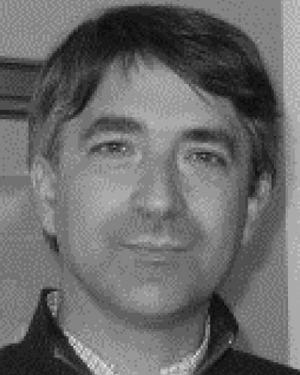 Gian Luca Delzanno合作论文数Los Alamos National Laboratory13
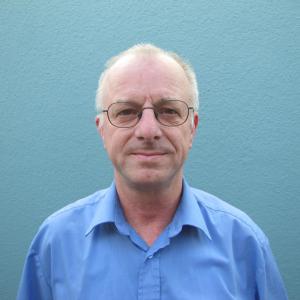 Harald Frey合作论文数Space Sciences Laboratory, Berkeley Institute for Data Science, University of California12
 Joseph E. Borovsky合作论文数Atmospheric Sciences Group, Los Alamos National Laboratory12A. T. Y. Lui合作论文数11
 Humberto C. Godinez合作论文数Department of Mathematics and Statistics, Portland State University11
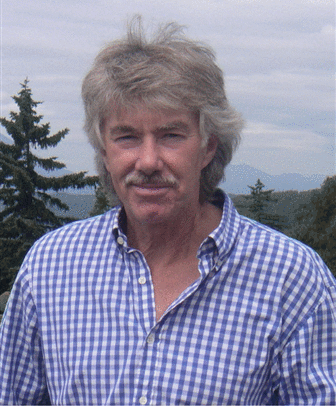 Richard M. Thorne合作论文数Department of Atmospheric and Oceanic Sciences, University of California, Los Angeles10Richard D. Belian合作论文数10
 George Hospodarsky合作论文数College of Liberal Arts and Sciences, University of Iowa10
 Jesse R. Woodroffe合作论文数9
 Allison N. Jaynes合作论文数Laboratory for Atmospheric and Space Physics, University of Colorado9
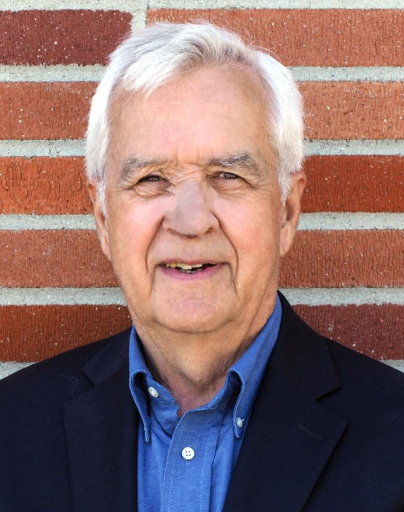 Robert McPherron合作论文数Department of Earth, Planetary, and Space Sciences, College of Physical Sciences, University of California, Los Angeles9J. S. Murphree合作论文数9Weichao Tu合作论文数9H. J. Mcandrews合作论文数9
 John Wygant合作论文数School of Physics and Astronomy, College of Science and Engineering, University of Minnesota9Jean-François Ripoll合作论文数9Larry Kepko合作论文数Center for Space Physics, Boston University9
 Xinlin Li合作论文数Laboratory for Atmospheric and Space Physics, University of Colorado Boulder;Department of Ann and H.J. Smead Aerospace Engineering Sciences, College of Engineering & Applied Science, University of Colorado Boulder9V. Loridan合作论文数8J. Goldstein合作论文数Southwest Research Institute;San;Southwest Research Institute8
 Mei-Ching Fok合作论文数8




