The construct of interpersonal forgiveness is operationalized and tested with 197 college students and 197 of their same-gender parents in the Midwestern United States. The Enright Forgiveness Inventory (EFI) showed strong internal consistency reliability. The EFI correlates significantly and negatively with anxiety particularly when a person is experiencing deep hurt in a developmentally relevant area. Age differences also were observed. Particularly when the hurt concerns a developmentally relevant area, college students are less forgiving and have more anxiety than their same-gender parents. The EFI thus appears to have sound psychometric properties.
Hierarchical Bayes procedures for the two-parameter logistic item response model were compared for estimating item and ability parameters. Simulated data sets were analyzed via two joint and two marginal Bayesian estimation procedures. The marginal Bayesian estimation procedures yielded consistently smaller root mean square differences than the joint Bayesian estimation procedures for item and ability estimates. As the sample size and test length increased, the four Bayes procedures yielded essentially the same result.
Detection of differential item functioning (DIF) on items intentionally constructed to favor one group over another was investigated on item parameter estimates obtained from two item response theory‐based computer programs, LOGIST and BILOG. Signed‐ and unsigned‐area measures based on joint maximum likelihood estimation, marginal maximum likelihood estimation, and two marginal maximum a posteriori estimation procedures were compared with each other to determine whether detection of DIF could be improved using prior distributions. Results indicated that item parameter estimates obtained using either prior condition were less deviant than when priors were not used. Differences in detection of DIF appeared to be related to item parameter estimation condition and to some extent to sample size.
Under the minimum logit chi‐square item parameter estimation procedure, observed proportions of correct response of zero or unity result in infinite logits and estimates cannot be obtained. The paper examines the application of three rules (l/2n, l/4n and elimination) for dealing with such cases. A simulation study is conducted in which sample size, number of grouping intervals, underlying item discrimination and difficulty are varied. The outcome variables are the square of the difference between the estimates and the underlying parameter values for item discrimination and difficulty. The results indicate that a complex set of interactions exist among the factors employed in the study. Overall, the 1/4n rule is preferred over the other two rules as it generally yields the smallest RMSE for both item discrimination and difficulty. However, as sample size increases the differences among the three rules decreased.
Under the minimum logit chi-square item parameter estimation procedure, observed proportions of correct response of zero or unity result in infinite logits and estimates cannot be obtained. The paper examines the application of three rules (l/2n, l/4n and elimination) for dealing with such cases. A simulation study is conducted in which sample size, number of grouping intervals, underlying item discrimination and difficulty are varied. The outcome variables are the square of the difference between the estimates and the underlying parameter values for item discrimination and difficulty. The results indicate that a complex set of interactions exist among the factors employed in the study. Overall, the 1/4 n rule is preferred over the other two rules as it generally yields the smallest RMSE for both item discrimination and difficulty. However, as sample size increases the differences among the three rules decreased.
From the perspective of teachers and test makers at the district or state level, current methods for obtaining reliability indices for mastery tests like the agreement coefficient and kappa coefficient are quite laborious. For example, some methods require two test administrations, whereas single administration approaches involve complex statistical procedures and require access to appropriate computer software. The present paper offers practitioners tables from which agreement and kappa coefficients can be read directly. Further‐more, because these indices differ from traditional reliability coefficients, the issue of what constitutes acceptable values of agreement and kappa coefficients is also addressed
This study examined three statistical methods for selecting items for mastery tests. One is the pretest-posttest method due to Cox and Vargas (1966); it is computationally simple, but has a number of serious limitations. The second is a latent trait method recommended by van der Linden (1981); it is computationally complex, but has a number of theoretical advantages. The third method, proposed herein, parallels the latent trait method in many respects; but it is computationally simple, like the pretest-posttest procedure. A number of distinct data sets were simulated; and the three item selection methods were applied to each data set for the purpose of studying relationships among the methods. The correlation between the latent trait method and the one proposed herein was substantial, suggesting that the latter might be recommended as a practical alternative to the former. The results for the pretest-posttest method tended to confirm its reputed limitations.
From a practitioner's nerspective, current methods of obtaining reliability coefficients for mastery tests are quite laborious. For example, some methods demand two test administrations; while others require access to computer facilities and/or involve advanced measurement and statistical procedures. Thus, the present paper provides tables from which practitioners can read such reliability coefficients directly. The method used to construct the tables is reviewed; and comments on the accuracy of the tabled values are
Biased test items were intentionally imbedded within a set of test items, and the resulting instrument was administered to large samples of blacks and whites. Three popular item bias detection procedures were then applied to the data: (1) the three‐parameter item characteristic curve procedure, (2) the chi‐square method, and (3) the transformed item difficulty approach. The three‐parameter item characteristic curve procedure proved most effective at detecting the intentionally biased test items; and the chi‐square method was viewed as the best alternative. The transformed item difficulty approach has certain limitations yet represents a practical alternative if sample size, lack of computer facilities, or the like preclude the use of the other two procedures.
The recently developed log-linear model procedures are applied to three types of data aris ing in a measurement context. First, because of the historical intersection of survey methods and test norming, the log-linear model approach should have direct utility in the analysis of norm-refer enced test results. Several different schemes for analyzing the homogeneity of test score distribu tions are presented that provide a finer analysis of such data than was previously available. Second, the analysis of a contingency table resulting from the cross-classification of students on the basis of criterion-referenced test results and instructionally related variables is presented. Third, the intersec tion of log-linear models and item parameter esti mation procedures under latent trait theory are shown. The illustrative examples in each of these areas suggest that log-linear models can be a versa tile and useful data analysis technique in a mea surement context.
Journal of Educational MeasurementVolume 17, Issue 4 p. 359-368 A NOTE ON HUYNH'S NORMAL APPROXIMATION PROCEDURE FOR ESTIMATING CRITERION-REFERENCED RELIABILITY CHAO-YING J. PENG, Corresponding Author CHAO-YING J. PENG University of Iowa PENG, CHAO-YING. Address: Division of Educational Psychology, Measurement and Statistics, University of Iowa, 371 Lindquist Center, Iowa City, Iowa 52242. Title: Assistant Professor. Degrees: B.S. National Taiwan University, M.S., Ph.D. University of Wisconsin. Specialization: Measurement and Applied Statistics. SUBKOVIAK, MICHAEL. Address: Department of Educational Psychology, University of Wisconsin, 1025 W. Johnson St., Madison, Wisconsin 53706. Title: Professor. Degrees: B.S. Canisius College, M.S., Ph.D. State University of New York at Buffalo. Specialization: Psychometric Theory.Search for more papers by this authorMICHAEL J. SUBKOVIAK, Corresponding Author MICHAEL J. SUBKOVIAK University of Wisconsin PENG, CHAO-YING. Address: Division of Educational Psychology, Measurement and Statistics, University of Iowa, 371 Lindquist Center, Iowa City, Iowa 52242. Title: Assistant Professor. Degrees: B.S. National Taiwan University, M.S., Ph.D. University of Wisconsin. Specialization: Measurement and Applied Statistics. SUBKOVIAK, MICHAEL. Address: Department of Educational Psychology, University of Wisconsin, 1025 W. Johnson St., Madison, Wisconsin 53706. Title: Professor. Degrees: B.S. Canisius College, M.S., Ph.D. State University of New York at Buffalo. Specialization: Psychometric Theory.Search for more papers by this author CHAO-YING J. PENG, Corresponding Author CHAO-YING J. PENG University of Iowa PENG, CHAO-YING. Address: Division of Educational Psychology, Measurement and Statistics, University of Iowa, 371 Lindquist Center, Iowa City, Iowa 52242. Title: Assistant Professor. Degrees: B.S. National Taiwan University, M.S., Ph.D. University of Wisconsin. Specialization: Measurement and Applied Statistics. SUBKOVIAK, MICHAEL. Address: Department of Educational Psychology, University of Wisconsin, 1025 W. Johnson St., Madison, Wisconsin 53706. Title: Professor. Degrees: B.S. Canisius College, M.S., Ph.D. State University of New York at Buffalo. Specialization: Psychometric Theory.Search for more papers by this authorMICHAEL J. SUBKOVIAK, Corresponding Author MICHAEL J. SUBKOVIAK University of Wisconsin PENG, CHAO-YING. Address: Division of Educational Psychology, Measurement and Statistics, University of Iowa, 371 Lindquist Center, Iowa City, Iowa 52242. Title: Assistant Professor. Degrees: B.S. National Taiwan University, M.S., Ph.D. University of Wisconsin. Specialization: Measurement and Applied Statistics. SUBKOVIAK, MICHAEL. Address: Department of Educational Psychology, University of Wisconsin, 1025 W. Johnson St., Madison, Wisconsin 53706. Title: Professor. Degrees: B.S. Canisius College, M.S., Ph.D. State University of New York at Buffalo. Specialization: Psychometric Theory.Search for more papers by this author First published: December 1980 https://doi.org/10.1111/j.1745-3984.1980.tb00837.xCitations: 16 Equal authorship is implied. Also the assistance of Dr. Gouri K. Bhattacharyya is gratefully acknowledged. AboutPDF ToolsRequest permissionExport citationAdd to favoritesTrack citation ShareShare Give accessShare full text accessShare full-text accessPlease review our Terms and Conditions of Use and check box below to share full-text version of article.I have read and accept the Wiley Online Library Terms and Conditions of UseShareable LinkUse the link below to share a full-text version of this article with your friends and colleagues. Learn more.Copy URL Share a linkShare onFacebookTwitterLinked InRedditWechat Citing Literature Volume17, Issue4December 1980Pages 359-368 RelatedInformation
Journal of Educational MeasurementVolume 16, Issue 4 p. 209-225 A COMPARISON OF SEVERAL METHODS OF ASSESSING ITEM BIAS GAIL H. IRONSON, Corresponding Author GAIL H. IRONSON Bowling Green State University Department of Psychology, University of South Florida, Tampa, Florida 33620. Title: Assistant Professor. Degrees: B.S. State University of New York at Stonybrook, M.S., Ph.D. University of Wisconsin. Specialization: Measurement Theory and Practice. Department of Educational Psychology, University of Wisconsin, 1025 W. Johnson Street, Madison, Wisconsin 53706. Title: Associate Professor and Director of Testing and Evaluation. Degrees: B.S. Canisius College, M.S., Ph.D. State University of New York at Buffalo. Specialization: Psychometric Theory.Search for more papers by this authorMICHAEL J. SUBKOVIAK, Corresponding Author MICHAEL J. SUBKOVIAK University of Wisconsin Department of Psychology, University of South Florida, Tampa, Florida 33620. Title: Assistant Professor. Degrees: B.S. State University of New York at Stonybrook, M.S., Ph.D. University of Wisconsin. Specialization: Measurement Theory and Practice. Department of Educational Psychology, University of Wisconsin, 1025 W. Johnson Street, Madison, Wisconsin 53706. Title: Associate Professor and Director of Testing and Evaluation. Degrees: B.S. Canisius College, M.S., Ph.D. State University of New York at Buffalo. Specialization: Psychometric Theory.Search for more papers by this author GAIL H. IRONSON, Corresponding Author GAIL H. IRONSON Bowling Green State University Department of Psychology, University of South Florida, Tampa, Florida 33620. Title: Assistant Professor. Degrees: B.S. State University of New York at Stonybrook, M.S., Ph.D. University of Wisconsin. Specialization: Measurement Theory and Practice. Department of Educational Psychology, University of Wisconsin, 1025 W. Johnson Street, Madison, Wisconsin 53706. Title: Associate Professor and Director of Testing and Evaluation. Degrees: B.S. Canisius College, M.S., Ph.D. State University of New York at Buffalo. Specialization: Psychometric Theory.Search for more papers by this authorMICHAEL J. SUBKOVIAK, Corresponding Author MICHAEL J. SUBKOVIAK University of Wisconsin Department of Psychology, University of South Florida, Tampa, Florida 33620. Title: Assistant Professor. Degrees: B.S. State University of New York at Stonybrook, M.S., Ph.D. University of Wisconsin. Specialization: Measurement Theory and Practice. Department of Educational Psychology, University of Wisconsin, 1025 W. Johnson Street, Madison, Wisconsin 53706. Title: Associate Professor and Director of Testing and Evaluation. Degrees: B.S. Canisius College, M.S., Ph.D. State University of New York at Buffalo. Specialization: Psychometric Theory.Search for more papers by this author First published: December 1979 https://doi.org/10.1111/j.1745-3984.1979.tb00103.xCitations: 61 Much of the work reported here is based upon a doctoral dissertation written at the University of Wisconsin by the first author, under the direction of the second author. Special thanks are expressed to Robert Brennan for his comments on an earlier draft and to Barbara Vogel for technical assistance. Requests for reprints should be sent to the senior author who is now at the Psychology Department, University of South Florida, Tampa, Florida 33620. AboutPDF ToolsRequest permissionExport citationAdd to favoritesTrack citation ShareShare Give accessShare full text accessShare full-text accessPlease review our Terms and Conditions of Use and check box below to share full-text version of article.I have read and accept the Wiley Online Library Terms and Conditions of UseShareable LinkUse the link below to share a full-text version of this article with your friends and colleagues. Learn more.Copy URL Share a linkShare onFacebookTwitterLinkedInRedditWechat Citing Literature Volume16, Issue4December 1979Pages 209-225 RelatedInformation
Journal of Educational MeasurementVolume 15, Issue 2 p. 111-116 EMPIRICAL INVESTIGATION OF PROCEDURES FOR ESTIMATING RELIABILITY FOR MASTERY TESTS MICHAEL J. SUBKOVIAK, Corresponding Author MICHAEL J. SUBKOVIAK University of WisconsinSUBKOVIAK, MICHAEL J. Address: Department of Educational Psychology, University of Wisconsin, 1025 West Johnson Street, Madison, WI 53706. Title: Associate Professor. Degrees: B.S. Canisius College, M.A., Ph.D. State University of New York at Buffalo. Specialization: Psychometric Theory.Search for more papers by this author MICHAEL J. SUBKOVIAK, Corresponding Author MICHAEL J. SUBKOVIAK University of WisconsinSUBKOVIAK, MICHAEL J. Address: Department of Educational Psychology, University of Wisconsin, 1025 West Johnson Street, Madison, WI 53706. Title: Associate Professor. Degrees: B.S. Canisius College, M.A., Ph.D. State University of New York at Buffalo. Specialization: Psychometric Theory.Search for more papers by this author First published: June 1978 https://doi.org/10.1111/j.1745-3984.1978.tb00062.xCitations: 25 This research was made possible by Grant No. NIE-G-76–0088 from the National Institute of Education. Gary Marco of the College Entrance Examination Board and Educational Testing Service provided the data used in this study, while Barbara Albrecht and Carl Voelz helped with the analyses. The assistance of each is gratefully acknowledged. AboutPDF ToolsRequest permissionExport citationAdd to favoritesTrack citation ShareShare Give accessShare full text accessShare full-text accessPlease review our Terms and Conditions of Use and check box below to share full-text version of article.I have read and accept the Wiley Online Library Terms and Conditions of UseShareable LinkUse the link below to share a full-text version of this article with your friends and colleagues. Learn more.Copy URL Share a linkShare onEmailFacebookTwitterLinkedInRedditWechat REFERENCES ALGINA, J., & NOE, M. J. An investigation of Subkoviak's single-administration reliability estimate for criterion-referenced tests. Paper presented at the annual meeting of the American Educational Research Association, New York City, 1977. Google Scholar HAMBLETON, R. K., & NOVICK, M. R. Toward an integration of theory and method for criterion-referenced tests. Journal of Educational Measurement, 1973, 10, 159–170. 10.1111/j.1745-3984.1973.tb00793.x Web of Science®Google Scholar HUYNH, H. On the reliability of decisions in domain-referenced testing. Journal of Educational Measurement, 1976, 13, 253–264. 10.1111/j.1745-3984.1976.tb00016.x Web of Science®Google Scholar HUYNH, H. Reliability of criterion-referenced tests: Comments on a paper by Subkoviak. Unpublished manuscript, University of South Carolina, 1977. Google Scholar La VALLE, I. H. An introduction to probability, decision, and inference. New York : Holt, Rinehart and Winston, 1970. Google Scholar MARSHALL, J. L., & HAERTEL, E. H. The mean split-half coefficient of agreement: A single administration index of reliability for mastery tests. Unpublished manuscript, University of Wisconsin, 1976. Google Scholar SUBKOVIAK, M. J. Estimating reliability from a single administration of a criterion-referenced test. Journal of Educational Measurement, 1976, 13, 265–76. 10.1111/j.1745-3984.1976.tb00017.x Web of Science®Google Scholar SUBKOVIAK, M. J. Further comments on reliability for mastery tests (Laboratory of Experimental Design, Occasional Paper No. 17). Unpublished manuscript, University of Wisconsin, 1977. Google Scholar SWAMINATHAN, H., HAMBLETON, R. K., & ALGINA, J. Reliability of criterion-referenced tests: A decision-theoretic formulation. Journal of Educational Measurement. 1974, 11, 263–267. 10.1111/j.1745-3984.1974.tb00998.x Web of Science®Google Scholar SWAMINATHAN, H., HAMBLETON, R. K., & ALGINA, J. A Bayesian decision-theoretic procedure for use with criterion-referenced tests. Journal of Educational Measurement, 1975, 12, 87–98. 10.1111/j.1745-3984.1975.tb01011.x Web of Science®Google Scholar Citing Literature Volume15, Issue2June 1978Pages 111-116 ReferencesRelatedInformation
 Frank B. Baker合作论文数6alan l roecks合作论文数3JR LEVIN合作论文数2
 Robert Enright合作论文数Department of Educational Psychology, School of Education, University of Wisconsin-Madison2Seock-Ho Kim合作论文数2
 Allan S. Cohen合作论文数Department of Kinesiology, University of Wisconsin, Madison2
 Elizabeth Gassin合作论文数2
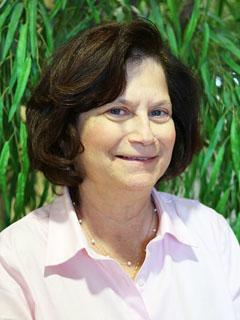 Gail H. Ironson合作论文数Department of Psychology, University of Miami2Joel R Levin合作论文数Department of Educational Psychology, College of Education, The University of Arizona2Donna Rae Clasen合作论文数2Henry S. Lufler合作论文数2
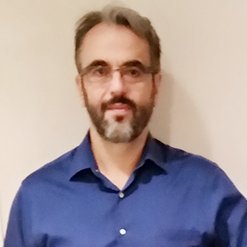 Issidoros Sarinopoulos合作论文数Michigan Publ Hlth Inst1
 Tom Leonard合作论文数UC Berkeley School of Journalismc1Tae-Je Seong合作论文数1Joel R. Levin合作论文数1
 Lawrence J. Hubert合作论文数Department of Psychology, University of Illinois at Urbana-Champaign1Michael W. Apple合作论文数1Frank B Baker合作论文数1Gary A. Davis合作论文数1Ching-Ru Wu合作论文数1
 Leanne Olson合作论文数1
 Suzanne Freedman合作论文数University of Delaware1Elizabeth S. Ghatala合作论文数1




