The long-time state of a non-Hermitian system is determined by the eigenvalue with the largest imaginary part. In interacting many-body systems this eigenvalue usually cannot be tracked analytically, and the character of the state it selects is unknown. We construct a non-Hermitian spin ensemble of L spins with exactly k-local all-to-all interactions, in which this dominant eigenvalue can be tracked analytically from the clean limit into the disordered regime. Disorder produces a competition between an isolated spectral outlier and the edge of a many-body spectral bulk. We study three cases: purely anti-Hermitian disorder, purely Hermitian disorder, and mixed disorder of equal strength. For purely anti-Hermitian and mixed disorder, we show that when the bulk overtakes the outlier in imaginary part, the dominant eigenstate switches from an outlier state with low entanglement and magic (nonstabilizerness) to a bulk state with substantially larger entanglement and magic, with both changing at the same threshold. For k ≫√(L) the bulk has a sharp spectral edge and the transition thresholds follow in closed form, while for k ≪√(L) spectral tails broaden the transition into a crossover. Purely Hermitian disorder provides a contrasting case with no outlier-to-bulk switching. Finally, we map the non-Hermitian evolution exactly onto postselected trajectories of a monitored quantum system, connecting this spectral mechanism to measurement-induced transitions.
Variational quantum algorithms (VQAs) offer a promising route toward simulating many-body quantum systems on noisy intermediate-scale quantum (NISQ) hardware. However, their scalability is severely limited by noise-induced barren plateaus (NIBPs), where hardware noise causes the gradients of the cost function to vanish exponentially with circuit depth, rendering optimization impossible. In this work, we demonstrate that introducing nonunitary elements into the variational ansatz can mitigate NIBPs in open-quantum systems. Using an analytically tractable infinite-range dissipative Ising model, we show that a nonunitary ansatz restores finite gradients in the presence of depolarizing noise, enabling convergence to the correct symmetry-broken steady state. We also develop a Floquet-type variational ansatz in which each layer repeats the same parameters, reducing the deep variational circuit to an effective quantum channel whose fixed points can be analyzed directly. We then extend these ideas to a realistic quantum-chemistry system by simulating electron transport through Oligophenylethynylene-sulfurmethyl (OPE-SMe) using Hamiltonians and jump operators of the model derived from first-principles polarizable QM/MM calculations. Our results show that nonunitary variational ansätze provide a scalable and physically grounded route for simulating open-system steady states on NISQ hardware, offering a pathway to overcoming one of the limitations of current quantum hardware.
There is a close theoretical connection between topological Floquet physics and cavity QED, yet this connection has not been realized experimentally due to complicated cavity QED models that often arise. We propose a simple, experimentally viable protocol to realize non-adiabatic topological photon pumping mediated by a single qubit, which we dub the anomalous Floquet photon pump. For both quantized photons and external drive, the system exhibits a non-trivial topological phase across a broad range of parameter space. Transitions out of the topological phase result from frequency-space delocalization. Finally, we argue that the protocol can be implemented in existing experiments via driven qubit non-linearities, with topological pumping witnessed in measurements of the cavity Wigner distribution functions.
In this manuscript, we explore the feasibility of achieving many-body localization in the context of cavity quantum electrodynamics at strong coupling. Working with a spinless electronic Hubbard chain sitting coupled to a single-mode cavity, we show that the global coupling between electrons and photons -- which generally would be expected to delocalize the fermionic excitations -- can instead favor the appearance of localization. This is supported by a novel high-frequency expansion that correctly accounts for electron-photon interaction at strong coupling, as well as numerical calculations in both single particle and many-bod regimes. We find evidence that many-body localization may survive strong quantum fluctuations of the photon number by exploring energy dependence, seeing signatures of localization down to photon numbers as small as $n\sim2$.
We study the effect of a terahertz field-driven single cavity mode for ultrafast control of a fermion chain with dissipation-induced nonlinearity and quadratic coupling to an infrared-active phonon mode. Without photon loss from the cavity, we uncover a first-order phase transition in the nonequilibrium steady state only for the lower phonon-polariton, accompanied by polaritons whose frequency response is asymmetric with respect to the photon frequency due to the direct laser-induced dressing effect on the photon. A weak laser field fails to induce the phase transition but renders the polaritons symmetrical. Finally, we show that sufficiently strong photon loss from the cavity eliminates the polaritons and the associated phase transition. The experimental feasibility of these phenomena is also proposed.
Quantum systems are powerful detectors with wide-ranging applications from scanning probe microscopy of materials to biomedical imaging. Nitrogen vacancy (NV) centers in diamond, for instance, can be operated as qubits for sensing of magnetic field, temperature, or related signals. By well-designed application of pulse sequences, experiments can filter this signal from environmental noise, allowing extremely sensitive measurements with single NV centers. Recently, optimal control has been used to further improve sensitivity by modification of the pulse sequence, most notably by optimal placement of 7r pulses. Here we consider extending beyond 7r pulses, exploring optimization of a continuous, time-dependent control field. We show that the difficulty of optimizing these protocols can be mapped to the difficulty of finding minimum free energy in a classical frustrated spin system. While most optimizations we consider show autocorrelations of the sensing protocol that grow as a power law, similar to an Ising spin glass, the continuous control shows slower logarithmic growth, suggestive of a harder Heisenberg-type glassy landscape.
While limitations on quantum computation under Markovian environmental noise are well understood in generality, their behavior for different quantum circuits and noise realizations can be less universal. Here we consider a canonical quantum algorithm-Grover's algorithm for unordered search on L qubits-in the presence of systematic noise. This allows us to write the evolution as a random Floquet unitary, which we show is well characterized by random matrix theory (RMT). The RMT analysis enables analytical predictions for different regimes and critical disorders of the many-body dynamics. We find two critical disorders. At small disorder, finite-dimensional manifold remains nonergodic as long as the noise is smaller than an ergodicity-breaking transition, which scales as O(L-1). Computational power is lost at a much smaller disorder that scales as O(2-L/2). We comment on relevance to nonsystematic noise in realistic quantum computers, including cold atom, trapped ion, and superconducting platforms.
In few-qubit systems, the quantum Zeno effect arises when measurement occurs sufficiently frequently that the spins are unable to relax between measurements. This can compete with Hamiltonian terms, resulting in interesting relaxation processes which depend non-monotonically on the ratio of measurement rate to coherent oscillations. While Zeno physics for a single qubit is well-understood, an interesting open question is how the Zeno effect is modified by coupling the measured spin to a non-trivial bulk. In this work, we study the effect of coupling a one-dimensional transverse field Ising to a Zeno spin which lives at the boundary. We find that sharp singularities occur in the boundary relaxation dynamics, which can be tied to the emergence or destruction of edge modes that can be found analytically. Finally, we provide numerical evidence that the dynamical singularities are stable in the presence of integrability-breaking interactions.
Quantum spin Hall insulators (QSHIs) leverage strong spin-orbit coupling (SOC) for efficient spin manipulation, making them promising for spintronics. In this study, we investigate the noncollinear RudermanKittel-Kasuya-Yosida (RKKY) interaction between two magnetic impurities in a perturbed Kane-Mele model with strong SOC, relevant to monolayer jacutingaite Pt2HgSe3 as a prominent QSHI. Following the previous studies that mainly focused on the model and its general applications, we provide a systematic examination of the effects of various perturbations and strong spin-orbit hybridizations, which drive phase transitions that have not been extensively explored before. By incorporating these perturbations into the model and accurately accounting for spin-orbit hybridizations through spin-space Green's functions and the RKKY interactions, we uncover distinct, relative (rather than absolute) signatures of different phase transitions. These phase transitions are induced by both static and dynamic perturbations on the magnetic impurities. Notably, we identify additional phases emerging from the interplay with the magnetic substrate. All these influence the switching between ferromagnetic and antiferromagnetic, as well as clockwise and counterclockwise magnetic interactions. Our results provide a practical way to track topological phases through magnetic properties, offering new insights into phase control and spin manipulation in QSHIs.
Although integrable spin chains only host ballistically propagating particles they can still feature diffusive spin transport. This diffusive spin transport originates from quasiparticle charge fluctuations inherited from the initial state's magnetization Gaussian fluctuations. We show that ensembles of initial states with quasi-long range correlations lead to superdiffusive spin transport with a tunable dynamical exponent. We substantiate our prediction with numerical simulations and explain how deviations arise from finite time and finite size effects.
In the realm of open quantum systems, steady states and high-harmonic generation (HHG) existing far from equilibrium have become core pillars of ultrafast science. Most solid-state research explores charge HHG with limited investigations into spin degrees of freedom. In this study, we theoretically address spin HHG in the steady state resulting from the terahertz laser-driven spin-phonon coupling in a dissipative dimerized spin-1/2 chain. Instead of directly driving spins using time-dependent magnetic fields, we employ the magnetophononic mechanism, where the laser first drives the lattice, and then the excited lattice subsequently drives the spins. We investigate the role of various model parameters for optimizing HHG. Increasing the laser's amplitude amplifies spin HHG beyond the perturbative regime, enhancing both harmonic amplitudes and orders. We find that configuring the drive frequency far below the spin band yields the highest harmonic order. Additionally, we provide a theory matching the numerical results under weak spin-phonon coupling and propose an experimental procedure to probe the emission spectrum of spin HHG.
To coherently enhance inherent weak magnetic interactions in rare-earth orthoferrite SmFeO$_3$ as a functional material for spintronic applications, we simulate the dissipative spin dynamics that are linearly and quadratically coupled to laser-driven infrared-active phonons. When linear coupling dominates, we discover a magnetophononic dynamical first-order phase transition in the nonequilibrium steady state which can inhibit strong enhancement of magnetic interactions. By contrast, when quadratic spin-phonon coupling dominates, no phase transition exists at experimentally relevant parameters. By utilizing a chirp protocol, the phase transition can be engineered, enabling stronger magnetic interactions. We also discuss the route for experimental observation of our results.
Non-Hermitian quantum dynamics lie in an intermediate regime between unitary Hamiltonian dynamics and trace-preserving non-unitary open quantum system dynamics. Given differences in the noise tolerance of unitary and non-unitary dynamics, it is interesting to consider implementing non-Hermitian dynamics on a noisy quantum computer. In this paper, we do so for a non-Hermitian Ising Floquet model whose many-body dynamics gives rise to persistent temporal oscillations, a form of time crystallinity. In the simplest two qubit case that we consider, there is an infinitely long-lived periodic steady state at certain fine-tuned points. These oscillations remain reasonably long-lived over a range of parameters in the ideal non-Hermitean dynamics and for the levels of noise and imperfection expected of modern day quantum devices. Using a generalized Floquet analysis, we show that infinitely long-lived oscillations are generically lost for arbitrarily weak values of common types of noise and compute corresponding damping rate. We perform simulations using IBM's Qiskit platform to confirm our findings; however, experiments on a real device (ibmq-lima) do not show remnants of these oscillations.
We study a periodically driven one dimensional Kitaev model in the presence of disorder. In the clean limit our model exhibits four topological phases corresponding to the existence or non-existence of edge modes at zero and pi quasienergy. When disorder is added, the system parameters get renormalized and the system may exhibit a topological phase transition. When starting from the Majorana $π$ Mode (MPM) phase, which hosts only edge Majoranas with quasienergy pi, disorder induces a transition into a neighboring phase with both pi and zero modes on the edges. We characterize the disordered system using (i) exact diagonalization (ii) Arnoldi mapping onto an effective tight binding chain and (iii) topological entanglement entropy.
Time crystals are systems that spontaneously break time-translation symmetry, exhibiting repeating patterns in time. Recent work has shown that non-Hermitian Floquet systems can host a time crystalline phase with quasi-long-range order. In this work, we investigate the effect of introducing a non-integrable interaction term into this non-Hermitian time crystal model. Using a combination of numerical TEBD simulations, mean-field analysis, and perturbation theory, we find that the interaction term has two notable effects. First, it induces a shift in the phase diagram, moving the boundaries between different phases. Second, a sufficiently strong interaction induces an unexpected symmetry-breaking transition, which is not captured by the mean-field approach. Within average Hamiltonian theory, we trace this back to a ferromagnetic transition in the anisotropic non-Hermitian XXZ model. Our results demonstrate that the interplay between non-Hermitian dynamics and many-body interactions can lead to novel symmetry breaking.
The nonlinear dynamics of magnetization in antiferromagnets, resulting in high-frequency spin waves (high-order harmonics) as signal carriers, enable fast magnetic state switching in spintronic devices. More harmonic orders potentially allow more information to be conveyed by the spins. Developing theoretical models to describe these waves in antiferromagnets is essential for predicting their properties and guiding experimental efforts. Here, we consider the role of linear and quadratic spin-phonon couplings (SPCs) in achieving high-order harmonics in the THz magnetization of a gapped antiferromagnetic spin chain. A THz steady laser's electric field indirectly drives spins via phonons. Using spin-wave theory, mean-field theory, and the Lindblad formalism, we analyze the resulting nonlinear dynamics. We highlight the distinct mechanisms for harmonic generation when a phonon is coupled to the easy-plane and easy-axis of spins. Moreover, we observe that quadratic SPC blocks odd harmonics due to invariant inversion symmetry, while linear SPC generates both odd and even harmonics. We also investigate the effects of drive frequency, drive amplitude, phonon damping, and spin damping on the number of harmonics. Our findings offer an alternative pathway for developing nonlinear magnonics.
We study dynamics of the one-dimensional Ising model in the presence of static symmetry-breaking boundary field via the two-time autocorrelation function of the boundary spin. We find that the correlations decay as a power law. We uncover a dynamical phase diagram where, upon tuning the strength of the boundary field, we observe distinct power laws that directly correspond to changes in the number of edge modes as the boundary and bulk magnetic field are varied. We suggest how the universal physics can be demonstrated in current experimental setups, such as Rydberg chains.
The nontrivial spin texture on the (001) surface of topological crystalline insulator SnTe hosts exotic scientific importance and spintronic applications. Here, we study the effects of weak Floquet optical driving on the Ruderman-Kittel-Kasuya-Yosida (RKKY) interaction between two magnetic impurities on a doped SnTe(001) surface. Due to peculiar spin-orbit hybridization, we find a noncollinear twisted RKKY interaction comprising XYZ-Heisenberg, symmetric in-plane, and asymmetric Dzyaloshinskii-Moriya (DM) terms. We see that contributions from the z (x)-component of the XYZ-Heisenberg (DM) interaction are dominant for most parameters. The interactions, including DM terms that are responsible for interesting spin textures, require doping in most cases. We propose to modify the interactions in situ via optical control of band structure, and thereby doping. A notable aspect of this control protocol is breaking of electron-hole symmetry, which stems from the DM interaction.
Entanglement phase transitions in hybrid quantum circuits describe individual quantum trajectories rather than the measurement-averaged ensemble, despite the fact that results of measurements are not conventionally used for feedback. Here, we numerically demonstrate that a class of generalized measurements with identical measurement-averaged dynamics give different phases and phase transitions. We show that measurement -averaged destruction of Bell state entanglement is a useful proxy for determining which hybrid circuit yields the lowest-entanglement dynamics. We use this to argue that no unfolding of our model can avoid a volume law phase, which has implications for simulation of open quantum systems.
Time-periodic (Floquet) drive can give rise to novel symmetry breaking and topological phases of matter. Recently, we showed that a quintessential Floquet topological phase known as the anomalous Floquet-Anderson insulator is stable to noise on the timing of its Floquet drive. Here, we perturb the anomalous Floquet-Anderson insulator at a single incommensurate frequency, resulting in a quasiperiodic 2-tone drive. Our numerics indicate that a robust topological phase survives at weak noise with topological pumping that is more stable than the case of white noise. Within the topological phase, we show that particles move subdiffusively, which is directly responsible for stabilizing topological transport. Surprisingly, we discover that when quasiperiodic noise is sufficiently strong to kill topology, the system appears to exhibit diffusive dynamics, suggesting that the correlated structure of the quasiperiodic noise becomes irrelevant.
 Anatoli Polkovnikov合作论文数Department of Physics, Boston University17
 Marin Bukov合作论文数Dept Phys, St Kliment Ohridski Univ Sofia10
 Mohsen Yarmohammadi合作论文数Max Planck Inst Phys Komplexer Syst8
 Joel Moore合作论文数Department of Physics, University of California, Berkeley;Materials Sciences Division, Lawrence Berkeley National Laboratory7
 Saeed Rahmanian Koshkaki合作论文数6Rongchun Ge合作论文数6
 Vadim Oganesyan合作论文数Department of Physics, College of Staten Island, The City University of New York;Graduate Center, The City University of New York;MRSEC, Columbia University in the City of New York6
 Bryan K Clark合作论文数Department of Physics, The Grainger College of Engineering, University of Illinois at Urbana-Champaign5Sthitadhi Roy合作论文数Department of Physics and Astronomy, University of Potsdam5
 Adolfo G. Grushin合作论文数Institute Néel, CNRS5
 Romain Vasseur合作论文数Department of Theoretical Physics, University of Geneva5P. Roushan合作论文数4A. Megrant合作论文数4Christopher I. Timms合作论文数4
 William Berdanier合作论文数Univ Calif Berkeley, Dept Phys, Berkeley, CA 94720 USA4White T C合作论文数Department of Physics, University of California4
 Chris Quintana合作论文数Department of Physics, University of California4
 Josh Mutus合作论文数Department of Physics, University of California4
 Andrew Dunsworth合作论文数Google AI Quantum4Ben Chiaro合作论文数4
 Kelly J合作论文数Department of Physics, University of California4
 Charles Neill合作论文数Google;University of California, Santa Barbara4Peter O'Malley合作论文数4
 John M. Martinis合作论文数Department of Physics, University of California, Santa Barbara4Evan Jeffrey合作论文数4James Wenner合作论文数4
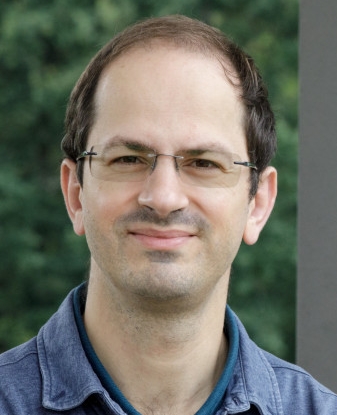 Rami Barends合作论文数Peter Grünberg Institute for Functional Quantum Systems, Forschungszentrum Jülich4
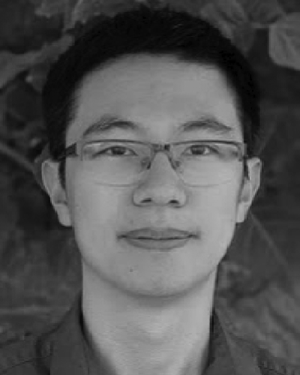 Z. Chen合作论文数Google3
 Frederik Nathan合作论文数Dept Phys, CALTECH3
 David Huse合作论文数Department of Physics, Princeton University3
 Phillip Weinberg合作论文数Department of Physics and Astronomy, Michigan State University3
 Nathan Ng合作论文数3
 Snir Gazit合作论文数Dept Phys, Univ Calif Berkeley3
 Daniel Sank合作论文数Google3Sebastian Wenderoth合作论文数2
 Takahiro Morimoto合作论文数2Jan Behrends合作论文数2Tiago Marcolino de Souza合作论文数Forestry Engn Sch, State Univ Amapa2
 Paraj Titum合作论文数Appl Phys Lab, Johns Hopkins Univ2
 Michael Tomka合作论文数Dept Phys & Astron, Univ Southern Calif2
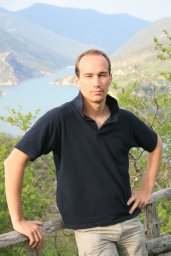 Luca Dalessio合作论文数Department of Physics, Boston University2Karthik Seetharam合作论文数Caltech, Inst Quantum Informat & Matter2
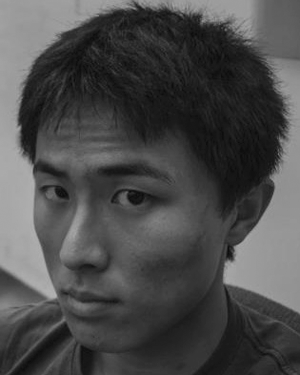 Michael Fang合作论文数Kavli Nanosci Inst, CALTECH2
 Jason R. Petta合作论文数Department of Physics & Astronomy, College of Physical Sciences, University of California, Los Angeles;HRL Laboratories, LLC2
 Nathan Goldman合作论文数Faculté des Sciences, Université libre de Bruxelles;Collège de France;International Solvay Institutes2
 Michael Vissers合作论文数National Institute of Standards and Technology;SQMS Center, Fermi National Accelerator Laboratory2
 Amit Vainsencher合作论文数Google2Campbell B合作论文数2William F Kindel合作论文数Department of Physics, University of Colorado2




