Applying the concept of invited behavior to the 2018 elections reveals hidden messages, motivations, and consequences in a way that enriches the understanding of success and failure in leaders’ interactions with each other and with the public. Democratic Party leaders learned from Hillary Clinton’s unfortunate example to avoid Trump’s trap invitations—those that snare the respondents in a no-win situation, while Republicans suffered a powerful adverse reaction to Trump’s invitation to return to patriarchy (a boomerang invitation—one that produces the opposite response to the one desired). By choosing to campaign on real material interests such as health care, the Democrats avoided Trump’s invitation to compete on the fantasy-based issues that were his chosen ground and made a strong appeal both to their base and to independent voters. Thus this campaign and election reflect the fundamental issue of whether American politics will proceed based on reality or pseudo reality.
This well-made, engaging film depicts the Israeli Palestinian conflict as a struggle between individuals, emphasizing the attitudes - stubbornness, pride, racism, machismo - that prevent peace-making. While illuminating key aspects of the situation, this psychological approach avoids the essential political dimensions, the all-too-real conflicts of interest, both material and moral.
This article describes the personal and pedagogical contexts for the development of a 9/11 curriculum. The author relates his own experiences learning of the event and teaching it soon afterwards and the subsequent development of a nationally distributed 9/11 curriculum.
A college-based program that combines training, direct support, and technical assistance was found to produce significant gains in bonding and bridging social capital and key political attributes among low-income, minority, and immigrant groups organizing to enhance their power to influence public school politics and policies in New York City.
This paper presents research into the use of large-scale parallelism for a continuous speech recognition algorithm. The algorithm, developed for the BBN Byblos system [1], uses context dependent Hidden-Markov models to achieve high recognition accuracy. The multiprocessor used in the research, the BBN ButterflyTMParallel Processor, is a shared memory, MIMD machine. The algorithm was implemented using the Uniform System software methodology, a system that simplifies parallel programming without sacrificing efficiency. The algorithm is described, highlighting those portions critical to an efficient parallel implementation. Some of the problems encountered in trying to improve efficiency are presented as well as the solutions to those problems. The algorithm is shown to achieve 79% processor utilization on a 97-node Butterfly Parallel Processor. This is equivalent to a speedup by a factor of 77 over a single processor benchmark.
In this paper, we describe BYBLOS, the BBN continuous speech recognition system. The system, designed for large vocabulary applications, integrates acoustic, phonetic, lexical, and linguistic knowledge sources to achieve high recognition performance. The basic approach, as described in previous papers [1, 2], makes extensive use of robust context-dependent models of phonetic coarticulation using Hidden Markov Models (HMM). We describe the components of the BYBLOS system, including: signal processing frontend, dictionary, phonetic model training system, word model generator, grammar and decoder. In recognition experiments, we demonstrate consistently high word recognition performance on continuous speech across: speakers, task domains, and grammars of varying complexity. In speaker-dependent mode, where 15 minutes of speech is required for training to a speaker, 98.5% word accuracy has been achieved in continuous speech for a 350-word task, using grammars with perplexity ranging from 30 to 60. With only 15 seconds of training speech we demonstrate performance of 97% using a grammar.
The integration of grammatical with acoustical knowledge sources in the BBN continuous speech recognition system, BYBLOS, and the resulting effects on performance are described. The system consists of feature extraction, acoustical scoring, and linguistic scoring. Feature extraction is based on vector quantized reel-warped cepstral coefficients. Acoustical scoring is derived from a hidden Markov model for each word, where word models are based on phonetic spellings so that models can be computed for words that have never been trained. The linguistic model is represented as a finite automaton derived automatically from a context-free specification of the task-domain syntax and semantics. It is shown how recognition performance varies with properties of the grammars. Word recognition accuracies of over 98% have been achieved in continuous speaker-dependent mode for 350-word tasks with grammars having maximum perplexity in the range of 20 to 60. [Work supported by DARPA and monitored by NAVELEX.]
In this paper, we examine several methods for text-independent speaker identification of telephone speech with limited duration data, The issue addressed is the assessment of channel characteristics, especially linear aspects, and methods for improving speaker identification performance when the speaker to be identified is on a different telephone channel than that data used for training. We show experimental evidence illustrating the cross-channel problem and also show that the direct approach, of using simple channel-invariant features, can discard much speaker dependent information. The methods we have found to be most effective rely on the training process to incorporate channel variability.
This paper discusses the use of the Hidden Markov Model (HMM) in phonetic recognition. In particular, we present improvements that deal with the problems of modeling the effect of phonetic context and the problem of robust pdf estimation. The effect of phonetic context is taken into account by conditioning the probability density functions (pdfs) of the acoustic parameters on the adjacent phonemes, only to the extent that there are sufficient tokens of the phoneme in that context. This partial conditioning is achieved by combining the conditioned and unconditioned pdfs models with weights that depend on the confidence in each pdf estimate. This combination is shown to result in better performance than either model by itself. We also show that it is possible to obtain the computational advantages of using discrete probability densities without the usual requirement for large amounts of training data.
A system for delivering a sinusoidal signal of known sound pressure to the ear at high frequencies (8–20 kHz) is explored. A high-frequency driver unit is coupled to the ear canal through a long tube, so that the acoustic source at the ear-canal entrance had an impedance close to ρc. The system is calibrated by applying an impulse of voltage to the source and measuring the response at a small microphone located in the coupling tube close to the ear-canal entrance. A signal-processing procedure detects the zeros in the spectrum of this response and uses these data to estimate the transfer function from the source voltage to the sound pressure at the inner end of the ear canal. The system has been calibrated for a number of different ears in this way, and data giving the range of characteristics of the ear canals as determined by the zero locations will be described. In general, the results are consistent with theoretical predictions based on the known average shape of the ear canal. [Supported by a contract from NINCDS.]
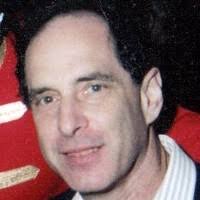 Richard Schwartz合作论文数Raytheon BBN Technologies8
 Salim Roukos合作论文数IBM Research6
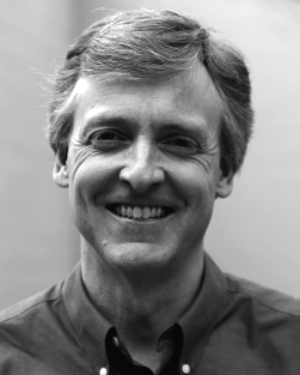 Owen Kimball合作论文数5
 y l chow合作论文数4
 John Makhoul合作论文数BBN Technologies;Northeastern University4Kenneth F. Karnofsky合作论文数3Michael G. Berouti合作论文数3lynn cosell合作论文数2Dunham, M.合作论文数2
 Ron Hayduk合作论文数Borough of Manhattan Community College, City University of New York2J. Makhoul合作论文数Speech and Signal Processing at Bolt Beranek and Newman Inc.2Jared J. Wolf合作论文数2
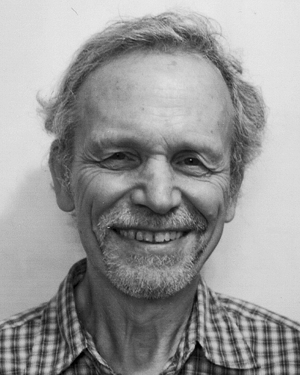 Herbert Gish合作论文数Speech and Language Processing Department, Raytheon BBN Technologies2LK COSELL合作论文数1Kimbell, O.合作论文数1a derr合作论文数1
 David M. Green合作论文数University of Florida1S. Blumenthal合作论文数1F. Kubala合作论文数1F. Pierre-Louis合作论文数1Robert Berkovitz合作论文数1
 Kenneth N. Stevens合作论文数Massachusetts Institute of Technology1Patti Price合作论文数SRI International1Roucos, S.合作论文数1




