Introduction Sugar kelp ( Saccharina latissima ) has a biphasic life cycle, allowing selection on both thediploid sporophytes (SPs) and haploid gametophytes (GPs). Methods We trained a genomic selection (GS) model from farm-tested SP phenotypic data and used a mixed-ploidy additive relationship matrix to predict GP breeding values. Topranked GPs were used to make crosses for further farm evaluation. The relationship matrix included 866 individuals: a) founder SPs sampled from the wild; b) progeny GPs from founders; c) Farm-tested SPs crossed from b); and d) progeny GPs from farm-tested SPs. The complete pedigree-based relationship matrix was estimated for all individuals. A subset of founder SPs ( n = 58) and GPs ( n = 276) were genotyped with Diversity Array Technology and whole genome sequencing, respectively. We evaluated GS prediction accuracy via cross validation for SPs tested on farm in 2019 and 2020 using a basic GBLUP model. We also estimated the general combining ability (GCA) and specific combining ability (SCA) variances of parental GPs. A total of 11 yield-related and morphology traits were evaluated. Results The cross validation accuracies for dry weight per meter ( r ranged from 0.16 to 0.35) and wet weight per meter ( r ranged 0.19 to 0.35) were comparable to GS accuracy for yield traits in terrestrial crops. For morphology traits, cross validation accuracy exceeded 0.18 in all scenarios except for blade thickness in the second year. Accuracy in a third validation year (2021) was 0.31 for dry weight per meter over a confirmation set of 87 individuals. Discussion Our findings indicate that progress can be made in sugar kelp breeding by using genomic selection.
Laminaria farlowii, golden kombu, is of interest as a novel species for aquaculture in Southern California, USA. Thermal biology and climate change resilience are important to the species' usefulness as a crop for the future. Wild populations of L. farlowii live primarily below the seasonal thermocline but individuals have been successfully cultivated in near surface conditions of light intensity and temperature. We examined the thermal biology of female gametophytes and juvenile sporophytes of L. farlowii . We grew the female gametophytes and juvenile sporophytes across gradients of temperature (9–20 °C) and light intensity (20–80 µmol photons m −2. s −1 ), finding growth rates were saturated by all light intensities tested and sensitive to temperature. Optimal growth temperatures were 16 °C for the female gametophytes and 15 °C for juvenile sporophytes. In a separate experiment, larger adult sporophytes were exposed to thermal regimes differing in mean temperature (10–20 °C) and thermal variability, under a photoperiod chosen to induce sorus formation. Growth rates were not significantly different from 14–18 °C but sori were formed only at a mean temperature of 15 °C. These results indicate that nursery and cultivation methods developed for a similar kelp, Saccharina latissima , are suitable for L. farlowii , and that the species can grow in the predominant coastal temperatures of Southern California.
Saccharina latissima (sugar kelp) is one of the most widely cultivated brown marine macroalgae species in the North Atlantic and the eastern North Pacific Oceans. To meet the expanding demands of the sugar kelp mariculture industry, selecting and breeding sugar kelp that is best suited to offshore farm environments is becoming necessary. To that end, a multi-year, multi-institutional breeding program was established by the U.S. Department of Energy's (DOE) Advanced Research Projects Agency-Energy (ARPA-E) Macroalgae Research Inspiring Novel Energy Resources (MARINER) program. Hybrid sporophytes were generated using 203 unique gametophyte cultures derived from wild-collected Saccharina spp. for two seasons of farm trials (2019–2020 and 2020–2021). The wild sporophytes were collected from 10 different locations within the Gulf of Maine (USA) region, including both sugar kelp (Saccharina latissima) and the skinny kelp species (Saccharina angustissima). We harvested 232 common farm plots during these two seasons with available data. We found that farmed kelp plots with skinny kelp as parents had an average increased yield over the mean (wet weight 2.48 ± 0.90 kg m−1 and dry weight 0.32 ± 0.10 kg m−1) in both growing seasons. We also found that blade length positively correlated with biomass in skinny kelp x sugar kelp crosses or pure sugar kelp crosses. The skinny x sugar progenies had significantly longer and narrower blades than the pure sugar kelp progenies in both seasons. Overall, these findings suggest that sugar x skinny kelp crosses provide improved yield compared to pure sugar kelp crosses.
Seaweed farming has the potential to produce feedstocks for many applications, including food, feeds, fertilizers, biostimulants, and biofuels. Seaweeds have advantages over land-based biomass in that they require no freshwater inputs and no allocation of arable land. To date, seaweed farming has not been practiced at scales relevant to meaningful biofuel production. Here we describe a techno-economic model of large-scale seaweed farms and its application to the cultivation of the cool temperate species Saccharina latissima (sugar kelp) and the tropical seaweed Eucheumatopsis isiformis. At farm scales of 1000 ha or more, our model suggests that farm gate production costs in waters up to 200 km from the onshore support base are likely to range between $200 and $300 per dry tonne. The model also suggests that production costs below $100 per dry tonne may be achievable in some settings, which would make these seaweeds economically competitive with land-based biofuel feedstocks. While encouraging, these model results and some assumptions on which they are based require further field validation.
Though Saccharina japonica cultivation has been established for many decades in East Asian countries, the domestication process of sugar kelp (Saccharina latissima) in the Northeast United States is still at its infancy. In this study, by using data from our breeding experience, we will demonstrate how obstacles for accelerated genetic gain can be assessed using simulation approaches that inform resource allocation decisions. Thus far, we have used 140 wild sporophytes that were sampled in 2018 from the northern Gulf of Maine to southern New England. From these sporophytes, we sampled gametophytes and made and evaluated over 600 progeny sporophytes from crosses among the gametophytes in 2019 and 2020. The biphasic life cycle of kelp gives a great advantage in selective breeding as we can potentially select both on the sporophytes and gametophytes. However, several obstacles exist, such as the amount of time it takes to complete a breeding cycle, the number of gametophytes that can be maintained in the laboratory, and whether positive selection can be conducted on farm-tested sporophytes. Using the Gulf of Maine population characteristics for heritability and effective population size, we simulated a founder population of 1,000 individuals and evaluated the impact of overcoming these obstacles on rate of genetic gain. Our results showed that key factors to improve current genetic gain rely mainly on our ability to induce reproduction of the best farm-tested sporophytes, and to accelerate the clonal vegetative growth of released gametophytes so that enough gametophyte biomass is ready for making crosses by the next growing season. Overcoming these challenges could improve rates of genetic gain more than 2-fold. Future research should focus on conditions favorable for inducing spring reproduction, and on increasing the amount of gametophyte tissue available in time to make fall crosses in the same year.
Our team has initiated a selective breeding program for regional strains of sugar kelp, Saccharina latissima, to improve the competitiveness of kelp farming in the United States. Within our breeding program, we also include an endemic putative species, Saccharina angustissima, locally referred to as skinny kelp. We crossed uniclonal gametophyte cultures derived from 37 wild-collected blades representing five sugar kelp strains and one skinny kelp strain to produce 104 unique crosses. Each cross was outplanted on a near-shore research farm located in the Gulf of Maine (GOM). After the first farming season, our results indicated that sugar kelp and skinny kelp were interfertile, and produced mature and reproductively viable sporophytes. Morphological traits of individual blades varied depending on the parental contribution (sugar vs. skinny), with significant differences found in progeny blade length, width, thickness, and in stipe length and diameter. Despite these differences, wet weight and blade density per plot showed no statistical differences regardless of the cross. Given their published genetic similarity and their interfertility shown here, S. angustissima and S. latissima may not be different species, and may each contribute genetic diversity to breeding programs aimed at meeting ocean farming and market needs.
The goal of this study was to evaluate flow-cytometric techniques for isolating individual kelp meiospores into 96-welled plates. Previously reported low success rates for sorting tens of thousands of meiospores at a time have been improved by technological developments, specifically, the low nozzle pressure of the commercially available, JSAN (Bay Bioscience Co. Ltd) instrument. We monitored growth and gametophyte development post-sorting for 10 months. Our data demonstrate that successful kelp meiospore isolations of up to 76% viability can be achieved with flow-cytometry. This method can save time as compared to traditional, manual isolations using pipettes and improves confidence that self-fertilized individuals will not contaminate specific crosses of resulting gametophytes. Our results highlight a new application for the flow cytometer to produce clonal kelp gametophytes with direct applications for germplasm and culture collection development.
An assessment of genetic diversity of marine populations is critical not only for the understanding and preserving natural biodiversity but also for its commercial potential. As commercial demand rises for marine resources, it is critical to generate baseline information for monitoring wild populations. Furthermore, anthropogenic stressors on the coastal environment, such as warming sea temperatures and overharvesting of wild populations, are leading to the destruction of keystone marine species such as kelps. In this study, we conducted a fine-scale genetic analysis using genome-wide high-density markers on Northwest Atlantic sugar kelp. The population structure for a total of 149 samples from the Gulf of Maine (GOM) and Southern New England (SNE) was investigated using AMOVA, FST, admixture, and PCoA. Genome-wide association analyses were conducted for six morphological traits, and the extended Lewontin and Krakauer (FLK) test was used to detect selection signatures. Our results indicate that the GOM region is more heterogeneous than SNE. These two regions have large genetic difference (between-location FST ranged from 0.21 to 0.32) and were separated by Cape Cod, which is known to be the biogeographic barrier for other taxa. We detected one significant SNP (P = 2.03 × 10⁻⁷) associated with stipe length, and 248 SNPs with higher-than-neutral differentiation. The findings of this study provide baseline knowledge on sugar kelp population genetics for future monitoring, managing and potentially restoring wild populations, as well as assisting in selective breeding to improve desirable traits for future commercialization opportunities.
ABSTRACT An assessment of genetic diversity of marine populations is critical not only for the understanding and preservation of natural biodiversity but also for its economic potential. As commercial demand rises for marine resources, it is critical to generate baseline information for monitoring wild populations. Furthermore, anthropogenic stressors on the coastal environment, such as warming sea surface temperatures and overharvesting of wild populations, are leading to the destruction of keystone marine species such as kelps. In this study, we conducted a fine-scale genetic analysis using genome-wide high-density markers on Northwest Atlantic sugar kelp species, Saccharina latissima and putative species, Saccharina angustissima . The population structure for a total of 149 samples from the Gulf of Maine (GOM) and Southern New England (SNE) was investigated using AMOVA, Fst, admixture, and PCoA. Genome-wide association analyses were conducted for six morphological traits, and the extended Lewontin and Krakauer (FLK) test was used to detect selection signatures. Our results indicate that the GOM region is moderately more heterogeneous than SNE. While admixture was observed between regions, these results confirm that Cape Cod acts as a biogeographic barrier for sugar kelp gene flow. We detected one significant SNP (P-value=2.03×10 −7 ) associated with stipe length, and 243 SNPs with higher-than-neutral differentiation. The findings of this study provide fundamental knowledge on sugar kelp population genetics for future monitoring, managing and potentially restoring wild populations, as well as assisting in selective breeding to improve desirable traits for cultivation and bioenergy production.
Acadian Seaplants, Ltd., marine plant extract powder (AMPEP) is a commercially available extract derived from the brown seaweed, Ascophyllum nodosum. This extract is widely applied to increase the performance of land crops and has been reported to enhance growth of some seaweed crops. To assess the effects of AMPEP on the growth and thermal tolerance of Saccharina latissima and S. angustissima cultivars, we performed two experiments. First, juvenile sporophytes were dipped (i.e., 30 or 60 min) in AMPEP solutions of different concentrations (0.001, 0.005, 0.05, 1, and 5 g L−1). Sporophytes were then cultivated in half strength Provasoli’s enriched seawater (PES) and allowed to grow at different temperatures (12, 16, 19, 23, and 25 ± 1 °C) for 20 days using a temperature gradient table. Photoperiod was maintained at 12:12 L:D with photosynthetically active radiation (PAR) of 90 ± 10 μmol photons m−2 s−1. Results show a differential response between the two species tested. Sporophytes of both species cultured at 23 and 25 °C died during the first 7 days post dipping in AMPEP. After the 20-day period, the surviving sporophytes were transferred to an incubator set at 18 ± 1 °C (i.e., LT50 after 20 days). These sporophytes remained for 14 additional days to assess for any delayed effect on thermal tolerance, with treated sporophytes showing a higher percentage of survival and growth than control sporophytes never exposed to AMPEP. Furthermore, after the 14-day incubation at 18 °C, treated sporophytes of both species showed blades more than three times thicker than control sporophytes. These preliminary results indicate that AMPEP may enhance the growth capacity of S. latissima and S. angustissima when exposed to suboptimal temperatures, allowing them to overcome heat stress more effectively while maintaining growth.
Coral bleaching, loss of symbiotic dinoflagellate algae from the coral holobiont, is a complex phenomenon that can result in coral death and reef degradation. Reactive oxygen species (ROS) have been suggested as a possible mechanism underlying this event. To determine if antioxidants can be used to reduce ROS production and coral bleaching, we tested the effects of thermal stress in Aiptasia pallida a model system for coral bleaching studies, and the scleractinian coral, Porites astreoides. We analyzed host ROS levels, symbiont dark-adapted quantum yield of photosystem II, and symbiont loss in the presence or absence of antioxidants. We found that a single dose of the antioxidant catechin, significantly reduced ROS levels in the hosts, mitigated the degradation of the symbiont’s quantum yield and reduced the loss of symbionts from thermally stressed P. astreoides but not from A. pallida . Taken together, these results support a key role of ROS and that antioxidants can prevent symbiont degradation and loss during thermally-induced bleaching in P. astreoides. Abbreviations: PAM: Pulse-Amplified ModulationROS: Reactive Oxygen Species
 Charles Yarish合作论文数Department of Ecology & Evolutionary Biology, College of Liberal Arts and Sciences, University of Connecticut11
 Schery Umanzor合作论文数10
 David Bailey合作论文数9
 Scott R. Lindell合作论文数9
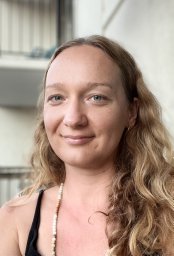 Simona Augyte合作论文数Dept Ecol & Evolutionary Biol, Univ Connecticut8
 Mao Huang合作论文数7
 Jean-Luc Jannink合作论文数Robert W. Holley Center for Agriculture & Health, Agricultural Research Service, U.S. Department of Agriculture;Plant Breeding and Genetics Section, School of Integrative Plant Science, College of Agriculture and Life Sciences, Cornell University7Li Yaoguang合作论文数6
 Crystal A. Ng合作论文数4
 Kelly Robbins合作论文数Plant Breeding and Genetics Section, College of Agriculture and Life Sciences, Cornell University4Margaret Aydlett合作论文数2Matthew Hare合作论文数Natural Resources and the Environment, College of Agriculture and Life Sciences, Cornell University2
 Jeremy Schmutz合作论文数HudsonAlpha Institute for Biotechnology;Department of Energy, Joint Genome Institute2
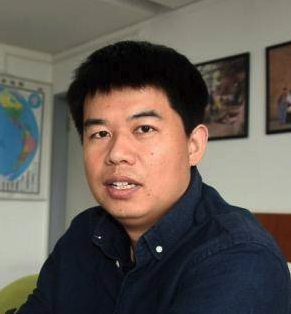 Xiaowei Mao (毛晓伟)合作论文数Institute of Vertebrate Paleontology and Paleoanthropology, Chinese Academy of Sciences2
 Loretta M Roberson合作论文数2Julie Decker合作论文数1Domenic Manganelli合作论文数1
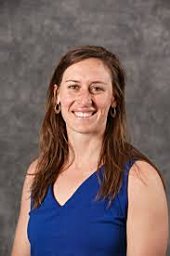 Gretchen Schott Grebe合作论文数Sch Marine Sci, Univ Maine1
 Sookkyung Shin合作论文数1Yudowski Guillermo A合作论文数Department of Anatomy &School of Medicine, University of Puerto Rico;School of Medicine, University of Puerto Rico1
 Kim Jang K合作论文数Departments of Ecology and Evolutionary Biology and Marine Sciences, University of Connecticut1Gary H. Wikfors合作论文数1
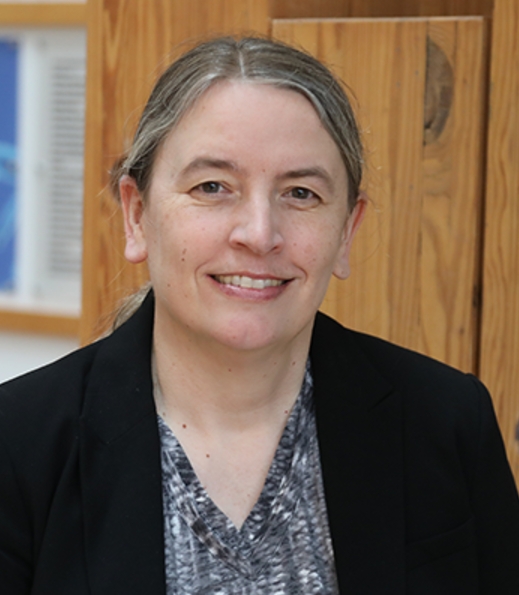 Jane Grimwood合作论文数Genome Sequencing Center, HudsonAlpha Institute for Biotechnology1
 Hauke L. Kite-Powell合作论文数1
 Janet E Kubler合作论文数california state university1
 Erick I Ask合作论文数1
 Michael Stekoll合作论文数Department of Natural Sciences, University of Alaska Southeast;College of Fisheries and Ocean Sciences, University of Alaska Fairbanks1
 Steve R. Dudgeon合作论文数Department of Biology, California State University1




