INTRODUCTION:Left bundle branch area pacing (LBBAP) is typically performed using the lumenless (LLL) Medtronic SelectSecureTM Model 3830 pacing lead. Stylet-driven leads (SDL) for LBBAP were recently introduced. OBJECTIVE:To compare the Abbott Tendril STSTM 2088TC SDL and CPS LocatorTM 3D delivery system to the Medtronic LLL and delivery system acutely and chronically. METHODS:Fifty consecutive patients who received SDL using the CPS LocatorTM 3D delivery system for standard pacing indications were included in this study. A comparison was made with 229 LLL patients from a retrospective database, evaluating baseline characteristics, procedural outcomes, lead and system performance, and follow-up data. RESULTS:LBBAP was successful in 84% of SDL and 79% of LLL patients (p = 0.55), with no significant differences in procedural characteristics or complications. Minor pacing differences were noted. CPS LocatorTM 3D performed similarly to C315His® delivery system with a trend for less lead placement attempts. Conduction system capture (CSC) pattern at implant did not differ between both groups. CSC maintenance was similar between SDL and LLL. However, follow-up QRS duration was significantly longer in SDL group (154 ms vs. 129 ms, p = 0.004), suggesting a possibility of CSC loss in some patients. CONCLUSION:SDL is a viable alternative to LLL, demonstrating comparable acute and midterm pacing parameters. CPS LocatorTM 3D delivery system showed comparable performance and an excellent safety profile. Acute CSC with SDL and LLL is similar, but its long-term maintenance will require further study.
Conduction system pacing has gained popularity for bradycardia and cardiac resynchronization therapy indications. Left bundle branch area pacing (LBBAP) is a more straightforward technique with better long-term outcomes compared with His bundle pacing.1 Conduction system pacing has traditionally been performed via left-sided (LS) subclavicular venous access, and only 1 study has reported a right-sided (RS) approach for His bundle pacing.2 There is little information on the safety, feasibility, and success rates of the RS approach for LBBAP.
Cardiac resynchronization therapy (CRT) is one of the most effective treatment modalities for patients with systolic heart failure and a wide QRS complex as it can improve survival, reduce hospitalization, and provide symptomatic relief (1). However, not all patients respond even when the therapy is indicated. Alternatively, a super response has been seen in select patients who have normalization or near normalization of the systolic function and elimination of symptoms. Definitions of CRT response vary widely and depend upon endpoints used.
Adoption and outcomes for conduction system pacing (CSP), which includes His bundle pacing (HBP) or left bundle branch area pacing (LBBAP), in real-world settings are incompletely understood. We sought to describe real-world adoption of CSP lead implantation and subsequent outcomes. We performed an online cross-sectional survey on the implantation and outcomes associated with CSP, between November 15, 2020, and February 15, 2021. We described survey responses and reported HBP and LBBAP outcomes for bradycardia pacing and cardiac resynchronization CRT indications, separately. The analysis cohort included 140 institutions, located on 5 continents, who contributed data to the worldwide survey on CSP. Of these, 127 institutions (90.7%) reported experience implanting CSP leads. CSP and overall device implantation volumes were reported by 84 institutions. In 2019, the median proportion of device implants with CSP, HBP, and/or LBBAP leads attempted were 4.4% (interquartile range [IQR], 1.9–12.5%; range, 0.4–100%), 3.3% (IQR, 1.3–7.1%; range, 0.2–87.0%), and 2.5% (IQR, 0.5–24.0%; range, 0.1–55.6%), respectively. For bradycardia pacing indications, HBP leads, as compared to LBBAP leads, had higher reported implant threshold (median [IQR]: 1.5 V [1.3–2.0 V] vs 0.8 V [0.6–1.0 V], p = 0.0008) and lower ventricular sensing (median [IQR]: 4.0 mV [3.0–5.0 mV] vs. 10.0 mV [7.0–12.0 mV], p < 0.0001). In conclusion, CSP lead implantation has been broadly adopted but has yet to become the default approach at most surveyed institutions. As the indications and data for CSP continue to evolve, strategies to educate and promote CSP lead implantation at institutions without CSP lead implantation experience would be necessary.
BACKGROUND:Criteria for successful left bundle area pacing (LBAP) are in flux and currently guided by lead tip measurements. Lead ring measurements during LBAP have not been well studied.OBJECTIVE:The purpose of this study was to investigate dynamics in pacing parameters during successful and unsuccessful lead implant attempts.METHODS:SelectSecure 3830 pacing leads (Medtronic, Inc) guided by C315 sheaths for LBAP were placed for standard pacing indications in 73 patients. Retrospective review of procedural, echocardiographic, and standard pacing data were performed. Depth and lead-septal angle of implanted electrodes were determined from fluoroscopy with septal contrast delineation. Depth was graded in 4 categories according to the degree of ring penetration into the septum. Successful implant was defined by the ability to advance the lead deep into the septum and achieve LBAP criteria (ventricular activation time, QRS width/shape).RESULTS:Ring impedance increased stepwise during successful attempts as opposed to unsuccessful attempts (P = .039). A wider lead-septal angle at implant position correlated with higher ring impedance (P = .036), whereas no association was found with tip impedance. Unipolar ring threshold correlated with depth of lead implant (P = .029). Tip impedance measurements at implant position were less predictive of lead depth and did not correlate with septal thickness.CONCLUSION:Ring pacing parameters are more predictive of lead progress than tip measurements. Lead depth and lead-septal angle can be determined from ring impedance measurements. These measurements may provide determination of lead depth and could obviate the need for contrast injection.
His bundle pacing can be challenging from right-sided access. Success rate for right-sided (RS) left bundle area pacing (LBAP) lead implants is unknown. To investigate success rate and pacing parameters of RS implants in comparison to left-sided (LS) in a tertiary referral center. Procedural characteristics and electrophysiology parameters in 81 patients who underwent LBAP at a tertiary referral center were extracted from medical records. Data on RS implants were compared to LS. Anatomical implant failure was defined as inability to advance lead into septum. Electrophysiologic failure was defined as QRS > 130 msec and/or left ventricular activation time > 90 msec. Eleven pts had RS implants and 70 were LS. C315™ sheaths (Medtronic, Inc) were used in all RS implants and in 69/70 LS pts. Deflectable sheath was used in 1 LS implant. One septal perforation was observed in LS implant and lead was later repositioned in RV. Acute lead dislodgment was seen in 1 RS and 3 LS patients. Procedural and pacing characteristics between RS and LS implants were comparable (Table) and excellent with high success rates for LBAP in both groups. 1. High success rate with RS LBAP implants was observed in a mixed patient population at a large tertiary referral center.2. Procedural and pacing characteristics between RS and LS implants were comparable.
Successful criteria for left bundle area pacing (LBAP) are in flux and currently guided by lead tip measurements. Ring measurements during LBAP have not been well studied. To investigate dynamics in pacing parameters during successful and unsuccessful lead implant attempts. Select Secure 3830 pacing leads (Medtronic, Inc) guided by C315 sheaths for LBAP were placed for standard pacing indications in 73 patients. Retrospective review of procedural, echocardiographic and standard pacing data in all patients and detailed stepwise tip and ring measurements in a subset of 25 patients were performed. Depth and lead/septum angle (LSA) of implanted electrodes were determined from fluoroscopy with septal contrast delineation. Depth was graded in 4 categories depending on whether the ring was in touch with the septum or deeper inside. LSA was determined by measuring the angle between the lead and septal surface. Several implant attempts made during one procedure were adjudicated separately as successful or not. Ring impedance increased stepwise (Fig.) during successful attempts as opposed to unsuccessful (p = 0.039). A wider angle of LSA at implant position correlates with higher ring impedance (p = 0.036), whereas no association was found with tip impedance. Unipolar ring threshold correlates with depth of lead implant (p = 0.029). Tip impedance measurements at implant position are less predictive of lead depth (Fig.) and do not correlate with septal thickness. Ring pacing parameters are more predictive of lead progress than tip measurements. Lead depth and LSA can be determined from ring impedance measurements. These measurements may provide determination of lead depth and could obviate the need for contract injection.
Uma N Srivatsa, MBBS, MS, FHRS—Section Editor Global Voices (Sacramento, California): Cardiac electrophysiologists are immensely specialized, highly focused, and committed to an intuitive and imaginative realm only they understand and can navigate. However, there comes a time when we need to transcend our boundaries to become global citizens and share our knowledge, compassion, and expertise, whether it be during the aftermath of an earthquake in Haiti, a tsunami in Indonesia, a nuclear accident in Japan, Hurricane Katrina's cyclonic devastation of New Orleans, or the COVID-19 pandemic worldwide. In this issue of Heart Rhythm O2, we bring you the voices of electrophysiologists delivering health care in war-torn Ukraine.Serhii Prorok, MD (Kyiv, Ukraine): I am an electrophysiologist who lives and works in Kyiv. We face tremendous problems and challenges in providing specialized and much-needed electrophysiological treatments during the war, whether they be catheter interventions, device implants, or conservative therapies.Fortunately, few patients require urgent cardiac interventions; however, when interventions are necessary, we often are not able to perform them because of (1) the patient's inability to reach us due to roadblocks; and (2) the lack of consumables as a result of necessary abandonment by company representatives and their distributors who left our cities because of active fighting.The most critical situation is the lack of pacemakers. A large supply, purchased by the state, arrived at Boryspil Airport during a missile strike. Panic among the population did not allow quick distribution to the clinics. We managed to transport the pacemakers but for only 2 weeks, then chaos caused by the war led to complete blockade of access to these devices. As a result, patients with critical bradycardia are suffering. A small supply of off-label pacemakers quickly ran out. We are desperate for any functional pacemakers, even if previously used.The panic caused by war led patients to buy large quantities of anticoagulants and antiarrhythmic drugs for fear that they will not be able to buy them later. This, combined with the challenges of receiving delivery of new supplies of drugs, has led to an astounding deficit of lifesaving drugs. Our volunteers are helping locally, but we expect that drug shortages will increase in regions where fighting continues. In some locales, there are additional problems such as physical destruction of clinics and blockade of transport of humanitarian goods. Currently, in the western regions, health care professionals are able to work full-time. Thank you for your concern. We appreciate any help.Tatiana Shandra, MDView Large Image Figure ViewerDownload Hi-res image Download (PPT)Tatiana Shandra, MD (Cherkasy, Ukraine): Ukraine is currently in a terrible war. War is not only on the battlefield, but also in our homes and in the streets among the civilian population. Cruise missiles fly and bomb not only areas where hostilities take place, but also in peaceful cities of Ukraine. Our sky is not closed. As medical professionals, we spend part of our lives in air-raid shelters, but we continue to work, day and night. We are committed to treating our patients as best we can; it is enough that many civilians die in bombed-out cities, and our soldiers die on the battlefield.Our Cherkasy Regional Cardiology Center continues to provide emergency medical care to patients with ST-elevation myocardial infarction (STEMI) and non-STEMI by percutaneous coronary interventions as needed. However, there are difficulties with the logistics of delivering therapy as quickly as possible to our cardiology center (150 km away) through military checkpoints. In the first days of the war, some hospitals had to shut down angiographic equipment because of the proximity of explosions. We have reduced the number of planned hospitalizations to save beds for the massive influx of those individuals with terrible gunshot wounds.Iurii Karpenko, MD, PhDView Large Image Figure ViewerDownload Hi-res image Download (PPT)Iurii Karpenko, MD, PhD (Odessa, Ukraine): On February 24, 2022, everything changed in the lives of 40 million Ukrainians. A full-scale invasion of Russian troops has led to a hellish and unjust war. The Ukrainian army and the entire Ukrainian nation have been putting up heroic resistance since the invasion. This full-scale war is accompanied by a humanitarian crisis and difficulties in delivering needed medical care.I am a Professor of Medicine, a cardiologist, an electrophysiologist with a long practical experience in the treatment of arrhythmias (35 years), Head of the Regional Center for Cardiac Surgery of Odessa Regional Hospital, and Head of the Department of Internal Medicine of the Odessa National Medical University. 2021 was our most successful year: we performed 1000 pacemaker and defibrillator implants and more than 500 catheter ablations using electroanatomic navigation systems.The future seemed cloudless and transparent, like the sky in my beloved city of Odessa, where I was born, grew up, and developed our arrhythmia center. Today, Odessa is reminiscent of the summer of 1941, during which Ukraine mounted a heroic defense against Nazi Germany. Now, air-raid sirens sound several times a day. Odessa looks like a fortress. We continue to perform all urgent and most elective procedures. Experienced doctors remain in Ukraine and continue to work in Kyiv and several other cities. Many refugees came to western Ukraine. Arrhythmia Units there are actively assisted by their closest neighbors—Poland, Slovakia, Czech Republic, and Lithuania. Unfortunately, in cities under active shelling (Kharkiv, Sumy, Chernihiv, Mariupol) or captured by the Russian invaders (Kherson, Berdyansk, Melitopol), the medical situation is catastrophic.A young patient with prolonged QT syndrome and recurrent ventricular tachycardia accompanied by syncope miraculously escaped Chernihiv, a city that is surrounded and shelled, and came to us for ICD implantation. The patient is doing well now! A military patient with bouts of highly symptomatic supraventricular tachycardia said to me: "Doctor, tachycardia prevents me from fighting, cure me!" The next day after the ablation, the patient left for the front.Currently, we have enough supplies to treat our patients; however, as the fighting continues, we are likely to run out. We need the help to provide qualified care.Brian Olshansky, MD, FHRS, CCDS (Iowa City, Iowa): The voices from Ukraine provide a stark reminder of how important it is to look beyond our own daily issues and understand the challenges and hardships that our colleagues are now facing. We can help. It is not just supplies, however, and it is not just Ukraine. It is collegial support on a global level. As electrophysiologists, international collaboration has strengthened our profession and allowed us to have stunning growth in our ability to deliver lifesaving care. We owe it to our colleagues now in Ukraine, and undoubtedly at other times and in other places, to help in their time of need. Uma N Srivatsa, MBBS, MS, FHRS—Section Editor Global Voices (Sacramento, California): Cardiac electrophysiologists are immensely specialized, highly focused, and committed to an intuitive and imaginative realm only they understand and can navigate. However, there comes a time when we need to transcend our boundaries to become global citizens and share our knowledge, compassion, and expertise, whether it be during the aftermath of an earthquake in Haiti, a tsunami in Indonesia, a nuclear accident in Japan, Hurricane Katrina's cyclonic devastation of New Orleans, or the COVID-19 pandemic worldwide. In this issue of Heart Rhythm O2, we bring you the voices of electrophysiologists delivering health care in war-torn Ukraine. Serhii Prorok, MD (Kyiv, Ukraine): I am an electrophysiologist who lives and works in Kyiv. We face tremendous problems and challenges in providing specialized and much-needed electrophysiological treatments during the war, whether they be catheter interventions, device implants, or conservative therapies. Fortunately, few patients require urgent cardiac interventions; however, when interventions are necessary, we often are not able to perform them because of (1) the patient's inability to reach us due to roadblocks; and (2) the lack of consumables as a result of necessary abandonment by company representatives and their distributors who left our cities because of active fighting. The most critical situation is the lack of pacemakers. A large supply, purchased by the state, arrived at Boryspil Airport during a missile strike. Panic among the population did not allow quick distribution to the clinics. We managed to transport the pacemakers but for only 2 weeks, then chaos caused by the war led to complete blockade of access to these devices. As a result, patients with critical bradycardia are suffering. A small supply of off-label pacemakers quickly ran out. We are desperate for any functional pacemakers, even if previously used. The panic caused by war led patients to buy large quantities of anticoagulants and antiarrhythmic drugs for fear that they will not be able to buy them later. This, combined with the challenges of receiving delivery of new supplies of drugs, has led to an astounding deficit of lifesaving drugs. Our volunteers are helping locally, but we expect that drug shortages will increase in regions where fighting continues. In some locales, there are additional problems such as physical destruction of clinics and blockade of transport of humanitarian goods. Currently, in the western regions, health care professionals are able to work full-time. Thank you for your concern. We appreciate any help. Tatiana Shandra, MD (Cherkasy, Ukraine): Ukraine is currently in a terrible war. War is not only on the battlefield, but also in our homes and in the streets among the civilian population. Cruise missiles fly and bomb not only areas where hostilities take place, but also in peaceful cities of Ukraine. Our sky is not closed. As medical professionals, we spend part of our lives in air-raid shelters, but we continue to work, day and night. We are committed to treating our patients as best we can; it is enough that many civilians die in bombed-out cities, and our soldiers die on the battlefield. Our Cherkasy Regional Cardiology Center continues to provide emergency medical care to patients with ST-elevation myocardial infarction (STEMI) and non-STEMI by percutaneous coronary interventions as needed. However, there are difficulties with the logistics of delivering therapy as quickly as possible to our cardiology center (150 km away) through military checkpoints. In the first days of the war, some hospitals had to shut down angiographic equipment because of the proximity of explosions. We have reduced the number of planned hospitalizations to save beds for the massive influx of those individuals with terrible gunshot wounds. Iurii Karpenko, MD, PhD (Odessa, Ukraine): On February 24, 2022, everything changed in the lives of 40 million Ukrainians. A full-scale invasion of Russian troops has led to a hellish and unjust war. The Ukrainian army and the entire Ukrainian nation have been putting up heroic resistance since the invasion. This full-scale war is accompanied by a humanitarian crisis and difficulties in delivering needed medical care. I am a Professor of Medicine, a cardiologist, an electrophysiologist with a long practical experience in the treatment of arrhythmias (35 years), Head of the Regional Center for Cardiac Surgery of Odessa Regional Hospital, and Head of the Department of Internal Medicine of the Odessa National Medical University. 2021 was our most successful year: we performed 1000 pacemaker and defibrillator implants and more than 500 catheter ablations using electroanatomic navigation systems. The future seemed cloudless and transparent, like the sky in my beloved city of Odessa, where I was born, grew up, and developed our arrhythmia center. Today, Odessa is reminiscent of the summer of 1941, during which Ukraine mounted a heroic defense against Nazi Germany. Now, air-raid sirens sound several times a day. Odessa looks like a fortress. We continue to perform all urgent and most elective procedures. Experienced doctors remain in Ukraine and continue to work in Kyiv and several other cities. Many refugees came to western Ukraine. Arrhythmia Units there are actively assisted by their closest neighbors—Poland, Slovakia, Czech Republic, and Lithuania. Unfortunately, in cities under active shelling (Kharkiv, Sumy, Chernihiv, Mariupol) or captured by the Russian invaders (Kherson, Berdyansk, Melitopol), the medical situation is catastrophic. A young patient with prolonged QT syndrome and recurrent ventricular tachycardia accompanied by syncope miraculously escaped Chernihiv, a city that is surrounded and shelled, and came to us for ICD implantation. The patient is doing well now! A military patient with bouts of highly symptomatic supraventricular tachycardia said to me: "Doctor, tachycardia prevents me from fighting, cure me!" The next day after the ablation, the patient left for the front. Currently, we have enough supplies to treat our patients; however, as the fighting continues, we are likely to run out. We need the help to provide qualified care. Brian Olshansky, MD, FHRS, CCDS (Iowa City, Iowa): The voices from Ukraine provide a stark reminder of how important it is to look beyond our own daily issues and understand the challenges and hardships that our colleagues are now facing. We can help. It is not just supplies, however, and it is not just Ukraine. It is collegial support on a global level. As electrophysiologists, international collaboration has strengthened our profession and allowed us to have stunning growth in our ability to deliver lifesaving care. We owe it to our colleagues now in Ukraine, and undoubtedly at other times and in other places, to help in their time of need. This work did not receive any specific grant from funding agencies in the public, commercial, or not-for-profit sectors.
 Charles I. Haffajee合作论文数20G. Muqtada Chaudhry合作论文数14
 John V Wylie合作论文数13Ma Brodsky合作论文数11Alena Goldman合作论文数10
 Ioannis Koulouridis合作论文数9
 Mikhail Y Maslov合作论文数Steward St. Elizabeth's Medical Center, Tufts University School of Medicine8Ibrahim Almasry合作论文数8Peter Hoffmeister合作论文数8Shaw R. Natan合作论文数7Amy Hicks合作论文数6Gunjan Shukla合作论文数6Allen B J合作论文数6
 Maxim Gorev合作论文数6Albert L. Waldo合作论文数6Artem Astsaturov合作论文数5GM Chaudhry合作论文数5Adhiraj Bhattacharya合作论文数5
 Stephan Foianini合作论文数Department of Molecular and Cellular Biology, Harvard University5Lovich Mark A合作论文数5Armstrong James合作论文数5
 David Benditt合作论文数Cardiovascular Division, Medical School, University of Minnesota5Rex J. Winters合作论文数5Steven Swiryn合作论文数Abraham Lincoln School of Medicine, University of Illinois College of Medicine5с н аввакумов合作论文数5Danylo Zorin合作论文数4ю н киселев合作论文数4Chris de Voir合作论文数4Dirk Muessig合作论文数4Gregory Kotler合作论文数4Michael Maysky合作论文数4Mara T Slawsky合作论文数4
 Vybhav Jetty合作论文数St Elizabeths Med Ctr, Tufts Univ4
 Pierre Jaïs合作论文数Rhythmology & Cardiac Stimulation Department, University of Bordeaux;LIRYC Institute;CHU de Bordeaux;inHEART4Qu Fujian合作论文数4Turkel Melanie合作论文数4David Casavant合作论文数Medtronic, Inc.4
 Douglas Hettrick合作论文数Medtronic, Inc.4Thomas Marchese合作论文数4
 Michael R. Ujhelyi合作论文数University of Georgia College of Pharmacy and Medical College of Georgia School of Medicine4Peter S. Hoffmeister合作论文数4Spyridon Akrivakis合作论文数4
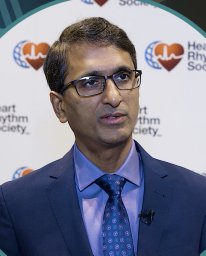 Pugazhendhi Vijayaraman合作论文数Geisinger Heart Institute, Geisinger Health System4Frederic Sacher合作论文数3Shaw Natan合作论文数3Marianna Nikolaychuk合作论文数3Mohsen Araghi-Niknam合作论文数3
 Mélèze Hocini合作论文数Department of Cardiac Arrhythmias Center, Bordeaux University Hospital;College of Health Sciences, University of Bordeaux;IHU Liryc3Tahir Syed M合作论文数3




