Ensuring the quality and reproducibility of biological resources is essential for advancing biomedical research and upholding animal welfare standards. The European Mouse Mutant Archive (EMMA), part of the INFRAFRONTIER research infrastructure, plays a key role in this effort by cryopreserving scientifically validated mutant mouse and rat strains and making them accessible to the global scientific community. To further enhance its processes and promote transparency, INFRAFRONTIER/EMMA has developed a set of ten Quality Principles specifically tailored to the unique requirements of cryopreserved rodent mutant strains. These principles guide EMMA’s workflows by providing a structured yet flexible quality framework across its distributed nodes. They encompass both general standards—such as adherence to the 3Rs (Replace, Reduce, Refine), staff competence, and continuous improvement—and more specific areas including scientific evaluation, data curation, and intellectual property rights. Each principle is presented with contextual background, defined requirements, practical recommendations, and key references. This initiative aims to strengthen the reliability, ethical integrity, and reproducibility of preclinical research resources.
INFRAFRONTIER, is a non-profit organisation dedicated to advancing the understanding and the treatment of human diseases through state-of-the-art in-vivo and in-vitro models. Comprised of a network of over 20 cutting-edge biomedical research institutes across Europe and beyond, it enables the generation, phenotyping, archiving, and distribution of advanced mouse and rat models as well as derived in-vitro model systems and associated FAIR data resources. Moreover, INFRAFRONTIER offers the generation of germ-free animals for axenic and gnotobiotic experimentation in biomedical research. Operating the largest mouse repository in Europe and one of the largest worldwide, INFRAFRONTIER empowers academia and industry scientists to accelerate their research on human health and disease. Committed to excellence, it adheres to rigorous scientific benchmarks and applies standardised protocols that prioritise animal welfare contributing to the refinement, reduction, and replacement of animal models. Furthermore, its collaboration with other European research infrastructures allows INFRAFRONTIER to contribute to the global sharing of FAIR research data and the provision of remote services. This collaboration creates a more interconnected European research community capable of reacting quickly, decisively and cooperatively to significant health challenges. Starting in June 2024, the INFRAPLUS project, recently selected for funding by the European Commission, will further enhance INFRAFRONTIER's capabilities by expanding human disease modelling, reducing animal usage, and developing alternative cellular models. Building on these strengths of disease model generation, characterisation and validation, collaborative research and data sharing and data integration, INFRAFRONTIER can make a significant contribution to the field of drug repurposing in Europe and beyond.
Over the last decade, INFRAFRONTIER has positioned itself as a world-class Research Infrastructure for the generation, phenotyping, archiving, and distribution of mouse models in Europe. The INFRAFRONTIER network consists of 22 partners from 15 countries, and is continuously enhancing and broadening its portfolio of resources and services that are offered to the research community on a non-profit basis. By bringing together European rodent model expertise and providing valuable disease model services to the biomedical research community, INFRAFRONTIER strives to push the accessibility of cutting-edge human disease modelling technologies across the European research landscape. This article highlights the latest INFRAFRONTIER developments and informs the research community about its extensively utilised services, resources, and technical developments, specifically the intricacies of the INFRAFRONTIER database, use of Curated Disease Models, overview of the INFRAFRONTIER Cancer and Rare Disease resources, and information about its main state-of-the-art services.
The main goals and challenges for the life science communities in the Open Science framework are to increase reuse and sustainability of data resources, software tools, and workflows, especially in large-scale data-driven research and computational analyses. Here, we present key findings, procedures, effective measures and recommendations for generating and establishing sustainable life science resources based on the collaborative, cross-disciplinary work done within the EOSC-Life (European Open Science Cloud for Life Sciences) consortium. Bringing together 13 European life science research infrastructures, it has laid the foundation for an open, digital space to support biological and medical research. Using lessons learned from 27 selected projects, we describe the organisational, technical, financial and legal/ethical challenges that represent the main barriers to sustainability in the life sciences. We show how EOSC-Life provides a model for sustainable data management according to FAIR (findability, accessibility, interoperability, and reusability) principles, including solutions for sensitive- and industry-related resources, by means of cross-disciplinary training and best practices sharing. Finally, we illustrate how data harmonisation and collaborative work facilitate interoperability of tools, data, solutions and lead to a better understanding of concepts, semantics and functionalities in the life sciences.
Improving reproducibility and replicability in preclinical research is a widely discussed and pertinent topic, especially regarding ethical responsibility in animal research. INFRAFRONTIER, the European Research Infrastructure for the generation, phenotyping, archiving, and distribution of model mammalian genomes, is addressing this issue by developing internal quality principles for its different service areas, that provides a quality framework for its operational activities. This article introduces the INFRAFRONTIER Quality Principles in Systemic Phenotyping of genetically altered mouse models. A total of 11 key principles are included, ranging from general requirements for compliance with guidelines on animal testing, to the need for well-trained personnel and more specific standards such as the exchange of reference lines. Recently established requirements such as the provision of FAIR (Findable, Accessible, Interoperable, Reusable) data are also addressed. For each quality principle, we have outlined the specific context, requirements, further recommendations, and key references.
In the last few decades, forward genetics approaches have been extensively used to identify gene function. Essentially, forward genetics is the elucidation of the genetic basis of a specific phenotype by screening a population containing random genomic modifications that alter gene function. These approaches have shed light on some essential gene functions in development and disease and have expanded the realm of understanding for genetic disorders. Due to the availability of efficient mutagenesis methods, phenotyping techniques, reliable validation, comprehensive sequence information and translational potential, mouse models are favored for forward genetics approaches. However, in this post-genomic CRISPR-Cas9 era, the relevance and future of forward genetics was brought into question. With more than 7300 mouse strains archived and close interactions with several leading mouse researchers around the world, INFRAFRONTIER - the European Research Infrastructure for mouse models organised a panel discussion on forward genetics at the International Mammalian Genome Conference 2018 to discuss the future of forward genetics as well as challenges faced by researchers using this approach in the current research environment. The commentary presents an overview of this discussion.
Authors of this deliverable: Florence Bietrix, José Maria Carazo, Salvador Capella-Gutierrez, Frederik Coppens, Maria Luisa Chiusano, Romain David, Jose Maria Fernandez, Maddalena Fratelli, Jean-Karim Heriche , Carole Goble, Philip Gribbon, Petr Holub, Robbie P. Joosten, Simone Leo, Stuart Owen, Helen Parkinson, Roland Pieruschka, Luca Pireddu, Luca Porcu, Michael Raess, Laura RodriguezNavas, Andreas Scherer, Stian Soiland-Reyes, Jing Tang
In the last few decades, forward genetics approaches have been extensively used to identify gene function. Essentially, forward genetics is the elucidation of the genetic basis of a specific phenotype by screening a population containing random genomic modifications that alter gene function. These approaches have shed light on some essential gene functions in development and disease and have expanded the realm of understanding for genetic disorders. Due to the availability of efficient mutagenesis methods, phenotyping techniques, reliable validation, comprehensive sequence information and translational potential, mouse models are favored for forward genetics approaches. However, in this post-genomic CRISPR-Cas9 era, the relevance and future of forward genetics was brought into question. With more than 7300 mouse strains archived and close interactions with several leading mouse researchers around the world, INFRAFRONTIER - the European Research Infrastructure for mouse models organised a panel discussion on forward genetics at the International Mammalian Genome Conference 2018 to discuss the future of forward genetics as well as challenges faced by researchers using this approach in the current research environment. The commentary presents an overview of this discussion.
 Asrar Ali Khan合作论文数13
 Martin Hrabě de Angelis合作论文数Helmholtz Zentrum München GmbH;Technical University München Germany10
 Helen Parkinson合作论文数European Molecular Biology Laboratory, European Bioinformatics Institute9Philipp Gormanns合作论文数8Rafaele Matteoni合作论文数6
 Frederik Coppens合作论文数Department of Plant Biotechnology and Genetics, Gent University6Marzia Massimi合作论文数5
 Romain David合作论文数Dept Hlth Behav & Soc, Johns Hopkins Bloomberg Sch Publ Hlth5Hériché Jean-Karim合作论文数European Mol Biol Lab, Heidelberg, Germany5
 Petr Holub合作论文数5
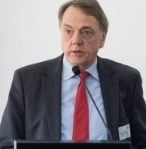 Christian Ohmann合作论文数ECRIN5
 Philip Gribbon合作论文数European ScreeningPort GmbH5
 Roland Pieruschka合作论文数5
 Carole Goble合作论文数School of Computer Science, The University of Manchester5
 Jing Tang合作论文数Institute for Molecular Medicine Finland, University of Helsinki5Maddalena Fratelli合作论文数5Rebecca Ludwig合作论文数4Vera Matser合作论文数4
 Michaela Th. Mayrhofer合作论文数4
 Radislav Sedlacek合作论文数4Sabine Fessele合作论文数4Sara Crockett合作论文数3
 Tobias Grantner合作论文数Dynatrace3Geoffrey Karnbach合作论文数3Jessica Klemeier合作论文数3Harald Wagener合作论文数3Pauline Audergon合作论文数3
 Björn Grüning合作论文数Institut für Informatik, Technische Fakultät, University of Freiburg;Centre for Integrative Biological Signalling Studies3Carla Lancelotti合作论文数3Antje Keppler合作论文数3Jan-Willem Boiten合作论文数3
 Rudolf Wittner合作论文数Masaryk University3
 Martin Weise合作论文数Data Science Research Unit, TU Wien3
 Emma Karoune合作论文数Independent researcher3Gema Valera合作论文数3Henriette Harmse合作论文数3Audrey Richard合作论文数Scripps Res Inst, Dept Immunol & Microbial Sci, Jupiter, FL USA3
 Ziaurrehman Tanoli合作论文数Univ Helsinki, Inst Mol Med Finland FIMM, Helsinki, Finland3Beatriz Serrano-Solano合作论文数Albert Ludwigs Univ Freiburg, Dept Comp Sci, Bioinformat Grp, Freiburg, Germany3
 Alex Sánchez-Pla合作论文数Statistics and Bioinformatics Research Group-Departament d'Estadística, Universitat de Barcelona, Barcelona, Catalonia, Spain3
 Maria Panagiotopoulou合作论文数Université de Technologie de, Compiègne, Sorbonne Universités3
 Claudia Pfander合作论文数Wellcome Trust Sanger Institute3Luca Porcu合作论文数3Rybina Arina合作论文数3
 Andreas Rauber合作论文数Department of Information Systems Engineering, Vienna University of Technology3
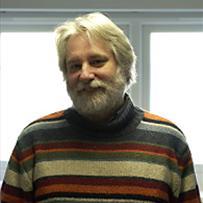 John M. Hancock合作论文数University of Ljubljana;Earlham Institute3
 Antonio Rosato合作论文数Department of Chemistry, University of Florence3
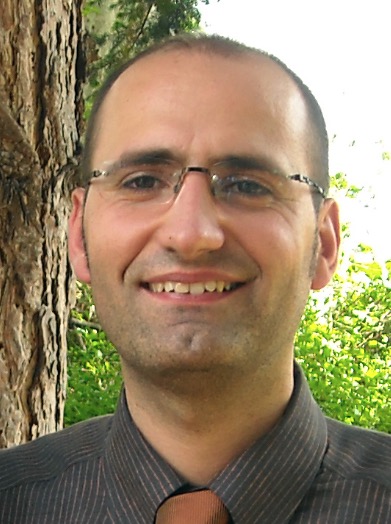 Dario Longo合作论文数Dipartimento di Biotecnologie Molecolari e Scienze per la Salute, Università degli studi di Torino;Research Unit of Torino, Institute of Biostructures and Bioimaging, Italian National Research Council3
 Benedicte Madon合作论文数School of Biological Sciences, University of Auckland3




