We consider the deterministic and stochastic versions of a first order non-autonomous differential equation which allows us to discuss the persistence of rivers (“fleuves”) under additive noise.
In the article 'Criteria for Strong and Weak Random Attractors' necessary and sufficient conditions for strong attractors and weak attractors are studied. In this note we correct two of its theorems on strong attractors.
We provide a framework for studying the expansion rate of the image of a bounded set under a flow in Euclidean space and apply it to stochastic differential equations (SDEs for short) with singular coefficients. If the singular drift of the SDE can be split into two terms, one of which is singular and the radial component of the other term has a radial component of sufficient strength in the direction of the origin, then the random dynamical system generated by the SDE admits a pullback attractor.
For a stochastically monotone Markov chain taking values in a Polish space, we present a number of conditions for existence and for uniqueness of its stationary regime, as well as for closeness of its transient trajectories. In particular, we generalise a basic result by Bhattacharya and Majumdar (2007) where a certain form of mixing, or swap condition was assumed uniformly over the state space. We do not rely on continuity properties of transition probabilities.
We consider a class of discrete time prey–predator models with three interacting species defined on the two-dimensional simplex. For some choices of parameters of the operator describing the evolution of the relative frequencies, we show that the trajectories approach a heteroclinic cycle and that the ergodic hypothesis does not hold. Moreover, we prove that any order Cesàro mean of the trajectories diverges. For another class of parameters, we show that all orbits starting from the interior of the simplex converge to the unique fixed point of the operator while for the remaining choices of parameters all orbits converge to one of the vertices of the simplex. Contrary to many authors, we study discrete time models but we include a speed function f in the dynamics which allows us to approximate the continuous-time case arbitrarily well when f is small.
We show existence of an invariant probability measure for a class of functional McKean-Vlasov SDEs by applying Kakutani's fixed point theorem to a suitable class of probability measures on a space of continuous functions. Unlike some previous works [1, 25], we do not assume a monotonicity condition to hold. Further, our conditions are even weaker than some results in the literature on invariant probability measures for functional SDEs without dependence on the law of the solution [12].
We provide a rather general perfection result for crude local semi-flows taking values in a Polish space showing that a crude semi-flow has a modification which is a (perfect) local semi-flow which is invariant under a suitable metric dynamical system. Such a (local) semi-flow induces a (local) random dynamical system (RDS). Then we show that this result can be applied to several classes of stochastic differential equations driven by semimartingales with stationary increments such as equations with locally monotone coefficients and equations with singular drift. For these examples it was previously unknown whether they generate a (local) RDS or not.
We investigate singular stochastic delay differential equations (SDDEs) in view of their long-time behavior. Using Lyons's rough path theory, we show that SDDEs can be solved pathwise and induce a continuous stochastic flow on the space of (Gubinelli's) controlled paths. In the language of random dynamical systems, this result shows that SDDEs induce a continuous cocycle on random fibers, or, more precisely, on a measurable field of Banach spaces. We furthermore prove a multiplicative ergodic theorem (MET) on measurable fields of Banach spaces that applies under significantly weaker structural and measurability assumptions than preceding METs. Applying it to linear SDDEs shows that the induced cocycle possesses a discrete Lyapunov spectrum that can be used to describe the long-time behavior.
We study stochastic differential equations (SDEs) with multiplicative Stratonovich-type noise of the formdXt=b(Xt)dt+σ(Xt)∘dWt,X0=x0∈Rd,t⩾0, with a possibly singular drift b∈Lp(Rd), p>d and p⩾2, and show that such SDEs can be approximated by random ordinary differential equations by smoothing the noise and the singular drift at the same time. We further prove a support theorem for this class of SDEs in a rather simple way using the Girsanov theorem.
In this work, we address the occurrence of infinite pinning in a random medium. We suppose that an initially flat interface starts to move through the medium due to some constant driving force. The medium is assumed to contain random obstacles. We model their positions by a Poisson point process and their strengths are not bounded. We determine a necessary condition on its distribution so that regardless of the driving force the interface gets pinned.
We prove that the best so far known constant cp = p−p 1−p , p ∈ (0, 1) of a domination inequality, which originates to Lenglart, is sharp. In particular, we solve an open question posed by Revuz and Yor [12]. Motivated by the application to maximal inequalities, like e.g. the Burkholder-Davis-Gundy inequality, we also study the domination inequality under an additional monotonicity assumption. In this special case, a constant which stays bounded for p near 1 was proven by Pratelli and Lenglart. We provide the sharp constant for this case.
We prove that the best so far known constant $c_p=\frac{p^{-p}}{1-p},\, p\in(0,1)$ of a domination inequality, which originates to Lenglart, is sharp. In particular, we solve an open question posed by Revuz and Yor. Motivated by the application to maximal inequalities, like e.g. the Burkholder-Davis-Gundy inequality, we also study the domination inequality under an additional monotonicity assumption. In this special case, a constant which stays bounded for $p$ near $1$ was proven by Pratelli and Lenglart. We provide the sharp constant for this case.
We consider a discrete and a continuum model for the propagation of a curvature sensitive interface in a time independent random medium. In both cases we suppose that the medium contains obstacles that act on the propagation of the interface with an inhibitory or an acceleratory force. We show that the interface remains bounded for all times even when a small constant external driving force is applied. This phenomenon has already been known when only inhibitory obstacles are present. In this work we extend this result to the case of, for example, a random medium of random zero mean forcing.
Consider a discrete time Markov chain with rather general state space which has an invariant probability measure μ. There are several sufficient conditions in the literature which guarantee convergence of all or μ-almost all transition probabilities to μ in the total variation (TV) metric: irreducibility plus aperiodicity, equivalence properties of transition probabilities, or coupling properties. In this work, we review and improve some of these criteria in such a way that they become necessary and sufficient for TV convergence of all respectively μ-almost all transition probabilities. In addition, we discuss so-called generalized couplings.
We show existence and uniqueness of solutions of stochastic path-dependent differential equations driven by cadlag martingale noise under joint local monotonicity and coercivity assumptions on the coefficients with a bound in terms of the supremum norm. In this set-up, the usual proof using the ordinary Gronwall lemma together with the Burkholder-Davis-Gundy inequality seems impossible. In order to solve this problem, we prove a new and quite general stochastic Gronwall lemma for cadlag martingales using Lenglart's inequality.
We establish verifiable general sufficient conditions for exponential or subexponential ergodicity of Markov processes that may lack the strong Feller property. We apply the obtained results to show exponential ergodicity of a variety of nonlinear stochastic partial differential equations with additive forcing, including 2D stochastic Navier-Stokes equations. Our main tool is a new version of the generalized coupling method.
We consider a 2-dimensional stochastic differential equation in polar coordinates depending on several parameters. We show that if these parameters belong to a specific regime then the deterministic system explodes in finite time, but the random dynamical system corresponding to the stochastic equation is not only strongly complete but even admits a random attractor.
We develop a new generalized coupling approach to the study of stochastic delay equations with Holder continuous coefficients, for which analytical PDE-based methods are not available. We prove that such equations possess unique weak solutions, and establish weak ergodic rates for the corresponding segment processes. We also prove, under additional smoothness assumptions on the coefficients, stabilization rates for the sensitivities in the initial value of the corresponding semigroups.
Spatially structured neural networks driven by jump diffusion noise with monotone coefficients, fully path dependent delay and with a disorder parameter are considered. Well-posedness for the associated McKean-Vlasov equation and a corresponding propagation of chaos result in the infinite population limit are proven. Our existence result for the McKean-Vlasov equation is based on the Euler approximation, that is applied to this type of equation for the first time.
 Martin Reisslein合作论文数School of Electrical, Computer and Energy Engineering, Ira A. Fulton Schools of Engineering, Arizona State University19
 Martin Maier合作论文数National Institute for Scientific Research14
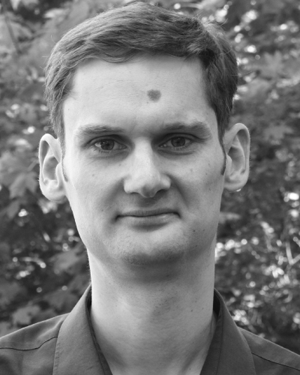 Frank Aurzada合作论文数Institut fur Mathematik;Technische Universitat Berlin;Institut fur Mathematik, Technische Universitat Berlin10
 Patrick W. Dondl合作论文数7
 Patrick Seeling合作论文数Department of Electrical Engineering, Arizona State University5Igor Chueshov合作论文数4Martin Herzog合作论文数4
 Uygun Jamilov合作论文数Akfa Univ4
 Riedel Sebastian合作论文数4Jochen Blath合作论文数4Georgi Dimitroff合作论文数ITWM Kaiserslautern4
 Steffen Dereich合作论文数4Salah-Eldin A. Mohammed合作论文数4Alexey M. Kulik合作论文数Institute of Mathematics, Ukrainian National Academy of Sciences4
 Sarah Geiss合作论文数3
 Chengcheng Ling合作论文数Fakultät für Mathematik, Universität Bielefeld3Isabell Vorkastner合作论文数3
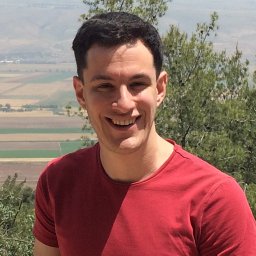 Oleg Butkovsky合作论文数Weierstrass Inst3
 Maite Wilke Berenguer合作论文数3
 David Steinsaltz合作论文数Department of Statistics, University of Oxford;Worcester College, University of Oxford3
 Bas Lemmens合作论文数3
 Michael Mcgarry合作论文数Dept. of Electrical and Computer Engineering, University of Texas at El Paso3
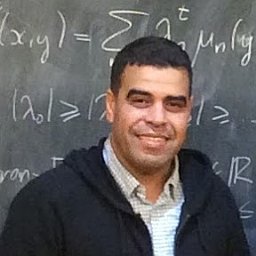 Abdelhadi Es-Sarhir合作论文数Faculty of Sciences;Cadi Ayyad University3
 Navid Ghazisaidi合作论文数Opt Zeitgeist Lab, INRS3
 Hans Crauel合作论文数3
 Benjamin Gess合作论文数Fakultät für Mathematik, Universität Bielefeld3Jesenko Martin合作论文数2
 Sima Mehri合作论文数Inst Math, Humboldt Univ2matti leimbach合作论文数2HOLGER VAN BARGEN合作论文数2Hui Xu (徐晖)合作论文数2
 Chadi Assi合作论文数Concordia Institute for Information Systems Engineering, Concordia University2
 Adam Wolisz合作论文数School of Electrical Engineering and Computer Science, Technical University of Berlin;Einstein Center Digital Future2
 Roger D. Nussbaum合作论文数Department of Mathematics, Rutgers University2
 Franco Flandoli合作论文数Scuola Normale Superiore2
 Krzysztof Burdzy合作论文数Department of Mathematics, University of Washington2Michel Sortais合作论文数2
 Peter Mörters合作论文数Department of Mathematical Sciences, University of Bath2Sergej Beck合作论文数2Michael Cranston合作论文数2Onno Van Gaans合作论文数2Max-K. Von Renesse合作论文数2
 Hannelore Lisei合作论文数Faculty of Mathematics and Computer Sciences, University of Babeş-Bolyai2
 Matthias an der Heiden合作论文数2
 Anis Matoussi合作论文数Laboratoire Statistiques et Processus, Université du Maine2
 Yuebao Wang合作论文数2
 Mohammad S. Kiaei合作论文数Sharif University of Technology2
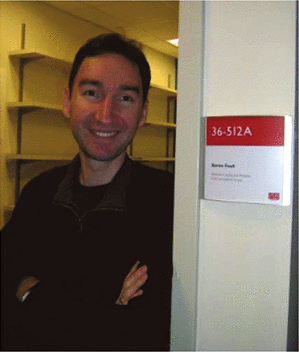 Kerim Fouli合作论文数2
 Jonathan Christopher Mattingly合作论文数Trinity College of Arts & Sciences, Duke University2




