ObjectivesWithin the multidisciplinary team, there can sometimes be lack of clarity as to the specific different contributions of each of the psycho-social-spiritual professionals: social workers, psychologist, and spiritual caregivers. This study examined the content of their end-of-life conversations with patients. MethodsA total of 180 patients with terminal cancer received standard multidisciplinary care, including conversations with a social worker, psychologist, and spiritual caregiver. After each patient's death, these professionals reported using a structured tool which content areas had arisen in their conversations with that patient. ResultsAcross all content areas, there were significant differences between social work and spiritual care. The difference between social work and psychology was slightly smaller but still quite large. Psychology and spiritual care were the most similar, though they still significantly differed in half the content areas. The differences persisted even among patients who spoke with more than 1 kind of professional. The 6 content areas examined proved to subdivide into 2 linked groups, where patients speaking about 1 were more likely to speak about the others. One group, "reflective" topics (inner and transpersonal resources, interpersonal relationships, one's past, and end of life), included all those topics which arose more often with spiritual caregivers or psychologists. The second group, "decision-making" topics (medical coping and life changes), was comprised of those topics which arose most commonly with social workers, bridging between the medical and personal aspects of care and helping patients navigate their new physical, psychological, and social worlds. Significance of resultsThese findings help shed light on the differences, in practice, between patients' conversations with social workers, psychologists, and spiritual caregivers and the roles these professionals are playing; can aid in formulating individualized care plans; and strengthen the working assumption that all 3 professions contribute in unique, complementary ways to improving patients' and families' well-being.
Abstract Background Little is known about the impact of spiritual caregivers, psychologists, and social workers on desired end-of-life (EoL) medical outcomes, such as reduced use of aggressive care in the final 2 weeks of life, having more time between the last active oncological treatment and death, and increased hospice use. Patients and Methods We conducted a prospective study of 180 patients with cancer and their families, their interactions with social work, psychology, and spiritual care, and the above three treatment outcomes. Results We found that having one or more spiritual care visits (adjusted odds ratio (AOR) = 2.02; P = .04), having more quality visits with the psychologist (P = .01), and speaking with someone about one’s inner resources (AOR = 2.25; P = .03) all correlated with reduced EoL aggressive care. The key interventions correlating with increased time after final treatment were more visits with the spiritual caregiver or the social worker (AOR = 1.30; P < .001), and speaking about the medical treatment (AOR = 1.54; P < .001) and about interpersonal relationships (AOR = 2.28; P < .001). A subjectively good-quality connection with the spiritual caregiver correlated with increased hospice use (AOR = 10.00; P = .01). Conclusions Patients with cancer who availed themselves of the spiritual care, psychology, and social work services, each profession in distinct ways, had significantly different outcomes in their EoL medical treatment, including undergoing fewer futile aggressive measures, having more time after their last active treatment, and using hospice services more. These outcomes directly bear on improved quality of life and reduced costs.
Few case studies of spiritual care for Jewish or Israeli patients have been published to date. This end-of-life case study describes a series of spiritual care visits with a 55-year-old traditional, though not religious, Jewish Israeli oncology patient in the last month of his life and, separately, with his sister. Some of the key themes that arose were forgiveness, being honest with ourselves, legacy, and the ability to change, even at the end of one’s life. Spiritual care modalities employed included Psalms, prayer, song, use of self, text study, guided imagery and facilitating mourning. The content and dynamic of the visits are described, and their impact is assessed retrospectively.
Incorrect family name of Layth Mula-Hussain.
OBJECTIVE:Integrating spiritual care into multidisciplinary care teams has seen both successful thoughtful collaboration and challenges, including feelings of competition and poor cross-disciplinary understanding. In Israel, where the profession is new, we aimed to examine how spiritual care is perceived by other healthcare professionals learning to integrate spiritual caregivers into their teams.METHOD:Semi-structured qualitative interviews of 19 professionals (seven physicians, six nurses, three social workers, two psychologists, and one medical secretary) working with spiritual caregivers in three Israeli hospitals, primarily in oncology/hematology. The interviews were transcribed and subjected to thematic analysis.RESULTS:Respondents' overall experience with adding a spiritual caregiver was strongly positive. Beneficial outcomes described included calmer patients and improved patient-staff relationships. Respondents identified reasons for a referral not limited to the end of life. Respondents distinguished between the role of the spiritual caregiver and those of other professions and, in response to case studies, differentiated when and how each professional should be involved.CONCLUSION:Despite its relative newness in Israel, spiritual care is well received by a wide variety of professionals at those sites where it has been integrated. Steps to improve collaboration should include improving multidisciplinary communication to broaden the range of situations in which spiritual caregivers and other professionals work together to provide the best possible holistic care.
Background Although spiritual distress is present across cultures, the ways in which patients experience it vary between cultures. Our goal was to examine the cultural expression and key indicators of spiritual distress in Israel. Methods We conducted a structured interview of 202 oncology outpatients in a cross-sectional study. Self-diagnosis of spiritual distress, which is a demonstrated gold standard for identifying its presence, was compared with the Facit-Sp-12 and a number of other items (from the Spiritual Injury Scale and newly developed Israeli items) hypothesized as Israeli cultural expressions of spiritual distress, demographic and medical data, and patient desire to receive spiritual care. Results Significant variation was found between Israeli cultural expression of spiritual distress and that found in studies from other countries. Key expressions of spiritual distress in this study included lack of inner peace, grief, and an inability to accept what is happening. Items related to faith were not significant, and loss of meaning showed mixed results. Patients requesting spiritual care were more likely to be in spiritual distress. No demographic or medical data correlated with spiritual distress. Conclusions Specially designed interventions to reduce spiritual distress should address the expressions of the distress specific to that culture. Studies of the efficacy of spiritual care can examine the extent of spiritual distress in general or of its specific cultural expressions.
ObjectiveWhen patients feel spiritually supported by staff, we find increased use of hospice and reduced use of aggressive treatments at end of life, yet substantial barriers to staff spiritual care provision still exist. We aimed to study these barriers in a new cultural context and analyzed a new subgroup with unrealized potential for improved spiritual care provision: those who are positively inclined toward spiritual care yet do not themselves provide it.MethodWe distributed the Religion and Spirituality in Cancer Care Study via the Middle East Cancer Consortium to physicians and nurses caring for advanced cancer patients. Survey items included how often spiritual care should be provided, how often respondents themselves provide it, and perceived barriers to spiritual care provision.ResultWe had 770 respondents (40% physicians, 60% nurses) from 14 Middle Eastern countries. The results showed that 82% of respondents think staff should provide spiritual care at least occasionally, but 44% provide spiritual care less often than they think they should. In multivariable analysis of respondents who valued spiritual care yet did not themselves provide it to their most recent patients, predictors included low personal sense of being spiritual (p < 0.001) and not having received training (p = 0.02; only 22% received training). How developed a country is negatively predicted spiritual care provision (p < 0.001). Self-perceived barriers were quite similar across cultures.Significance of resultsDespite relatively high levels of spiritual care provision, we see a gap between desirability and actual provision. Seeing oneself as not spiritual or only slightly spiritual is a key factor demonstrably associated with not providing spiritual care. Efforts to increase spiritual care provision should target those in favor of spiritual care provision, promoting training that helps participants consider their own spirituality and the role that it plays in their personal and professional lives.
The DT is not sufficient to identify spiritual distress. The peace subscale of FACIT-Sp-12 is a better match than the measure as a whole. The SIS is the best match for spiritual distress, although an imperfect one.
INTRODUCTION:Everyone has spiritual resources that generally serve them well, and in times of struggle, part of people's suffering is spiritual. Tending to patients' "whole pain" must include their spiritual pain. Studies from Israel and worldwide found that approximately one-third of advanced cancer patients suffer spiritual distress. In addition, over half of cancer patients attach great importance to feeling hopeful, coping peacefully, and finding meaning in times of illness. Studies found a significant predictive correlation among advanced cancer patients between spiritual wellbeing and despair, desire to die, and suicidal ideation, and a longitudinal connection among patients with heart disease between survival rates and spiritual wellbeing. Spiritual care is provided in thousands of hospitals worldwide, and in limited fashion in over ten hospitals in Israel. By the nature of spiritual care, it is difficult to clinically measure its full impact on and contribution to patients and family members. Nonetheless, studies have found a correlation between a hospital's providing spiritual care, lowered mortality rates in the hospital and increased use of hospice care. Receipt of spiritual care correlated with higher quality of life at the end of life. When the staff, including the spiritual care provider, attends to patients' spirituality, studies find a substantial reduction in aggressive medical interventions at the end of life. In recent years, the Ministry of Health has further emphasized the need to develop hospital-based palliative care teams. As part of this effort, we must consider the integration of spiritual care providers as full members of that team.
INTRODUCTION:Spirituality is a difficult concept to define, one that is often understood differently by different cultures and religious communities. Illness constitutes a dramatic change in the ongoing flow and norms of a person's life, raising questions of the value or meaning of life, questions of self-worth, and questions of forgiveness, to ourselves and others. The profession of spiritual care comes to provide support in these areas. Originally focused on religious care, the profession has shifted to providing care for general spiritual well-being, where professionals care for all patients regardless of religion. This survey presents the impact of spiritual well-being on patients in times of serious illness, as distinct from religious well-being, and the role of the spiritual care provider in supporting patients who are in spiritual distress. Studies demonstrate the connection between spiritual or religious well-being and various clinical measures for advanced illness. Studies of spiritual well-being, as distinct from religious well-being, found a direct connection between higher spiritual well-being and reduced depression and despair among cancer and AIDS patients and improved survival rates among patients with congestive heart failure. Religious struggle has been found to correlate with lowered survival rates for hospitalized elderly patients, and with more prolonged hospital stays among patients with congestive heart failure. Negative religious coping has been found to correlate with depression, anxiety, and decreased quality of life among patients undergoing bone-marrow transplants, cancer patients, and patients with end-stage renal disease. In order to integrate the spiritual care provider into the multidisciplinary hospital team, a model has been proposed for staff to perform a short spiritual history at intake relating to patients' beliefs and the importance they hold for the patient. The staff person learns to be attentive to key points indicating a referral to spiritual care. Spiritual needs addressed by the spiritual care provider may include aligning care plans with patients' values, promoting a sense of peace, lessening isolation, and enabling mourning. In Israel, spiritual care is a new profession, not carrying with it the baggage of earlier models which limited this profession to religious leaders, a fact which enables better integration of the spiritual care provider into the multidisciplinary staff.
In the US, ∼75% of advanced cancer patients want doctors and nurses to provide some spiritual care, and a similar percentage of staff believe they should do so. When patients feel spiritually supported by staff, we find a higher QoL, increased use of hospice, and reduced use of aggressive treatments in EoL. Yet only ∼25% of patients actually receive spiritual care, a service gap that bears understanding and addressing. Relatively little is known about staff spiritual care provision in the Middle East, which the present study aims to address. We distributed the Religion and Spirituality in Cancer Care Study via the Middle East Cancer Consortium to physicians and nurses caring for advanced cancer patients. Survey items include how often respondents think members of their profession should provide spiritual care, how often they themselves do so in practice, and their perceived barriers to spiritual care provision. We had 770 respondents (40% physicians, 60% nurses) from 14 Middle Eastern countries. Eighty percent of respondents think staff should provide patients with spiritual care at least occasionally, but 44% provide spiritual care less often than they think they should. Of their last three incurable patients, respondents offered some form of spiritual care to 47%. In a multivariate analysis (MVA), predictors of spiritual care provision include spirituality, nurses more than doctors, and working in palliative care. How "developed" a country is (following the rankings of the Human Development Index) actually negatively predicts spiritual care provision (p < 0.001). Staff most commonly cite lack of time (67%) and of private space (58%) as reasons they provide spiritual care less often than they think they should. Yet in MVA vs. actual spiritual care provision, these reasons did not correlate with non-care provision. Only the third most commonly cited reason, lack of adequate training (55%), remained significant in the MVA (p = 0.004). Staff spiritual care provision in the Middle East is higher than in the US, but we still see a large gap between its desirability and its actual provision. The greatest barrier to spiritual care provision in practice is lack of training, which only 22% received.
From drawing to sculpture, poetry to journaling, and dance to music and song, the arts can have a major impact on patients' spiritual well-being and health. The arts empower patients to fulfill the basic human drive to create and give patients a sense of possibility. Through creative expression, patients regain a feeling of wholeness, individually and as part of the larger world. Although spiritual caregivers have made occasional use of the arts, it would be better for the arts to be seen as a pillar of spiritual care provision. This paper provides a model for arts-based spiritual care (chaplaincy) in oncology/hematology and elsewhere. We discuss how to match the art form intervention to the individual patient and give examples of many kinds of uniquely spiritual arts-based interventions. In life, there are occasional “caseuras,” or ruptures. Using a theoretical foundation drawn from theologian Michael Fishbane, our model of arts-based spiritual care bridges the experience of the caesura to a renewed sense of meaning, or spiritual reorientation, that can be discovered within the reality of illness. Additionally, the ambiguity and playfulness inherent to creative expression strengthen the patient's flexibility and resilience.
Faced with a serious, incurable illness, disability, and other symptoms, both physical and mental, some patients find themselves wondering about the meaning of their Lives. They need the help of a professional who can perceive their mental turmoil and identify their spiritual needs, and who knows how to help them find meaning in their uncertain state. Spiritual care providers are professionals whose role it is to provide patients with support in their hour of need, to help them preserve their identity in life-threatening situations, and to help them re-endow their world with meaning, employing a special language and set of tools that enable patients to get in touch with their spiritual resources and internal powers of healing. Spiritual care providers serve on the medical staff in Western countries. In the United States, some 2,600 are employed in general hospitals, psychiatric hospitals, long-term care facilities, and palliative care units. Approximately ten years ago, the profession began developing in Israel. Today, dozens of spiritual care providers are now working in the healthcare system. There is a spiritual care network with 21 member organizations. Although the profession is laying down roots in the healthcare system in this country, it is still in its infancy and has to contend with substantial barriers and challenges, including professional recognition, creating positions, and identifying sources of funding for positions. The profession still has much room to grow as it is further incorporated into the healthcare system and continues undergoing adaptation to the Israeli cultural setting.
Background As professional spiritual care (chaplaincy) is introduced to new cultures worldwide, it bears examining which elements of screening and care are universal and, for those elements showing cultural difference, to study them in each culture. No quantitative spiritual care patient study had previously been done in Israel. Our objectives were twofold: 1) to examine who wants spiritual care in Israel, including demographic and clinical variables, and to compare against other results worldwide to further develop universal screening protocols 2) to see what patients want from spiritual care specifically in the Israeli setting. Methods Self-administered patient questionnaire examining spirituality/religiosity, interest in spiritual care (subdivided by type of care), and key demographic, social, and clinical data. The study setting was an Israeli oncology center at which spiritual care had been recently introduced. Results Data from 364 oncology patient questionnaires found 41% interest in spiritual care, as compared to 35%-54% in American studies. Having previously been visited by a spiritual caregiver predicted patient interest in further spiritual care (AOR 2.4, 95% CI 1.2-4.6), suggesting that the new service is being well-received. Multivariate stepwise logistic regression analysis identified additional predictors of openness to receiving spiritual care: self-describing as somewhat/very spiritual vs. not spiritual (adjusted odds ratio [AOR] 3.9 and 6.3, 95% CI 1.8-8.6 and 2.6-15.1) or traditional/religious vs. secular (AOR 2.2 and 2.1, 95% CI 1.3-3.6 and 1.1-4.0); and receiving one visit a week or less from family and friends (AOR 5.6, 95% CI 2.1-15.1). These findings are in line with previous American studies, suggesting universality across cultures that could be utilized in screening. Differences in demographic data and medical condition were not significant predictors of patient interest, suggesting a cultural difference, where age and education were predictors in the American context. Levels of interest in explicitly religious or spiritual support such as prayer or addressing religious/spiritual questions were much lower than in other cultures. Conclusions Results illustrate the demand for and satisfaction with the new Israeli service. The cross-cultural comparison found both culture-dependent and possibly universal predictors of patient interest, and found lower interest in Israel for explicitly religious/spiritual types of support.
What are the ethical responsibilities of the medical staff (doctors, nurses, social workers, and chaplains) regarding the preservation of meaningful life for their patients who are approaching the end of life (EOL)? In particular, what is the staff's ethical responsibility to initiate a conversation with their patient regarding palliative care? By subjecting traditional Jewish teachings to an ethical analysis and then exploring the underlying universal principles, we will suggest a general ethical duty to inform patients of the different care options, especially in a manner that preserves hope. The principle that we can derive from Jewish bioethics teaches that the medical staff has a responsibility to help our patients live in a way that is consistent with how they understand their task or responsibility in life. For some patients, the best way to preserve a meaningful life in which they can fulfill their sense of purpose in the time that remains is to focus on palliation. For this reason, although palliative and supportive care are provided from the time of diagnosis, it is critical we make sure our patients realize that they have the opportunity to make a decision between either pursuing additional active treatments or choosing to focus primarily on palliative therapies to maximize quality of life. The Jewish tradition and our experience in spiritual care suggest the importance of helping patients preserve hope while, simultaneously, honestly acknowledging their situation. Staff members can play a vital role in helping patients make the most of this new period of their lives.
Spiritual care is a vital part of holistic patient care. Awareness of common patient beliefs will facilitate discussions about spirituality. Such conversations are inherently good for the patient, deepen the caring staff-patient-family relationship, and enhance understanding of how beliefs influence care decisions. All healthcare providers are likely to encounter Muslim patients, yet many lack basic knowledge of the Muslim faith and of the applications of Islamic teachings to palliative care. Similarly, some of the concepts underlying positive Jewish approaches to palliative care are not well known. We outline Jewish and Islamic attitudes toward suffering, treatment, and the end of life. We discuss our religions' approaches to treatments deemed unnecessary by medical staff, and consider some of the cultural reasons that patients and family members might object to palliative care, concluding with specific suggestions for the medical team.
 Gil Bar Sela合作论文数9
 Gil Bar-Sela合作论文数Department of Oncology, Emek Medical Center;Department of Oncology, Faculty of Medicine, Technion Israel Institute of Technology;Oncology Department, Rambam Medical Center6
 Netta Bentur合作论文数4
 Mohamad H Khleif合作论文数3
 Mazin Faisal Al-Jadiry合作论文数3
 Rassouli Maryam合作论文数3
 Khaled Khader合作论文数3Rana Fakhri Obeidat合作论文数Faculty of Nursing, Zarqa University3
 Nahla Gafer合作论文数Palliative Care Unit, Radiation and Isotope Centre, Khartoum, Sudan.3Charalambous H合作论文数3
 Michael Silbermann合作论文数Technion-Israel Institute of Technology, The Rappaport Family Institute for Research in the Medical Sciences3
 Rejin Kebudi合作论文数Istanbul Medical Faculty, Istanbul University3Ma'an Al-Omari合作论文数2Gülçin Özalp合作论文数2Sophia Nestoros合作论文数2Ibtisam Ghrayeb合作论文数2Hani Ayyash合作论文数2Inbal Mitnik合作论文数2Daniela Zalman合作论文数2Ilana Shazar合作论文数2Tehilah Meged-Book合作论文数2
 Salvatore Campisi-Pinto合作论文数Phyto-Lipid Biotech Lab (PLBL),, Ben Gurion University of the Negev2Svetlana Baziliansky合作论文数Sch Social Work, Univ Haifa2Rasha Fahmi合作论文数2G Tuncel合作论文数2Rehana Punjwani合作论文数2
 Safa Faraj合作论文数University of Wasit2
 Alaa Albashayreh合作论文数University of Iowa College of Nursing2
 Suha Omran合作论文数Faculty of Nursing, Jordan University of Science and Technology2
 Mohammad Al Qadire合作论文数School of Nursing, Al Albayat University2
 Layth Mula-Hussain合作论文数2Mashiach Tanya合作论文数2
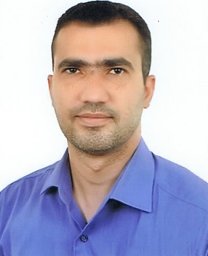 Hasanein Ghali合作论文数2
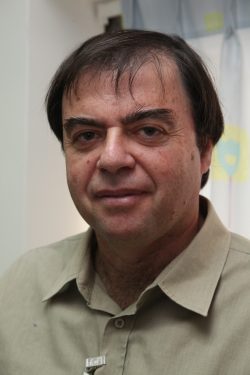 Eran Ben Arye合作论文数The Ruth and Bruce Rappaport Faculty of Medicine, Technion – Israel Institute of Technology2
 Karima Elshamy合作论文数2
 Doumit Myrna A A合作论文数School of Nursing, Lebanese American University2
 Ahmet Ozet合作论文数Department of Clinical Oncology, GATA Faculty of Medicine2
 Ibrahim Turker合作论文数Department of Medical Oncology, Dr. Abdurrahman Yurtaslan Ankara Oncology Education and Research Hospital2
 Gulbeyaz Can合作论文数Florence Nightingale School of Nursing, Istanbul University2Sergey Postovsky合作论文数2
 Sultan Kav合作论文数Baskent University;Faculty of Health Sciences;Department of Nursing;Faculty of Health Sciences, Baskent University2Kassim Baddarni合作论文数1Doron Lulav Grinwald合作论文数1R. Punjwani合作论文数1Corn Benjamin W合作论文数1Doumit Michael合作论文数1Ettun Rachel合作论文数1
 Czamanski-Cohen Johanna合作论文数Center for Women's Health Studies and Promotion, Ben Gurion University of the Negev1Ghrayeb I合作论文数1




