Article Kalibrierung von Volumendatensätzen aus Spiral-CT-Akquisitionen zur Konturfindung bei individueller Schädelimplantatfertigung was published on January 1, 1998 in the journal Biomedical Engineering / Biomedizinische Technik (volume 43, issue s1).
AbstractTransport of solutes in porous materials plays an important role in many kinds of materials such as biological tissues, porous implants or even soils. In most of the cases the liquid phase in the pores acts as a solvent for one or more solutions. The motion of the solutions is driven by both, the advective and convective transport. The former is related to the fluid phase velocity whereas the letter follows the concentration gradient. The interactions between the solutes and the solid and liquid phase may influence the overall material behavior. Although the solutes often carry electrical charges this paper is focused on neutrally charged solutions. In this contribution the model to describe the solute transport in a fluid saturated porous material is based on the well founded Theory of Porous Media. We will present the basic framework and the governing equations. Finally, we will show a three dimensional numerical example of the solute driven degradation of a skull implant. (© 2009 Wiley‐VCH Verlag GmbH & Co. KGaA, Weinheim)
Article Das TICC-Verfahren (Tomography Imageprocessing CAD CAM) zur individuellen Implantatherstellung was published on January 1, 2000 in the journal Biomedical Engineering / Biomedizinische Technik (volume 45, issue s1).
Introduction: A 16-year-old Arab boy had suffered from a severe head injury including an intracranial haematoma. Despite replantation of the bone flap later on, the cosmetic result was very unfavourable due to partial resorption of the reinserted bone and atrophy of the right temporalis muscle. Aim: For contour reconstruction of both soft and hard tissues the boy was transferred from Saudi Arabia. Method: A spiral CT was obtained and the contour was reconstructed using a new algorithm for surface generation. Result: The resulting titanium implant was inserted without complications or the need for revision. The cosmetic result was good and corresponded to the preoperative digital planning. Conclusion: Techniques of computer-assisted implant prefabrication and surgery may include special algorithms for considering soft tissues including contour deficits of the temporalis muscle. (c) 2007 European Association for Cranio-Maxillofacial Surgery.
Objective The TICC (Tomography, Image processing, CAD, CAM) processing chain developed at the Ruhr-University Bochum in Germany has already been established since several years for the reconstruction of large pre-existing posttraumatic skull defects with individual prefabricated implants made of pure titanium. So far, more than 500 titanium implants have been inserted with great success at more than 60 clinical centres worldwide. The aim of our study was to evaluate all implants inserted between 1994 and 2000. Materials and Methods The study describes the clinical experience with 166 patients receiving 169 skull implants between 1994 and 2000. All 169 implants were measured and categorized in the CAD system in terms of size and anatomical localization. The surgical and radiological reports of the patients were evaluated. Sixty patients operated at the university hospital in Bochum and nearby were clinically reviewed describing scars, position of the implants and cosmetic results. Questionnaires of 131 patients were analyzed regarding the postoperative quality of life distinctly. Results The study shows constantly good to excellent results intraoperatively as well as postoperatively regarding complications, fit of the implants and the clinical follow-up. In particular the enquiry of the patients shows that titanium skull implants improve quality of life. Conclusion High precision and easy handling as well as a low complication rate and the high contentedness of the patients make the individual titanium skull implants valuable for cranioplasty, especially in complicated applications with very large defects, multiple previous operations and additional irradiations. Even in these difficult cases predictable results are possible.
Biodegradable functionally graded skull implants on the basis of polylactides and calcium phosphate/calcium carbonate were prepared in an individual mould using a combination of different processing techniques. A geometrically corresponding resection template was designed to enable a craniectomy and cranioplasty with the prepared implant in the same operation. After various preliminary experiments concerning degradation kinetics, pH evolution during degradation, micromorphology, biocompatibility tests in human osteoblast cell cultures and surgery of cadaver heads, a new large-animal model was developed for long-term in vivo studies. In eight 12-months-old sheep, the surgical templates were used to create 4.5×5cm2 calvarial defects which were then filled with the corresponding degradable implants in the same operation. The animals were sacrificed after 2, 9, 12 and 18 months, and the implants and the surrounding tissues were analysed by computer tomography (CT), macroscopic examination and microscopy. The new animal model proved to be reliable and very suitable for large individual craniectomies and cranioplasties. The formation of new bone from the dural layer of the meninges corresponded well to the degradation of the porous inner layer of the implants whereas the skull contour was stabilised by the compact outer layer over the follow-up period.
A functionally graded implant was developed to substitute the function of the skull for geometry and for protection of the brain. The implant consists of polylactide/amorphous calcium phosphate as mechanically stable external structure and of polylactide/calcium carbonate as porous internal structure for the ingrowth of bone. For the examination of this protective mechanical function implant fragments were compared with bone fragments of the corresponding calvarium with a 3-point bending test.
This study of 169 consecutive individually prefabricated CAD/CAM titanium implants for cranioplasty between 1993 and 2000 yields comprehensive data of geometric, surgical, and medical aspects, and answers various questions of quality of life. The scheme for the classification of size and location of the defects is based on the precise CAD data of each implant. CAD/CAM-prefabricated titanium implants are of increased benefit in the neurocranium compared to the craniofacial area, including the forehead and the periorbital rims, which are more problematic with regard to primary fit and cosmetic result. Neurocranial protection and the consecutive improvement of the quality of life are more distinct in this group and come along with the highest benefit for patients with very large defects (>100 cm2 defect area). For the first time, the defect area could be determined so precisely with the CAD implant data and such a high number of extremely large consecutive cranioplasties could be evaluated.
In the past, rapid prototyping has been used for preoperative planning of surgical operations. Today biocompatible materials are used for soft- and hard-tissue replacement in surgery. This study shows a new application of a laser beam for rapid prototyping. The selective laser melting (SLM) process is used for production of detailed anatomic macro- and micro-structures in 100% dense steel and in titanium.
Introduction: A major goal of research in bone transplantation is the ability to avoid the creation of secondary bone defects. Experiments in minipigs have shown that it is possible to induce heterotopic bone with the aid of recombinant human bone morphogenetic protein-7 (rhBMP-7). We were able to grow an individually customized bone transplant inside the latissimus dorsi muscle of an adult male patient. This was then transplanted to repair an extended mandibular discontinuity defect.
SAMP6 mice exhibit features of skeletal aging including reduced bone mineral density (BMD), diminished rate of bone formation, fewer mesenchymal stem cell (MSC) progenitors of osteoblasts, decreased osteoblasts and increased marrow adipocytes. A decrease in the self-renewal capacity of MSCs may account for the reduced osteoblast number and bone formation. Increased activation, or overexpression, of the transcription factor PPARγ2 in SAMP6 mice may also contribute as features of the SAMP6 skeletal phenotype were reproduced by feeding the PPARγ2 ligand rosiglitazone to normal mice. Genetic mapping studies utilizing F2 progeny of SAMP6 mice mated with either SAMR1 or the related AKR/J strain identified quantitative trait loci (QTLs) for vertebral BMD on chromosomes 2, 7, 11, 13, 16, 18, and X. Transfer of the AKR allele of the chromosome 2 QTL into SAMP6 mice by backcrossing caused a 5.0–5.4% increase in BMD, accounting for ∼50% of the BMD difference between SAMP6 and AKR/J. Studies in Scottish postmenopausal women revealed an association of the X chromosome locus with BMD, thus demonstrating the applicability of QTL mapping information derived from mice to humans. Future genetic and functional studies of SAMP6 mice should therefore provide clues as to why the production of osteoblasts is reduced during aging in mice and humans.
This study describes the direct end milling method using an articulated robot in the machining of aluminum building materials. The most important characteristics of this method are using a small diameter of end mill (φ3 mm) and a high-speed spindle to reduce the cutting force in order to reduce the effect of the low stiffness of the articulated robot. In this work, the behavior of this end milling operation was first studied by end milling experiments and structural analysis. It was established that this machining method can accommodate a higher feed rate than in the conventional machining method, because in end milling, the cutting force by of the articulated robot is decreased by 50–70% in comparison with a fluting machine. The cutting accuracy of articulated robot can also be compensated for by using the regulation of the deformation of the articulated robot in end milling. Consequently, a new multifunctional automatic machine tool, which take advantage of the flexibility of articulated robot, can be realized.
AbstractUm Lücken in der Schädeldecke zu schließen, werden Titanimplantate passgenau eingesetzt. Dabei können computergestützte Verfahren und Roboter helfen, die in enger Kooperation zwischen Medizinern und Ingenieuren entwickelt werden
AbstractTitan ist ein etabliertes Knochenersatzmaterial für die Versorgung komplexer Schädeldefekte mittels individuell geplanter CAD/CAM‐Implantate. Zur Verbesserung der durch Patientenkontrollstudien evaluierten thermischen und psychischen Belastungsfaktoren wurde in der vorliegenden Studie ein gradiertes Kompositmaterial aus Polymeren und Calciumphosphat bzw. Calciumcarbonat entwickelt. Biokompatibilitätsuntersuchungen auf Basis des ISO‐Standards 10993‐5 erlaubten zunächst die Auswahl geeigneter Materialien sowie nachfolgend die Feststellung der verbesserten pH‐Charakteristika der Kompositmaterialien gegenüber den reinen Polymeren. Für die geometrisch korrekte Herstellung der Implantate aus Kompositmaterialien wurden zwei unterschiedliche Verarbeitungsmethoden gewählt und kombiniert. Diese Implantate konnten bereits durch in‐vivo Versuche an einem eigens entwickelten Großtiermodell getestet werden und zeigten post mortem bei einem Nachbeobachtungszeitraum von zwei Monaten keine histologischen Reaktionen außerhalb der Norm und eine beginnende Knochenbildung. Klinisch ergaben sich bei den lebenden Schafen auch nach einem Zeitraum von bisher 11 Monaten keinerlei Komplikationen.
 Harald Eufinger合作论文数68S. Weihe合作论文数34
 Matthias Epple合作论文数Faculty of Chemistry, University of Duisburg-Essen12
 Martin Scholz合作论文数11Egbert Machtens合作论文数11Christoph Albrecht Rasche合作论文数10C. Schiller合作论文数10Stefan Hassfeld合作论文数9Stephan Weihe合作论文数9
 Lothar Heuser合作论文数9Andreas Falk合作论文数7Koenen D合作论文数6Wolfgang Maßberg合作论文数6Joerg Raczkowsky合作论文数Einrichtung(en) IPR W?0?2rn;Geb?0?1ude;Raum 40.28 Montagebau Informatik 1116Kamyszek T合作论文数5H. C. Wehmöller合作论文数4Alexander Tschakaloff合作论文数4
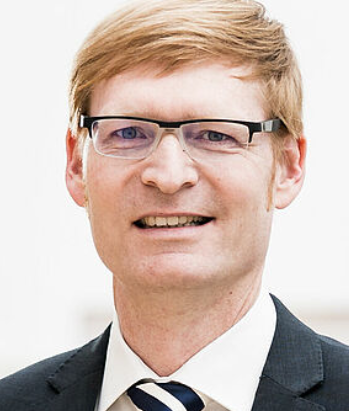 Dirk Engel合作论文数Hochschule Stralsund4Christian Rasche合作论文数Raschkee, Sylvia British Columbia Medical Technology Industry Association Sylvia Raschkee R&D;Engineering (604)412-7597 silvia raschke@bcit.ca
Raschkes, Karl Oregon Music Educators Association Salem, Oregon Schools - Karl Raschkes, Supervisor of Music4
Dirk Engel合作论文数Hochschule Stralsund4Christian Rasche合作论文数Raschkee, Sylvia British Columbia Medical Technology Industry Association Sylvia Raschkee R&D;Engineering (604)412-7597 silvia raschke@bcit.ca
Raschkes, Karl Oregon Music Educators Association Salem, Oregon Schools - Karl Raschkes, Supervisor of Music4 Patrick H Warnke合作论文数4R. Von Oepen合作论文数4Arm Wittkampf合作论文数3H. Knoop合作论文数3
 Philipp Scherer合作论文数Department of Internal Medicine, Medical School, The University of Texas Southwestern Medical Center;Touchstone Center for Diabetes Research, The University of Texas Southwestern Medical Center3
 Henning Schliephake合作论文数3Albrecht Harders合作论文数3
 Hendrik Terheyden合作论文数3
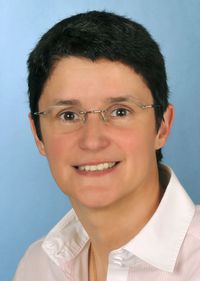 Kirsten Schmieder合作论文数Neurochirurgische Universitatsklinik, Universitatsklinikum Knappschaftskrankenhaus3Dieter Kruse合作论文数3R. Böckmann合作论文数2T. Annen合作论文数2Jutta Lehmbrock合作论文数2Nc Gellrich合作论文数2Müller C合作论文数2
 Strahinja Stojadinovic合作论文数Virginia Commonwealth University2
 Alexander Schramm合作论文数2Frans W Zonneveld合作论文数2Jorg Wiltfang合作论文数2
 Yahya Acil合作论文数2
 Hendrik Bolte合作论文数2Jörg Raczkowsky合作论文数Geb?0?1ude / Raum 40.28 Montagebau Informatik 111
Einrichtung(en) IPR W?0?2rn2Martin Engelhardt合作论文数2M. Bücheler合作论文数2
Hendrik Bolte合作论文数2Jörg Raczkowsky合作论文数Geb?0?1ude / Raum 40.28 Montagebau Informatik 111
Einrichtung(en) IPR W?0?2rn2Martin Engelhardt合作论文数2M. Bücheler合作论文数2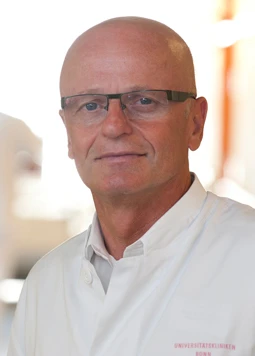 Friedrich Bootz合作论文数Klinik und Poliklinik für Hals-Nasen-Ohren-Heilkunde/Chirurgie, Universitätsklinikum Bonn2Olaf Winzen合作论文数2E Behrens合作论文数1




