The AMReX-Astrophysics Microphysics library provides a common set of microphysics routines (reaction networks and associated physics, equations of state, and various transport coefficients) as well as solvers (stiff ODE integrators, nonlinear system solvers) for astrophysical simulation codes built around the AMReX adaptive mesh refinement library (W. Zhang et al., 2019). Several multi-dimensional simulation codes, including the compressible hydrodynamics code Castro (Almgren et al., 2010), the low-Mach number hydrodynamics code MAESTROeX (Fan et al., 2019), and the radiation-hydrodynamics code Quokka (Wibking Krumholz, 2022) use Microphysics to provide the physics and solvers needed to close the hydrodynamics systems that they evolve. The library is implemented in C++ with GPU-offloading a key design feature.
We describe the latest release of pynucastro: a community python library for nuclear astrophysics. The goal of the pynucastro project is to build the tools needed to interactively explore nuclear properties, reaction rates, and networks, and to export these networks to a variety of simulation codes. Major changes in pynucastro since the last major release include new rate approximations, a stellar equation of state, support for the StarLib library and rate uncertainties, and new tools for exploring networks.
We investigate the properties of mixed H/He flames in X-ray bursts using 2D hydrodynamic simulations. We find that as the initial hydrogen abundance of the atmosphere increases, the flame is less energetic and propagates slower. The simulation outcome, whether a flame forms and whether there's runaway burning at the base of the atmosphere, is very sensitive to the initial model and the nuclear reaction network used. We also see that at late times a secondary flame ignites, with the ignition mechanism dependent on the composition.
We present a benchmark problem to assess the treatment of shock-induced nuclear burning in the context of double detonation Type Ia supernovae. In a stratified white dwarf model, we implement a shock-detection criterion that suppresses burning in zones characterized by compression and significant pressure gradients, controlled by a tunable parameter, f_ shock. One-dimensional simulations, using the open-source Castro suite, were conducted across three treatments - burning fully enabled, and burning suppressed with f_ shock = 2/3 and f_ shock = 1 - across three spatial resolutions (5.0, 2.5, and 0.3125 km). At the finest resolution, the burning-enabled and f_ shock = 1 models converge, while the f_ shock = 2/3 front continues to show slight offset behavior. Since most simulations are carried out at much lower resolutions, our tests support the idea that burning in shocks should always be disabled in practice. We also observe that the behavior of lower-resolution simulations remains extremely sensitive to the choice of f_ shock.
Astrophysical observations of the cosmos allow us to probe extreme physics and answer foundational questions on our universe. Modern astronomy is increasingly operating under a holistic approach, probing the same question with multiple diagnostics including how sources vary over time, how they appear across the electromagnetic spectrum, and through their other signatures, including gravitational waves, neutrinos, cosmic rays, and dust on Earth. Astrophysical observations are now reaching the point where approximate physics models are insufficient. Key sources of interest are explosive transients, whose understanding requires multidisciplinary studies at the intersection of astrophysics, gravity, nuclear science, plasma physics, fluid dynamics and turbulence, computation, particle physics, atomic, molecular, and optical science, condensed matter and materials science, radiation transport, and high energy density physics. This white paper provides an overview of the major scientific advances that lay at the intersection of physics and astronomy and are best probed through time-domain and multimessenger astrophysics, an exploration of how multidisciplinary science can be fostered, and introductory descriptions of the relevant scientific disciplines and key astrophysical sources of interest.
Stellar evolution is driven by the changing composition of a star from nuclear reactions. At the late stages of evolution and during explosive events, the timescale can be short and drive strong hydrodynamic flows, making simulations of astrophysical reacting flows challenging. Over the past decades, the standard approach to modeling reactions in simulation codes has been operator splitting, using implicit integrators for reactions. Here we review the state-of-the-art, explore some of the assumptions in this standard approach, and describe some techniques for improving the efficiency and accuracy of astrophysical reacting flows.
A classical nova is a thermonuclear runaway initiated on a white dwarf accreting solar-like material from its stellar companion. Once the white dwarf accretes enough mass, the pressure at the base of the accreted layer reaches a critical point, leading to the ignition of the hydrogen fuel at their interface. This paper presents a set of two-dimensional CO classical nova simulations with an extended buffer zone of a fixed low density and temperature between the top of the accreted layer and the upper boundary, allowing us to capture the thermonuclear outburst in the domain. Our domain reduces the role of the upper-outflow boundary condition that has affected previous simulations and allows us to explore the nucleosynthesis evolution in detail. We also study the effects of the initial temperature perturbation and buffer size to explore their sensitivity in our simulations. Finally, we start our simulations with a lower temperature at the base of the accreted layer (7× 10^7 K) than previous work, allowing us to capture mixing earlier in the evolution, reducing the effects of the mixing-length-theory assumptions. This allows for a more realistic description of convective transport in our models.
A proposed setting for thermonuclear (Type Ia) supernovae is a white dwarf that has gained mass from a companion to the point of carbon ignition in the core. In the early stages of carbon burning, called the simmering phase, energy released by the reactions in the core drive the formation and growth of a core convection zone. One aspect of this phase is the convective Urca process, a linking of weak nuclear reactions to convection, which may alter the composition and structure of the white dwarf. The convective Urca process is not well understood and requires 3D fluid simulations to properly model the turbulent convection, an inherently 3D process. Because the neutron excess of the fluid both sets and is set by the extent of the convection zone, the realistic steady state can only be determined in simulations with real 3D mixing processes. Additionally, the convection is relatively slow (Mach number less than 0.005) and thus a low Mach number method is needed to model the flow over many convective turnovers. Using the MAESTROeX low Mach number hydrodynamic software, we present the first full-star 3D simulations of the A = 23 convective Urca process, spanning hundreds of convective turnover times. Our findings on the extent of mixing across the Urca shell, the characteristic velocities of the flow, the energy-loss rates due to neutrino emission, and the structure of the convective boundary can be used to inform 1D stellar models that track the longer-timescale evolution.
We build on the simplified spectral deferred corrections (SDC) coupling of hydrodynamics and reactions to handle the case of nuclear statistical equilibrium (NSE) and electron/positron captures/decays in the cores of massive stars. Our approach blends a traditional reaction network on the grid with a tabulated NSE state from a very large, O(100) nuclei network. We demonstrate how to achieve second-order accuracy in the simplified-SDC framework when coupling NSE to hydrodynamics, with the ability to evolve the star on the hydrodynamics time step. We discuss the application of this method to convection in massive stars leading up to core collapse. We also show how to initialize the initial convective state from a 1D model in a self-consistent fashion. All of these developments are done in the publicly available Castro simulation code and the entire simulation methodology is fully GPU-accelerated.
We describe the AMReX-Astrophysics framework for exploring the sensitivity of astrophysical simulations to the details of a nuclear reaction network, including the number of nuclei, choice of reaction rates, and approximations used. This is explored by modeling a simple detonation with the Castro simulation code. The entire simulation methodology is open-source and GPU-enabled.
We perform the first multidimensional fluid simulations of thermonuclear helium ignition underneath a hydrogen-rich shell. This situation is relevant to Type I X-ray bursts on neutron stars that accrete from a hydrogen-rich companion. Using the low-Mach number fluid code MAESTROeX , we investigate the growth of the convection zone due to nuclear burning, and the evolution of the chemical abundances in the atmosphere of the star. We also examine the convective boundary mixing processes that cause the evolution to differ significantly from previous one-dimensional simulations that rely on mixing-length theory. We find that the convection zone grows outward as penetrating fluid elements cool the overlying radiative layer, rather than directly from the increasing entropy of the convection zone itself. Simultaneously, these flows efficiently mix composition, carrying carbon out of and protons into the convection zone even before contact with the hydrogen shell. We discuss the implications of these effects for future modeling of these events and observations.
Well-balanced reconstruction techniques have been developed for stellar hydrodynamics to address the challenges of maintaining hydrostatic equilibrium during evolution. I show how to adapt a simple well-balanced method to the piecewise parabolic method for hydrodynamics. A python implementation of the method is provided.
X-ray bursts are the thermonuclear runaway of a mixed H/He layer on the surface of a neutron star. Observations suggest that the burning begins locally and spreads across the surface of the star as a flame. Recent multidimensional work has looked in detail at pure He flames spreading across a neutron star. Here we report on progress in multidimensional modeling of mixed H/He flames and discuss the challenges.
pynucastro is a python library that provides visualization and analyze techniques to classify, construct, and evaluate nuclear reaction rates and networks. It provides tools that allow users to determine the importance of each rate in the network, based on a specified list of thermodynamic properties. Additionally, pynucastro can output a network in C++ or python for use in simulation codes, include the AMReX-Astrophysics simulation suite. We describe the changes in pynucastro since the last major release, including new capabilities that allow users to generate reduced networks and thermodynamic tables for conditions in nuclear statistical equilibrium.
We study the coupling of hydrodynamics and reactions in simulations of the double-detonation model for Type Ia supernovae. When assessing the convergence of simulations, the focus is usually on spatial resolution; however, the method of coupling the physics together as well as the tolerances used in integrating a reaction network also play an important role. In this paper, we explore how the choices made in both coupling and integrating the reaction portion of a simulation (operator/Strang splitting versus the simplified spectral deferred corrections method we introduced previously) influences the accuracy, efficiency, and nucleosynthesis of simulations of double detonations. We find no need to limit reaction rates or reduce the simulation time step to the reaction timescale. The entire simulation methodology used here is GPU-accelerated and made freely available as part of the Castro simulation code.
A proposed setting for thermonuclear (Type Ia) supernovae is a white dwarf that has gained mass from a companion to the point of carbon ignition in the core. There is a simmering phase in the early stages of burning that involves the formation and growth of a core convection zone. One aspect of this phase is the convective Urca process, a linking of weak nuclear reactions to convection that may alter the composition and structure of the white dwarf. Convective Urca is not well understood and requires 3D fluid simulations to realistically model. Additionally, the convection is relatively slow (Mach number less than 0.005) so a low-Mach method is needed to make simulating computationally feasible. Using the MAESTROeX low-Mach hydrodynamics code, we investigate recent changes to how the weak reactions are modeled in the convective Urca simulations. We present results that quantify the changes to the reaction rates and their impact on the evolution of the simulation.
We present MESA-Web,a cloud resource with an online interface to the Modules for Experiments in Stellar Astrophysics (MESA) software instrument. MESA-Web allows learners to evolve stellar models without the need to download and install MESA. Since being released in 2015, MESA-Web has delivered over 17,000 calculations to over 2,200 unique learners and currently performs about 11 jobs per day. MESA-Web can be used as an educational tool for stars in the classroom or for scientific investigations.We report on new capabilities of MESA-Web introduced since its 2015 release including learner-supplied nuclear reaction rates, custom stopping conditions, and an expanded selection of input parameters. To foster collaboration we have created a Zenodo MESA-Web community hub, where instructors can openly share examples of using MESA-Web in the classroom. We discuss two examples in the current community hub. The first example is a lesson module on Red Giant Branch stars that includes a suite of exercises designed to fit a range of learners and a Jupyter workbook for additional analysis. The second example is lesson materials for an upper-level Astronomy majors course in Stars and Radiation that includes an assignment verifying some of the expected trends that are presented in a popular stellar physics textbook.
We explore the early evolution of flame ignition and spreading on the surface of a neutron star in three dimensions, in the context of X-ray bursts. We look at the nucleosynthesis and morphology of the burning front and compare to two-dimensional axisymmetric simulations to gauge how important a full three-dimensional treatment of the flame is for the early dynamics. Finally, we discuss the progress toward full-star resolved flame simulations.
Through the use of axisymmetric 2D hydrodynamic simulations, we further investigate laterally propagating flames in X-ray bursts (XRBs). Our aim is to understand the sensitivity of a propagating helium flame to different nuclear physics. Using the Castro simulation code, we confirm the phenomenon of enhanced energy generation shortly after a flame is established by adding ^12 C(p, γ ) ^13 N( α , p) ^16 O to the network, in agreement with the past literature. This sudden outburst of energy leads to a short accelerating phase, causing a drastic alteration in the overall dynamics of the flame in XRBs. Furthermore, we investigate the influence of different plasma screening routines on the propagation of the XRB flame. We finally examine the performance of simplified spectral deferred correction, a novel approach to hydrodynamics and reaction coupling incorporated in Castro, as an alternative to operator splitting.
We describe pynucastro 2.0, an open-source library for interactively creating and exploring astrophysical nuclear reaction networks. We demonstrate new methods for approximating rates and use detailed balance to create reverse rates, show how to build networks and determine whether they are appropriate for a particular science application, and discuss the changes made to the library over the past few years. Finally, we demonstrate the validity of the networks produced and share how we use pynucastro networks in simulation codes.
 Alan Calder合作论文数Center for Computational Sciences, The State University of New York64
 Paul M. Ricker合作论文数Department of Astronomy, College of Liberal Arts and Sciences, University of Illinois at Urbana-Champaign58
 L Jonathan Dursi合作论文数Canadian Institute for Theoretical Astrophysics;University of Toronto;Canadian Institute for Theoretical Astrophysics, University of Toronto57
 Francis Timmes合作论文数School of Earth and Space Exploration, Arizona State University57
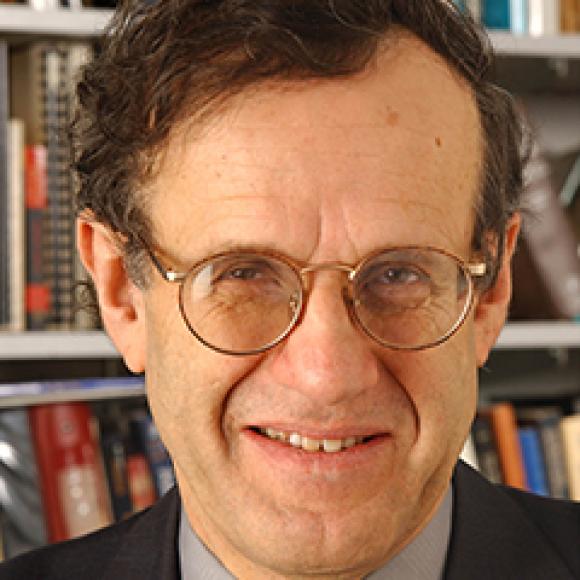 Robert Rosner合作论文数Department of Physics, University of Chicago;Clare Hall, Cambridge University54
 Ann S. Almgren合作论文数Center for Computational Sciences and Engineering, Lawrence Berkeley National Laboratory;Applied Mathematics Department , Applied Mathematics and Computational Research Division, Lawrence Berkeley National Laboratory37
 James W. Truran合作论文数36B. Fryxell合作论文数34K. Olson合作论文数30
 Stanford E. Woosley合作论文数Department of Astronomy and Astrophysics, Science Division, University of California at Santa Cruz;Lawrence Livermore National Laboratory25A. Nonaka合作论文数25
 Donald Q. Lamb合作论文数Department of Astronomy and Astrophysics, The University of Chicago;Enrico Fermi Institute, The University of Chicago;Kavli Institute for Cosmological Physics, The University of Chicago22Henry M. Tufo合作论文数Department of Computer Science, University of Colorado at Boulder22
 John B. Bell合作论文数Lawrence Berkeley National Laboratory22kent d olson合作论文数20max p katz合作论文数19peter j macneice合作论文数19
 Chris Michael Malone合作论文数Department of Physics and Astronomy;Stony Brook University;Department of Physics and Astronomy, Stony Brook University17Alice Harpole合作论文数Dept Phys & Astron, SUNY Stony Brook15
 Peter J Macneice合作论文数Goddard Space Flight Center, National Aeronautics and Space Administration13
 Marc Day合作论文数12
 Edward F. Brown合作论文数Department of Computational Mathematics, Science and Engineering, College of Natural Science, Michigan State University12Weiqun Zhang合作论文数Shanghai Astronomical Observatory Chinese Academy of Sciences, Chinese Academy of Sciences12
 Alexandros Alexakis合作论文数Département de Physique, Ecole Normale Supérieure;Laboratoire de Physique Statistique, Ecole Normale Supérieure11Kiran Eiden合作论文数10
 Hendrik Schatz合作论文数Department of Physics and Astronomy, Michigan State University;National Superconducting Cyclotron Laboratory, Michigan State University9Donald E. Willcox合作论文数8A. Caceres合作论文数8H. Tufo合作论文数7Eric T. Johnson合作论文数7
 Don E. Willcox合作论文数SUNY Stony Brook, Dept Phys & Astron, Stony Brook, NY 11794 USA7
 Andrew Cumming合作论文数Department of Physics, Faculty of Science, McGill University7
 Alexander Heger合作论文数Monash Centre for Astrophysics, School of Physics and Astronomy, Monash University7
 Katherine Riley合作论文数Argonne National Laboratory7
 Dean Townsley合作论文数Department of Physics and Astronomy, Barefield College of Arts and Sciences, The University of Alabama7Andrew Nonaka合作论文数6C. A. Rendleman合作论文数6Alexander Smith Clark合作论文数6
 Tomasz Plewa合作论文数Center for Astrophysical Thermonuclear Flashes;University of Chicago;Center for Astrophysical Thermonuclear Flashes, University of Chicago6Yuri Cavecchi合作论文数6
 Natalia Vladimirova合作论文数Department of Astronomy and Astrophysics, University of Chicago6
 Yuannan Young合作论文数Department of Astronomy;University of Chicago;Department of Astronomy, University of Chicago6H. M. Tufo合作论文数5Maria Barrios Sazo合作论文数5Brendan Boyd合作论文数5Zhi Chen合作论文数5
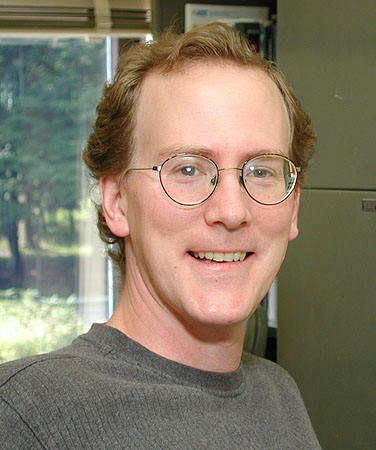 Tod Strohmayer合作论文数X-ray Astrophysics Branch, Laboratory for High Energy Astrophysics, Goddard Space Flight Center, National Aeronautics and Space Administration5




