The Kimberley Marine Region is a vast stretch of complex eastern Indian Ocean seascape spanning approximately six degrees of latitude and eight degrees of longitude.The region includes various habitats, including offshore reef and shoal systems, and a complex array of nearshore platform and fringing reefs along an estimated 12,000 km of the northern Western Australian coastline.Isolated from urban centres, the Kimberley features one of the world's least anthropogenically impacted tropical reef ecosystems and is predicted to be a significant repository for coral biodiversity.However, little information has been publicly available to verify this.Here we report a revision of the zooxanthellate coral biodiversity of the Kimberley region based on new specimen records.Replicate belt transects were surveyed at 135 intertidal and subtidal stations spanning the inshore, mid-shelf and offshore Kimberley from 2009-2014.Nineteen thousand and eighty-six colonies and 333 species were counted and identified on the belt transects, and an additional 62 species were recorded incidentally off transects.Combining the new museum-accessioned specimen records with recent specimen donations and published historical records from 1893 onwards resulted in an updated regional diversity estimate of 438 species of zooxanthellate reef-building corals in the Kimberley.This dataset extends the known distribution range of 85 species, 37 of which represent new records for Australia.Our results show that the Kimberley coral communities are heterogenous, with pronounced cross-shelf, depth, and subregional diversity patterns.Ashmore Reef, Cassini Island and Montgomery Reef are regional coral biodiversity hotspots.Goniastrea retiformis, Porites lutea, Dipsastraea pallida, Goniastrea favulus and Coelastrea aspera dominate the intertidal reef zones, whilst Porites lichen, Heliopora coerulea, Seriatopora hystrix, Goniastrea pectinata and Montipora aequituberculata dominate the subtidal reefs.This dataset suggests that the origins, biogeography, and connectivity within the Australasian region and the diversity of corals in the eastern Indian Ocean have been misinterpreted in the past.Overall, this study provides a revision of biodiversity and biogeographic patterns in Australia and highlights the importance of the Kimberley region as a nationally significant reservoir of tropical coral biodiversity with vital, yet under-studied, connections to the Indo-Australian Centre of Diversity.
Mesophotic coral ecosystems are characterised by the presence of photosynthetic scleractinian corals despite the decreasing amounts of light available with depth. To better understand physiological strategies across a broad depth gradient, we studied the biological trait responses of Pocillopora cf. verrucosa from 6 to 60 m depth and Pachyseris “speciosa” spp. from 20 to 90 m depth at four islands of French Polynesia. Specifically, we characterised associated Symbiodiniaceae communities, photophysiological traits (Symbiodiniaceae density and chlorophyll concentrations), micro-morphology and trophic plasticity (autotrophy vs heterotrophy inferred from stable isotopes). Our results showed that both taxa can live at mesophotic depths without significant genetic structuring in their generic Symbiodiniaceae communities, mainly composed of Cladocopium and Durusdinium. Yet, the prevalence of Symbiodiniaceae ITS2 profiles revealed location-based variations that sometimes interact with depth and highlight putative shallow- or depth-tolerant taxa. For both taxa, symbiont density and chlorophyll pigment concentrations increased with increasing depth. We also found a change in their skeletal micro-morphology with an increase in the inter-corallite distance for Pocillopora cf. verrucosa and a decrease in the height of septa for Pachyseris “speciosa” spp. with depth. Finally, we found no isotopic evidence of switching to a more heterotrophic diet as their primary energy source, although host–tissue δ13C ratios became more negative with depth in both corals. Overall, our findings show similarity (across the two species) and species-specific strategies (biological trait patterns with increasing depth) underlying the capacity of symbiotic scleractinian corals to live in low-light environments.
The rapid decline of shallow coral reefs has increased the interest in the long-understudied mesophotic coral ecosystems (MCEs). However, MCEs are usually characterised by rather low to moderate scleractinian coral cover, with only a few descriptions of high coral cover at depth. Here, we explored eight islands across French Polynesia over a wide depth range (6 to 120 m) to identify coral cover hotspots at mesophotic depths and the co-occurrent biotic groups and abiotic factors that influence such high scleractinian cover. Using Bayesian modelling, we found that 20 out of 64 of studied deep sites exhibited a coral cover higher than expected in the mesophotic range (e.g. as high as 81.8 % at 40 m, 74.5 % at 60 m, 53 % at 90 m and 42 % at 120 m vs the average expected values based on the model of 31.2 % at 40 m, 22.8 % at 60 m, 14.6 % at 90 m and 9.8 % at 120 m). Omitting the collinear factors light-irradiance and depth, these 'hotspots' of coral cover corresponded to mesophotic sites and depths characterised by hard substrate, a steep to moderate slope, and the dominance of laminar corals. Our work unveils the presence of unexpectedly and unique high coral cover communities at mesophotic depths in French Polynesia, highlighting the importance of expanding the research on deeper depths for the potential relevance in the conservation management of tropical coral reefs.
Aim Revealing how diversity varies across the depth gradient is key for understanding the role of mesophotic coral ecosystems in the functioning of coral reefs. We quantitatively examined how alpha and beta generic diversity of scleractinian coral assemblages vary across a wide depth gradient for coral reefs. Location Sixteen sites in eight islands of three archipelagos in French Polynesia. Methods We studied generic diversity patterns of scleractinian corals, as derived from the analysis of photo-quadrats, across the seafloor from shallow to lower mesophotic depths (6-120 m) and on a wide geographic scale. Our sampling considered quantitative coral cover to explore the patterns of alpha and beta components of diversity across depth and horizontal space. Results We show that in French Polynesia, mesophotic coral ecosystems host higher alpha and beta generic diversity than shallow reefs despite decreasing coral cover with depth. The variation of coral genus richness across the depth gradient is mainly driven by a mid-domain effect with a peak at 40 m depth. At the same time, we found that the differences in coral genera across islands (spatial beta-diversity) increased steadily along the depth gradient. Main conclusions Our findings report the first quantitative results of coral cover and diversity from mesophotic coral ecosystems in French Polynesia and also present one of the few existing studies to examine the broad breadth of the mesophotic depth gradient. We demonstrate that mesophotic depths can host unexpectedly high generic richness of scleractinian coral assemblages. At the same time, we showed that increasing depth increases the differences in generic diversity composition across islands, whereas shallow reefs are similar in between. While a single island could conserve shallow regional biodiversity, mesophotic depths containing the richest diversity require site-specific measures, suggesting that considering these mesophotic depths in conservation is necessary to maintain regional diversity.
Climate change and consequent coral bleaching are causing the disappearance of reef-building corals worldwide. While bleaching episodes significantly impact shallow waters, little is known about their impact on mesophotic coral communities. We studied the prevalence of coral bleaching two to three months after a heat stress event, along an extreme depth range from 6 to 90 m in French Polynesia. Bayesian modelling showed a decreasing probability of bleaching of all coral genera over depth, with little to no bleaching observed at lower mesophotic depths (greater than or equal to 60 m). We found that depth-generalist corals benefit more from increasing depth than depth-specialists (corals with a narrow depth range). Our data suggest that the reduced prevalence of bleaching with depth, especially from shallow to upper mesophotic depths (40 m), had a stronger relation with the light-irradiance attenuation than temperature. While acknowledging the geographical and temporal variability of the role of mesophotic reefs as spatial refuges during thermal stress, we ought to understand why coral bleaching reduces with depth. Future studies should consider repeated monitoring and detailed ecophysiological and environmental data. Our study demonstrated how increasing depth may offer a level of protection and that lower mesophotic communities could escape the impacts of a thermal bleaching event.
The symbiosis between scleractinian corals and photosynthetic algae from the family Symbiodiniaceae underpins the health and productivity of tropical coral reef ecosystems. While this photosymbiotic association has been extensively studied in shallow waters (<30 m depth), we do not know how deeper corals, inhabiting large and vastly underexplored mesophotic coral ecosystems, modulate their symbiotic associations to grow in environments that receive less than 1% of surface irradiance. Here we report on the deepest photosymbiotic scleractinian corals collected to date (172 m depth), and use amplicon sequencing to identify the associated symbiotic communities. The corals, identified as Leptoseris hawaiiensis, were confirmed to host Symbiodiniaceae, predominantly of the genus Cladocopium, a single species of endolithic algae from the genus Ostreobium, and diverse communities of prokaryotes. Our results expand the reported depth range of photosynthetic scleractinian corals (0–172 m depth), and provide new insights on their symbiotic associations at the lower depth extremes of tropical coral reefs.
As evolutionary relationships among some coral species still remain unclear, studies on unstudied area such as the Persian Gulf (PG), as part of the western Indo-Pacific, may reveal a better understanding of phylogenetic positions and relationships of corals. In the present study, the phylogenetic relationships of eight common coral species (Favites pentagona, Platygyra daedalea, Cyphastrea microphthalma, Siderastrea savignyana, Pavona decussata, Pavona cactus, Goniopora columna, and Goniopora djiboutiensis) collected from two Iranian Islands were compared with the congeneric sequences from the Indo-Pacific (IP) using rDNA region. The result shows that some coral species which were hitherto considered as representatives of widespread species from IP are related to distinct lineages. Further, it appears that morphological convergence between the taxa leads to an underestimation of the real coral species diversity in the PG. The current study is the first attempt to investigate the phylogenetic position of coral species from the PG in comparison to their counterparts from the IP. As conservation planning hinges on the identification of species, taxonomic revisions have to be undertaken in order to obtain a more reliable picture of coral species diversity in the PG.
Accurate delimitation of species and their relationships is a fundamental issue in evolutionary biology and taxonomy and provides essential implications for conservation management. Scleractinian corals are difficult to identify because of their ecophenotypic and geographic variation and their morphological plasticity. Furthermore, phylogenies based on traditional loci are often unresolved at the species level because of uninformative loci. Here, we attempted to resolve these issues and proposed a consistent species definition method for corals by applying the genome-wide technique Restriction-site Associated DNA sequencing (RADseq) to investigate phylogenetic relationships and species delimitation within the genusLeptastrea. We collected 77 colonies from nine localities of the Indo-Pacific and subjected them to genomic analyses. Based on de novo clustering, we obtained 44,162 SNPs (3701 loci) from the holobiont dataset and 62,728 SNPs (9573 loci) from the reads that map to coral transcriptome to reconstruct a robust phylogenetic hypothesis of the genus. Moreover, nearly complete mitochondrial genomes and ribosomal DNA arrays were retrieved by reference mapping. We combined concatenation-based phylogenetic analyses with coalescent-based species tree and species delimitation methods. Phylogenies suggest the presence of six distinct species, three corresponding to known taxa, namelyLeptastrea bottae,Leptastrea inaequalis,Leptastrea transversa, one characterized by a remarkable skeletal variability encompassing the typical morphologies ofLeptastrea purpureaandLeptastrea pruinosa, and two distinct and currently undescribed species. Therefore, based on the combination of genomic, morphological, morphometric, and distributional data, we herein describedLeptastrea gibbosasp. n. from the Pacific Ocean andLeptastrea magalonisp. n. from the southwestern Indian Ocean and formally consideredL. pruinosaas a junior synonym ofL. purpurea. Notably, mitogenomes and rDNA yielded a concordant yet less resolved phylogeny reconstruction compared to the ones based on SNPs. This aspect demonstrates the strength and utility of RADseq technology for disentangling species boundaries in closely related species and in a challenging group such as scleractinian corals.
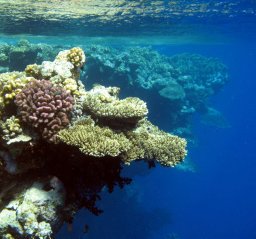
Zooxanthellate scleractinian corals are moderately well-known for shallow reef habitats, but not for mesophotic depths (>30 m) that are relatively difficult to access. Mesophotic habitats are light-limited, with different hydrodynamics and sedimentation processes, which result in growth forms that are often difficult to classify using traditional schemes based largely on shallow reef specimens. We analyzed published data and museum records, using specimen-based records to minimize classification issues, finding 53 mesophotic species in the western Atlantic Ocean (85% of total species) and 338 in the Indo-Pacific (45%). Only four species were recorded exclusively below 30 m depth, while the great majority were common shallow reef taxa. Over 96% of western Atlantic and 82% of Indo-Pacific genera and most coral lineages were represented below 30 m depth. In the Indo-Pacific, species and genus richness varied widely between regions and were significantly correlated with shallow reef species richness. Overall, species richness decreased steadily with increasing depth, with little evidence for distinct faunal boundaries: 157 species occurred >= 60 m and 31 deeper than 100 m, with species occurrence only moderately related to phylogeny. Our knowledge of mesophotic biodiversity is rapidly changing as more regions are documented and new molecular techniques suggest taxonomic revisions and resolve deepwater cryptic species. We conclude that mesophotic scleractinian fauna are largely a subset of shallow scleractinian fauna, comprising a significant proportion of coral species and most genera, with the potential to play a significant role in lineage preservation and the future of coral reefs.
French Polynesia is composed of 118 high islands and atolls stretching in a vast oceanic expanse in the central Pacific Ocean, from just below the equator to almost 30 degrees S. It is composed of five archipelagos, which all differ in terms of their geological origin and history, environmental conditions, and reef development. The Tuamotu Archipelago is entirely comprised of atolls, whereas fringing or barrier reefs are found in the Society, Gambier, and Austral Islands (only one atoll), and coral reef accretion is almost nonexistent in the Marquesas. Coral reef studies have concentrated mostly on the Society and Tuamotu Archipelagos, and, except for occasional observations, been restricted to a depth of 30-40 m on the reef slopes. Our knowledge of mesophotic coral ecosystems is therefore limited, particularly for the deeper zone, below 80 m depth. The scleractinian mesophotic fauna is highly diverse compared to shallow reefs, with 38 genera and 96 species recorded. This fact is likely to be a consequence of water clarity, allowing the photophilic shallow coral species to extend deeper than usual. In some areas, substratum cover by Pachyseris speciosa reaches values of 80% at depths of >= 70 m, and a typical "deep" mesophotic assemblage dominated by Leptoseris spp. has also been recognized. Quantitative data on other major biotic components of the mesophotic assemblages are either lacking or insufficient to allow their characterization as depth generalists or depth specialists.
Parisa Alidoost Salimi, Pargol Ghavam Mostafavi, Chaolun Allen Chen, Seyed Mohammad Reza Fatemi, and Michel Pichon (2018) There are many islands in the Iranian waters, but little is known about their coral species. This is a first attempt to describe and illustrate the coral species occurring in Abu-Musa and Sirri Islands. Overall, 26 species belonging to 9 families are reported, and three unidentified species and two species are added to coral communities of Iran. This study also provides overall insight on coral fauna in the Persian Gulf.
Coral reefs are increasingly threatened by thermal bleaching and tropical storm events associated with rising sea surface temperatures. Deeper habitats offer some protection from these impacts and may safeguard reef-coral biodiversity, but their faunas are largely undescribed for the Indo-Pacific. Here, we show high species richness of scleractinian corals in mesophotic habitats (30–125 m) for the northern Great Barrier Reef region that greatly exceeds previous records for mesophotic habitats globally. Overall, 45% of shallow-reef species (less than or equal to 30 m), 78% of genera, and all families extended below 30 m depth, with 13% of species, 41% of genera, and 78% of families extending below 45 m. Maximum depth of occurrence showed a weak relationship to phylogeny, but a strong correlation with maximum latitudinal extent. Species recorded in the mesophotic had a significantly greater than expected probability of also occurring in shaded microhabitats and at higher latitudes, consistent with light as a common limiting factor. The findings suggest an important role for deeper habitats, particularly depths 30–45 m, in preserving evolutionary lineages of Indo-Pacific corals. Deeper reef areas are clearly more diverse than previously acknowledged and therefore deserve full consideration in our efforts to protect the world's coral reef biodiversity.
Mesophotic coral ecosystems in the Indo-Pacific remain relatively unexplored, particularly at lower mesophotic depths (≥60 m), despite their potentially large spatial extent. Here, we used a remotely operated vehicle to conduct a qualitative assessment of the zooxanthellate coral community at lower mesophotic depths (60-125 m) at 10 different locations in the Great Barrier Reef Marine Park and the Coral Sea Commonwealth Marine Reserve. Lower mesophotic coral communities were present at all 10 locations, with zooxanthellate scleractinian corals extending down to ~100 metres on walls and ~125 m on steep slopes. Lower mesophotic coral communities were most diverse in the 60-80 m zone, while at depths of ≥100 m the coral community consisted almost exclusively of the genus Leptoseris. Collections of coral specimens (n = 213) between 60 and 125 m depth confirmed the presence of at least 29 different species belonging to 18 genera, including several potential new species and geographic/depth range extensions. Overall, this study highlights that lower mesophotic coral ecosystems are likely to be ubiquitous features on the outer reefs of the Great Barrier Reef and atolls of the Coral Sea, and harbour a generic and species richness of corals that is much higher than thus far reported. Further research efforts are urgently required to better understand and manage these ecosystems as part of the Great Barrier Reef Marine Park and Coral Sea Commonwealth Marine Reserve.
Rapa (27 degrees 36S, 144 degrees 20W) is a small (similar to 40km(2)) volcanic island isolated in the Southern Austral Archipelago, where direct anthropogenic stressors are extremely limited. Here, we present the results of the first quantitative survey of coral community structure across habitats and depths around the island. Despite its geographical isolation in the depauperate South Central Pacific, its small size and unfavourable environmental conditions (competition with macroalgae, low sea surface temperatures, reduced reef accretion), the diversity of scleractinian corals at Rapa is particularly high (112 species from 32 genera, including 37 species of Acropora) in comparison to other French Polynesian islands and subtropical Pacific locations. Our results indicate that the abundance (>100 colonies per 10m(2) recorded at nine of the 17 sampling stations) and cover (>40% at four stations) of corals are relatively high for a marginal reef location. Strong spatial heterogeneity was found, with high variation in diversity, abundance, cover and community composition among stations. Variation in community composition was related to habitat types, with distinct assemblages among fringing reefs within bays, reef formations at bay entrances, and those on the submerged platform surrounding the island. On the platform, a depth gradient was detected, with generic richness, abundance and cover generally greater at deeper stations (18-20m depth) compared with medium-depth (10-12m) and shallow (1-3m) stations. A gradient was also recorded along bays, with increasing coral diversity and abundance from the bay heads to the bay entrances. The coral community at Rapa was characterized by the presence of several taxa not found in other French Polynesian archipelagos and the rarity of others that are common and abundant in the Society and the Tuamotu islands. Another distinctive feature of reef communities at Rapa is the high cover and dominance of macroalgae, particularly in the shallower parts of the surrounding platform, which probably explains the lower densities of coral colonies recorded there. These characteristics of the diversity and biogeographical composition of coral assemblages at Rapa provide considerable ecological grounds for its conservation.
Stylophora pistillata is a widely used coral “lab-rat” species with highly variable morphology and a broad biogeographic range (Red Sea to western central Pacific). Here we show, by analysing Cytochorme Oxidase I sequences, from 241 samples across this range, that this taxon in fact comprises four deeply divergent clades corresponding to the Pacific-Western Australia, Chagos-Madagascar-South Africa, Gulf of Aden-Zanzibar-Madagascar and Red Sea-Persian/Arabian Gulf-Kenya. On the basis of the fossil record of Stylophora , these four clades diverged from one another 51.5-29.6 Mya, i.e., long before the closure of the Tethyan connection between the tropical Indo-West Pacific and Atlantic in the early Miocene (16–24 Mya) and should be recognised as four distinct species. These findings have implications for comparative ecological and/or physiological studies carried out using Stylophora pistillata as a model species and highlight the fact that phenotypic plasticity, thought to be common in scleractinian corals, can mask significant genetic variation.
 Francesca Benzoni合作论文数Dip. Biotecnologie e Bioscienze BtBs, Università Milano22
 Stefani, Fabrizio合作论文数Water Research Institute, National Research Council (IRSA – CNR),10
 Paolo Galli合作论文数Institute of Integrative Biology, ETH-Z9
 Pim Bongaerts合作论文数Global Change Inst, Univ Queensland7
 Heloise Rouze合作论文数6
 Gonzalo Pérez-Rosales合作论文数EPHE, PSL University5
 Chaolun Allen Chen合作论文数Institute of Zoology;Academia Sinica;Institute of Zoology, Academia Sinica5
 Jarosław Stolarski合作论文数Institute of Paleobiology, Polish Academy of Sciences5
 Laetitia Hedouin合作论文数Institut de Recherche pour le Développement, Station Marine d'Endoume5
 Eric Dutrieux合作论文数4
 Torda Gergely合作论文数James Cook University, James Cook University4
 Valeriano Parravicini合作论文数Centre de Recherche Insulaire et Observatoire du Pacifique, École Pratique des Hautes Études4
 Paul Muir合作论文数Museum of Tropical Queensland Townsville4
 Carden C. Wallace合作论文数4
 Pargol Ghavam Mostafavi合作论文数Faculty of Marine Science and Technology, Islamic Azad University4Ibrahim Al-Thary合作论文数3
 Guillaume M Charriere合作论文数3
 Jeremy Carlot合作论文数CESAB-FRB3
 Charles Sheppard合作论文数School of Life Sciences, University of Warwick3Michel Frankignoulle合作论文数3
 Claude-Henri Chaineau合作论文数3
 Jean-Pierre Gattuso (让·皮埃尔·加图索)合作论文数Laboratoire d’Océanographie de Villefranche, Sorbonne University;Institute for Sustainable Development and International Relations;Centre National de la Recherche Scientifique3J. E. N. Veron合作论文数3
 Claude E. Payri合作论文数Institut de Recherche pour le Développement3
 Mehdi Adjeroud合作论文数CNRS EPHE UPVD, Université de Perpignan3Serge Andréfouët合作论文数2B Delesalle合作论文数2Shaker Al-Hazeem合作论文数2Yaoyang Chuang合作论文数2
 Parisa Alidoost Salimi合作论文数Sci & Res Branch, Islamic Azad Univ2
 David Obura合作论文数Tel.: +254415486473; fax: +254415480117.2
 Shashank Keshavmurthy合作论文数Biodivers Res Ctr, Acad Sinica2
 Andrew Baker合作论文数Coral Reef Futures Lab, Department of Marine Biology and Ecology, Rosenstiel School of Marine and Atmospheric Science, University of Miami2
 Arrigoni Roberto合作论文数Dept. of Biotechnology and Biosciences, University of Milano-Bicocca2
 Yang Sung-Yin合作论文数Biodiversity Research Center, Academia Sinica2
 Frederic Sinniger合作论文数Faculty of Science, University of the Ryukyus2
 Zoe T. Richards合作论文数australian museum2Saki Harii合作论文数Graduate School of Engineering and Science, University of the Ryukyus2James Cook University合作论文数1P. Colantoni合作论文数1jeanlouis menou合作论文数1robert hirst合作论文数1Edwin Grandcourt合作论文数1Sam J. Purkis合作论文数1Pauline Bosserelle合作论文数1Olivier Konieczny合作论文数1Gabriel Barathieu合作论文数1MALEK ABDULAZIZ合作论文数1
 Mohamed A.R. Abdel-Moati合作论文数1




