In recent years, eyewitness experts have provided clear and consistent direction to the criminal justice community that if "pristine" non-suggestive procedures are used, high confidence suspect-identifications imply accuracy: Not a perfect relationship, but much stronger than previously thought. However, when suggestion is present, high-confidence suspect identifications no longer provide reliable evidence of accuracy. Recently, some experts have promoted a much broader picture of how and when confidence implies accuracy to the legal community, noting that confidence can still reliably predict accuracy even when suggestive procedures like showups are used. Although this observation is statistically correct, its practical meaning may be lost in translation to legal audiences, who may interpret this as support for treating high-confidence showup identifications as strong evidence of witness accuracy. In this paper, we argue for researchers to be cautious in how they disseminate research results to clearly specify the limitations on how new findings can be used to evaluate eyewitness evidence in court. In making this argument, we review findings from numerous experiments employing the field-simulation paradigm, which clearly illustrate a situation where a positive correlation between confidence and accuracy exists, but at the same time, nearly half of all false-identifications are made with 90-100% confidence.
We partnered with law enforcement to conduct two experiments using the field-simulation paradigm, in which participants (N = 979) were immersed in what they were led to believe was an actual police investigation. We field-tested the efficacy of replacing live showups with photographic lineups administered to witnesses on a computer tablet in a squad car, and directly compared identifications obtained using showups and lineups under the same highly suggestive circumstances that showups are typically conducted: when witnesses are told that a suspect has been detained in the area shortly after the crime. As predicted, when showups were administered under field conditions, choosers were overconfident in their identification decisions. Although confidence and response time did not postdict accuracy for choosers when showups were used, both confidence and response time were well aligned with accuracy for rejectors. Indeed, high-confidence showup rejections were diagnostic of innocence. In contrast, photographic lineups conducted under field conditions yielded very few high-confidence false suspect identifications, and both confidence and response time were well aligned with accuracy for choosers but not rejectors. Results also showed that the inclusion of an additional-opportunities instruction lowered false identifications for both showups and lineups without decreasing culprit identifications. These data contribute to a growing body of field research showing how real-world field conditions differentially affect eyewitness performance when conducting showups versus lineups. Moreover, this study provides a practical demonstration of how police can capitalize on recent technological developments to move away from their continued reliance on the use of highly suggestive showups by employing some version of the field-lineup procedure tested in this effort.
BACKGROUND:Questions of memory accuracy arise when adults report childhood trauma that was allegedly forgotten but later recalled. Our study examined the relation of memory accuracy and subjective forgetting (i.e., self-reported temporary forgetting of child sexual abuse [CSA]). OBJECTIVE:In longitudinal research on maltreatment and memory, spanning 20 years, we investigated the relation between memory accuracy for a childhood maltreatment evaluation and self-reported subjective forgetting of CSA. Past studies suggested links between these memory phenomena and trauma symptoms; we thus included a trauma symptom measure. PARTICIPANTS AND SETTING:Adult participants (N = 109) had been admitted as children to a forensic unit for assessment of child maltreatment. As adults, they were interviewed, 20 years later, about the forensic unit evaluation, CSA, and trauma symptoms. METHODS:Memory for trauma-related and non-trauma related information was assessed by comparing adult interview responses against documented details of the childhood forensic evaluation. Adults were categorized into CSA disclosers who reported subjective forgetting, CSA disclosers who did not report subjective forgetting, and CSA non-disclosers. RESULTS:Better memory in adulthood concerning core trauma-related events in childhood was associated with subjective forgetting, β = 0.22, p = .036. Time 1 age and adult trauma symptoms also predicted accurate memories, βs ≥ 0.34, ps < .001. Adults with heightened trauma symptomatology were more likely to report subjective forgetting, B = 0.08, p = .001. CONCLUSIONS:Accurate memory of a child maltreatment evaluation was positively related to subjective forgetting and adult trauma symptoms. Implications are discussed.
Adults’ claims of decades-old child maltreatment raise questions about how to obtain accurate memories about childhood events. In this study, adults who experienced a documented child maltreatment medical examination when they were 3 to 16 years old (Time 1) were interviewed 2 decades later (Time 2). The adults ( N = 115) were randomly assigned to one of three interview-protocol conditions: a standard forensic interview, the cognitive interview (CI) with mental reinstatement, or the CI with mental- and physical-context reinstatement. The CI increased accuracy by dampening reports of potentially schematic but nonexperienced information. Younger age at Time 1 was associated with memories that were less complete but not more inaccurate. A greater number of Time 2 posttraumatic-stress-disorder symptoms predicted both correct and incorrect (omissions and commissions, respectively) answers to specific questions and incorrect answers to misleading questions; commission errors were associated with Time 1 physical-abuse status. Theoretical implications and clinical and legal applications are discussed.
In legal cases regarding child sexual abuse (CSA), children have various options, such as to disclose or deny maltreatment. When interviewed in adulthood, their accounts may be consistent with their childhood responses. Alternatively, denial in childhood could be followed in adulthood by disclosure (“deferred disclosure”), confirming previous suspicions. Or the adults could possibly recant. We conducted a longitudinal study of CSA disclosures and denials ( N = 99; Time 1 [T1], 3- to 16-year-olds). T1 CSA disclosures and denials at a forensic unit were compared to the individuals’ responses 20 years later (Time 2 [T2]. 22- to 37-years-old). We found that consistent disclosure was associated with being older at T1 and female. Deferred disclosure was significantly associated with greater T2 trauma-related symptoms. Corroboration and higher CSA severity predicted T2 recantation. Consistent denial was related to less severe CSA. Our findings add to knowledge about CSA disclosures, which affect legal pathways available to child victims.
Two experiments were conducted to examine whether misidentifying an innocent suspect with a unique feature (i.e. facial tattoo) would impact witnesses’ recollections of the culprit so that they would mistakenly describe the culprit as having that same feature, when in reality, he did not. In both experiments, participants viewed a video of a simulated carjacking in which the perpetrator’s face was visible from a close or far distance, and were then led to misidentify an innocent suspect from a suggestive culprit-absent photo-array. The innocent suspect either had a tattoo photoshopped onto his face, or, like the culprit, had no visible facial markings. After making the identification, half the participants received confirming post-identification feedback. Finally, participant-witnesses were asked to describe the culprit in their own words. In both experiments, over a third of the participant-witnesses in the tattoo condition mistakenly described the culprit as having had a tattoo on his face. In Experiment 2, remember/know judgements indicated that participant/witnesses in the tattoo condition were also more likely to report remembering that the culprit had a face tattoo, rather than simply knowing this to be true. Also, as predicted, in both experiments, confirming feedback significantly boosted erroneous reports of recalling the tattoo.
OBJECTIVE This field-simulation experiment was designed to compare eyewitness performance when conducting show ups and lineups under field versus laboratory conditions. HYPOTHESES We expected to replicate the findings from previous field-simulation experiments showing overconfidence in show up identifications made under field but not lab conditions, and further predicted that under field conditions, high-confidence identifications are more likely to be correct when using lineups compared with show ups. It was also expected that field conditions would lead witnesses to lower their criterion for choosing with show ups, but we did not know how field conditions would affect lineup decision-making. METHOD Participants (N = 719) witnessed the theft of a laptop computer and were asked to identify a suspect from a live show up, a photographic show up, or a photographic lineup administered under either field or lab conditions. In the field condition, uniformed officers functioned as experimenters and participants were immersed in what they were led to believe was an actual police investigation. In the lab condition, participants were debriefed before the identification procedure that the theft was staged for research purposes and that their identifications were being made as part of a study on eyewitness memory. RESULTS As predicted, witnesses were overconfident in their show up identifications made under field but not lab conditions, and high-confidence identifications were more likely to be correct when using lineups compared with show ups. Also as expected, field conditions led witnesses to lower their criterion for choosing with show ups regardless of culprit presence. However, the opposite was true for lineups, such that field conditions resulted in witnesses raising their criterion for choosing. CONCLUSIONS Field conditions had a very different effect on witness performance when conducting show ups compared with lineups. When witnesses were led to believe that their identification would result in the arrest and prosecution of the suspect, they became more liberal in their decision-making when show ups were used but more conservative when lineups were employed. (PsycInfo Database Record (c) 2022 APA, all rights reserved).
This experiment was designed to examine how viewing conditions could affect witnesses' vulnerability to suggestive influence. It was predicted that when the encoding conditions were stronger, accurate witnesses would be less likely to shift their decisions when prompted to reexamine the lineup, and that confirming feedback would effectively solidify influenced identifications. Participants (N = 411) watched a simulated-crime from two different viewing distances and were asked to identify the culprit from a photographic lineup. After voicing their identification decisions, participants were prompted to reexamine the lineup. Half the participants then received confirming-feedback for their decisions. Twelve-minutes later, witnesses viewed the same lineup and were asked again to identify the culprit. As predicted, accurate witnesses were less likely to shift their identification decisions when prompted to reexamine the lineup in the close, but not the far viewing condition. Also, shifted identification decisions that were reinforced with confirming feedback were asserted with higher confidence.
When adults allege childhood victimization, their long-term memory comes under scrutiny. This scrutiny can extend to the adults' memory of childhood interviews. The concerns raise important theoretical and applied issues regarding memory for long-past discussions of child maltreatment and trauma. In this longitudinal study, 104 adults, who as children (ages 3-15 years) were interviewed in child maltreatment investigations (Time 1), were questioned 20 years later (Time 2) about the Time 1 interviews. Verbatim documentation from Time 1 permitted scoring of memory accuracy. A subset of the participants (36%) reported no memory for the Time 1 interviews. Of the 64% who remembered being interviewed at Time 1, those who had been adolescents at Time 1 remembered the forensic interview discussion about abuse incidents better than discussion about general psychological issues. Adult trauma symptoms were associated with more accurate memory for interview content that directly concerned abuse experiences but not for non-abuse-specific information. Findings indicate that the veracity of adults' long-term memory for clinical/forensic conversations about childhood maltreatment depends on age at interview, interview content, and traumatization factors. Implications are discussed.
This study examined the recorded interviews of 132 children between 3 and 16-years of age who were involved in a forensic investigation evaluating allegations of sexual and/or physical abuse. As part of this investigation, two interviews were conducted over a 5-day period. The interviews were analyzed to examine how frequently these children disclosed substantiated allegations of abuse when asked directly about these experiences in one or both interviews. Results revealed that 39.2% of children with substantiated sexual abuse and 55.6% of those with substantiated physical abuse denied these experiences in one or both interviews. The denial rate was highest among school aged children (6- to-10-year- olds), as over a third of the girls and more than half of the boys in this age group denied the substantiated allegations in one or both interviews. Recantations were also relatively common, as 24% of the children who disclosed sexual and/or physical abuse prior to the assessment denied the allegations in one or both interviews. The youngest children (3- to 5-year-olds) were most likely to be inconsistent in their denials/disclosures across interviews. Custody status and relation to the perpetrator also predicted denials/disclosures of sexual, but not physical abuse. Overall, the data suggest that denials of both sexual and physical abuse are quite common and higher than rates found in most archival file reviews.
=1436222 [hereinafter, Eisen, Study 1]. 9 Eisen, Study 1, supra n. 12. 10 Id. 11 Id. 12 Id. 13 Id. 14 Id. 15 Eisen, Study 1, supra n. 12. dant's mere association with gang members on the night of the incident was enough to drive up guilty verdicts by fifteen percent. When the defendant was described as a self-admitted member with a gang tattoo, guilty verdicts increased to sixty-three percent. 6 This first study showed that gang evidence had a prejudicial effect on juror decision-making; however, it was not clear how powerful this effect was or what actually caused the increase in guilty verdicts. It is possible that mentioning the gang evidence merely tainted the character of the defendant just enough to push the mock jurors over the edge in a close call. Alternatively, introducing the defendant's gang association could have prejudiced the jurors to the point where they were ready to ignore reasonable doubt in order to convict a defendant who was perceived. to be a bad actor by virtue of his gang affiliation. Unfortunately, the data from the initial study could not be used to test this latter hypothesis, because reasonable doubt was not clearly established. Rather, the evidence was designed to be equivocal to start with, resulting in over forty percent of the mock jurors voting guilty even when there was no mention of gangs. Further, the simulation in this case lacked a few key elements that may have limited the study's applied value. For instance, jurors did not deliberate in panels; thus, it is possible that deliberations may have washed out biases that some participants came to the table with. Also, jurors were not read standard j ury instructions that would have directed them in how to weigh the evidence and arguments presented. Therefore, it is possible that
The present study examined the effects of interviewer support on the memory and suggestibility of children ( N = 71), all of whom were involved in child maltreatment investigations. This was accomplished by questioning 3- to 12-year olds (66% African American) about a game played individually with an experimenter at the end of the maltreatment investigation, so that the results did not affect any evaluations or legal proceedings. After the game, the children were interviewed in a warm and engaging high support manner or in a relatively formal and withdrawn low support fashion--the latter, likely considered by some as “neutral” in child forensic interviews. Typical age effects emerged overall; for example, with the preschool (compared to school-aged) children providing fewer correct units of information in free recall and making more errors to specific and misleading questions. However, findings also varied in relation to interviewer support and type of question. To specific questions, older (but not younger) children in the low (compared to high) interviewer support condition made more omission errors, possibly due to the interviewer’s low support resulting in a “no bias” for older children in answering these questions. To misleading questions, younger (but not older) children in the high (compared to low) support condition made significantly more commission errors. The elevated commission error rate in the high support group appeared to be driven by a small number of 3- and 4-year-olds who had a “yes-bias” when answering misleading questions. Implications for children’s accuracy in maltreatment investigations and for children’s psychological and physical security are discussed.
Two experiments were conducted to see if asking witnesses to take another look at the lineup after they voiced their identification decisions would alter their choices, and if confirming feedback could then be used to solidify the selections they shifted to. Participants watched a simulated crime and were asked to identify the culprit from a photographic lineup. After voicing their identification decisions, participants were prompted to re-examine the lineup. Half of the participants then received confirming feedback for their decisions, regardless of whether they shifted to a new picture or not. Later on, a different experimenter escorted participants to a second room and administered the same lineup again. In Experiment 1 (N = 432), biased instructions were used to encourage choosing, and when participants were prompted to re-examine the lineup, 70% changed their identification decisions and selected a different picture. When that new selection was reinforced with feedback and participants were given a second opportunity to identify the culprit at a later time, 72% selected the picture they shifted to as the culprit. Participants who made their decisions more quickly were less likely to shift, but accuracy did not predict shifting. This general pattern of findings was replicated using unbiased instructions in Experiment 2 (N = 237). Results suggest that prompting witnesses to re-examine the lineup can often lead witnesses to change their identification decisions, and when the altered choice is reinforced, they will often stay with that influenced decision over time, asserting it with a high degree of confidence. (PsycINFO Database Record
Recent changes in statutes of limitations for crimes against children permit accusations of decades-old child sexual abuse to be considered in court. These laws challenge scientists to address the accuracy of long-term memory of genital contact. To examine theoretical, clinical, and legal concerns about long-term memory accuracy, children who in the 1990s (Time 1) were 3 to 17 years old and experienced a documented child maltreatment medical examination that included genital touch were interviewed between 2012 and 2014 (Time 2), as adults, about the medical experience. Almost half of the adults reported the childhood genital contact. Child sexual abuse and greater depression in adulthood predicted greater memory accuracy. No participant falsely reported chargeable offenses that did not occur, even when such offenses had been falsely suggested in a childhood interview. Some participants erred with regard to specific and misleading questions implying less egregious acts. Ramifications for theory and application are discussed.
SummaryParticipants (N = 189) witnessed the theft of a computer and were immersed into what they were led to believe was an actual police investigation that culminated in a live showup. After the crime, an officer responded to the scene to take witness statements. Minutes after his arrival, the officer received a radio dispatch that could be heard clearly by the witnesses. The dispatch either stated that the Sherriff had ‘…caught the guy…’ or ‘…detained a suspect who matched the thief's description…’ and instructed the officer to bring the witnesses to identify the suspect. The witnesses then met with two deputies who conducted a live showup with an innocent suspect or the actual culprit. Choosers were more confident than rejecters across all conditions. Also, overhearing the suggestion that the sheriff had caught the guy significantly increased false identifications, and boosted witness confidence in these errors, but did not affect accurate suspect identifications.Copyright © 2017 John Wiley & Sons, Ltd.
Children bring their own unique abilities, backgrounds, and circumstances into legal settings. Thus, discussions of children’s memory and suggestibility require a nuanced approach to the many factors that can affect their eyewitness reports. The authors contend that children’s memory accuracy and inaccuracy in forensic contexts are affected by individual differences, the nature of the event, and the context in which the memory is elicited. In this chapter, the proposed framework is applied to extant research on children’s memory and suggestibility, focusing on children with histories of maltreatment. In doing so, the chapter considers suggestibility in relation to commission errors and omission errors, the latter concerning suggestibility to say that an event (such as child sexual abuse) did not occur when the crime actually did take place. It concludes that, just as a legal system cannot stand when the innocent are jailed, justice fails when victims feel they cannot come forward.
This experiment was designed to examine the effect of misinformation imparted through co-witness discussions on memory reports and line-up decisions obtained after varied retention intervals. Participants viewed a simulated car-jacking and then heard co-witnesses describe their memory for the event. Confederate accounts included three plausible and three implausible pieces of misinformation. Memory for the event was assessed after five minutes, 50 minutes, two days, or one week. In addition to examining free-recall memory, we also looked at how misinformation about the perpetrator's appearance affected recognition memory by obtaining identifications from culprit-present and absent lineups. One of the confederates falsely described the perpetrator having a tattoo on his neck, and one lineup filler had this feature. Results revealed that mistaken identifications of the tattooed filler increased significantly at the longer retention intervals, while recall for the misinformation decreased at the longer intervals. Also, as expected, plausible misinformation was recalled more often than implausible.
While there is a growing body of research examining the relatively "cold," cognitive decision-making components of showups, few attempts have been made to capture the "hot" affective components of showups that are thought to exacerbate the suggestiveness of the procedure. In 3 simulated-field experiments, we partnered with law enforcement to examine how participants who were led to believe they were involved in an actual criminal investigation (Field-simulation condition) differed from participants who knew they were not part of an actual investigation (Lab-simulation condition). We staged crimes for both conditions, but in the field-simulation condition, law enforcement personnel carried out mock investigations that culminated with a live showup. In Experiment 1 (N = 321), which did not include a culprit-present condition, the field-simulation condition increased innocent suspect identifications. The standard showup admonition decreased innocent suspect identifications, but only for dissimilar innocent suspects. Experiment 2 (N = 96) added a culprit-present condition and found that the field-simulation condition increased innocent suspect and culprit identifications to a similar extent. Experiment 3 (N = 67) replicated the findings of Experiment 2 and examined the impact of admonishing eyewitnesses that if they did not believe the suspect was the culprit, they might have additional opportunities to make an identification. Confidence-accuracy calibration analyses revealed that confidence discriminated accurate from inaccurate identifications in the field, but not in the lab; however, eyewitnesses who made identifications in the field were overconfident and across all levels of confidence were less likely to be correct than eyewitnesses who made identifications in the lab.
This study was designed to examine the potential biasing effect of gang evidence on jury verdicts. Two hundred four participants viewed one of two versions of a simulated trial that included opening statements and closing arguments by the prosecution and defense, and direct and cross-examination of the eyewitness and investigating officer. Half of the participants saw a version of the trial that included no mention of gang involvement, while the other half saw a version in which the prosecutor argued at opening and closing that the crime was committed for the benefit of a criminal street gang. In the gang version, participants also heard testimony from a gang expert who described the primary criminal activities of the gang. Jurors were read standard California jury instructions and deliberated in small groups. The prosecution’s case was very weak by design. Results revealed that when mock jurors were polled before deliberations, only 13 percent who saw the trial without gang evidence voted guilty compared to 36 percent in the gang condition. After deliberation, none of the jurors found the defendant guilty in the no-gang condition. However, when gang evidence was introduced, 10 percent of the jurors continued to vote guilty. When faced with potent gang testimony in the absence of persuasive evidence, some jurors appeared to disregard reasonable doubt and vote to convict the defendant who was depicted as a dangerous gangster. This behavior appears to be driven by a form of jury nullification in the reverse direction, in which the defendant is judged to be deserving of punishment despite a lack of evidence related to the charge at hand. Implications of these data in the courtroom are discussed.
 Gail S Goodman合作论文数Department of Psychology, University of California, Davis17
 Jianjian Qin合作论文数Department of Psychology, Yale University12Goldfarb Deborah合作论文数7Yuerui Wu合作论文数4
 Jennifer Jones合作论文数ELLICSR Hlth Wellness & Canc Survivorship Ctr, Univ Hlth Network4
 Rebecca Ying合作论文数Iowa State Univ4Suzanne L. Davis合作论文数4
 T'Awna Q. Williams合作论文数3Daisy Vidales合作论文数3Yan Wang合作论文数3Emilie B. Mitchell合作论文数2
 Dayna M. Gomes合作论文数2Rakel P Larson合作论文数2Jessica Diep合作论文数2Lauren Ristrom合作论文数2amanda clemente ms合作论文数2Gabriela C. Cedré合作论文数2Dana T. Hartman合作论文数2Marianne T. Lacsamana合作论文数2Sayfan Liat合作论文数2Jodi A. Quas合作论文数Department of Psychology and Social Behavior, University of California2Alejandra Gonzalez合作论文数1dayna m gomes ms合作论文数1marilyn crosbieburnett合作论文数1Amaia Skerrit-Perta合作论文数1Richard J. Macur-Brousil合作论文数1Lauren Gonzalves合作论文数1
 Alma P. Olaguez合作论文数Psychological Science, University of California1
 Julie Olomi合作论文数Dept Psychol, Univ Denver1Lily Anna Brown合作论文数Department of Psychiatry, Perelman School of Medicine, University of Pennsylvania1Morgan Danielle Y合作论文数1Kistorian Rose合作论文数1Oustinovskaya Maka合作论文数1
 Ronald P. Fisher合作论文数Department of Psychology, College of Arts, Sciences & Education, Florida International University1
 Andrew M. Smith合作论文数Department of Psychology, College of Liberal Arts and Sciences, Iowa State University1
 Simona Ghetti合作论文数Department of Psychology, University of California, Davis;Center for Mind and Brain, University of California, Davis1
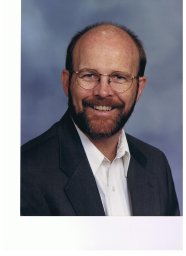 Blaine J. Fowers合作论文数Department of Educational and Psychological Studies, University of Miami1
 Laura Mickes合作论文数Department of Psychology, University of California1John W. Crayton合作论文数1
 Yoojin Chae合作论文数1Margaret Crosbie-Burnett合作论文数1William Lorber合作论文数1
 Fiona Gabbert合作论文数School of Psychology;University of Abertay;School of Psychology, University of Abertay1




