Saliva, a scientific and clinical entity familiar to every oral health researcher and dental practitioner, has emerged as a translational and clinical commodity that has reached national visibility at the National Institutes of Health and the President's Office of Science and Technology. "Detecting dozens of diseases in a sample of saliva" was issued by President Obama as one of the 14 Grand Challenges for biomedical research in the 21(st) Century (National Economic Council, 2010). In addition, NIH's 2011 Government Performance Report Act (GPRA) listed 10 initiatives in the high-risk long-term category (Collins, 2011). The mandate is to determine the efficacy of using salivary diagnostics to monitor health and diagnose at least one systemic disease by 2013. The stage is set for the scientific community to capture these national and global opportunities to advance and substantiate the scientific foundation of salivary diagnostics to meet these goals. A specific calling is to the oral, dental, and craniofacial health community. Three areas will be highlighted in this paper: the concept of high-impact diagnostics, the role of dentists in diagnostics, and, finally, an infrastructure currently being developed in the United Kingdom--The UK Biobank--which will have an impact on the translational and clinical utilizations of saliva.
Kolberg et al. (1) report from the Inter99 cohort that a risk score incorporating six biomarkers (adiponectin, C-reactive protein, ferritin, interleukin-2 receptor A, glucose, and insulin) is useful in the prediction of type 2 diabetes and could be recommended as a tool for identification of high-risk individuals. So far, however, there is little evidence that a procedure based partly on nonroutinely measured biomarkers is superior to risk scores based on personally known variables or on routinely measured clinical data. An area under the receiver operating characteristic curve (AROC) of 0.76 is reported by the investigators, indicating a rather moderate diagnostic accuracy of the …
Background:Improved identification of subjects at high risk for development of type 2 diabetes would allow preventive interventions to be targeted toward individuals most likely to benefit. In previous research, predictive biomarkers were identified and used to develop multivariate models to assess an individual's risk of developing diabetes. Here we describe the training and validation of the PreDx™ Diabetes Risk Score (DRS) model in a clinical laboratory setting using baseline serum samples from subjects in the Inter99 cohort, a population-based primary prevention study of cardiovascular disease. Methods:Among 6784 subjects free of diabetes at baseline, 215 subjects progressed to diabetes (converters) during five years of follow-up. A nested case-control study was performed using serum samples from 202 converters and 597 randomly selected nonconverters. Samples were randomly assigned to equally sized training and validation sets. Seven biomarkers were measured using assays developed for use in a clinical reference laboratory. Results:The PreDx DRS model performed better on the training set (area under the curve [AUC] = 0.837) than fasting plasma glucose alone (AUC = 0.779). When applied to the sequestered validation set, the PreDx DRS showed the same performance (AUC = 0.838), thus validating the model. This model had a better AUC than any other single measure from a fasting sample. Moreover, the model provided further risk stratification among high-risk subpopulations with impaired fasting glucose or metabolic syndrome. Conclusions:The PreDx DRS provides the absolute risk of diabetes conversion in five years for subjects identified to be "at risk" using the clinical factors.
s of all RAND Health publications and full text of many research documents can be found on the RAND Health Web site at www.rand.org/health. The RAND Corporation is a nonprofi t research organization providing objective analysis and effective solutions that address the challenges facing the public and private sectors around the world. RAND’s publications do not necessarily refl ect the opinions of its research clients and sponsors. R® is a registered trademark. RAND Offi ces Santa Monica, CA • Washington, DC • Pittsburgh, PA • Jackson, MS / New Orleans, LA • Cambridge, UK • Doha, QA – 4 –
 Janice Kolberg合作论文数26Kolberg J A合作论文数24R. Sanchez-Pescador合作论文数18Judith C. Wilber合作论文数18Thomas Horn合作论文数17Jc Wilber合作论文数14J Detmer合作论文数14
 Gary L. Davis合作论文数Baylor University Medical Center13
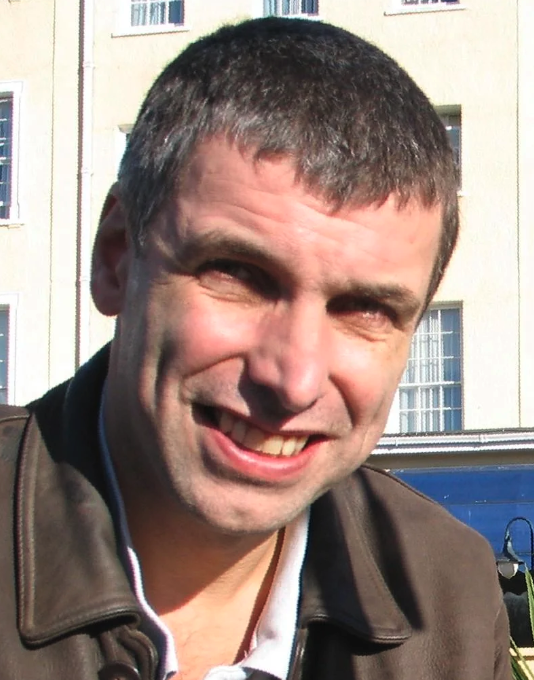 Peter Simmonds合作论文数Nuffield Department of Medicine, University of Oxford11Jyn Lau合作论文数11P NEUWALD合作论文数9
 Michael Patrick Mckenna合作论文数Center for Cognitive and Behavioral Brain Imaging, The Ohio State University8
 Bruce Irvine合作论文数8Ji Legg合作论文数8Running J A合作论文数8Cha T A合作论文数8Pablo D. T. Valenzuela合作论文数Fundación Ciencia para la Vida and Instituto Milenio de Biología Fundamental y Aplicada Zañartu8Laura Penny合作论文数7Paul D. Neuwald合作论文数7
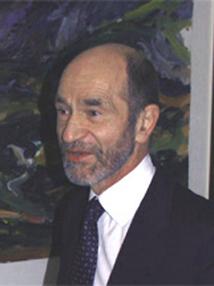 James Scott合作论文数National Heart & Lung Institute, Faculty of Medicine, Imperial College London7T.L. Wright合作论文数7Peng Yap合作论文数6E Beall合作论文数6C A Chang合作论文数6KP Qian合作论文数6George Kuo合作论文数6Carol Pachl合作论文数6
 Edward J. Moler合作论文数Tethys BioScience, Inc6J ROBERTS合作论文数5luping shen合作论文数5Collins M L合作论文数5
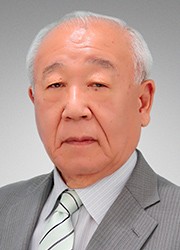 Masashi Mizokami合作论文数National Center for Global Health and Medicine5Warner B D合作论文数5
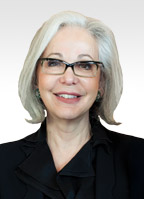 Nancy L. Ascher合作论文数Department of Surgery,University of California,San Francisco5
 Torben Jørgensen合作论文数Center for Clinical Research and Prevention;Department of Public Health, Faculty of Health and Medical Sciences, University of Copenhagen;Aalborg Universitet5
 Oluf Borbye Pedersen合作论文数Center for Basic Metabolic Research, University of Copenhagen;Department of Clinical Medicine, Faculty of Health and Medical Sciences, University of Copenhagen;Department of Medicine, Herlev Hospital5Linda Ferrell合作论文数5
 William J. Rutter合作论文数University of California, San Francisco;Synergenics, L.L.C.5Michelle M Stempien合作论文数5
 Brian Warner合作论文数5Rae Lyn Burke合作论文数5
 Jim Todd合作论文数Catholic University of Health and Allied Sciences5T Yeghiazarian合作论文数5PD NEUWALD合作论文数4L Marino合作论文数4Pj Dailey合作论文数4Eastman PS合作论文数4




