Newin situ(U–Th–Sm)/He and U–Pb zircon double dating method replicates results obtained using conventional methods at the Ellendale diamond occurrence.
In this paper a compartmental modelling approach is applied to provide a mathematical description of the activity of the anti-cancer agent topotecan, and delivery to its nuclear DNA target following administration. The activity of topotecan in defined buffers is first modelled using a linear two compartment model that then forms the basis of a cell based model for drug activity in live cell experiments. An identifiability analysis is performed before parameter estimation to ensure that the model output (i.e., continuous, perfect and noise-free data) uniquely determines the parameters. Parameter estimation is performed using experimental data which offers concentrations of active and inactive forms of topotecan from high performance liquid chromatography methods.
In this paper, a compartmental model is proposed for describing the in vitro kinetics of the anti-cancer agent topotecan following administration into a culture medium containing human lymphoma cells in suspension. The model extends one previously proposed by including an extra dissociation pathway, with the objective of describing the effect of DNA binding on the stability of bound topotecan. The structural identifiability and steady states of the model are analysed. The model is fitted to high performance liquid chromatography data and it is found that there is a qualitative difference between the predicted behaviour of the new model and that of the previous model.
 Paul Smith合作论文数School of Medicine, Cardiff University;OncoTherics Limited;MediWales Ltd;Biostatus Ltd3
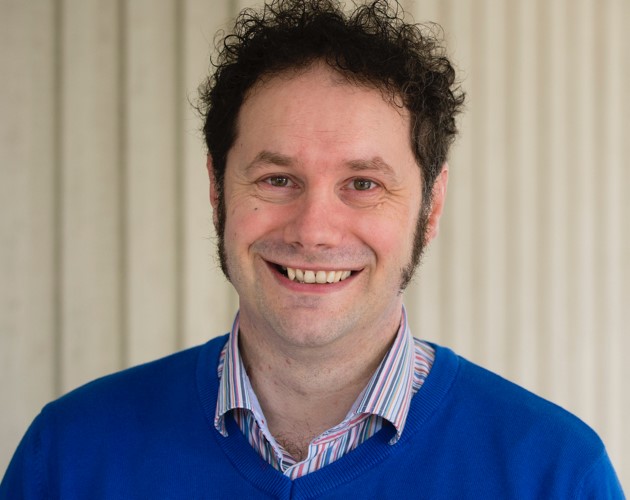 Neil Evans合作论文数School of Engineering, Faculty of Science, Engineering and Medicine, The University of Warwick3
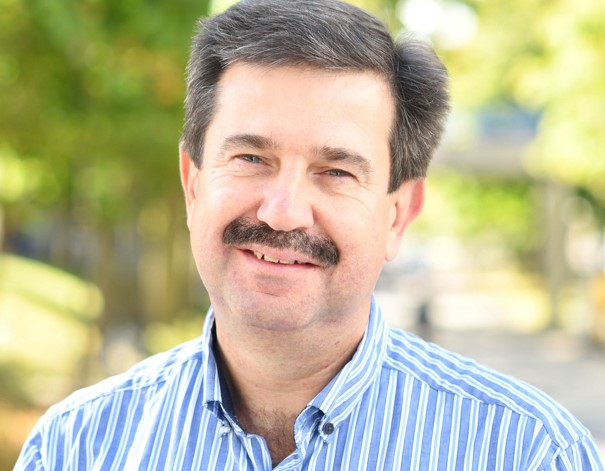 Michael Chappell合作论文数School of Engineering, Faculty of Science, Engineering and Medicine, The University of Warwick3
 Rachel J. Errington合作论文数3
 Keith R Godfrey合作论文数School of Engineering, The University of Warwick2Michael J. Chapman合作论文数2Martin Danišík合作论文数1e marillosialer合作论文数1Pieter Vermeesch合作论文数Earth Sciences, Faculty of Mathematical & Physical Sciences, University College London1Feeney Graham P合作论文数1
 Thomas Becker合作论文数Astrophysikalisches Institut Potsdam1Graham P. Feeney合作论文数1
 Simon M Ameer-Beg合作论文数Kings College London, Guy’s Medical School1David B Patterson合作论文数1
 Brent I. A. Mcinnes合作论文数CSIRO Exploration and Mining, HIAF1
 Boris Vojnovic合作论文数Department of Oncology, Medical Sciences Division, University of Oxford;Gray Institute for Radiation Oncology and Biology, University of Oxford1Marie Wiltshire合作论文数1
 Noreen Evans合作论文数John De Laeter Research Centre, Curtin University;Faculty of Science and Engineering, Curtin University1Bradley J. McDonald合作论文数1




