Feminist environmental educators have been calling for new ways of dismantling traditional separations such as nature-culture for reconfiguring human-environment relations. The Common Worlds Research Collective is an interdisciplinary research network made up of educators and researchers that conduct feminist and anticolonial pedagogical and methodological work concerned with more-than-human worlds. This visual essay takes inspiration from the inventive ways the Common Worlds Research Collective are thinking and practising with concepts. This visual essay introduces commoning, worlding and inheriting as concepts for rethinking practice. It shows how re-viewing photographic documentation taken of a waste project with young children and educators opens up pedagogical possibilities for attending to children's complex and entangled relations with waste. This visual essay demonstrates how creative, experimental and feminist methods can reconfigure children's relations with waste and invites educators to apply these approaches in their own contexts.
UNFINISHED BUSINESS features the archive of #FEAS Feminist Educators Against Sexism alongside work by Australian feminist artists.The exhibition brings into focus a lineage of activist feminist art to invite thinking with practices that interrupt white patriarchal heteronormative narratives.The concept of an expanded zine connects the works, with 'pages' forming in vastly different ways.The exhibition offers irreverent, furious, funny, and tender insights toward connected and equitable feminist futures, unfinished… #FEAS is an international feminist collective committed to developing creative interventions into sexisms in the academy and other places.It is co-led by
This article introduces the special issue on collaboratories. Collaboratories create spaces for collaborative experimentation with children, generating vital opportunities not only for exchange and networking but also for speculation and inquiry as we compose and nurture conditions that respond to the question of what it means to live ethically in situated common worlds. Drawing on our work within the Common Worlds Research Collective, this introduction outlines three key assumptions that inform collaboratories' practices.
This paper offers an analysis of selected survey findings from a mixed methods research project, entitled Understanding and Addressing Everyday Sexisms in Australian Universities. The project is situated within the context of the negative impact of gender-based discrimination upon the higher education sector in Australia and internationally. The findings discussed in this paper relate to quantitative analyses of selected items from a national survey of over 1200 Australian academics, recruited through 12 public universities. In this paper, the ways in which different participant groups responded to items designed to explore their attitudes towards sexism in the academic workplace, both broadly and with respect to specific incidents of 'everyday sexisms' are discussed. Results demonstrate that, despite university-wide policies and processes which seek to promote gender equality, diversity and inclusion, women and gender diverse academics view gender-based discrimination as an enduring barrier to career progression. Further, men academics are less likely to recognise this or to find everyday sexisms intelligible. The paper argues that universities' failure to recognise or acknowledge everyday sexisms is a form of gender-washing that occurs at the systemic and interpersonal levels, enabling recognition of only the most obvious instances of gender-based oppression: sexual harassment and assault.
Expanding the important body of work that addresses child development’s limitations and responding to the ecological crisis that threatens the future of life on Earth, this article proposes a living feminist postdevelopmental lexicon. The lexicon introduces 26 concepts that together challenge the theory/practice divide, disrupt Cartesian modes of subjectivity, reorient taken-for-granted ideas as problematic in early education, open up early education to inquiries that respond to the political and ethical questions of our milieu, and generate conditions for creative, inventive, thoughtful, and ethical projects. The paper invites readers to engage with and creatively add to the lexicon, making it an emerging and living tool for responding to the current ecological crisis.
This article explores young children’s relations with soil, drawing on research that positioned soil as animate, lively and interconnected. The paper investigates how animist approaches offered a mode of encounter for children and their teachers, encouraging them to see themselves as part of a larger ecological community. The research began with a “soil biome immersion” experience where teachers engaged with soil through sensory and arts-based experiences. These initial encounters led to further exploration of child-soil relations through experiential learning and storytelling. Children, as active meaning-makers, co-constructed the inquiry through imaginative and sensory engagements. Findings suggest animism cultivates soil relations, challenging traditional notions of soil as inert and promoting a dynamic understanding of soil ecosystems. Through practices such as storying, drawing and listening, educators supported children’s animist perspectives, deepening their attunement to the more-than-human world. This article contributes to environmental education by demonstrating how animism can enrich children’s ecological awareness and their sense of connectedness to the world.
This article offers an analysis of data from the project Sexism, Higher Education, and Covid-19: The Australian Perspective. The authors argue that the gendered impact of the pandemic in Higher Education Institutions constitutes a form of institutionally perpetrated sexist harassment, and that raising awareness of the ways in which institutions themselves enable and perpetrate such harassment is consistent with the aims of the #MeToo movement. This article is intended to act as testament to the ways in which Australian universities function as masculinist institutions that, during this time of crisis, deployed tactics that were experienced by women and minority-identifying research participants as sexist and violent. The article illustrates how the COVID-19 pandemic, and university responses to it, are evidence of the everyday sexual violence that women and gender-diverse academics experience due to inherent norms about the labour that 'counts' in the masculinist, neoliberal academy.
This paper offers analysis of the first phase of a research project, Understanding and Addressing Everyday Sexisms in Australian Universities. This phase involved a critical content analysis of all 39 of Australia's public university websites, focusing on how they represent gender, absences in relation to gender and the navigability of the websites in relation to gender equity policy. Drawing on Maria Lugones's colonialities of gender, this paper demonstrates how university websites have the potential to reproduce or renegotiate inherited institutional everyday sexisms and broader gender inequities. Themes of reconfiguring acceptable gendering, conspicuous absences, and in-built obscurity that emerged from this process are discussed. The paper invites the reader to conduct their own content analysis as an intervention to increase their awareness of the imaginaries their university website offers. Throughout the paper, examples of better practices - everyday feminisms - are highlighted, inviting universities and other public institutions to rethink their online architectures.
Environmental education has the potential to extend its transformative potential by reframing social and ecological justice as always interconnected. This paper introduces vulnerable reading as a method for unsettling anthropocentric and colonial influences on how educators conceptualise and respond to environmental precarity through a socio-ecological lens. It has emerged from a six-month walking project during which the authors developed vulnerable reading practices as they walked with young children, educators, and a weedy landscape in Boorloo (Perth), Western Australia. With a focus on reimagining pedagogies to be inclusive of multiple weedy ideas, bodies and voices, the paper uses empirical examples of practice to illustrate how vulnerable reading across temporalities, scales, disciplines, and genres draws attention to the complex relations humans share with weedy worlds. The paper shows how vulnerable reading is a feminist and anticolonial practice that makes visible the complexity of relations humans share with more-than-human worlds and is an example of ecosocial justice in action.
COVID-19 amplified the everyday sexisms that academics experience in higher education, including women's submission of publications. This chapter shows how a creative and transdisciplinary intervention, #FEAS FAKE JOURNAL, made space for feminist academics whose scholarship was affected by the pandemic to take part in a project that privileged "unfinished business". A creative methodology was used that moved beyond the traditional research narrative that relies on mastery and certainty. Seventeen feminist academics participated in the project by submitting an abstract to a fake journal about an unfinished work. Several creative components were used to solicit and support personal, political, and creative accounts to the pandemic. These accounts show how feminist academics were affected by lockdowns, how they managed, and in some cases how they connected with each other. Findings show how transdisciplinary feminist creative activism made space for participants to reflect on the effects of the pandemic and to consider what is worth finishing. This paper shares a rare glimpse into the behind the scenes of knowledge making and doing as unfinished business. It shows how transdisciplinary feminist art activism can be enacted with care and solidarity with others.
Conversations with Rain aims to disrupt conventional socio-constructivist and cognitive notions of the child familiar in museum settings by rethinking children's relations with art objects and weather worlds. Our rationale suggests that poetic and non-linear interpretation strategies, combined with artist studio practices that heighten presence and attention, expand the potential of more porous entanglements for children with the world, and potentially transform our climate futures. Disrupting didactic Gallery programming and environmental 'learning about' practices, we propose responsive, participatory, multisensory, open-ended, and poetic opportunities that recognise the unfixed, iterative, and tacit knowledges of the child. Building a body of research through a suite of five creative outputs Conversations with Rain contributes to more-than-human pedagogies that investigate how interdisciplinary, embodied, and practice-led approaches deepen engagement, lead to more responsive nature and culture relations, and enliven connection and empathy with children, art objects, and the world.
In this chapter, the authors propose common worlding pedagogies that challenge developmentalism, as postfoundational inquiries. In so doing, they engage the following reorienting questions: What are we overturning and displacing? What are we making room for? Who, and what, helps us to think otherwise? and How do theory and concepts complicate our inquiries, rather than making it easy? Pacini-Ketchabaw and Blaise draw on their empirical work in early childhood centers across Canada and Australia in which they emphasize worlding practices, learning with , and situatedness. They share aspects of how they think with and enact these concepts by briefly describing two projects that reconfigure child-waste relations. The authors have been thinking and experimenting with common worlding pedagogies in early childhood education for over a decade, shifting the focus of their research from the child as the central becoming-knowable subject about the world to the complex, entangled, mutually affecting, and co-shaping child-world relations. Experimentations with these postfoundational techniques expose, displace, and overturn normative discourses of developmentalism that seem to have a stranglehold on early childhood education. They do not propose common worlding pedagogies as guidelines but as practices that allow attention to be paid to the worlds that are worlded with others (human and more-than-human) in the doing of research.
An abstract is not available for this content. As you have access to this content, full HTML content is provided on this page. A PDF of this content is also available in through the ‘Save PDF’ action button.
This paper offers an analysis of data from the second phase of a project entitled Understanding and Addressing Everyday Sexisms in Australian Universities , which involved interviewing key stakeholders with an understanding of and/or experiences of ‘Everyday Sexisms’ within the academy. The paper demonstrates how women understand themselves as inherently unwelcome within higher education in Australia, and illustrates how this manifests through experiences, complaints procedures and seemingly banal everyday gendered and racilaised interactions. The authors show how complaints procedures often operate to further harass women who have experienced sexist harassment at work. The paper concludes by considering how the shared experiences of minoritised people within universities can pave the way for new ways of understanding diversity and working together to co-create a more equitable Higher Education.
Presenting research findings outside of the form of a traditional research report requires different modes of making and communicating. This paper offers an account of how The #FEAS Report, a satirical news video, was made to communicate the findings from interviews and a survey as part of the mixed-methods study, Sexism, Higher Education, and COVID-19: The Australian Perspective to a wider public. Three creative tactics for research communication were used: DIY aesthetics, humour, and situated bodies. These communication tactics enabled the researchers to think differently about what research findings mean, and how to articulate them in ways that are intelligible. The paper shows how these tactics worked to bring findings to audiences beyond the academy and ask audiences within the academy to think differently about research reporting and knowledge communication. The paper considers how performing research in this way generates different conversations that compliment those started by more common ways of presenting research findings, and most importantly, how crucial it is for feminist researchers to make space for the creative within contemporary higher education.
 Affrica Taylor合作论文数17
 Emily Gray合作论文数RMIT Univ14
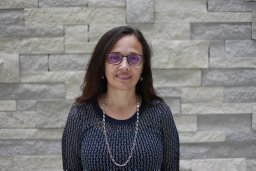 Veronica Pacini-Ketchabaw合作论文数University of Victoria School of Child & Youth Care14
 Tonya Rooney合作论文数Fac Educ & Arts, Australian Catholic Univ8
 Jo Pollitt合作论文数7
 Gloria Latham合作论文数7
 Shelly Dole合作论文数University of Queensland7julie faulkner合作论文数6Catherine Hamm合作论文数The University of Melbourne6Jane Merewether合作论文数6
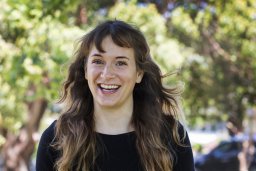 Jacqueline Ullman合作论文数Sch Educ, Western Sydney Univ6
 Susan Edwards合作论文数Learning Sci Inst Australia, Australian Catholic Univ6
 Karen Malone合作论文数6
 Josephine Lang合作论文数6Stefania Giamminuti合作论文数5
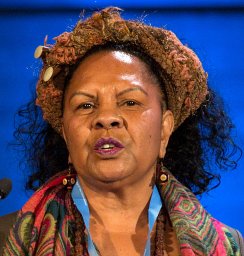 Anne Poelina合作论文数Nulungu Res Inst, Univ Notre Dame Australia5sandrina de finney合作论文数5
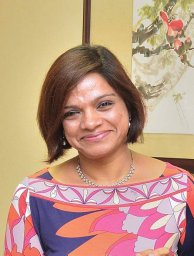 Bidisha Banerjee合作论文数Dept Literature & Cultural Studies, Educ Univ Hong Kong5
 Sandra Wooltorton合作论文数5
 Jeanne Iorio合作论文数Melbourne Graduate School of Education, The University of Melbourne4
 Linda Knight合作论文数4
 Jane Bone合作论文数4Emma Fishwick合作论文数3
 Peta White合作论文数Sch Educ, Deakin Univ3Marie Hammer合作论文数School of Educational Psychology and Counselling, Faculty of Education, Monash University3
 Laurie Guimond合作论文数3Libby Jackson-Barrett合作论文数2Joanna Pollitt合作论文数2Susan Bailey合作论文数2
 Vanessa Wintoneak合作论文数2Yarrow Andrew合作论文数2
 Yin Paradies合作论文数Faculty of Arts and Education, Deakin University2Sam Illingworth合作论文数1p leseman合作论文数1Jason Barrow合作论文数1Jill Robbins合作论文数1Angela Hobsbaum合作论文数1Jennifer Hamilton合作论文数1
 Eva Lloyd合作论文数1Bert van Oers合作论文数1debbie albon合作论文数1Jasmine Kieft合作论文数1Hayley Singer合作论文数Univ Melbourne1
 Paulina Semenec合作论文数Educ Studies, Univ British Columbia1Maelis Karlsson Lohmander合作论文数1
 Claudia Diaz-Diaz合作论文数Dept Educ Studies, Univ British Columbia1Margaret Brennan合作论文数1
 Raewyn Tudor合作论文数Dept Human Serv & Social Work, Univ Canterbury1Dinah Volk合作论文数1




