This paper presents an innovative approach to few-shot fault diagnosis by combining Masked Autoencoders (MAE) pre-training, meta fine-tuning, and prototype prompting, termed MAE-PMFP. Traditional meta-learning methods often suffer from overfitting, limiting their performance in fault diagnosis with limited labeled data. The MAE-PMFP framework overcomes this by leveraging a large amount of unlabeled data, using MAE pre-training to establish a robust latent feature space that generalizes across different operational conditions. The process involves selecting appropriate preprocessing methods using sliding window cosine similarity (SWCS) and conducting unsupervised MAE pre-training. Subsequently, meta fine-tuning and prototype prompting adapt the model to downstream tasks. Notably, prototype prompting alone can achieve 97.49% without parameter updates when the target task is derived from the pre-training data. Even for new data sources, the model achieves strong performance through the two-stage fine-tuning approach, reaching an accuracy of 94.50%. These results demonstrate that MAE-PMFP is capable of learning meaningful latent features from vast amounts of unlabeled data and generalizing effectively to a variety of fault diagnosis tasks, offering a robust solution to the challenges faced by traditional meta-learning in real-world applications.
In the context of Industry 4.0 and intelligent manufacturing, conventional serial manipulators face limitations in dynamic task environments due to fixed structural parameters and the traditional decoupling of mechanism design from motion planning. To address this issue, this study proposes SAC-SC (Soft Actor–Critic-based Structure–Control Co-Design), a reinforcement learning framework for the co-design of manipulator link lengths and motion planning policies. The approach is implemented on a custom four-degree-of-freedom PRRR manipulator with manually adjustable link lengths, where a hybrid action space integrates configuration selection at the beginning of each episode with subsequent continuous joint-level control, guided by a multi-objective reward function that balances task accuracy, execution efficiency, and obstacle avoidance. Evaluated in both a simplified kinematic simulator and the high-fidelity MuJoCo physics engine, SAC-SC achieves 100% task success rate in obstacle-free scenarios and 85% in cluttered environments, with a planning time of only 0.145 s per task, over 15 times faster than the two-stage baseline. The learned policy also demonstrates zero-shot transfer between simulation environments. These results indicate that integrating structural parameter optimization and motion planning within a unified reinforcement learning framework enables more adaptive and efficient robotic operation in unstructured environments, offering a promising alternative to conventional decoupled design paradigms.
This paper presents a mathematical model for the dynamic analysis of axially loaded end-bearing pile embedded in two-layered viscoelastic soil. The soil layers surrounding the pile are treated as Tajimi-type continua, and the pile is modelled as one-dimensional elastic rod. This allows obtaining rigorous, closed-form expressions for the dynamic pile stiffness and the soil reaction acting along the pile shaft. Predictions of the model are validated against independent results, to demonstrate that the simplifications introduced in the formulation have trivial effect on predictions. The presentation concludes with an investigation on the effects of two-layered soil parameters on the vibration characteristics of end-bearing piles. There we identify under which conditions soil stratigraphy (and not just average soil stiffness) needs to be considered in the dynamic analysis of piles, and provide recommendations for practice.
In the context of complex scenarios, identifying the posture of individuals is a critical technology in the fields of intelligent surveillance and autonomous driving. However, existing methods face challenges in effectively balancing real-time performance, occlusion, and recognition accuracy. To address this issue, we propose a lightweight hybrid model, referred to as YOLO-SwinTransformer, in this study. This model utilizes YOLOv8’s CSP Darknet as the primary network to achieve efficient multi-scale feature extraction. It integrates the Path Aggregation Network aggregation (PANet) and HRNet with high-resolution multi-scale feature extraction, enhancing cross-level semantic information interaction. The primary innovation of this model is the design of a modified Swin Transformer posture identification module, incorporating the Spatial Locality-Aware Module (SLAM) to enhance local feature extraction, achieving a combined modeling of space attention and time-series continuity. This effectively addresses the challenges posed by occlusion and video distortion in identifying posture. Additionally, we have extended the CIoU Loss and weighted mean square error loss functions to improve posture identification strategies, enhancing the precision of key points. Ultimately, extensive experimentation with both the COCO dataset and the self-built realistic road dataset demonstrated that the YOLO-SwinTransformer model achieved a state-of-the-art Average Precision (AP) of 84.9% on the COCO dataset, representing a significant 12.8% enhancement over the YOLOv8 baseline (72.1% AP). More importantly, on our challenging self-built real-world road dataset, the model achieved 82.3% AP (a 13.7% improvement over the baseline’s 68.6% AP), proving its superior robustness in complex occlusion and low-light scenarios. The model’s size is 27.3 M, and its lightweight design enables 39–41 FPS of real-time processing on edge devices, providing a feasible solution for intelligent monitoring and autonomous driving applications with high precision and efficiency.
To address the limitations of traditional robotic structural design, an improved Beluga Whale Optimization algorithm - the Logistic Mapping-Harris Hawk Optimization-based Beluga Whale Optimization (LHBWO) is proposed for robot structure optimization. The LHBWO algorithm incorporates Logistic mapping for population initialization to enhance initial population quality and diversity, and incorporates Harris Hawk Optimization strategies for local development to strengthen local search capabilities. The algorithm is applied to optimize the link lengths of a four-degree-of-freedom robot in the Robot Operating System2 (ROS2) environment. Experimental results demonstrate that compared to other algorithms, such as the original Beluga Whale Optimization (BWO), the LHBWO algorithm achieves superior optimization accuracy, faster convergence speed, and greater stability. Statistical analysis using the Mann-Whitney U test confirms the significant performance improvements of the LHBWO algorithm. The research provides a new solution for robot structural optimization and contributes to the advancement of intelligent optimization algorithms in robotics applications.
In the era of intelligent manufacturing, the production mode of customer demand-pull has become predominant. However, this mode of production entails numerous uncertainties, necessitating accurate predictions in various aspects such as market demand, supply chain, warehousing, and workshop logistics. Therefore, it is of great engineering significance to establish a high-performance time forecasting model for enhancing logistics planning and operations. In this study, we propose a novel hybrid time series forecasting method. This method can select appropriate decomposition methods and prediction models based on the characteristics of the sequence itself, and use hyperparameter optimization to achieve the best prediction effect. The effectiveness of the proposed method is demonstrated through rigorous validation with diverse types of time series data. Consequently, this method holds promise as a suitable forecasting model for logistics planning and operations.
Ensuring the safety and reliability of rotating machinery in modern industrial production and intelligent manufacturing is of paramount importance. While deep learning-based fault diagnosis methods offer promise, the scarcity of fault samples and the variations in distributions between training and test data due to variable working conditions make it difficult for these methods to be applied in industrial scenarios. To surmount these obstacles, we present a novel solution: learning to generalize with latent embedding optimization. Our proposed method, tailored for few-shot and zero-shot cross domain fault diagnosis, shows promise in addressing the industrial fault diagnosis problems under small samples and various working condition. The proposed method builds upon the latent embedding optimization algorithm which capitalizes on the essence of meta-learning, effectively addressing few-shot challenges. Additionally, we harness an efficient pretraining model, enhancing feature extraction and domain adaptation, effectively handling the scarcity of fault data. In tackling the cross domain issue, we introduce an innovative meta-task organization and amplify the episode training strategy within meta-learning. These enhancements empower the model to develop the ability to generalize effectively. The proposed approach is substantiated through comprehensive case studies in bearing and gearbox fault diagnosis. The results demonstrate its exceptional efficacy in both few-shot and zero-shot cross domain fault diagnosis scenarios.
For the dynamic job shop scheduling problem (DJSP), an improved variant of salp swarm algorithm (SSA) named self-learning discrete salp swarm algorithm (SLDSSA) is proposed to minimize makespan. The primary intentions are to enhance SSA’s exploration, exploitation, diversity, and dynamic balance of exploration and exploitation. SLDSSA benefits from three new improvement strategies: hybrid initialization, discrete position update strategy, and self-learning population partitioning mechanism. The hybrid initialization significantly improves the overall quality of the initial population. The proposed discrete update strategy enhances the exploration and exploitation capability of the algorithm. The self-learning population partitioning mechanism achieves a dynamic balance of exploration/exploitation rate according to the population state. The SlDSSA algorithm is tested on 25 test functions, 27 job shop benchmark instances , and composite DJSP instances to evaluate the performance of SLDSSA. Furthermore, the results of SLDSSA are compared with 13 existing algorithms. The results show that the SLDSSA algorithm can provide competitive results to the comparative algorithms, effectively solve job shop scheduling problems and deal with the interference caused by dynamic events.
Recently, the progress of intelligent fault diagnosis shows deep learning-based methods with large data have achieved great success. Nevertheless, in engineering practice, limited labelled data, and various working con-ditions seriously hinder the widespread application of most deep learning-based fault diagnosis methods. Be-sides, increasingly complex networks for obtaining powerful feature representation are difficult to deploy in the industry, due to the problem of model efficiency. To address these problems, a novel lightweight relation network (NLRN) is proposed in this paper. The lightweight encoder module in NLRN achieves a strong feature extraction capability with fewer parameters, which means higher model efficiency. Furthermore, a calibration method based on semi-supervised learning is designed to alleviate domain shift due to cross-domain problems, as well as to improve the unreliability of relation networks in few-shot problems. We choose rolling bearings as the research object and three bearing datasets are utilized to demonstrate the effectiveness of the proposed models. The results of our experiment indicate that NLRN has an aptitude to deal with cross-domain few-shot problems. In comparison with other approaches, the proposed method is superior for fault diagnosis under various working conditions with few samples.
Current data-driven fault diagnosis methods are prone to overfitting and a decrease in accuracy when working with only a limited number of labeled samples. Additionally, existing graph neural network-based fault diagnosis methods often fail to comprehensively utilize both global and local features. To address these challenges, we propose a rolling bearing fault diagnosis method based on multi-scale weighted visibility graph and a multi-channel graph convolutional network (MCGCN). Our approach converts vibration signals into multiple weighted graphs from the perspective of geometric meaning and extracts local node feature information and global topology information of graphs using MCGCN. Experimental results demonstrate that our method achieves excellent performance under both sufficient and limited data conditions, providing a promising approach for real-world industrial bearing fault diagnosis.
The success of these meta-learning methods in few-shot bearing fault diagnosis depends strictly on the assumption that the meta-training set and the meta-testing set share the same distribution, which inevitably leads to undesirable performance degradation in varying working conditions. In this paper, we propose a novel Adaptive Siamese-based Meta Transfer Learning Networks (ASTN) for cross-domain fault diagnosis with limited data. Our algorithm learns meta-knowledge from episodic metric meta-learning and further adapts the prior experience to the target domain with a transfer learning strategy. The experiment results demonstrate that our proposed approach outperforms a series of existing meta-learning methods with fewer auxiliary samples. Meanwhile, with the increment of the complexity in the meta-training set, the proposed ASTN achieves good cross-domain generalization.
Wire bonding is one of the main processes in micro-assembly, as its quality directly affects the reliability of microwave components and their operating characteristics. Therefore, it is important to detect defects in wire bonding. Due to the diversity of chips, connections, and circuit substrates, the wire bonding regions vary greatly. Using image processing methods exclusively requires expert knowledge, and the solution lacks versatility. Meanwhile, in highly complex industrial scenarios, relying on end-to-end deep learning method alone cannot accomplish the task constrained by data volume and task difficulty. Therefore, we propose a three-stage wire bonding defect detection method that integrates deep learning with traditional image processing methods for the detection of complex wire bonding defects. In order to address the defect detection of more types of complex bonding images, we divide them into four categories and complete the detection step by step. In the first two stages, semantic segmentation and image processing methods are used in turn to complete the extraction of the region of interest, and in the third stage, we propose a defect recognition model based on Siamese network with a new feature fusion structure to enhance feature learning. Experiments show that the proposed three-stage method, which combines deep learning and image processing, can effectively detect wire bonding defects and is suitable for handling highly complex engineering tasks with greater efficiency and intelligence.
Deep learning has made great achievements in fault diagnosis research. However, due to the changeable working conditions and lack of data in the current industrial scene, it is challenging to apply fault diagnosis methods based on deep learning in practical industry scenarios. To address this issue, a l2 prototype correction network (LPCN) with coordinate attention (CA) is proposed. CA is introduced into the feature extractor, cooperating with the proposed time-frequency representation based on continuous wavelet transform (CWT), which could provide prototypical network better feature maps for classification. Additionally, l2 prototype correction is proposed to mitigate the length fluctuations caused by the domain shift and enable LPCN to find more accurate prototypes, thus further improving the generalization performance of LPCN. The effectiveness of the proposed method is validated on two bearing vibration datasets, showing that it not only achieves higher classification accuracy but also requires less data. As a key issue in meta learning, the construction of the meta-training dataset in fault diagnosis is also discussed to guide application of meta-learning in the field of fault diagnosis.
Deep learning-based fault diagnosis uses rich labeled data in achieving promising performance. However, in most real cases, only few labeled data can be acquired in fault diagnosis tasks, which is far from the essential requirement for training a deep model from scratch. To tackle this problem, a novel two-step fine-tuning process is primarily proposed, based on the idea of implementing information from a relevant auxiliary task via tuning less task-specific weights, which expands the fine-tuning method. A lightweight model is adapted for lower data consumption. Furthermore, a distance loss function is designed and embedded into the training process with a dynamic tuning process for sparser feature representations. Comprehensive experiments have been carried out. Results prove the effectiveness of the proposed method, which evidently improves the diagnosis performance and robustness in diagnosis tasks with limited data and has the potential for application to fault diagnosis of varying working conditions.
智能制造催生产业链和职业岗位的重构,需要与之相应的人才.高校作为人才的供给侧,如何进行专业课程改革,培养满足智能制造需要的人才,是亟待解决的问题.德国是最早提出"工业4.0"的国家,其高校在应对"工业4.0"的专业课程改革方面积累了丰富的经验.例如,研究型工业大学采取3阶段渐进式改革模式:第1阶段大工科,第2阶段活模块,第3阶段精方向,保证了工业研究型大学内在独立性与外在共生性之间的平衡和张力;应用技术大学采取增设新智能制造或相关专业的模式,新设专业具有理论课程系统化、实践与理论课程均衡化、专业及实践课程项目化等特征.借鉴德国经验,应对智能制造,中国高校应结合自身功能定位,采取不同的专业课程改革模式;加强项目课程开发;持续深化产教融合,创新推进行业企业参与高校专业课程改革机制.
In recent years, deep learning-based fault diagnosis methods have drawn lots of attention. However, for most cases, the success of machine learning-based models relies on the circumstance that training data and testing data are under the same working condition, which is too strict for real implementation cases. Combined with the features of robustness of deep convolutional neural network and vibration signal characteristics, information fusion technology is introduced in this study to enhance the feature representation capability as well as the transferability of diagnosis models. With the basis of multi-sensors and narrow-band decomposition techniques, a convolutional architecture named fusion unit is proposed to extract multi-scale features from different sensors. The proposed method is tested on two data sets and has achieved relatively higher generalization ability when compared with several existing works, which demonstrates the effectiveness of our proposed fusion unit for feature extraction on both source task and target task.
针对在轴承故障诊断中存在的故障数据较少、数据所属工况较多的问题,提出了一种基于阶次跟踪的数据增强算法.该算法利用阶次跟踪中的角域不变性,对原始振动信号进行时域重采样从而生成模拟信号,随后重新计算信号的幅值来抵消时域重采样以及环境噪声对原始信号能量的影响,最后使用随机零填充来保证信号在变化过程中采样长度不变.对比实验表明,该算法既可以增加样本多样性,又可以增加数据集样本的数量,改善原始数据集中存在的问题,有效提高故障诊断模型的分类准确率和泛化性能.
Addressing the phenomenon of data sparsity in hostile working conditions, which leads to performance degradation in traditional machine learning-based fault diagnosis methods, a novel Wasserstein distance-based asymmetric adversarial domain adaptation is proposed for unsupervised domain adaptation in bearing fault diagnosis. A generative adversarial network-based loss and asymmetric mapping are integrated to alleviate the difficulty of the training process in adversarial transfer learning, especially when the domain shift is serious. Moreover, a simplified lightweight architecture is introduced to enhance the generalization and representation capability and reduce the computational cost. Experimental results show that our method not only achieves outstanding performance with sufficient data, but also outperforms these prominent adversarial methods with limited data (both source and target domain), which provides a promising approach to real industrial bearing fault diagnosis.
针对断路器这类瞬间动作机构铰链间隙、结构弹性等真实因素诱发机械故障问题,建立了一种考虑实际工况的高压断路器有限元模型,分析大功率脉冲载荷作用下断路器工作特性,预测弹簧刚度、尺寸偏差对其运动特性的影响,揭示极限参数、设计缺膨等潜在故障导致断路器机械特性变化规律.该方法克服了试验成本高、工作量大、分析效率低的缺点;弥补了传统断路器故障样本参数单一,难以系统分析故障产生原因的缺膨;对提高断路器故障诊断水平有重要意义.
In the era of big data, various data-driven fault diagnosis algorithms, which are mainly based on traditional machine learning and deep learning, have been developed and successfully applied on several benchmark datasets. However, in the real world, there are two major obstacles that prevent existing data-driven algorithms from being applied in actual industrial diagnostics applications: a) few-shot learning with limited labelled data, and b) high requirement for model's generalization ability to adapt different diagnosis circumstances. Two classic feature engineering methods of Order Tracking and Fast Fourier Transform give us inspirations to solve these problems. In this paper, we propose a data augmentation algorithm based on the core assumption of Order Tracking and present a self-adaptive convolutional neural network for fault diagnosis. The data augmentation algorithm utilizes resampling technique to simulate data under different rotating speeds and working loads, in which the Fast Fourier Transform is embedded alternately to calculate the frequency spectra of the expanded dataset. Based on the robust features in the spectra, the self-adaptive convolutional architecture is designed with much fewer Floating Points Operations (FLOPs) and trainable parameters than the deep counterparts, by which the extracted features are invariant for generalization and discriminative for classification. Experiments based on two bearing databases have been carried out and the results have verified the generalization ability and adaptability for few-shot learning of our proposed methods. (C) 2020 Elsevier Ltd. All rights reserved.
 Jinfei Liu (刘晋飞)合作论文数Chinesisch-Deutsche Hochschule für Angewandte Wissenschaften, Tongji University17
 Yanfen Mao (毛燕芬)合作论文数Chinesisch-Deutsche Hochschule Fur Angewandte Wissenschaften, Tongji University9
 Ying Yu (于颖)合作论文数School of Mechanical Engineering, Tongji University9
 Jie Wu (吴杰)合作论文数College of Civil Engineering, Tongji University8
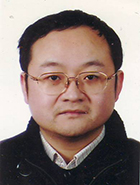 Lei Wang (汪镭)合作论文数College of Electronic and Information Engineering, Tongji University8
 ZongYi Huang (黄宗益)合作论文数7Weian Guo (郭为安)合作论文数同济大学中德工程学院7
 Qidi Wu (吴启迪)合作论文数College of Electronic and Information Engineering, Tongji University7Shide Hu (胡世德)合作论文数Tongji University6
 Hans Wiedmann合作论文数Chinesisch-Deutsche Hochschule für Angewandte Wissenschaften, Tongji University;Hochschule Esslingen - University of Applied Sciences6
 Xinghua Li (李兴华)合作论文数School of Mechanical Engineering, Tongji University6
 Liang Wang (王亮)合作论文数School of Mechanical Engineering, Tongji University6
 Jingpei Li (李镜培)合作论文数Department of Geotechnical Engineering, College of Civil Engineering, Tongji University6
 Yun Chen (陈云)合作论文数School of Public Economics and Administration of Shanghai University of Finance and Economics6BingSen Chen (陈炳森)合作论文数5Kesheng Wang合作论文数Norges teknisk-naturvitenskapelige universitet5Guijuan Lin合作论文数4Tianhao Hu (胡天豪)合作论文数4Tianyuan Yang合作论文数Sch Mech Engn, Tongji Univ4Ronglai LIN (林荣来)合作论文数4
 Jingwei Wang (王经纬)合作论文数CIMS Research Center, College of Electronic and Information Engineering, Tongji University4Qiu-yun LIU (刘秋云)合作论文数4DeChao Song (宋德朝)合作论文数4
 Yu Wang (王玉)合作论文数同济大学中德工程学院4
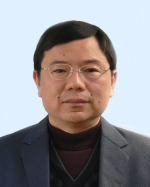 Guohua Wang (王国华)合作论文数School of Mechanical Engineering, Tongji University4yinglei li (李营垒)合作论文数4Shufa Han (韩树发)合作论文数3Chuanhang Qiu合作论文数3Jun Zhao合作论文数3Daike Kang (康代轲)合作论文数3XiaoHong Fu (傅晓红)合作论文数3QingHua Kong (孔庆华)合作论文数3Qun Wang (王群)合作论文数3
 Wang, Yi合作论文数3
 Qingyu Meng (孟庆雨)合作论文数Chinesisch-Deutsche Hochschule für Angewandte Wissenschaften, Tongji University3Haojun Tang (汤浩钧)合作论文数3
 Xiao Feng (冯晓)合作论文数Chinesisch-Deutsche Hochschule for Angewandte Wissenschaften, Tongji University;School of Economics and Management, Tongji University3Chao Wang (王超)合作论文数3Yu-Hui Zhang合作论文数3Zhifang Huang合作论文数2Bingying TANG (汤冰影)合作论文数2Xiang-long QI (齐相龙)合作论文数2Hongwei XIA (夏红卫)合作论文数2Qun WANG (王群)合作论文数2
 Jielin LI (李杰林)合作论文数2Mei Jiang (江梅)合作论文数2Yun Dong (董云)合作论文数2
 Haiming Chen (陈海明)合作论文数安徽理工大学2
 Tang Tang (唐堂)合作论文数School of Mechanical Engineering, Tongji University2




