Autonomous vehicles have been widely equipped with radars, camera, and LiDARs due to their complementary capabilities of environment perception. However, it becomes a critical task to accurately track the trajectory of the preceding vehicle when the host vehicle suffers a LiDAR failure under challenging lighting conditions. This article proposes an integrated learning-based solution to address this critical issue. It is composed of a Q -learning-based Gaussian mixture model (QLGMM) for clustering dense radar data, a weight-scheduled method for radar data association, and a switchable recurrent neural network with dual-level long short-term memory (LSTM) cells for trajectory tracking under LiDAR failure and various illumination levels. Specifically, the QLGMM is first introduced to improve the conventional GMM-EM algorithm with the cluster number determined by a Q -learning approach. Then, the weight-scheduled method is presented to associate the data from multiple radars. Furthermore, a switchable dual-level LSTM network is developed to adaptively fuse the trajectories from the radar and camera streams based on three lighting modes. The training data and testing data were acquired on a fully instrumented autonomous vehicle. Experimental verification demonstrates that the proposed method can achieve a promising improvement for LiDAR-fault-tolerant trajectory tracking under different lighting conditions.
Path planning is a critical part for improving the driving safety and driver comfort of autonomous vehicles (AVs), especially in complex maneuvering conditions. In addition, different drivers have different preferences for AVs, thus, how to provide personalized trajectories for different drivers is a vital issue for AVs. The collision-free path planning problem in conditions with large road curvatures is investigated in this paper, with the consideration of environmental safety constraints, drivers’ comfort, vehicle actuator constraints, etc. Firstly, a Driver-Vehicle-Road (DVR) system is established based on the combination of the kinematic vehicle model and the two-point visual preview driver model, such that the driver's individual handling characteristics can be considered in the controller. The kinematic vehicle model is modified to have the similar understeering characteristics with those of the nonlinear full car models, and then the proposed DVR system can satisfy different groups of drivers and cars. Secondly, for environmental constraints, a new artificial potential field (APF) method is proposed, which can form a banana-shaped 3-D dangerous imaginary mountain and a lane boundary cliff suitable for arbitrary curvature roads to generate a collision-free evasive path. Finally, the Linear-Time-Varying (LTV) model predictive control (MPC) method is adopted to design the path planner. The CarSim-Simulink joint simulation illustrates that with the proposed planner, the host vehicle is capable of avoiding obstacles with a safer and more comfortable maneuver on large curvature roads. And the proposed path planner can provide individually safe trajectories for different drivers with good maneuverability.
This paper investigates the trajectory tracking control of independently actuated autonomous vehicles after the first impact, aiming to mitigate the secondary collision probability. An integrated predictive control strategy is proposed to mitigate the deteriorated state propagation and facilitate safety objective achievement in critical conditions after a collision. Three highlights can be concluded in this work: (1) A compensatory model predictive control (MPC) strategy is proposed to incorporate a feedforward-feedback compensation control (FCC) method. Based on the definite physical analysis, it is verified that adequate reverse steering and differential torque vectoring render more potentials and flexibility for vehicle post-impact control; (2) With compensatory portions, the deteriorated states after a collision are far beyond the traditional stability envelope. Hence it can be further manipulated in MPC by constraint transformation, rather than introducing soft constraints and decreasing the control efforts on tracking error; (3) Considering time-varying saturation on input, input rate, and slip ratio, the proposed FCC-MPC controller is developed to improve faster deviation attenuation both in lateral and yaw motions. Finally two high-fidelity simulation cases implemented on CarSim-Simulink conjoint platform have demonstrated that the proposed controller has the advanced capabilities of vehicle safety improvement and better control performance achievement after severe impacts.
Oncoming vehicle high-beams pose a potential risk to the object detection performance of cameras in autonomous driving. In this scenario, modeling stochastic human driving behavior becomes a challenging task. This paper provides an integrated framework that generates appropriate driving operations to handle the oncoming high-beams scenario based on human driver data. By decomposing human drivers' pedal and steering signals, a parallel autoregressive input-output hidden Markov model (p-AIOHMM) is developed to capture the temporal dependencies of the decomposed driving actions. Besides, parallel generative adversarial networks (p-GAN) are proposed to reconstruct the pedal positions and the steering angles from the p-AIOHMM-based actions. All the parameters can be learned from the naturalistic driver data. Experimental results have verified that the developed parallel AIOHMM-GAN solution can perform a better task of driving behavior generation when suffering from oncoming high beams.
This paper investigates a post-impact control (PIC) method for four-wheel independently actuated (FWIA) electric autonomous vehicles (EAVs) after an initial impact. Differential steering angles actuated by differential torques generated from the left and right wheels have been utilized as an inherent redundant control strategy when the steering motor totally fails, to realize the PIC and secondary collision mitigation. To this end, a vehicle state estimation-based PIC strategy is developed in this work, and three contributions have been made as follows: 1) A novel cascaded estimation approach using the adaptive complementary filters (ACF) is proposed to estimate the longitudinal and lateral velocities with low-cost measurement; 2) Experiments on a scaled FWIA EAV with differential steering mechanism have been conducted to verify the proposed ACF approach, indicating that ACF can accurately estimate the longitudinal and lateral velocities; 3) The vehicle velocity estimation-based path planning and following with model predictive control (MPC) strategy are proposed for PIC and for FWIA EAVs, both for the first time. Finally, the verifiable simulation based on the high-fidelity CarSim-Simulink conjoint platform with the experimentally identified vehicle parameters has been conducted, which has verified the proposed ACF-based PIC strategy can effectively avoid the secondary collision and guarantee vehicle stability and control performance. (C) 2020 Elsevier Ltd. All rights reserved.
Radars, LiDARs and cameras have been widely adopted in autonomous driving applications due to their complementary capabilities of environment perception. However, one problem lies in how to effectively improve the cross-area tracking accuracy with massive data from multiple sensors. This paper proposes a novel tracking solution that is composed of a reinforcement-learning-based Gaussian mixture model (GMM), submodel center realignment, and data-driven trajectory association. Specifically, developed with a Q-learning-based cluster number, an improved GMM-EM algorithm is firstly investigated to cluster the dense short-range radar data points. Subsequently, an innovative kinetic-energy-aware approach is presented to realign the Q-learning GMM cluster centers for position error mitigation. In addition to Q-learning GMM clustering, a weight-scheduled method is presented to associate the data from a long-range radar and cameras for cross-area object extraction and trajectory fusion. Eighteen experiments for training and one experiment for verification were conducted on a fully-instrumented autonomous vehicle. Experimental results demonstrate that a better tracking performance in crossing detection areas can be achieved by the proposed method.
In contrast to the single-light detection and ranging (LiDAR) system, multi-LiDAR sensors may improve the environmental perception for autonomous vehicles. However, an elaborated guideline of multi-LiDAR data processing is absent in the existing literature. This paper presents a systematic solution for multi-LiDAR data processing, which orderly includes calibration, filtering, clustering, and classification. As the accuracy of obstacle detection is fundamentally determined by noise filtering and object clustering, this paper proposes a novel filtering algorithm and an improved clustering method within the multi-LiDAR framework. To be specific, the applied filtering approach is based on occupancy rates (ORs) of sampling points. Besides, ORs are derived from the sparse "feature seeds" in each searching space. For clustering, the density-based spatial clustering of applications with noise (DBSCAN) is improved with an adaptive searching (AS) algorithm for higher detection accuracy. Besides, more robust and accurate obstacle detection can be achieved by combining AS-DBSCAN with the proposed OR-based filtering. An indoor perception test and an on-road test were conducted on a fully instrumented autonomous hybrid electric vehicle. Experimental results have verified the effectiveness of the proposed algorithms, which facilitate a reliable and applicable solution for obstacle detection.
A cooperative trajectory planning algorithm for two vehicles driven on a winding road is presented in this paper, considering drivers' characteristics of preview action, time delay, and steering gain. The algorithm of cooperative game is introduced to plan trajectories without collision with each other for the involved encountering vehicles, with satisfaction of requirements including vehicle stability and road-departure avoidance. The proposed trajectory planning algorithm is then converted to a Model Predictive Control (MPC) problem and solved with the concept of Pareto Optimality. The proposed algorithm is verified with simulations of lane exchanging on an arc shaped road. Results show that the algorithm can accomplish the task of trajectory planning on a winding road successfully, with considering the driver's characteristics.
Based on adaptive complementary filtering (ACF) principles, this paper presents a cascaded estimation method to estimate the longitudinal and lateral velocities of a vehicle. The observation process is first carried out to estimate the longitudinal velocity, followed by the lateral speed observer in another ACF. Both of the ACFs are regulated by a high-pass filter and a low-pass filter with adaptive filtering parameters. Quick-response motor torques are attainable to induce the relevant vehicle states in a dynamic inverse coupled tire model (ICTM). Meanwhile, an additional kinematics-based approach is lumped into ACF to enhance the robustness against modeling discrepancy to zero. The errors of estimation are proved to converge by Lyapunov method. On an electric ground vehicle (EGV) equipped with four independently actuated in-wheel motors (FIAIWM), two maneuvers were conducted to evaluate the proposed method. Experimental results indicate that the proposed estimators are capable of matching with the measured longitudinal and lateral velocities accurately, and highlight it as a low-cost solution in practice.
A driver-vehicle-road (DVR) model based on kinematic vehicle model is proposed in this paper. In this DVR model, the kinematics vehicle-road model is adopted, and the driver model considering the human driver's characteristics is also included. Thus the behaviors of human driver's preview and neuromuscular delay can be considered in design of path planner and controller by using this DVR model. The repulsive force field based on the artificial potential field (APF) and the circle decomposition of vehicle shape are used to describe the constraints of obstacle avoidance and the road departure avoidance. Based on the proposed DVR model, a trajectory planer using model predictive control (MPC) is designed with consideration of collision and lane-departure avoidance, driver's intention, and vehicle occupant comfort. Simulation results show that with the proposed planner, the vehicle can successfully avoid static/moving obstacles and return to the original lane without lane departure. Simulation results indicate that the proposed kinematic vehicle model based DVR model can be used to design the path planner in normal driving and some typical driving scenarios. And the proposed path planner can provide the vehicle driven by different human drivers with individually safe trajectories in typical scenarios of obstacle avoidance.
A vehicle-to-vehicle (V2V) cooperative trajectory-planning algorithm for connected vehicles driven on a winding road considering characteristics of human drivers is presented in this paper. The algorithm of cooperative game is introduced to plan collision-free trajectories for the involved encountering vehicles, with satisfaction of the safety requirements including vehicle stability and road-departure avoidance. The trajectory-planning algorithm is then converted to a Model Predictive Control (MPC) problem and solved with the concept of Pareto Optimality. The algorithm is compared with a V2V trajectory-planning algorithm with non-cooperative game. Simulations are conducted in the scenarios of lane-exchange on arc shaped roads with different radius to verify the proposed algorithm. Results show that the algorithm can accomplish the task of trajectory-planning on either winding road or straight road successfully, considering the driver's characteristics. The difference of collaboration tendency in V2V driving between using cooperative algorithm and non-cooperative algorithm is also studied and described.
A model predictive control (MPC) approach combined with feedback compensation control (FCC) for the post-impact vehicle with active front steering (AFS) is investigated in this paper. The combined control method is designed to imitate the driving skills of the experienced racers in some extreme impact conditions. This paper also presents a feedback compensation based on definite physical meanings to verify the effectiveness of adequate reverse steering in spinning states after given initial impacts. With a compensatory portion, the sufficient AFS is compensated reversely to achieve the maximum lateral tire force to manage the position and orientation, and converge to the reference. Under the consideration of the input and the input rate saturation, the combined FCC and MPC controller is adopted to obtain the optimal AFS to attenuate the lateral offset and the heading deviation. The simulations conducted in Carsim-Simulink joint platform show that the proposed controller is capable of tracking the original path after given severe impacts.
A novel hierarchical model predictive control (MPC) method is investigated for four-wheel-independently-actuated (FWIA) autonomous ground vehicles (AGVs) with emergency collision avoidance in this paper, where an artificial potential field (APF)-based NMPC path replanner and a feedback compensation control (FCC)-based LTV-MPC path follower are designed. Both replanning with circle decomposition of vehicle shape, and tracking with tire force maximization, are considered simultaneously to enlarge the reachable zone of path replanning and following, particularly in much aggressive situations, where the trajectories are not feasible with the conventional approaches. By the proposed control, ample space and sufficient time are available to steer appropriately and accelerate/brake independently in such hazardous scenarios. In addition, a shorter predictive horizon is introduced to evaluate both methods in more extreme situations. The simulations modeled in the Carsim-Simulink joint platform demonstrate that the proposed approach can further improve path-replanning reachability and path-following safety in emergency collision avoidance scenarios, even in a shortsighted prediction.
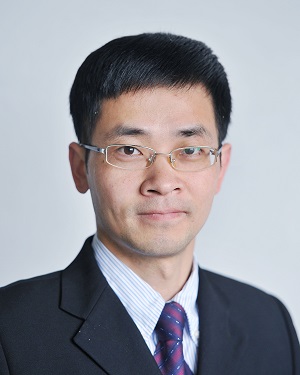 Jinxiang Wang (王金湘)合作论文数School of Mechanical Engineering, Southeast University8
 Nan Chen (陈南)合作论文数School of Mechanical Engineering, Southeast University8
 Junmin Wang合作论文数Mobility Systems Lab, Walker Department of Mechanical Engineering, University of Texas at Austin6
 Rongrong Wang (王荣蓉)合作论文数6
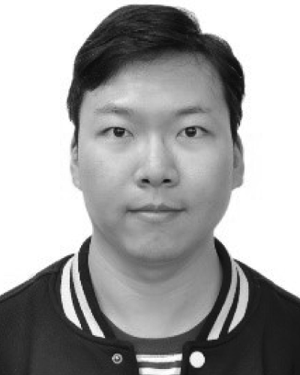 Kuoran Zhang合作论文数4
 Chuan Hu (胡川)合作论文数Institute of Intelligent Vehicle, School of Mechanical Engineering, Shanghai Jiao Tong University3
 Guodong Yin (殷国栋)合作论文数Jiangsu Engineering Research Center for Intelligent Eletrified Mobility, School of Mechanical Engineering, Southeast University3
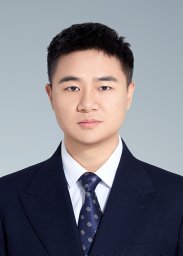 Yongjun Yan合作论文数School of Mechanical Engineering, Southeast University2
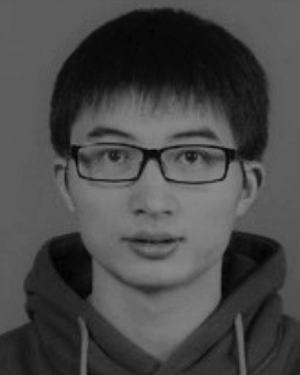 Jingqiang Zha合作论文数University of Texas at Austin, Austin, TX, 78712, USA1
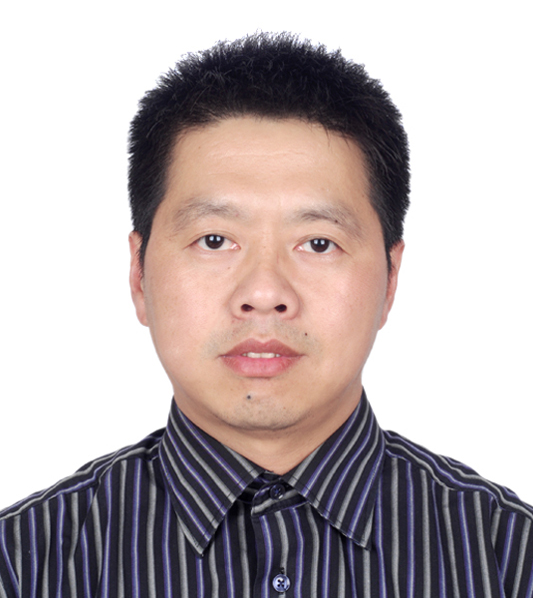 Jiansong Chen (陈建松)合作论文数School of Mechanical Engineering, Southeast University1
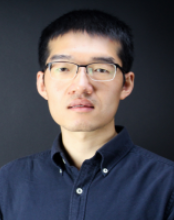 Yimin Chen (陈依民)合作论文数School of Marine Science and Technology, Northwestern Polytechnical University1




