Dataset distillation is the technique of synthesizing smaller condensed datasets from large original datasets while retaining necessary information to persist the effect. In this paper, we approach the dataset distillation problem from a novel perspective: we regard minimizing the prediction discrepancy on the real data distribution between models, which are respectively trained on the large original dataset and on the small distilled dataset, as a conduit for condensing information from the raw data into the distilled version. An adversarial framework is proposed to solve the problem efficiently. In contrast to existing distillation methods involving nested optimization or long-range gradient unrolling, our approach hinges on single-level optimization. This ensures the memory efficiency of our method and provides a flexible tradeoff between time and memory budgets, allowing us to distil ImageNet-1K using a minimum of only 6.5GB of GPU memory. Under the optimal tradeoff strategy, it requires only 2.5$\times$ less memory and 5$\times$ less runtime compared to the state-of-the-art. Empirically, our method can produce synthetic datasets just 10% the size of the original, yet achieve, on average, 94% of the test accuracy of models trained on the full original datasets including ImageNet-1K, significantly surpassing state-of-the-art. Additionally, extensive tests reveal that our distilled datasets excel in cross-architecture generalization capabilities.
Though being remarkably efficient in computation and storage, recent research demonstrates deep hashing based image retrieval models are also vulnerable to adversarial attacks. A substantial amount of defence techniques against adversarial attacks have been developed recently, the overwhelming majority focus on adversarial training. However, adversarial defence focusing on the data side, i.e., cluster-contrasting, still remains a paucity. Albeit a pioneer work makes attempt to maximise the average distances of image clusters by anchoring predefined hash centers, it is still insufficient for a robust defence due to no optimal guarantee and over-sticking to the global average distance. Further, the laser-focus of either adversarial training or cluster contrasting of existing methods hinder them from further robustness boosting by judiciously incorporating them together. In this paper, we propose a novel distance maximization algorithm for defence on deep hashing based image retrieval systems. The model finds the optimal maximum average distance between cluster centers, and then uses a heuristic method to increase the minimum distance in the worst-case by solving a maximum Boolean satisfiability (max-SAT) problem. Our proposed distance maximization algorithm is a boosting algorithm that can be incorporated into adversarial training to enhance or boost the robustness of retrieval systems. Experiments conducted on two datasets demonstrate that our algorithm can generate clusters with a maximised average distance, while the minimum distance is also increased by up to 33% over the state-of-the-art method, and robustness is improved by up to 23%.
The practice of transferring knowledge from a sophisticated, proprietary large language model (LLM) to a compact, open-source LLM has garnered considerable attention. Previous works have focused on a unidirectional knowledge distillation way by aligning the responses of the student model with those of the teacher model to a set of instructions. Nevertheless, they overlooked the possibility of incorporating any “feedback”–identifying challenging instructions where the student model’s performance falls short–to boost the student model’s proficiency iteratively. To this end, we propose a novel adversarial distillation framework for a more efficient knowledge transfer. Leveraging the versatile role adaptability of LLMs, we prompt the teacher model to identify “hard” instructions and generate new “hard” instructions for the student model, creating a three-stage adversarial loop of imitation, discrimination, and generation. By applying this adversarial framework, we successfully transfer knowledge from ChatGPT to a student model (named Lion), using a mere 70k training data. Our results show that Lion-13B not only achieves comparable open-ended generation capabilities to ChatGPT but surpasses conventional state-of-the-art (SOTA) instruction-tuned models like Vicuna-13B by 55.4% in challenging zero-shot reasoning benchmarks such as BIG-Bench Hard (BBH) and 16.7% on AGIEval.
Distilled student models in teacher-student architectures are widely considered for computational-effective deployment in real-time applications and edge devices. However, there is a higher risk of student models to encounter adversarial attacks at the edge. Popular enhancing schemes such as adversarial training have limited performance on compressed networks. Thus, recent studies concern about adversarial distillation (AD) that aims to inherit not only prediction accuracy but also adversarial robustness of a robust teacher model under the paradigm of robust optimization. In the min-max framework of AD, existing AD methods generally use fixed supervision information from the teacher model to guide the inner optimization for knowledge distillation which often leads to an overcorrection towards model smoothness. In this paper, we propose an adaptive adversarial distillation (AdaAD) that involves the teacher model in the knowledge optimization process in a way interacting with the student model to adaptively search for the inner results. Comparing with state-of-the-art methods, the proposed AdaAD can significantly boost both the prediction accuracy and adversarial robustness of student models in most scenarios. In particular, the ResNet-18 model trained by AdaAD achieves top-rank performance (54.23% robust accuracy) on RobustBench under AutoAttack.
Deep hashing based retrieval models have been widely used in large-scale image retrieval systems. Recently, there has been a surging interest in studying the adversarial attack problem in deep hashing based retrieval models. However, the effectiveness of existing adversarial attacks is limited by their poor perturbation management, unawareness of ranking weight, and only laser-focusing on the attack image. These shortages lead to high perturbation costs yet low AP reductions. To overcome these shortages, we propose a novel adversarial attack framework to improve the effectiveness of adversarial attacks. Our attack designs a dimension-wise surrogate Hamming distance function to help with wiser perturbation management. Further, in generating adversarial examples, instead of focusing on a single image, we propose to collectively incorporate relevant images combined with an AP-oriented (average precision) weight function. In addition, our attack can deal with both untargeted and targeted adversarial attacks in a flexible manner. Extensive experiments demonstrate that, with the same attack performance, our model significantly outperforms state-of-the-art models in perturbation cost on both untargeted and targeted attack tasks.
There is an increasing interest in studying adversarial attacks on image retrieval systems. However, most of the existing attack methods are based on the white-box setting, where the attackers have access to all the model and database details, which is a strong assumption for practical attacks. The generic transfer-based attack also requires substantial resources yet the effect was shown to be unreliable. In this paper, we make the first attempt in proposing a query-efficient decision-based attack framework for the image retrieval (DAIR) to completely subvert the top-K retrieval results with human imperceptible perturbations. We propose an optimization-based method with a smoothed utility function to overcome the challenging discrete nature of the problem. To further improve the query efficiency, we propose a novel sampling method that can achieve the transferability between the surrogate and the target model efficiently. Our comprehensive experimental evaluation on the benchmark datasets shows that our DAIR method outperforms significantly the state-of-the-art decision-based methods. We also demonstrate that real image retrieval engines (Bing Visual Search and Face++ engines) can be attacked successfully with only several hundreds of queries.
 Wei Wang (王炜)合作论文数Information Hub, The Hong Kong University of Science and Technology;Department of Computer Science and Engineering, School of Engineering, The Hong Kong University of Science and Technology6
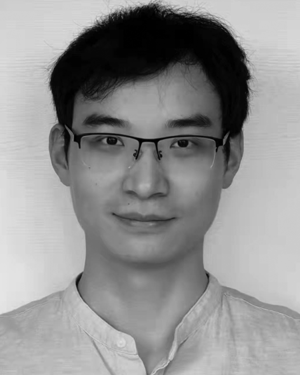 Junda Lu合作论文数5
 Bo Huang合作论文数The Hong Kong University of Science and Technology3
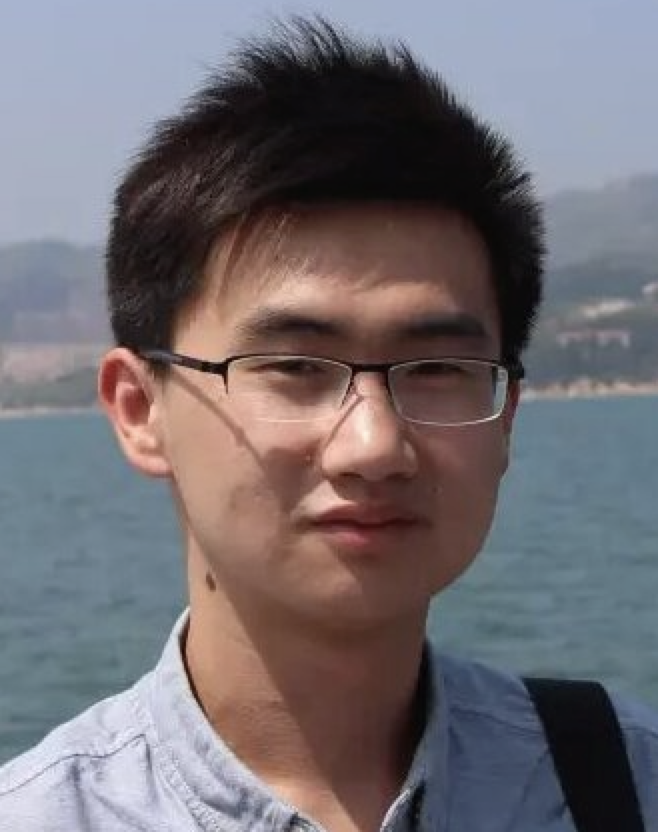 Minhao Cheng (程黽昊)合作论文数Department of Computer Science and Engineering, Hong Kong University of Science and Technology2
 Bing Li (李冰)合作论文数School of Information and Communication Engineering, University of Electronic Science and Technology of China2
 Chunkit Chan (陈俊杰)合作论文数Department of Computer Science and Engineering, School of Engineering, The Hong Kong University of Science and Technology1Yukai Miao合作论文数University of New South Wales, Sydney, Australia1
 Xiaochun Yang (杨晓春)合作论文数Software College of Northeastern University1
 Yi Wang (王艺)合作论文数Dongguan University of Technology1
 Yuxin Jiang (姜宇心)合作论文数Huawei Hong Kong Research Center1
 Yifang Sun合作论文数SEEK1
 Jianbin Qin (秦建斌)合作论文数College of Computer Science and Software Engineering, University of New South Wales1
 Dali Kaafar合作论文数Faculty of Science and Engineering, MQ school of Computing, Macquarie University1
 Dinusha Vatsalan合作论文数The Australian National University1




