High-quality scientific illustrations are essential for communicating complex scientific and technical concepts, yet existing automated systems remain limited in editability, stylistic controllability, and efficiency. We present AutoFigure-Edit, an end-to-end system that generates fully editable scientific illustrations from long-form scientific text while enabling flexible style adaptation through user-provided reference images. By combining long-context understanding, reference-guided styling, and native SVG editing, it enables efficient creation and refinement of high-quality scientific illustrations. To facilitate further progress in this field, we release the video at https://youtu.be/10IH8SyJjAQ, full codebase at https://github.com/ResearAI/AutoFigure-Edit and provide a website for easy access and interactive use at https://deepscientist.cc/.
While previous AI Scientist systems can generate novel findings, they often lack the focus to produce scientifically valuable contributions that address pressing human-defined challenges. We introduce DeepScientist, a system designed to overcome this by conducting goal-oriented, fully autonomous scientific discovery over month-long timelines. It formalizes discovery as a Bayesian Optimization problem, using a cumulative Findings Memory to intelligently balance the exploitation of promising avenues with the exploration of novel hypotheses. Consuming over 20,000 GPU hours, the system generated about 5,000 unique ideas and experimentally validated approximately 1100, ultimately surpassing human-designed 2025 state-of-the-art (SOTA) methods on three frontier AI tasks by 183.7\%, 1.9\%, and 7.9\%. Crucially, this was achieved by autonomously redesigning core methodologies, not merely recombining existing techniques. In a striking demonstration, the system achieved progress on AI text detection in just two weeks that is comparable to three years of cumulative human research. This work provides the first large-scale evidence of an AI achieving discoveries that progressively surpass human SOTA on scientific tasks, producing valuable findings that genuinely push the frontier forward. To facilitate further research into this process, we will open-source all experimental logs and system code.
The proliferation of sophisticated text generation models necessitates the development of robust detection methods capable of identifying machine-generated content, particularly text designed to evade detection through adversarial perturbations. Existing zero-shot detectors often rely on statistical measures that implicitly assume Gaussian distributions, a premise that falters when confronted with the heavy-tailed statistical artifacts characteristic of adversarial or non-native English texts. This paper introduces T-Detect, a novel detection method that fundamentally redesigns the statistical core of curvature-based detectors. Our primary innovation is the replacement of standard Gaussian normalization with a heavy-tailed discrepancy score derived from the Student's t-distribution. This approach is theoretically grounded in the empirical observation that adversarial texts exhibit significant leptokurtosis, rendering traditional statistical assumptions inadequate. T-Detect computes a detection score by normalizing the log-likelihood of a passage against the expected moments of a t-distribution, providing superior resilience to statistical outliers. We validate our approach on the challenging RAID benchmark for adversarial text and the comprehensive HART dataset. Experiments show that T-Detect provides a consistent performance uplift over strong baselines, improving AUROC by up to 3.9% in targeted domains. When integrated into a two-dimensional detection framework (CT), our method achieves state-of-the-art performance, with an AUROC of 0.926 on the Books domain of RAID. Our contributions are a new, theoretically-justified statistical foundation for text detection, an ablation-validated method that demonstrates superior robustness, and a comprehensive analysis of its performance under adversarial conditions. Ours code are released at https://github.com/ResearAI/t-detect.
As Large Language Models (LLMs) evolve in natural language processing (NLP), their ability to stably follow instructions in long-context inputs has become critical for real-world applications. However, existing benchmarks seldom focus on instruction-following in long-context scenarios or stability on different inputs. To bridge this gap, we introduce LIFBench, a scalable dataset designed to evaluate LLMs' instruction-following capabilities and stability across long contexts. LIFBench comprises three long-context scenarios and eleven diverse tasks, featuring 2,766 instructions generated through an automated expansion method across three dimensions: length, expression, and variables. For evaluation, we propose LIFEval, a rubric-based assessment method that enables precise, automated scoring of complex LLM responses without reliance on LLM-assisted assessments or human judgment. This method allows for a comprehensive analysis of model performance and stability from multiple perspectives. We conduct detailed experiments on 20 prominent LLMs across six length intervals. Our work contributes LIFBench and LIFEval as robust tools for assessing LLM performance in complex and long-context settings, offering valuable insights to guide future advancements in LLM development.
The automation of scientific discovery has been a long-standing goal within the research community, driven by the potential to accelerate knowledge creation. While significant progress has been made using commercial large language models (LLMs) as research assistants or idea generators, the possibility of automating the entire research process with open-source LLMs remains largely unexplored. This paper explores the feasibility of using open-source post-trained LLMs as autonomous agents capable of performing the full cycle of automated research and review, from literature review and manuscript preparation to peer review and paper refinement. Our iterative preference training framework consists of CycleResearcher, which conducts research tasks, and CycleReviewer, which simulates the peer review process, providing iterative feedback via reinforcement learning. To train these models, we develop two new datasets, Review-5k and Research-14k, reflecting real-world machine learning research and peer review dynamics. Our results demonstrate that CycleReviewer achieves promising performance with a 26.89\% reduction in mean absolute error (MAE) compared to individual human reviewers in predicting paper scores, indicating the potential of LLMs to effectively assist expert-level research evaluation. In research, the papers generated by the CycleResearcher model achieved a score of 5.36 in simulated peer reviews, showing some competitiveness in terms of simulated review scores compared to the preprint level of 5.24 from human experts, while still having room for improvement compared to the accepted paper level of 5.69. This work represents a significant step toward fully automated scientific inquiry, providing ethical safeguards and exploring AI-driven research capabilities. The code, dataset and model weight are released at https://wengsyx.github.io/Researcher.
The emergence of Artificial Intelligence (AI) Scientist represents a paradigm shift in scientific discovery, with large language models (LLMs) taking the lead as the primary executor in the entire scientific workflow from idea generation to experiment implementation. Recent AI Scientist studies demonstrate sufficient capabilities for independent scientific discovery, with the generated research reports gaining acceptance at the ICLR 2025 workshop and ACL 2025, arguing that a human-level AI Scientist, capable of uncovering phenomena previously unknown to humans, may be imminent. Despite this substantial progress, AI Scientist has yet to produce a groundbreaking achievement in the domain of computer science on par with automated scientific tools. Based on extensive quantitative evidence from existing benchmarks in complex engineering tasks and a systematic evaluation assess 28 research papers generated by five advanced AI Scientist systems, we argue that \textbf{the fundamental bottleneck for AI Scientists lies in their capability to execute the requisite verification procedures.} Current AI Scientist systems lack the execution capabilities needed to execute rigorous experiments and produce high-quality scientific papers. To better illustrate the root cause of this \textbf{implementation gap}, we provide an in-depth discussion on the fundamental limitations of AI Scientist. This position paper aims to call for the participants in the community to bridge the implementation gap.
Failure attribution in multi-agent systems – pinpointing the exact step where a decisive error occurs – is a critical yet unsolved challenge. Current methods treat this as a pattern recognition task over long conversation logs, leading to critically low step-level accuracy (below 17%), which renders them impractical for debugging complex systems. Their core weakness is a fundamental inability to perform robust counterfactual reasoning: to determine if correcting a single action would have actually averted the task failure. To bridge this counterfactual inference gap, we introduce Abduct-Act-Predict (A2P) Scaffolding, a novel agent framework that transforms failure attribution from pattern recognition into a structured causal inference task. A2P explicitly guides a large language model through a formal three-step reasoning process within a single inference pass: (1) Abduction, to infer the hidden root causes behind an agent's actions; (2) Action, to define a minimal corrective intervention; and (3) Prediction, to simulate the subsequent trajectory and verify if the intervention resolves the failure. This structured approach leverages the holistic context of the entire conversation while imposing a rigorous causal logic on the model's analysis. Our extensive experiments on the Who&When benchmark demonstrate its efficacy. On the Algorithm-Generated dataset, A2P achieves 47.46% step-level accuracy, a 2.85× improvement over the 16.67% of the baseline. On the more complex Hand-Crafted dataset, it achieves 29.31% step accuracy, a 2.43× improvement over the baseline's 12.07%. By reframing the problem through a causal lens, A2P Scaffolding provides a robust, verifiable, and significantly more accurate solution for automated failure attribution. Ours code are released at https://github.com/ResearAI/A2P.
Language models (LMs) proficiency in handling deterministic symbolic reasoning and rule-based tasks remains limited due to their dependency implicit learning on textual data. To enable fully rule comprehension ability, we explore how to incorporate compiled neural networks (CoNNs) which weight is specially designed into the architecture of LMs, to achieve high accuracy and robust performance. CoNNs are transformer-based neural networks that execute rules through artificially generated attention weights. Our method, which call "Neural Comprehension", by incorporating CoNN modules into the LM, the framework effectively tackles rule-intensive challenges. Our experiments on symbolic reasoning tasks and real-world arithmetic reasoning tasks demonstrate the superior performance of our method compared to existing techniques. Furthermore, our LM achieves flawless execution on symbolic operations tasks, highlighting the potential of our method in enabling LMs to possess true symbolic comprehension capabilities.
In Textual question answering (TQA) systems, complex questions often require retrieving multiple textual fact chains with multiple reasoning steps. While existing benchmarks are limited to single-chain or single-hop retrieval scenarios. In this paper, we propose to conduct Graph-Hop -- a novel multi-chains and multi-hops retrieval and reasoning paradigm in complex question answering. We construct a new benchmark called ReasonGraphQA, which provides explicit and fine-grained evidence graphs for complex questions to support interpretable reasoning, comprehensive and detailed reasoning. And ReasonGraphQA also shows an advantage in reasoning diversity and scale. Moreover, We propose a strong graph-hop baseline called Bidirectional Graph Retrieval (BGR) method for generating an explanation graph of textual evidence in knowledge reasoning and question answering. We have thoroughly evaluated existing evidence retrieval and reasoning models on the ReasonGraphQA. Experiments highlight Graph-Hop is a promising direction for answering complex questions, but it still has certain limitations. We have further studied mitigation strategies to meet these challenges and discuss future directions.
The medical conversational question answering (CQA) system aims at providing a series of professional medical services to improve the efficiency of medical care. Despite the success of large language models (LLMs) in complex reasoning tasks in various fields, such as mathematics, logic, and commonsense QA, they still need to improve with the increased complexity and specialization of the medical field. This is because medical CQA tasks require not only strong medical reasoning, but also the ability to think broadly and deeply. In this paper, to address these challenges in medical CQA tasks that need to be considered and understood in many aspects, we propose the Holistically Thought (HoT) method, which is designed to guide the LLMs to perform the diffused and focused thinking for generating high-quality medical responses. The proposed HoT method has been evaluated in three different medical CQA datasets containing English and Chinese languages. The extensive experimental results show that our method can produce more correct, professional, and considerate answers than several SOTA methods, manifesting its effectiveness.
Question answering (QA) systems have long pursued the ability to reason over explicit knowledge credibly. Recent work has incorporated knowledge into fine-grained sentences and constructed natural language database (NLDB) task, and conducts complex QA with explicit reasoning chains. Existing models focus on retrieving evidence by combining multiple modules or discretely. However, these models ignore utilizing path information (e.g. sentence order), which is proven to be important for evidence retrievers. In this work, we propose a ReliAble Path-retrieval (RAP) to generate varying length evidence chains iteratively. It comprehensively models reasoning chains and introduces loss from two views. The experimental results show that our model demonstrates state-of-the-art performance on both evidence chain retrieval and question-answering tasks. Additional experiments on sequential supervised and sequential unsupervised retrieval fully indicate the significance of RAP.
The medical conversational question answering (CQA) system aims at providing a series of professional medical services to improve the efficiency of medical care. Despite the success of large language models (LLMs) in complex reasoning tasks in various fields, such as mathematics, logic, and commonsense QA, they still need to improve with the increased complexity and specialization of the medical field. This is because medical CQA tasks require not only strong medical reasoning, but also the ability to think broadly and deeply. In this paper, to address these challenges in medical CQA tasks that need to be considered and understood in many aspects, we propose the Holistically Thought (HoT) method, which is designed to guide the LLMs to perform the diffused and focused thinking for generating high-quality medical responses. The proposed HoT method has been evaluated through automated and manual assessments in three different medical CQA datasets containing the English and Chinese languages. The extensive experimental results show that our method can produce more correctness, professional, and considerate answers than several state-of-the-art (SOTA) methods, manifesting its effectiveness. Our code in https://github.com/WENGSYX/HoT.
Recently, with the chain of thought (CoT) prompting, large language models (LLMs), e.g., GPT-3, have shown strong reasoning ability in several natural language processing tasks such as arithmetic, commonsense, and logical reasoning. However, LLMs with CoT require multi-step prompting and multi-token prediction, which is highly sensitive to individual mistakes and vulnerable to error accumulation. The above issues make the LLMs need the ability to verify the answers. In fact, after inferring conclusions in some thinking decision tasks, people often check them by re-verifying steps to avoid some mistakes. In this paper, we propose and prove that LLMs also have similar self-verification abilities. We take the conclusion obtained by CoT as one of the conditions for solving the original problem. By performing a backward verification of the answers that LLM deduced for itself, we can obtain interpretable answer validation scores to select the candidate answer with the highest score. Experimental results demonstrate that the proposed method can improve the reasoning performance on various arithmetic, commonsense, and logical reasoning datasets. Our code is publicly available at: https://github.com/WENGSYX/Self-Verification.
Language models have achieved impressive results in natural language processing tasks, but their ability to perform symbolic operations and arithmetic operations, remains limited, which attribute to their learn the rules implicitly from data. We explore how to incorporate compiled neural networks (CoNNs) which weight is specially designed, into the architecture of language models to enable the language model trained by gradient to obtain fully rule comprehension ability. The incorporation of compiled neural networks offers a promising direction for improving the performance of language models on compound tasks, particularly in areas that require a deeper comprehension of abstract rules beyond recognizing patterns in training data. Our method, which call "Neural Comprehension", helps language models achieve absolute accuracy in symbolic operations, thereby enhancing their ability for rule reasoning, symbolic reasoning, and arithmetic reasoning. Our code is publicly available at: https://github.com/WENGSYX/Neural-Comprehension. TL;DR: We have enabled language models to more fundamental comprehension of the rule, to achieve completely absolute accuracy in symbolic reasoning without additional tools.
The ability of reasoning over evidence has received increasing attention in question answering (QA). Recently, natural language database (NLDB) conducts complex QA in knowledge base with textual evidences rather than structured representations, this task attracts a lot of attention because of the flexibility and richness of textual evidence. However, existing text-based complex question answering datasets fail to provide explicit reasoning process, while it's important for retrieval effectiveness and reasoning interpretability. Therefore, we present a benchmark ReasonChainQA with explanatory and explicit evidence chains. ReasonChainQA consists of two subtasks: answer generation and evidence chains extraction, it also contains higher diversity for multi-hop questions with varying depths, 12 reasoning types and 78 relations. To obtain high-quality textual evidences for answering complex question. Additional experiment on supervised and unsupervised retrieval fully indicates the significance of ReasonChainQA. Dataset and codes will be made publicly available upon accepted.
Visual Dialogue (VD) task has recently received increasing attention in AI research. Visual Dialog aims to generate multi-round, interactive responses based on the dialog history and image content. Existing textual dialogue models cannot fully understand visual information, resulting in a lack of scene features when communicating with humans continuously. Therefore, how to efficiently fuse multimodal data features remains to be a challenge. In this work, we propose a knowledge transfer method with visual prompt (VPTG) fusing multi-modal data, which is a flexible module that can utilize the text-only seq2seq model to handle visual dialogue tasks. The VPTG conducts text-image co-learning and multi-modal information fusion with visual prompts and visual knowledge distillation. Specifically, we construct visual prompts from visual representations and then induce sequence-to-sequence(seq2seq) models to fuse visual information and textual contexts by visual-text patterns. And we also realize visual knowledge transfer through distillation between two different models’ text representations, so that the seq2seq model can actively learn visual semantic representations. Extensive experiments on the multi-modal dialogue understanding and generation (MDUG) datasets show the proposed VPTG outperforms other single-modal methods, which demonstrate the effectiveness of visual prompt and visual knowledge transfer.
Question Answering (QA) is a Natural Language Processing (NLP) task that can measure language and semantics understanding ability, it requires a system not only to retrieve relevant documents from a large number of articles but also to answer corresponding questions according to documents. However, various language styles and sources of human questions and evidence documents form the different embedding semantic spaces, which may bring some errors to the downstream QA task. To alleviate these problems, we propose a framework for enhancing downstream evidence retrieval by generating evidence, aiming at improving the performance of response generation. Specifically, we take the pre-training language model as a knowledge base, storing documents’ information and knowledge into model parameters. With the Child-Tuning approach being designed, the knowledge storage and evidence generation avoid catastrophic forgetting for response generation. Extensive experiments carried out on the multi-documents dataset show that the proposed method can improve the final performance, which demonstrates the effectiveness of the proposed framework.
Visual Question Answering (VQA) has received increasing attention in NLP research. Most VQA images focus on natural scenes. However, some images widely used in textbooks such as diagrams often contain complicated and abstract information (e.g. constructed graphs with logic and concepts). Therefore, Diagram Question answering (DQA) is a challenging but significant task, which is also helpful for machines to understand human cognitive behaviors and learning habits. On DQA task, we propose a multi-perspective understanding based visual question-answering method, which constructs a variety of different self-monitoring tasks in the form of prompts to help the model learn deeper information. For the first time, we propose a decoding method of "Cross Entropy constraint Decoding", which can effectively constrain the content generated by the text when performing multiple selection tasks. This method has obtained SOTA in the evaluation task of CCKS-2022, which fully proves the effectiveness of the method.
 Yixuan Weng合作论文数Westlake University16
 Kang Liu (刘康)合作论文数National Laboratory of Pattern Recognition, Institute of Automation, Chinese Academy of Sciences;School of Artificial Intelligence, University of Chinese Academy of Sciences10
 Jun Zhao (赵军)合作论文数Institute of Automation, Chinese Academy of Sciences;School of Artificial Intelligence, University of Chinese Academy of Sciences10
 Shizhu He (何世柱)合作论文数Institute of Automation, Chinese Academy of Sciences;University of Chinese Academy of Sciences10
 Bin Li合作论文数College of Electrical and Information Engineering, Hunan University7
 Bin Sun (孙斌)合作论文数College of Electrical and Information Engineering, Hunan University3
 Qiujie Xie (谢秋婕)合作论文数Fudan University2Zhang Yue合作论文数2
 Linyi Yang (杨林易)合作论文数Southern University of Science and Technology2
 Shengping Liu合作论文数Department of Biomedical Engineering, Chongqing University of Technology2
 Yue Zhang (张岳)合作论文数School of Engineering, Westlake University;Westlake Institute for Advanced Study;Singapore University of Technology and Design2He Yan合作论文数1Yichen Liu合作论文数1Minhao Wang合作论文数1Li Cai合作论文数1
 Xiaodong Wu合作论文数School of Computer Science and Technology, East China Normal University1
 Hongbo Zhang (张鸿博)合作论文数School of Engineering, Westlake University1
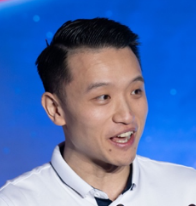 Fang Guo合作论文数School of Engineering, Westlake University1
 Wei Zhang (张伟)合作论文数School of Computer Science and Technology, East China Normal University1Panzhong Lu合作论文数School of New Media and Communication, Tianjin University1
 Guangsheng Bao合作论文数Westlake University;Zhejiang University1
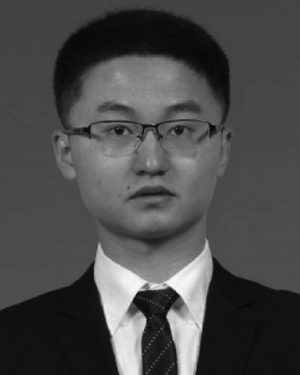 Cunguang Wang合作论文数Department of Hydraulic Engineering, Tsinghua University, Beijing, China1
 Xiaoming Shi (施晓明)合作论文数School of Computer Science and Technology, East China Normal University1
 Jian Wu合作论文数Tokyo Institute of Technology;Microsoft1
 Shutao Li (李树涛)合作论文数Chang'an University1
 Jindong Wang (王晋东)合作论文数Department of Data Science, William & Mary;School of Computing, Data Sciences & Physics, William & Mary1
 Xiangju Lu合作论文数1
 Fei Xia合作论文数Department of Linguistics, University of Washington;Department of Biomedical and Health Informatics, University of Washington1




