Toponyms (territorial names) can mobilize people by shaping captivating nationalist narratives. They can thus be a source of controversial policies that could erode democratic values. Drawing on the study of the Macedonian Name Dispute (MND) over the past six years, the paper argues that journalism must rethink its coverage of these conflicts, as media often amplify domestic nationalist narratives and escalate tensions between nation-states, with measurable effects on bilateral relations and regional diplomacy. I focus here on public communication, as its practices have imposed a dogmatic view that shapes online communication, including social media content, especially in the case of the MND. Crucially, in symbolic name disputes over territories, the media do not merely mirror a pre‑existing national interest; they are active agents, since the dispute’s political reality is constructed and amplified through communication and cultural practices. In a globalized world, when the media uncritically rally behind national flags, they not only reinforce inequality and restrict people’s rights domestically but also harden interstate positions, complicate diplomacy, and undermine multilateral conflict‑resolution mechanisms. This essay argues for a normative approach to media coverage, focusing on facts, pluralism, and more inclusive perspectives in coverage of territorial name disputes. This normative approach draws on Rothberg’s notion of multidirectional memory to encourage reporting that recognizes overlapping memories and comparative claims rather than treating histories as exclusive competitions.
One of the most consequential territorial disputes today is the South China Sea (SCS) dispute, involving Brunei, China, Indonesia, Malaysia, the Philippines, and Vietnam. Drawing on Communication Geography and a qualitative framing analysis of 533 English-language news articles from state-affiliated outlets in these six countries, this article shows how media actively reshape the definition and contestation of geographical space. The analysis reveals that Chinese state media project stability and a preference for peaceful resolution, while other claimants remain skeptical and carefully avoid actions that might provoke Beijing, given its global influence. Across outlets, naming practices and repeatable symbolic devices are used to align the SCS with national interests, reinforcing competing territorial imaginaries and amplifying the salience of the dispute. Focusing on state-affiliated English coverage highlights how official media articulate policy positions, signal diplomatic red lines to international audiences, and shape the legal and rhetorical resources available to negotiators.
The Belt and Road Initiative (BRI) has garnered significant attention from geographers worldwide, yet few have focused on its communicative aspects. This article examines the BRI from a communication geography perspective that integrates media studies and geographical analysis. We focus on the role of media narratives in the spatio-discursive construction of a flagship BRI project-Piraeus Port in Greece. This construction involves a complex, competitive process among media outlets in different countries. Based on framing theory, we analysed 519 online news articles about Piraeus Port, written in Greek and English and originating from five countries (China, France, Greece, the UK, and the US), to reveal four major geographical frames: geopolitics, geoeconomics, local development, and governance. These frames operate at different scales, invoke different spatial imaginaries, and frame Piraeus Port differently as a symbol of peaceful coexistence, a geopolitical hotspot amid intensifying China-US tensions, a harbinger of economic prosperity, a local space of everyday life and production undergoing transformation, and a zone of exception marked by illicit activities. We further conducted a cross-country analysis and found that, while most news coverage adopted a positive view of the port project, Western media outlets were more critical than their Chinese counterparts.
As there is still room for exploring the securitization process as a part of the Securitization Theory, this research paper shows that the securitization process can be contentious. There were at least two successful securitization processes in the MND. The current study interviewed 18 political members of the coalition government led by Syriza and 24 opposition members from Spring 2019 to 2020. The interviews focused on the events associated with the Macedonian Name Dispute (MND), which overshadowed the Greek discourse from 2018 to 2019 and supposedly solved one of the world's oldest and most potent territorial name disputes. The first securitization process was promoted by the government, and the other by the dominant right-wing opposition party of New Democracy, which eventually became the new government after the national elections on 7 July 2019. In this contentious process, the side that exploited the media seemed to maintain its securitization longer.
This paper focuses on the Macedonian name dispute (MND) in Greece as a qualitative instrumental case study. Through participant observations, artifacts and field notes, it researches the reasons behind the success of sustaining and using the MND as a tool in political competition. The study highlights the creation of a name (sign) whose meanings and importance are also related to non-existent facts that can be used to disseminate fabricated narratives, which is happening in other territorial name disputes worldwide. Consequently, through the examined name dispute, there is a distortion or alteration of facts, criminalising different viewpoints, threatening political opponents, spreading hate and provoking mob attacks against those that challenge Greece's dominant national narrative that wants to secure the monopoly of the word Macedonia.
Wildfires are not only natural disasters but also political events. Media plays an important role in the power-laden process of meaning-making and responsibility-assigning that can significantly shape how societies understand and response to wildfires. To shed light on the role of media in the political ecology of wildfire, we conducted a framing analysis of 241 news articles on the Evros wildfires in Greece. We discovered five narratives of blame: migrant activities, government mismanagement, climate change, arson, and war. We argued that the politics of blame in the Greek context is deeply intertwined with the rise of national populism and xenophobic attitudes as a response to the European refugee crisis. This is evidenced by a dominant narrative that blamed transnational migrants as culprits. The blame politics of wildfires in Greece is also shaped by the political economy of the media that enhances state control over media narratives.
The study examined through ideological discourse analysis (IDA) 38 widely spread disinformation-laced news stories (or "fake news") regarding the Macedonian Name Dispute (MND) and the "Prespes Agreement" in the years 2018 and 2019. The paper explores the ideological narratives and constructions disseminated through the disinformation-laced news stories during these 2 years. Therefore, the study expands the relevant literature regarding democracy, disinformation, and hate campaigns by examining the ideological narratives and constructions disseminated through the disinformation-laced news stories during that two-years-period. The findings showed that those news stories were successfully weaponized and resulted in empowering identity characteristics and ideological narratives through the distancing method (us vs them), the alienation with elements of dramatization (e.g. territorial loss of the Greek Macedonia due to the "Prespes Agreement"), and the sense of victimization and dehumanization that demanded emergency actions to protect the ingroup (Greece) from the outgroup (North Macedonia and its Greek assistants).
In 2020, the Greek government initiated the “Stay at Home” Campaign (or “Petsas’ list”), a fund for supporting the country’s media industry due to financial issues provoked by the Covid-19 pandemic. Also, the campaign would promote the message of staying at home to stop spreading Covid-19. However, that initiative seemed to have been perceived as a manipulation effort to control the news media in order to support an ideal image of the government, including defending the excessive pandemic restrictions (e.g., lockdowns and the prohibition of music in restaurants and bars). The current study employs Ideological Discourse Analysis (IDA) to investigate the online anti-media sentiment empowered by the “Stay at Home” Campaign. It focuses on the Twitter users’ ideological constructions emphasizing on the positive depictions of one group (i.e., the government and the media) against the “other” (i.e., the public) in 1623 Tweets of the relevant hashtag in Greek #Petsas_list (#Λιστα_Πετσα) on Twitter. The results showed that financial support when used in a controversial and non-transparent way, could undermine media independence and empower anti-media sentiment. Lastly, the study enhances the literature about the mass media industry’s problems globally, including the decline in media freedom that contributes to the democratic recession.
This research paper employed Ideological Discourse Analysis (IDA) to study the use of the Macedonian Name Dispute (MND) on the websites of the eight most prominent candidates of the regional and municipal elections of 2019 in Thessaloniki and Central Macedonia. MND is one of the oldest territorial name disputes in the world, as it is connected to the Macedonian Question dating back to the end of the 19th century. For almost 30 years, the MND has been used in Greece’s political competition, and more recently in 2018 and 2019 due to the ratification of the Prespes (or Prespa) Agreement between Greece and the country now-named North Macedonia. This study revealed that politicians employed the MND as a communication tool to provoke powerful emotions linked with the Greek identity. After all, MND, like other territorial name disputes (e.g., South China Sea, Persian/Arabian Gulf, Kuril Islands/Northern Territories, Nagorno-Karabakh/Artsakh, Western Sahara), seems to preserve a dominant discourse in which the emotional factor dictates the truth and goes against those who oppose this existing reality.
This article summarizes the events at Narrating New Normal: Graduate Student Symposium, held virtually on May 17–18, 2021. The symposium was organized by a number of graduate students from the School of Communication and Film (previously named the School of Communication) and was supported by Global Storytelling: Journal of Digital and Moving Images and the School of Communication and Film. It was attended by an international roster of graduate students hailing from academic institutions and think tanks in different countries. The presentations focused on the usage of the phrase new normal, a popular term during crises, in various geopolitical, geocultural, and historical contexts. The essay discusses first the background and theoretical framework that informs the symposium. Conceived during the COVID-19 pandemic, a global crisis that has seen the use of the phrase new normal in describing the shifts in our daily lives or imaginations of a postcrisis future. Taking a critical approach, the symposium aims to interrogate how the phrase is used by different social institutions, corporations, and individuals in various crises, considering how it normalizes precarity. This essay also summarizes the keynote lecture delivered by professor Michal Krzyzanowski (Uppsala University) on the discursive strategies of normalization and mainstreaming. It also covers the papers and discussions across four panels that examined the different aspects of normalization and of new normal in its various incarnations: geopolitics, networked media spaces, normalization and precarity, and popular culture. The article ends by offering a synthesis of the major threads that tie the presentations and addresses together. It proposes that while the phrase new normal normalizes and obfuscates precarity, it also suggests that there are pockets of optimism during crises where we can witness human resilience and individual agency.
The Mati (Greece) wildfire of 23 July 2018 received extensive news coverage. It dominated the Greek public discourse for several years to the extent that it was ascribed to being used as a tool for electoral power. In spite of its significance, no research has focused on investigating the news coverage of this event. This research paper examines the news discourse of the Mati Wildfire by studying 1,573 news articles, using ideological discourse analysis (IDA). It analyzes the dominant narratives and constructions of the nine most prominent news websites in Greece and reveals if there is a systemic undermining of human impact on the environment. The findings showed that the news outlets did not cover the wildfire as an environmental event, but rather a political issue. The disseminated constructions were of a populistic discourse that supported a polarized logic of a positive image for a particular group (i.e., the main opposition party) and a negative one for the outgroup (i.e., the then-government). As a result, the study emphasizes how crucial it is for journalists to critically explain the role and effects of human activity on the environment (Anthropocene), instead of simply focusing on political or otherwise discussion of events.
In the Macedonian Name Dispute (MND), the Greek media promoted the country's main nationalistic narrative that treats the compromise between Greece and its neighboring country (now-named North Macedonia) as a national crisis that could even lead to an existential threat to Greece and its people. To investigate the recent events related to the MND, this study examined 615 news articles throughout 2018 and 2019 to identify how the news media framed the events associated with the MND and the Prespes Agreement. The results revealed that most news stories framed the MND incidents as a political or mobilization tool of the public and an existential threat to Greece. Furthermore, the news coverage showed that several news stories employed the patriotic and nationalistic frame to support or undermine the country's then-government. These findings offer insights into the use of territorial name disputes as a communication tool, how news articles and journalism promote the idea of an existential threat connected to the MND, and the alarming non-critical news coverage that could lead to a further democratic backsliding of Greece.
While many studies in the field of environmental communication have focused on exploring the environmental impact of social media, this research paper takes a different turn. It investigates, through a qualitative content analysis, 391 websites that support and provide green hosting services. This study is considered the first in the field that aims to examine in-depth how these green websites tend to communicate their green services. Therefore, its contribution is to enhance the relevant bibliography and present more insights regarding green websites and sustainability. The results showed that most of the websites were trying to highlight the positive impact their services will have on the environment. In addition, many websites tried to educate their consumers concerning sustainable development and make them part of a broader green cultural tradition. Nevertheless, on many websites, green hosting seemed a supplementary factor for choosing the company's services.
In contemporary world, it is estimated that there are 1,838,596,056 sites across 214,036,874 unique domain names and 7,290,968 web-facing computers.The huge power consumption of these online services has serious consequences regarding the environment.The web-sites, along with the web tools, need electrical power to operate.Thus, environmental problems such as global warming, air pollution, natural resource depletion, and acid rain are worsening.Consequently, this study researched five hundred news web-sites including well-known international news organizations in order to understand if they choose to cover environmental news, if they take action to protect the Earth's habitat by operating through renewable sources, by using the black colour in their graphic design or energy saving mode, and by organizing actions in favour of the environment.The findings of this original research revealed that almost none of the prominent news web-sites of the world seem to care about changing their web-sites in order to become environmentally friendly.
In the current media world, there is a huge debate about the importance of the visibility of a news website in order to secure its existence. Thus, search engine optimization (SEO) practices have emerged in the news media systems around the world. This study aimed to expand the current literature about the SEO practices by focusing on examining, via the walkthrough method, the ways that news companies allow the users to comment on their online news articles. The comments on the news websites are related to the notions of social influence, information diffusion, and play an essential role as a SEO practice, for instance, by providing content and engagement. The examined sample was collected by the most visited news websites’ rankings of alexa.com for a global scale and for the countries Greece and Cyprus. The findings reveal that the news websites throughout the globe use similar features and ways to support the comments of the users. In the meantime, though, a high number of the news websites did not allow the users to use their social media accounts in order to comment the provided news articles, or provided multiple comment platforms. This trend goes against the SEO practices. It is believed that this finding is associated with the difficulty of the news organizations to regulate and protect themselves by the users’ comments that promote, in some case harmful rhetoric and polarization.
Spain has become the second most popular destination in the world, and the city of Barcelona has experienced several incidents characterized by anti-tourism sentiment.One of them was the 'tourist go home' movement, which attracted interest throughout the world.In this study, quantitative and empirical approaches were used to collect and analyzed the sample.The analyses were conducted focusing on specific characteristics of YouTube videos.This research highlights the dynamic of a brand-new "anti-tourist" emotion and movement, which is linked to mass tourism and to renting platforms such as Airbnb.Additionally, the conducted study tried to analyze this new social phenomenon, paying simultaneous attention to the YouTube platform as a propaganda tool and the use of hate speech as a weapon against individuals.Subsequently, it is believed that the examined issue influences social media companies, social movements, the tourism industry, journalists, state, and non-state actors.
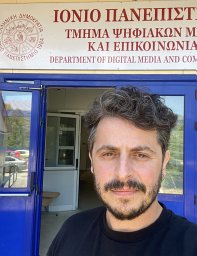 Nikos Antonopoulos合作论文数6
 Matina Kiourexidou合作论文数5
 Evangelos Lamprou合作论文数Journalist2
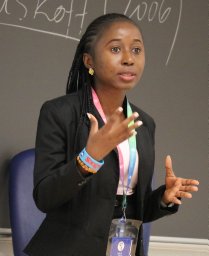 Mistura Adebusola Salaudeen合作论文数Hong Kong Baptist University1
 Theodora Saridou合作论文数Media Informat Lab, Aristotle Univ Thessaloniki1
 Kevin Lo合作论文数Geography, University of Melbourne1Ruepert Jiel Dionisio Cao合作论文数1
 Andreas Veglis合作论文数Informatics Lab .;Department of Journalism & Mass Communication;Aristotle University of Thessaloniki;Informatics Lab ., Aristotle University of Thessaloniki1




