Unsupervised image-to-image translation has gained considerable attention due to recent impressive advances in generative adversarial networks (GANs). This paper presents a simple but effective regularization technique for improving GAN-based image-to-image translation. To generate images with realistic local semantics and structures, we propose an auxiliary self-supervision loss that enforces point-wise consistency of the overlapping region between a pair of patches cropped from a single real image during training the discriminator of a GAN. Our experiment shows that the proposed dense consistency regularization improves performance substantially on various image-to-image translation scenarios. It also leads to extra performance gains through the combination with instance-level regularization methods. Furthermore, we verify that the proposed model captures domain-specific characteristics more effectively with only a small fraction of training data.
This study proposes a modified concept for mono ethylene glycol (MEG) regeneration process to prevent the precipitation of monovalent salt (NaCl) and to economize on efficient energy use with operational flexibility. Two-stage distillation was that the second distillation column was operated after the removal of the monovalent salt while controlling the performance of the first distillation column. This modified concept was evaluated according to (i) the possibility of salt precipitation in the re-boiler of the column at various salinity in the produced water (35–224g/L) and (ii) the economic feasibility compared to a conventional concept where water is evaporated off using a single stage distillation column. The salt precipitation was investigated using the ENRTL-RK property in ASPEN PLUS. The conventional concept showed a high risk of NaCl precipitation in the column when the feed stream contains a high salinity. The modified concept showed few precipitation in the column with a high salinity in feed stream. Then, ASPEN PLUS economic analyzer were used to construct the economic evaluation according to the Life Cycle Cost (LCC) methodology including CAPEX and OPEX. The modified concept showed 9.8% decrease in CPAEX and 8.6% decrease in OPEX compared to the conventional concept. The sensitivity analysis showed that the inlet flow rate and the concentration of rich MEG were the most significant factors that affected the economic viability of the MEG regeneration process, and the modified concept was less sensitive to the inlet condition change than the conventional concept.
CO2 storage tanks must be cooled before loading cryogenic liquid CO2 to prevent physical and thermal damage to the tank wall. This pre-cooling process gasifies a fraction of the liquid CO2 cargo and injects the resulting gas into the storage tank until the tank reaches the target temperature of 243.15K and pressure of 500kPa. In this paper, we propose a model predictive control approach for optimizing the injection flowrate of CO2 gas to reduce the loss of liquid CO2 cargo and CO2 capturing and compression cost. First, the process is mathematically formulated into a nonlinear multi-input-multi-output (MIMO) gas-phase system in which the injection mass flowrate and the outlet purging mass flowrate of CO2 gas act as control inputs. Then, a finite-horizon linearized model predictive control (MPC) scheme is designed to make the tank system reach the target state within 24h with a maximum cooling rate of −10K/h. A terminal penalty is suboptimally approximated by solving a modified discrete Lyapunov stability condition. The performance of the proposed method in optimizing the pre-cooling process is illustrated with example case studies based on the SIMULINK environment in MATLAB R2015a.
This study investigates the hydrate equilibrium conditions as well as the formation characteristics of monoethylene glycol and NaCl solutions by varying the concentration of NaCl from 3.5 to 20.0wt% in an MEG solution. As predicted by the thermodynamic model, the hydrate equilibrium conditions were shifted toward lower-temperature and higher-pressure conditions. The equilibrium temperature depression data were interpolated linearly with the NaCl concentration in the MEG solution. The addition of NaCl affected the hydrate onset time and subcooling temperature only slightly, but their addition decreases the initial growth rate and hydrate volume fraction in the liquid phase. By increasing the NaCl concentration to 7.0wt% in a MEG 20wt% solution, the initial growth rate reduced to 0.2vol%/min from 2.3vol%/min of pure water, while the hydrate fraction was decreased to 18.7vol% from 78.9vol% of pure water; moreover, the torque change during the hydrate formation shows severe spikes for pure water with a maximum relative torque of 20 for the pure water. The addition of the 7.0wt% NaCl to the MEG 20wt% solution, however, only showed a negligible torque increase. The growth rate starts to decrease when the torque starts to rise for pure water, suggesting that the agglomeration of the hydrate particles may induce a mass-transfer limitation or slow down the particle growth. The presence of NaCl and MEG in the aqueous phase seems to minimize the interaction between the hydrate particles by surrounding the hydrate particle with the NaCl and MEG. These results proved that the NaCl plays a synergist role for the MEG in an under-inhibition condition by further limiting the hydrate fraction and minimizing the resistance-to-flow. This is the first work to present hydrate formation characteristics in the presence of both MEG and NaCl, and its insight will assist flow assurance engineers in the management of the risk of hydrate plug formation in offshore oil and gas fields.
Micro- and mesoporous CuBTCs, referred to as micro- and meso-CuBTCs, were synthesized, and tested for their capacity to adsorptively remove CO2 from a binary mixture of CO2-CH4. Physicochemical analyses of the thermally treated Cu-BTCs were performed. The CO2 and CH4 adsorption isotherms for the Cu-BTCs at 25 °C in the pressure range 0-3MPa were experimentally measured and implemented for calculating the CO2/CH4 selectivity as a function of pressure and CO2 concentration using the ideal adsorbed solution theory (IAST). The CH4 adsorption capacity of meso-CuBTC at 3MPa was reduced to 43% of that of micro-CuBTC, whereas the CO2 adsorption capacity of meso-CuBTC at 3MPa was reduced to 27% of that of micro-CuBTCs. Consequently, meso-CuBTC shows a higher CO2/CH4 selectivity compared to micro-CuBTC. It was also found that the selectivity of the CuBTCs could be enhanced by lowering the partial pressure of CO2. This was ascribed to the larger abatement of the adsorption capacity for CH4 than for CO2, resulting from a reduction of the interaction of CH4 with the surface of pores of meso-CuBTC of which the pore size had been augmented.
Abstract MEG (Monoethylene Glycol) is usually used as a gas hydrate inhibitor, and it is essential to regenerate and re-inject this into well because great amount of MEG is consumed to control the gas hydrate problems. MEG is recovered as rich MEG from the topside. Rich MEG is a water solution, which is about 50 wt% of MEG with rich water. This is regenerated as lean MEG through MEG regeneration process. Lean MEG is high concentration of MEG. In the production of subsea oil and gas, formation water is also produced. Formation water contains salts1. This causes problem in MEG regeneration process. If problem arises, the whole process is stopped2. And it can result in tremendous loss. It is important to know the salts equilibrium under MEG regeneration conditions in order to prevent problems related to deposition and scale precipitation. That is, MEG regeneration process is to separate water and salts from the mixed solution, which is composed of MEG, water, and salts. Using the difference in vapor pressure to separate water is called re-concentration and to separate salts is called reclamation process. As it shows from figure 1 and figure 2, density of MEG solution increases along with increase of NaCl and MEG concentration. NaCl concentration was calculated from the conductivity. If MEG effect and salts effect are separated, assumption of MEG concentration is possible inversely. Sandengen introduced this method in his paper3. But there is a limit to monitor the MEG system with only these results. Ions which are included within the formation water are Sodium (Na+), Potassium (K+), Calcium (Ca2+), Magnesium (Mg2+), Barium (Ba2+), Strontium (Sr2+), Iron (Fe2+), Chloride (Cl-), Sulfate (SO42-), Alkalinity as HCO3-, and Bromide (Br-) etc.1. Salts can be separated into low soluble salts and high soluble salts. High soluble salts are dissolved in water well like NaCl and KCl. Low soluble salts cannot be dissolved in water well like CaCO3 and MgSO44. There are two methods in MEG regeneration. One is the full stream concept, and the other is slip stream concept5. Many studies were conducted to explain this process. In the full stream concept, high soluble salts and low soluble salts are not sorted. The reclamation process flashes the feed solution. In the slip stream concept, water is separated in the re-concentration process first, and then from part of it, high soluble salts are removed using flash. Core of this concept is to tolerate some of high soluble salts. On the other hand, since low soluble salts are at high risk of scale problems, it is removed in the pre-treatment process beforehand. Enough studies on low soluble salts need to be conducted. Only measurements of density and conductivity are not enough, and they have limits.
CO2 is generated by the combustion reaction, when getting the energy from fossil fuel. If the carbon dioxide emissions increases more, the global warming problem will become more serious. CCS (carbon capture storage) needs to be developed for the prevention of this. When liquefied CO2 is transported, BOG (boil-off gas) is generated because of several problems. In the study, by injecting liquefied CO2 in two tanks which contains 40 m 3 each, the amount of BOG and its composition were measured during 30 days when generating pressure changes and external heat, loading, unloading. In result, 16,040 kg of BOG was generated and the composition has been found out to be 99.95% CO2 and 0.05 % N2. Also, we conducted simulation process for reliquefaction of generated BOG with vapor compression cycle using the PRO/II with PROVISION version 9.2. As a result, the refrigeration cycle of the total circulation flow rate was 42.07 kg/h and the condenser utility consumption was 48.85 kg/h.
이산화탄소(CO2) 포집 및 지중저장을 위한 CO2 수송선용 저장탱크는 액체 CO2와 직접적으로 접촉할 경우 발생할수 있는 물리적/열적 탱크 손상을 방지하기 위해 화물 선적 단계 이전에 예냉과정을 거쳐야 한다. 본 연구에서는 예냉을 위해 주입되는 저온 CO2 기체의 탱크 유입량을 계산하기 위해 CO2 저장탱크 예냉과정의 수학적 모델 식을 제안하였다. 또한 비례-적분(proportional-integral: PI) 제어를 통해 공정을 제어하는 동적 모사 결과를 제시하였다. 이 때 제어 변수를 탱크 내 온도 또는 압력으로 선정한 두 가지 사례를 모사하였으며 그러한 결정이 CO2 저장탱크의 예냉과정에 미치는 영향을 해석하였다. 결과적으로 예냉과정의 PI제어에는 탱크 내 온도를 제어하는 것보다 압력을 제어하는 우회적인 방식을 택할 때 수학적 모델의 비선형성과 특이점 발생으로 인한 불안정성을 피할 수 있으므로 더 안정된 결과가 도출됨을 보였다.
Storage tanks of Carbon dioxide (CO2) carriers utilized for the purpose of carbon capture and storage (CCS) into subsea strata have to undergo a pre-cooling session before beginning to load cryogenic liquid cargos in order to prevent physical and thermal deterioration of tanks which may result from cryogenic CO2 contacting tank walls directly. In this study we propose dynamic model to calculate the tank inflow of CO2 gas injected for precooling process and its dynamic simulation results under proportional-integral control algorithm. We selected two cases in which each of them had one controlled variable (CV) as either the tank pressure or the tank temperature and discussed the results of that decision-making on the pre-cooling process. As a result we demonstrated that the controlling instability arising from nonlinearity and singularity of the mathematical model could be avoided by choosing tank pressure as CV instead of tank temperature.
In this paper, we illustrated a numerical algorithm which we refer to as the Virtual Resistive Network algorithm, to reconstruct the interior conductivity from interior current densities. In the algorithm, the essence is to introduce a virtual resistive network onto the continuum domain. The algorithm is noniterative and has certain degrees of flexibility in use. We reconstructed the isotropic conductivity, from one interior current density and known conductivity on partial boundary, and reconstructed the orthotropic conductivity, from two pieces of current densities and known conductivity on partial boundary. Numerically simulated results with noise are presented. Various features of the algorithm against the noise was reported.
There is not much method of using C4 Raffinate III, despite having high olefin contents. The majority of the C4 Raffinate III have been converted into n-butane through hydrogenation, and sold as LPG. The C4 Raffinate III is rich 2-butenes with very low isobutene and isobutene contents. The 2-butenes are converted into 1-butene in the vicinity of thermodynamic equilibrium yield through positional isomerization with n-almumina catalyst calcinated at 400 similar to 600 degrees C. The overall process is composed of isomerization-reactor, de-1-buteneizer to prepare the reactants and to enrich reactive products, and 1-butene column to product a high purity 1-butene. The production of 1-butene increases by 40 similar to 60 wt% with the selective positional isomerization from the existing separation method.
 Yu Kyung Lim合作论文数3seongjun lee合作论文数3Yutaek Seo合作论文数3
 Jong-Nam Kim合作论文数3Sang-Sup Han合作论文数3Hee-Tae Beum合作论文数3
 Seungkyu Dan合作论文数2
 Seok Goo Lee合作论文数2
 Jong-Min Lee合作论文数School of Chemistry, Chemical Engineering and Biotechnology, Nanyang Technological University, Singapore2Hyunho Kim合作论文数2
 Chang Hyun Ko合作论文数Inorganic Materials Chemistry Lab, School of Chemical Engineering, Chonnam National University2
 Jungho Cho合作论文数2Soon-Haeng Cho合作论文数2Tae Sung Jung合作论文数1Hyung Chul Yoon合作论文数1suyoul park合作论文数1Jongkee Park合作论文数1Dong-Sun Kim合作论文数1jaeho lee合作论文数1jeon y jeon yooil合作论文数1
 Jinwoo Park合作论文数1Min-Gi Lee合作论文数Department of Mathematics, Kyungpook National University1
 Eunju Cha合作论文数Korea Adv Inst Sci & Technol, Daejeon 34141, South Korea1
 Yong Jung Kim合作论文数Department of Mathematical Sciences, College of Natural Sciences, Korea Advanced Institute of Science and Technology1
 Juwoon Park合作论文数1
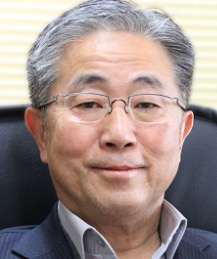 Dong-Woo Cho合作论文数Department of Mechanical Engineering, Pohang University of Science and Technology;Center for Rapid Prototyping Based 3D Tissue/Organ Printing, Pohang University of Science and Technology1
 Jong Ki Jeon合作论文数Fine Chemical Engineering Laboratory, Deparement of Chemical Engineering, Kongju National University1
 Youngsub Lim合作论文数School of Chemical and Biological Engineering, Seoul National University1
 Jae-Joon Han合作论文数Samsung Advanced Institute of Technology;Samsung Electronics1
 Phani Rallapalli合作论文数Central Salt and Marine Chemicals Research Institute (CSMCRI),, Council of Scientific & Industrial Research (CSIR),1
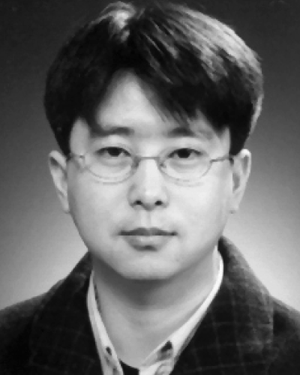 Sungjoo Suh合作论文数Samsung Electronics Co., LTD.1
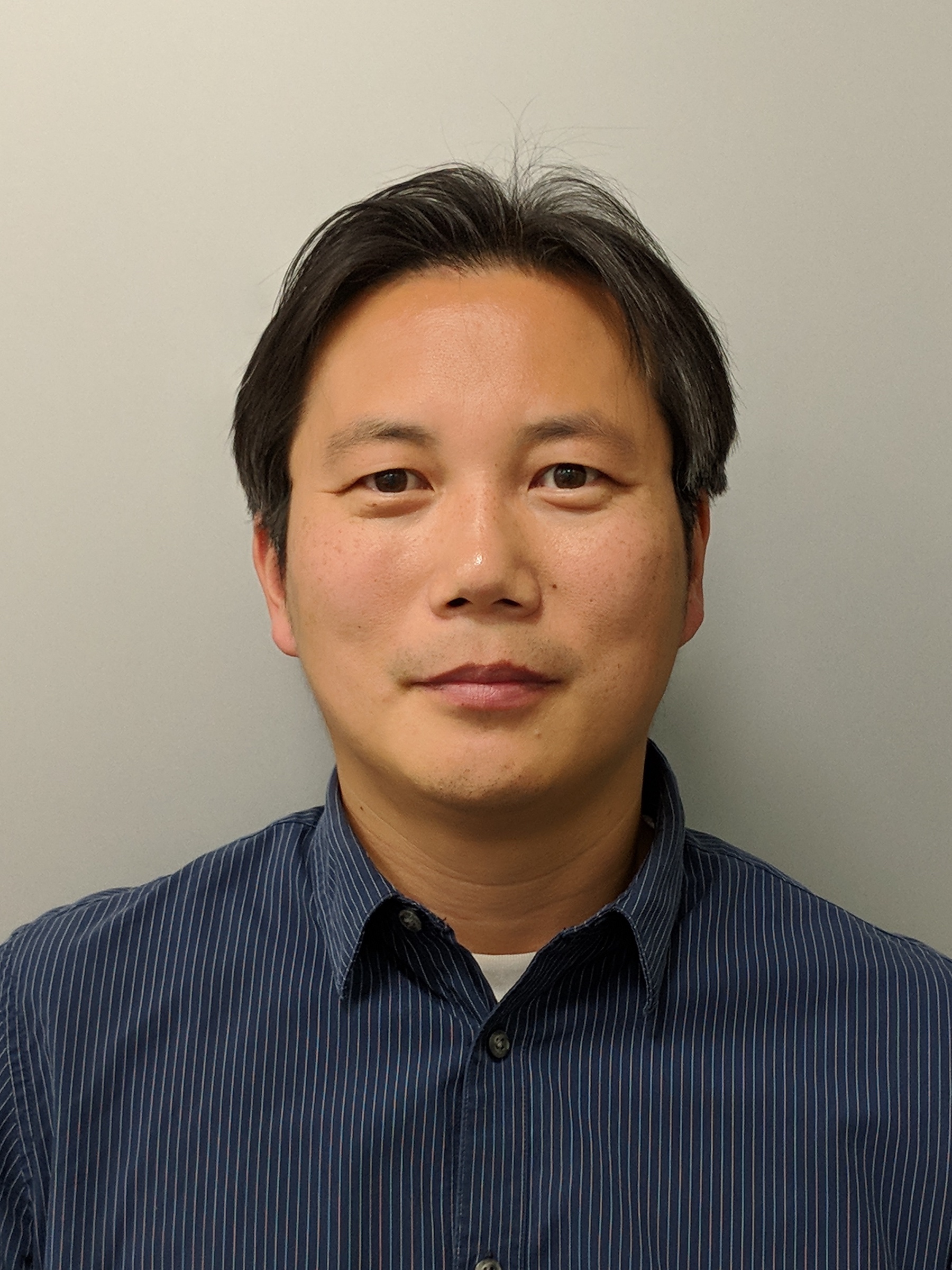 Bohyung Han合作论文数Computer Vision Laboratory, Department of Electrical and Computer Engineering, Seoul National University1
 Hui-Jin Lee合作论文数1
 Jong-Ho Park合作论文数Basic Science Research Institute, Pukyong National University1
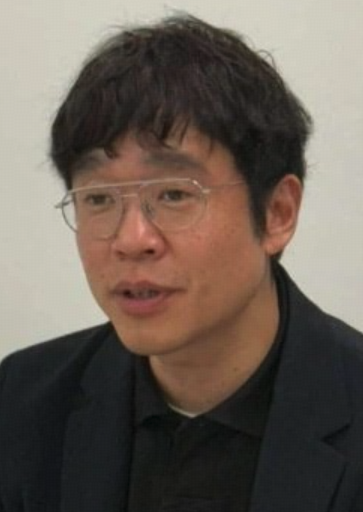 Jinwoo Shin合作论文数School of Electrical Engineering, Korea Advanced Institute of Science and Technology;Kim Jaechul Graduate School of AI, Korea Advanced Institute of Science and Technology1




