Public vehicle service (PVS), as a paradigm to manage and share large-capacity vehicles for public passenger delivery, is promising to improve the quality of urban transportation. In the PVS system, a command center receives requests sent by passengers, periodically assigns them to public vehicles and schedules vehicle routes to serve the requests. However, in the PVS system, the passengers' waiting time is not well utilized. Moreover, it is observed that the driving distance on low-speed roads accounts for a rather high percentage. These two factors impact on system efficiency. In order to utilize the waiting time, we propose to let passengers walk a short distance instead of standing at their origins. At the same time, the driving distance on low-speed roads will be reduced. In this paper, the closest meeting point algorithm is proposed to address the challenge of determining the best pick-up and drop-off locations. The large-scale simulations show that the passenger walking and the proposed fast-route scheduling strategy can shorten the total vehicle travel distance by 34%.
Industrial Internet of Things (IIoT) plays an indispensable role for Industry 4.0, where people are committed to implement a general, scalable, and secure IIoT system to be adopted across various industries. However, existing IIoT systems are vulnerable to single point of failure and malicious attacks, which cannot provide stable services. Due to the resilience and security promise of blockchain, the idea of combining blockchain and Internet of Things (IoT) gains considerable interest. However, blockchains are power-intensive and low-throughput, which are not suitable for power-constrained IoT devices. To tackle these challenges, we present a blockchain system with credit-based consensus mechanism for IIoT. We propose a credit-based proof-of-work (PoW) mechanism for IoT devices, which can guarantee system security and transaction efficiency simultaneously. In order to protect sensitive data confidentiality, we design a data authority management method to regulate the access to sensor data. In addition, our system is built based on directed acyclic graph -structured blockchains, which is more efficient than the Satoshi-style blockchain in performance. We implement the system on Raspberry Pi, and conduct a case study for the smart factory. Extensive evaluation and analysis results demonstrate that credit-based PoW mechanism and data access control are secure and efficient in IIoT.
ZigBee is a widely used wireless technology in low-power and short-range scenarios such as the Internet of Things, sensor networks, and industrial wireless networks. However, the traditional ZigBee supports only one data rate, 250 Kbps, which thoroughly limits ZigBee's efficiency in dynamic wireless channels. In this paper, we propose Mrs. Z, a novel physical layer design to enable multi-rate selection in ZigBee with lightweight modification on the legacy ZigBee modules. The key idea is to change the single spectrum spreading length to multiple ones. Correspondingly, to support the rate adaptation to the channel variations, we propose a bit-error-based rate selection scheme, which predicts BER by leveraging the physical properties of ZigBee to calculate the confidence for each symbol in transmission. Then, the receiver selects the rate based on the negative impact on throughput incurred by bit errors and gives feedback to the transceiver. We implement Mrs. Z on USRPs and evaluate its performance in different scenarios. Experiment results demonstrate that Mrs. Z achieves about 1.15, 1.2, and 1.8 x average throughput compared to the classic smart pilot, softrate, and the traditional ZigBee.
Radio Frequency Identification (RFID) technology has been widely used in many applications such as logistics, warehouse management and animal identification. However, the dilemma of short time requirement and massive tags makes traditional one-by-one identification methods impractical. Meanwhile, existing off-the-shelf methods cannot count and classify RFID tags at the same time. In this paper, RFID classification statistics problem is defined as classifying the tags into distinct groups and counting the quantity of tags in each group by the reader. The issue of time efficiency is significant in classification statistics, especially when the number of tags is large. To address this problem, we propose a novel Twins Accelerating Gears (TAG) approach. One gear shortens the classification process in frequency domain through subcarrier allocation, when another gear accelerates the statistics process in time domain through geometric distribution based quantity estimation. TAG can handle classification and quantity estimation during one process while existing methods need to handle it separately. We give elaborate proof of the running time and quantity estimation value of the process in theory. Typically, the total time of TAG is O(logN) and TAG outperforms existing identification solutions about 99.8% time reduction on 1000 tags classified statistics.
Vehicular ad-hoc networks (VANETs) have drawn increasing attention from both academia and industry. With the proliferation of sensor and wireless technologies, a large amount of sensory data need to be transmitted among vehicles for various intelligent transportation applications such as autonomous vehicles. The conventional WiFi-based VANETs cannot perform well due to its short communication range. To this end, we introduce a hybrid dual-radio architecture consisting of a 2.4 GHz WiFi and a 433 MHz Eagle Eye (EE) radio characterized by long-range, low-rate, and low-cost communication. Through this EE radio, a mobile node can “see” more nodes in a farther distance to improve the quality of next relay selection for packet delivery using WiFi. Collaborating between WiFi and EE radios, we propose a novel dual-radio routing protocol that significantly alleviates the delivery delay in a distributed manner. To evaluate the performance, we build a dual-radio prototype to verify its feasibility and efficiency. Furthermore, extensive simulations conducted using 4000+ taxis’ trajectories in Shanghai demonstrate that the proposed dual-radio architecture and protocol can reduce up to 50% delivery delay in VANETs.
ZigBee is a widely used wireless technology in low-power and short-range scenarios such as Internet of Things (IoT), sensor networks, and industrial wireless networks. However, the standard ZigBee supports only one data rate, 250Kbps, which thoroughly limits ZigBee's efficiency in dynamic wireless channels. In this paper, we propose Mrs.Z, a novel physical layer design to enable multi-rate selection in ZigBee. The key idea is to change the single spectrum spreading length to multiple ones. Correspondingly, to gracefully adapt to the channel variations, we propose a BER-based rate selection scheme, dividing bit errors into two categories: errors caused by the exceeding despreading threshold, which can be discovered in the physical layer, and caused by incorrect despreading, which is not visible until cyclic redundancy check (CRC) in the media access control (MAC) layer. Then, the receiver selects the rate based on the underlying negative impacts incurred by them and feedbacks to the transceiver. We implement Mrs.Z on USRPs and evaluate its performance in different scenarios. Results demonstrate that Mrs.Z achieves an improvement of 20% and 80% compared to the classic SoftRate and the standard ZigBee.
Wireless sensor network (WSN) is one of the mainstay technologies in Internet of Things. In WSNs, clustering is to organize scattered sensor nodes into a cluster-topology network for communications. Existing efforts on clustering intensively focus on the energy-efficiency issue. However, in mission-critical applications, a fast clustering scheme, which can not only gather sensory data immediately after deployment but also reduce the energy consumption, is more desired. In this paper, we study the clustering problem considering both time- and energy-efficiency. We propose a novel instantaneous clustering protocol (ICP) that groups sensor nodes into single-hop clusters in a parallel manner. ICP can instantaneously complete the clustering due to two key designs. First, to determine the cluster heads locally. Existing methods require a long duration on cluster head voting. To waive the voting consumption, a cluster head in ICP is locally determined by the pre-assigned probability and its present status. Second, to minimize the amount of transmissions. Parallel transmissions from different cluster heads and acknowledgments (ACKs) from multiple cluster members lead to severe time and energy consumption. On the contrary, ICP gets rid of the ACK mechanism, instead, only cluster heads contend to broadcast during a given period. This period is elaborately derived to guarantee the connectivity. Experiments on a 64-node testbed and simulations on large-scale WSNs are extensively conducted to evaluate ICP. Performance results demonstrate that ICP significantly outperforms existing clustering methods by reducing up to 55% time consumption and 89% amount of transmissions for energy-saving.
This paper advocates a new paradigm of transportation systems for future smart cities, namely, public vehicles (PVs), that provides dynamic ridesharing trips at requests. Passengers will enjoy more convenient and flexible transportation services with much less expense. In the PV system, both the number of vehicles and required parking spaces will be significantly reduced. There will be less traffic congestion, less energy consumption, and less pollution. In this paper, the concept, method, and algorithm for the PV system are described. The key issue of effectively implementing the PV system is to design efficient planning and scheduling algorithms. The PV-path problem is formulated, which is NP-complete. Then, a practical approach is proposed, which can serve people anywhere and anytime. The simulation results show that, to achieve the same performance (e.g., total time, waiting time, and travel time), the number of vehicles in the PV system can be reduced by around 90% and 57% compared with the conventional vehicle system and Uber Pool, respectively, and the total traveling distance can be reduced by 34% and 14%.
Mobile crowd sensing (MCS) has become a promising paradigm to perceive the environment with the help of smart phones. A monetary award is an effective method to incentivize participants to contribute good quality data. However, the reward for long-term data collection in the wide area could be unaffordable for a MCS requester. In this paper, we enable data requesters to recruit sensing workers in a group buying way. Requesters with similar data demand can form a group to share the payment and sensing data, which reduces cost and increases the coverage of sensing data. Agents from different groups compete in buying sensing data from sensing workers. We propose TGBA, a Two-phase Group Buying based Auction mechanism for MCS. In phase I, requesters submit bids to their group agent, the group agent decides the winners and clearing prices. In phase II, group agents attend the auction for recruiting workers. TGBA is computationally efficient and possesses good economic properties such as individual rationality, budget balance and truthfulness.
Indoor localization is a supporting technology for a broadening range of pervasive wireless applications. One promising approach is to locate users with radio frequency fingerprints. However, its wide adoption in real-world systems is challenged by the time- and manpower-consuming site survey process, which builds a fingerprint database a priori for localization. To address this problem, we visualize the 3-D RF fingerprint data as a function of locations (x-y) and indices of access points (fingerprint), as a tensor and use tensor algebraic methods for an adaptive tubal-sampling of this fingerprint space. In particular, using a recently proposed tensor algebraic framework in [1] , we capture the complexity of the fingerprint space as a low-dimensional tensor-column space. In this formulation, the proposed scheme exploits adaptivity to identify reference points which are highly informative for learning this low-dimensional space. Further, under certain incoherency conditions, we prove that the proposed scheme achieves bounded recovery error and near-optimal sampling complexity. In contrast to several existing work that rely on random sampling, this paper shows that adaptivity in sampling can lead to significant improvements in localization accuracy. The approach is validated on both data generated by the ray-tracing indoor model which accounts for the floor plan and the impact of walls and the real world data. Simulation results show that, while maintaining the same localization accuracy of existing approaches, the amount of samples can be cut down by $71$ percent for the high SNR case and $55$ percent for the low SNR case.
Body Area Networks (BANs) expect to exploit IEEE802.15.4-2015-TSCH, proposing an efficient MAC layer for wireless industrial sensor networks. The standard relies on techniques such as channel hopping and bandwidth reservation to ensure both energy savings and reliable transmissions. With the expected growth of the BAN usage, we must now consider dense topologies, and interference. In this paper, we propose a rescheduling algorithm to avoid the collisions among the Enhanced Beacons (EB): each coordinator is able to adapt distributively its transmission to avoid interference. Indeed, EB losses impact negatively the performance of a BAN. We also optimized conjointly the neighbor discovery mechanism since a multichannel MAC would else increase too much the discovery delay. Our simulations validate the relevance of our discovery and scheduling mechanisms to cope with a very dense deployment of interfering BANs.
In this paper, we consider tensor completion under adaptive sampling of tensor (a multidimensional array) fibers. Tensor fibers or tubes are vectors obtained by fixing all but one index of the array. This sampling is in contrast to the cases considered so far where one performs an adaptive element-wise sampling. In this context we exploit a recently proposed algebraic framework to model tensor data [1] and model the underlying data as a tensor with low tensor tubal-rank. Under this model we then present an algorithm for adaptive sampling and recovery, which is shown to be nearly optimal in terms of sampling complexity. We apply this algorithm for robust estimation of RF fingerprints for accurate indoor localization. We show the performance on real and synthetic data sets. Compared to existing methods, that are primarily based on non-adaptive matrix completion methods, adaptive tensor completion achieves significantly better performance.
The increasing population in urban areas gives rise to a huge traffic pressure. A cloud-based industrial system, public vehicle (PV) system, is promising to mitigate the traffic congestion in smart cities, where passengers can share PVs and transfer among them with scheduling decisions made by the cloud. This paper studies the transfer problem in the PV system due to that transfer can improve the whole traffic efficiency with sacrificing a little comfort with the corporation of all the PVs. The transfer problem is NP-Complete through our analysis. Our work can be separated into three steps. First, we introduce several factors to guarantee the comfort of passengers during transfer. Second, we propose two algorithms through the graph-based scheduling problem aiming at reducing the travel distance of all the PVs with service guarantee. Third, simulations based on the Shanghai (China) urban road network show that, the total travel distance of PVs is reduced under the quality of service for passengers, and the traffic efficiency is improved.
Mobile crowdsourcing has shown great potential to address problems with large scale by outsourcing tasks to pervasive smartphone users. Smartphone users will join a crowdsourcer if they can receive satisfying rewards. In a mobile crowdsourcing market, smartphone users have free choice of crowdsourcers, and multiple crowdsourcers will interact with the rest of the market to share the limited smartphone contributions (i.e., sensed data). To better fit the gap between the demands of crowdsourcers and the capabilities of smartphone users, the underlying rationale of crowdsourcers' behavior needs to be well understood. However, little attention has been given to this issue. In this article, we analyze and predict the behavior (i.e., adjust the price paid) of crowdsourcers. We use a dynamic non-cooperative game to formulate the interaction among crowdsourcers and extend it to a repeated game since crowdsourcers may cooperate with each other to get the optimal profit considering the long-term profit when the game is played multiple times.
In Intelligent Transport field, the Public Vehicle System is proposed to introduce a concept of a specialized vehicle for public transportation, which can integrate and substitute for vehicles such as taxis, buses and railways. Public Vehicle model has several advantages over earlier models, but the algorithm proposed in the model can't consider all potential solutions when building new paths, resulting in a decrease in performance. We expand the searching method to cover all cases of insertion and achieve a lower cost. Our simulations show that the Combinatorial Insertion Algorithm can have a 5%-11% promotion in total traveling distance.
A well-designed energy-efficient routing protocol is an indispensable part for prolonging the lifetime of wireless sensor networks (WSNs) because a sensor node usually has limited energy. Many research efforts are contributed on routing design in WSNs. With the development of green technology, the energy harvesting technique is being applied to real WSNs. Therefore, existing routing protocols are not suitable for such new WSNs with energy harvesting. In this paper, we concentrate on designing a novel routing protocol, named energy harvesting routing (EHR), which takes energy harvesting as one major factor into routing design to improve the energy efficiency. First, we introduce a hybrid routing metric combining the effect of residual energy and energy harvesting rate. Then we propose an updating mechanism allowing every node to maintain dynamic energy information of its neighbors. Based on the hybrid metric and the neighbor information, EHR is able to locally select the optimal next hop. Extensive simulations are conducted to evaluate the performance of EHR. Results demonstrate that EHR outperforms existing routing protocols in energy harvesting WSNs in term of the energy efficiency.
Indoor localization is a supporting technology for a broadening range of pervasive wireless applications. One promis- ing approach is to locate users with radio frequency fingerprints. However, its wide adoption in real-world systems is challenged by the time- and manpower-consuming site survey process, which builds a fingerprint database a priori for localization. To address this problem, we visualize the 3-D RF fingerprint data as a function of locations (x-y) and indices of access points (fingerprint), as a tensor and use tensor algebraic methods for an adaptive tubal-sampling of this fingerprint space. In particular using a recently proposed tensor algebraic framework in [1] we capture the complexity of the fingerprint space as a low-dimensional tensor-column space. In this formulation the proposed scheme exploits adaptivity to identify reference points which are highly informative for learning this low-dimensional space. Further, under certain incoherency conditions we prove that the proposed scheme achieves bounded recovery error and near-optimal sampling complexity. In contrast to several existing work that rely on random sampling, this paper shows that adaptivity in sampling can lead to significant improvements in localization accuracy. The approach is validated on both data generated by the ray-tracing indoor model which accounts for the floor plan and the impact of walls and the real world data. Simulation results show that, while maintaining the same localization accuracy of existing approaches, the amount of samples can be cut down by 71% for the high SNR case and 55% for the low SNR case.
Data collection is a crucial operation in wireless sensor networks. The design of data collection schemes is challenging due to the limited energy supply and the hot spot problem. Leveraging empirical observations that sensory data possess strong spatiotemporal compressibility, this paper proposes a novel compressive data collection scheme for wireless sensor networks. We adopt a power-law decaying data model verified by real data sets and then propose a random projection-based estimation algorithm for this data model. Our scheme requires fewer compressed measurements, thus greatly reduces the energy consumption. It allows simple routing strategy without much computation and control overheads, which leads to strong robustness in practical applications. Analytically, we prove that it achieves the optimal estimation error bound. Evaluations on real data sets (from the GreenOrbs, IntelLab and NBDC-CTD projects) show that compared with existing approaches, this new scheme prolongs the network lifetime by 1.5X to 2X for estimation error 5-20 percent.
To address the contradiction between data aggregation and data security in wireless sensor networks, an integrity-assured concealed data aggregation scheme is proposed based on the privacy homomorphism and the aggregate message authentication code techniques. The proposed scheme provides both end-to-end privacy and data integrity in data aggregation for wireless sensor networks. Besides, it supports any type of aggregation functions since the base station can recover each sensing data collected by all sensors even if these data have been aggregated by aggregators. The performance analysis shows that the proposed scheme is efficient in computation and communication, and is feasible for resource limited sensor networks.
 Wei Wennie Shu合作论文数Electrical & Computer Engineering Department, The University of New Mexico87
 Linghe Kong (孔令和)合作论文数School of Cyber Science and Engineering, Shanghai Jiao Tong University;Department of Computer Science and Engineering, Shanghai Jiao Tong University;School of Electronic Information and Electrical Engineering, Shanghai Jiao Tong University32
 Minglu Li (李明禄)合作论文数Department of Computer Science and Engineering, School of Electronic Information and Electrical Engineering, Shanghai Jiao Tong University28
 Jialiang Lu (陆佳亮)合作论文数Ecole d'Ingenieurs Paris SJTU23
 Xiao-Yang Liu合作论文数Department of Electrical Engineering, Columbia University22
 Yanmin Zhu (朱燕民)合作论文数Department of Computer Science and Engineering, School of Electronic Information and Electrical Engineering, Shanghai Jiao Tong University11
 Hongyu Huang (黄宏宇)合作论文数College of Computer Science, Chongqing University10
 Xu Li合作论文数9
 Jorge Crichigno合作论文数Department of Integrated Information Technology, Molinaroli College of Engineering and Computing, University of South Carolina;Electrical Engineering Department, University of South Florida;Florida Center for Cybersecurity9
 Ishfaq Ahmad合作论文数Department of Arlington Multimedia Technology Research Center, University of Texas9
 Henry H.-N. Dai (戴弘寧)合作论文数Department of Computer Science, Faculty of Science, Hong Kong Baptist University7
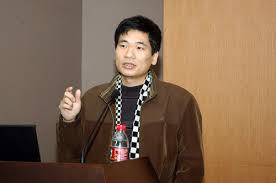 Xinhua Lin (林新华)合作论文数上海交通大学计算机科学与工程系7
 Guihai Chen (陈贵海)合作论文数School of Computer Science, Shanghai Jiao Tong University;School of Computer Science, Nanjing University6
 Yu (Jason) Gu合作论文数Visa6
 NG, Kam-Wing (吳錦榮)合作论文数Rapid Systems Prototyping Laboratory, Department of Computer Science and Engineering, The Chinese University of Hong Kong6
 Ming Zhu合作论文数5
 Rui-Min Shen (申瑞民)合作论文数Shanghai Jiao Tong University5
 Liang He合作论文数School of Computing, College of Engineering, University of Nebraska Lincoln;Batteries beyond Batteries5
 Peng Jia合作论文数College of Mechatronics and Automation, National University of Defense Technology5
 Ming-Fei Guo合作论文数5
 Yu-Kwong Kwok合作论文数4
 Yan Zhu合作论文数4
 Xiaodong Wang合作论文数Department of Electrical Engineering, Columbia University4Xinbing Wang (王新兵)合作论文数4
 Vaneet Aggarwal合作论文数School of Industrial Engineering, Purdue University4
 Weisheng Hu (胡卫生)合作论文数Department of Electronic Engineering, School of Electronic Information and Electrical Engineering, Shanghai Jiaotong University4
 Aidong Zhang合作论文数Department of Biomedical Engineering, School of Engineering and Applied Science, University of Virginia;School of Data Science, University of Virginia;Department of Computer Science and Engineering, School of Engineering and Applied Sciences, University at Buffalo;The State University of New York4
 Wenzhe Zhang合作论文数4
 Shuchin Aeron合作论文数Dept ECE, Tufts Univ4
 Pei-En Luo合作论文数3
 Yifeng Cao合作论文数School of Computer Science, Georgia Institute of Technology3Ting Cao合作论文数3
 Zhang Chongqing (张重庆)合作论文数3
 Feilong Tang (唐飞龙)合作论文数Department of Computer Science and Engineering, Shanghai Jiao Tong University3
 Wei Guo (郭薇)合作论文数上海交通大学国家重点实验室3
 Meikang Qiu合作论文数Department of Computer & Cyber Sciences, School of Computer and Cyber Sciences, Augusta University;Department of Computer Science, Texas A&M University Commerce;Department of Electrical Engineering, Columbia University3Shu Zhou合作论文数3
 Tao Zhang (张涛)合作论文数School of Computer Engineering and Science Shanghai University3
 Fan Yang (杨帆)合作论文数School of Mechanical Engineering, Shanghai Jiaotong University;Institute of Fuel Cells, Shanghai Jiaotong University3
 Tian He (何田)合作论文数School of Computer Science and Engineering, Southeast University;JD.com, Inc3
 Xue (Steve) Liu合作论文数Department of Mathematics and Statistics, Faculty of Science, McGill University;School of Computer Science, Faculty of Science, McGill University;Department of Electrical and Computer Engineering, Faculty of Engineering, McGill University3
 Fenggang Wu合作论文数3
 Joud Khoury合作论文数Department of Electrical & Computer Engineering;University of New Mexico;Department of Electrical & Computer Engineering, University of New Mexico3
 Nasir Ghani合作论文数Department of Electrical Engineering, University of South Florida3
 Guangshuo Chen合作论文数3Qunhua Pan合作论文数Dept. of Computer Science and Engineering, Shanghai Jiaotong University
Xinli Huang, Dept. of Computer Science and Engineering, Shanghai Jiaotong University
Minglu Li, Dept. of Computer Science and Engineering, Shanghai Jiaotong University3Jaehyung Yang合作论文数School of Computer and Media Engineering (학과 홈페이지)
Kangnam University3
Guangshuo Chen合作论文数3Qunhua Pan合作论文数Dept. of Computer Science and Engineering, Shanghai Jiaotong University
Xinli Huang, Dept. of Computer Science and Engineering, Shanghai Jiaotong University
Minglu Li, Dept. of Computer Science and Engineering, Shanghai Jiaotong University3Jaehyung Yang合作论文数School of Computer and Media Engineering (학과 홈페이지)
Kangnam University3 Mingchen Zhao合作论文数University of Pennsylvania3
 Xin Liu合作论文数2




