[In the abovementioned article (Ely JW, Osheroff JA, Chambliss ML, Ebell MH. J Am Board Fam Med. 2006;19(2):148–160), the following sentence was incorrect in the abstract. The sentence should read as follows: Patients who have findings consistent with sleep apnea, such as daytime somnolence, loud
OBJECTIVE:To identify the most frequent obstacles preventing physicians from answering their patient-care questions and the most requested improvements to clinical information resources.DESIGN:Qualitative analysis of questions asked by 48 randomly selected generalist physicians during ambulatory care.MEASUREMENTS:Frequency of reported obstacles to answering patient-care questions and recommendations from physicians for improving clinical information resources.RESULTS:The physicians asked 1,062 questions but pursued answers to only 585 (55%). The most commonly reported obstacle to the pursuit of an answer was the physician's doubt that an answer existed (52 questions, 11%). Among pursued questions, the most common obstacle was the failure of the selected resource to provide an answer (153 questions, 26%). During audiotaped interviews, physicians made 80 recommendations for improving clinical information resources. For example, they requested comprehensive resources that answer questions likely to occur in practice with emphasis on treatment and bottom-line advice. They asked for help in locating information quickly by using lists, tables, bolded subheadings, and algorithms and by avoiding lengthy, uninterrupted prose.CONCLUSION:Physicians do not seek answers to many of their questions, often suspecting a lack of usable information. When they do seek answers, they often cannot find the information they need. Clinical resource developers could use the recommendations made by practicing physicians to provide resources that are more useful for answering clinical questions.
Objective To describe the obstacles encountered when attempting to answer doctors' questions with evidence.Design Qualitative study.Setting General practices in Iowa.Participants 9 academic generalist doctors, 14 family doctors, and 2 medical librarians.Main outcome measure A taxonomy of obstacles encountered while searching for evidence based answers to doctors' questions.Results 59 obstacles were encountered and organised according to the five steps in asking and answering questions: recognise a gap in knowledge, formulate a question, search for relevant information, formulate an answer, and use the answer to direct patient care. Six obstacles were considered particularly salient by the investigators and practising doctors: the excessive time required to find information; difficulty modifying the original question, which was often vague and open to interpretation; difficulty selecting an optimal strategy to search for information; failure of a seemingly appropriate resource to cover die topic; uncertainty about how to know when all the relevant evidence has been found so that the search can stop; and inadequate synthesis of multiple bits of evidence into a clinically useful statement.Conclusions Many obstacles are encountered when asking and answering questions about how to care for patients. Addressing these obstacles could lead to better patient care by improving clinically oriented information resources.
Objective To develop a taxonomy of doctors' questions about patient care that could be used to help answer such questions.Design Use of 295 questions asked by Oregon primary care doctors to modify previously developed taxonomy of 1101 clinical questions asked by Iowa family doctors.Setting Primary care practices in Iowa and Oregon.Participants Random samples of 103 Iowa family doctors and 49 Oregon primary care doctors.Main outcome measures Consensus among seven investigators on a meaningful taxonomy of generic questions; interrater reliability among 11 individuals who used the taxonomy to classify a random sample of 100 questions: 50 from Iowa and 50 from Oregon.Results The revised taxonomy, which comprised 64 generic question types, was used to classify 1396 clinical questions. The three commonest generic types were "What is the drug of choice for condition x?" (150 questions, 11%); "What is the cause of symptom x?"(115 questions, 8%); and "What test is indicated in situation x?"(112 questions, 8%). The mean interrater reliability among 11 coders nas moderate (kappa = 0.53, agreement 55%).Conclusions Clinical questions in primary care can be categorised into a limited number of generic types. A moderate degree of interrater reliability was achieved with the taxonomy developed in this study, The taxonomy may enhance our understanding of doctors' information needs and improve our ability to meet those needs.
Objectives To characterise the information needs of: family doctors by collecting the questions they asked about patient care during consultations and to classify these in ways that would be useful to developers of knowledge bases.Design Observational study in which investigators visited doctors for two half days and collected their questions. Taxonomies were developed to characterise the clinical topic and generic type of information sought for each question.Setting Eastern Iowa.Participants Random sample of 103 family doctors.Main outcome measures Number of questions posed, pursued, and answered; topic and generic type of information sought for each question; time spent pursuing answers; information resources used.Results Participants asked a total of 1101 questions. Questions about drug prescribing obstetrics and gynaecology, and adult infectious disease were most common and comprised 36% of all questions. The taxonomy of generic questions included 69 categories; the three most common types, comprising 24% of all questions, were "What is the cause of symptom X?" "What is the dose of drug X?" and "How should I manage disease or finding X?" Answers to most questions (702, 64%) were not immediately pursued, but, of those pursued, most (318, 80%) were answered. Doctors spent an average of less than 2 minutes pursuing an answer, and they used readily available print and human resources. Only two questions led to a formal literature search.Conclusions Family doctors in this study did not pursue answers to most of their questions. Questions about patient care can be organised into a limited number of generic types, which could help guide the efforts of knowledge base developers.
PURPOSE:To test whether an academic detailing intervention would improve journal reading among residents.METHOD:In 1995-96, the authors conducted a randomized controlled trial at two family medicine residencies in Missouri. Fifty-nine family practice residents were randomized into two groups identical in baseline characteristics; 29 received individual 15-minute educational presentations, based on academic detailing, that emphasized careful selection of medical journal articles for reading. The authors measured the percentage of important journal articles of which the residents were aware, the percentage of those they had read (either abstract only or the whole article), and the percentage of correctly answered knowledge questions.RESULTS:Despite randomization, the residents in the control group indicated on the pretest that they were more likely than were the residents in the intervention group to be aware of and to have read abstracts from selected articles. However, when comparing pretest with posttest results, the intervention group recalled 18.2% (95% CI, 2.0, 34.0) more articles and correctly answered 16.6% (95% CI 3.0, 29.9) more knowledge questions than did the control group.CONCLUSION:A brief intervention increased residents' recall of important articles and knowledge of those articles' conclusions.
The information available does not support postural blood pressure testing as a screening device among patients attending primary care practices. However, there is evidence to support the testing of high-risk subgroups of patients. Answers to the proposed research questions will clarify how testing for orthostatic hypotension can be most effectively applied in primary care.
Physicians often have self-perceived knowledge gaps when they are seeing patients. Traditional continuing medical education is designed to meet the knowledge gaps of groups rather than individual physicians with specific patient problems. Physicians with clinical information needs are advised to critically evaluate high-quality original research in order to practice "evidence-based medicine." But this advice may be unrealistic for busy clinicians. We propose a system for documenting self-perceived information needs using a computer database. Concise answers to these needs are included in the database along with reference citations supporting the answers. The system tracks continuing education efforts, directs patient care decisions, and focuses lifelong learning on relevant topics. We emphasize the importance of being sensitive to personal information needs and the benefits of maintaining a record of these needs.
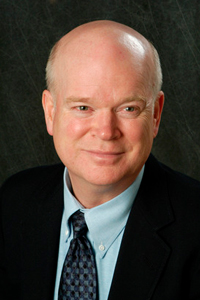 John Ely合作论文数Department of Family Medicine, Carver College of Medicine, University of Iowa7
 Jerome A. Osheroff合作论文数Clinical Information Management Department, American College of Physicians7
 Mark H. Ebell合作论文数Department of Epidemiology and Biostatistics, College of Public Health, University of Georgia6
 Vinson D C合作论文数2Stevermer J J合作论文数2Eric Pifer合作论文数2
 Grant Hoekzema合作论文数1
 Levy Barcey T合作论文数Dept Family Med, Univ Iowa1Hale W合作论文数1M.E. Rosenbaum合作论文数1George R. Bergus合作论文数1P.Zoë Stavri合作论文数Division of Medical Informatics and Outcomes Research, School of Medicine, Oregon Health & Science University1
 Kristi Ferguson合作论文数Office of Consultation and Research in Medical Education, University of Iowa College of Medicine1
 Paul N. Gorman合作论文数School of Medicine, Oregon Health & Science University1




