We explored health care access experiences of 32 male-to-female (MtF) and 15 female-to-male (FtM) transgender people of different ethnicities in Virginia using data from focus groups conducted in 2004. Victimization associated with social stigmatization played a dominant role in participants' lives, manifested by discrimination; violence; and health care provider insensitivity, hostility, and ignorance of transgender health. Access to transgender-related medical services that would allow participants to pass in their chosen genders was their highest medical priority. Faced with barriers to access, hormonal self-medication was common, and silicone injections were reported by both MtF and FtM participants. Due to economic vulnerability, sex work was reported as a source of income by both MtFs and FtMs. MtFs expressed concern over confidentiality of HIV testing and additional discrimination if testing positive. FtMs expressed difficulty accessing gynecological care due to their masculine gender identities and expressions. Cultural and technical competency training for providers and implementation of local programs in transgender hormonal therapy are recommended to improve transgender health care access.
While recent research on transgender populations has demonstrated high rates of experiencing violence, there has been little research attention to the mental health implications of these experiences. This study utilized data collected from the Virginia Transgender Health Initiative Survey (THIS) of transgender people (individuals who described their gender identity as different from their sex assigned at birth) collected from 2005-2006. Current study analyses were limited to two subgroups: trans women (n = 179) and trans men (n = 92). We hypothesized that, as in the general population, exposure to physical and sexual violence would be related to suicidal ideation, suicide attempts, and substance abuse. Both trans women and trans men in this sample were at high risk for physical and sexual violence, as well as suicidal ideation and suicide attempt. Logistic regression analyses indicated that among both trans women and trans men, those who had endured physical and/or sexual violence were significantly more likely than those who had not had such experiences to report a history of suicide attempt and multiple suicide attempts. In addition, among trans men, history of physical and sexual violence were each related to alcohol abuse. Among trans women, history of sexual violence was related to alcohol abuse and illicit substance use. Patterns of violence against transgender people were identified and are discussed, including frequent gender-related motivation for violence, low prevalence of reporting violence to police, and variety of perpetrators of violence. Clinical implications and recommendations are provided.
This article presents empirical research findings from a subsample of 290 transgender participants in the Virginia Transgender Health Initiative Survey (THIS) who reported whether or not they had experienced hostility or insensitivity related to their gender identity or expression during high school, termed in-school gender-based victimization (GBV). The purpose of this study was to assess the impact of in-school GBV on rates of suicide attempts among transgender people. Of the 290 respondents, 44.8% reported they had experienced in-school GBV, and 28.5% reported a history of suicide attempt. Among those who had attempted, 32.5% reported having made one attempt, 28.6% reported a history of two attempts, and 39.0% reported having made three or more attempts. Participants who reported experiencing GBV were approximately four times more likely to have attempted suicide than those who did not. Among the subgroups of 147 trans women and 81 trans men, GBV was associated both with history of suicide attempt, and with a higher number of suicide attempts over the life span. Implications for policy and clinical interventions are discussed.
In the last few years, transgender and gender nonconforming people have become more visible in our society, which has sparked a marked increase in awareness, interest, and attention among psychologists. Questions have emerged about the extent to which psychologists are able to work competently with this population. This article presents a framework for understanding key clinical issues that psychologists who work with transgender and gender nonconforming individuals will likely encounter in their clinical work. This article does not address the knowledge and skills required to provide services related to gender transition, but rather to provide other psychological services that these clients may need, in light of the high levels of gender-related victimization and discrimination to which they are exposed. An adaptation of the Minority Stress Model (Meyer, 2003) is presented and translated to incorporate the unique experiences encountered by transgender and gender nonconforming individuals. In particular, we examine adverse experiences that are closely related to gender identity and expression, resulting expectations for future victimization or rejection, and internalized transphobia. The impact of Minority Stress Model factors on suicide attempts is presented as a detailed example. Mechanisms by which transgender and gender nonconforming persons develop resilience to the negative psychological effects of these adverse experiences are also discussed. Recommendations for clinicians are then made to assist psychologists in developing competence in working with this population.
This study sought to replicate and extend an investigation by Diaz et al. (1999) on determinants of HIV risk among Latino gay and bisexual men living in San Francisco who were predominantly English-speaking. Compared to the Diaz et al. study, the current study sample consisted of predominantly Spanish-speaking MSM, who resided outside of HIV/AIDS epicenters and whose countries of origin were primarily Central & South American. The relationships of unprotected anal sex and multiple sexual partners with demographic, developmental, behavioral, cultural and psychosocial variables were examined. Data were collected in a convenience sample of 250 participants (primarily immigrants from El Salvador) residing in Virginia. Most men in the sample had more than one sexual partner in the last 3 months (62%) and more than a third had unprotected anal sex with a casual partner in the same time period. Communication about HIV, sexual attraction, machismo, and experiences of discrimination based on homosexual behavior were predictive of HIV risk behaviors. The findings support an integrative approach to investigating HIV risk among Latino MSM. Implications for prevention programs are discussed.
Gay and bisexual men were asked if they had disclosed their sexuality to family members, heterosexual friends, gay friends, coworkers, health care workers, and members of their church; if they had been associated with groups made up of gays, bisexuals, and lesbians; and if they had gay/bisexual friends. White men were much more likely to disclose their sexuality, to have associated with groups and to have gay/bisexual friends. As education increased, white men were more likely, and African American men less likely, to disclose sexuality and associate with groups. Having gay/bisexual friends increased with education with both groups. The difference in disclosure can be traced to the higher social stigma apparently attached to being gay in the African American community, which may be exacerbated for more educated men. As a result, African American gay men may be less likely to participate in the fight against HIV/AIDS.
Objective: To evaluate the effects of treatment with alternating and simultaneous regimens of zidovudine and didanosine on neuropsychological Function in patients with symptomatic HIV-1 disease, focusing on patients with possible HIV-1-associated central nervous system (CNS) compromise at entry.Design: Randomized non-blinded clinical trial.Setting: Government medical research center.Patients: Thirty-eight patients with symptomatic HIV-1 disease, of whom 21 had evidence of CNS compromise at entry.Results: After 12 weeks of therapy, overall significant improvements in memory (P < 0.01) and focused attention (P < 0.001) were seen on both regimens. These gains, however, were largely limited to those patients with HIV-1-associated CNS compromise at entry (P < 0.05). Improvements were also noted in receptive vocabulary, reading, perceptual discrimination and reasoning, divided attention, motor strength, and in mood and affect. Improvements in those latter functions were generally of limited magnitude and were of comparable size for both compromised and non-compromised patients. There was no overall difference between the two drug regimens in the effects on CNS parameters.Conclusions: Therapy-related improvements were noted particularly for patients with HIV-1-associated CNS compromise. Neuropsychological functions that have been implicated in AIDS dementia - memory and attention - showed the greatest gains. In contrast to the previously described superiority of the simultaneous regimen with regard to immunologic and virologic parameters, there was no difference between the regimens with regard to CNS measures. This supports the contention that the CNS constitutes a relatively independent compartment in terms of HIV disease and treatment.
ABSTRACT: Background : Neuropsychological studies of the pattern and extent of cognitive impairment in HIV-infected patients have mostly used deviations from control values and/or cut-off scores as criteria for classification of dementia. There is, however, no agreement as to how to define impairment, and classification is imprecise. Method : The current study used a dementia classification matrix, developed with a step-wise linear discriminant analysis of neuropsychological data from patients with primary neurodegenerative dementias, to classify symptomatic HIV patients as demented or non-demented, and further to differentiate cortical and subcortical dementia patterns. Thirty-two male and 2 female patients (mean age 39 ± 2) with symptomatic HIV disease (mean absolute CD4 count 195 ±41) participated in the study. Results : Thirty-five per cent of patients were classified as demented. Of these, 83% showed a subcortical pattern and 17% a cortical profile of deficits. Significant differences between patients classified as subcortically demented and those categorized as normal on neuropsychological measures associated with subcortical integrity further validated the classification. Measures of psychiatric status between subgroups were similar. Conclusion : Since certain treatments may delay or reverse cognitive deficits, the use of an objective classification method based on discriminant analysis may help to identify patients who may benefit from therapy.
Rated observations of videotapes were made of 16 variables representing 5 behavioral domains (task orientation, positive social-emotional, motor skills, expressive speech, and activity) on a sample of 83 HIV-infected children. Comparisons were made on the rated behaviors between children classified as either encephalopathic or nonencephalopathic. Analyses were conducted separately for infants (M age = 1.80 years) and older children (M age = 5.15 years). The nonencephalopathic infants exhibited higher activity levels and were superior in motor and verbal skills and showed more social and emotional responsiveness than did the encephalopathic group. The older nonencephalopathic children functioned in a more adaptive and appropriate manner than did the encephalopathic children in all domains of behavior. Independently made Q-sort ratings of behaviors during developmental testing were highly correlated with conceptually congruent ratings of the videotaped behaviors.
 Judith B Bradford合作论文数6
 Testa Rylan J合作论文数5
 Peter Goldblum合作论文数4
 Bruce Bongar合作论文数Clinical Crises and Emergencies Research Laboratory, Palo Alto University4Laura M. Sciacca合作论文数3
 Pim Brouwers合作论文数3Kelly Ducheny合作论文数2
 Jessica Xavier合作论文数2Florence Wang合作论文数2
 Keo-Meier Colton L合作论文数Department of Psychology, University of Houston.2H Mitsuya合作论文数1Sand C. Chang合作论文数1
 Samantha Pflum合作论文数1Jm Pluda合作论文数1Ja Lietzau合作论文数1
 Philip A. Pizzo合作论文数Department of Microbiology and Immunology, Stanford School of Medicine;Department of Pediatrics, Stanford School of Medicine;Stanford Distinguished Careers Institute, Stanford University1Kennamer J D合作论文数1
 Robert Yarchoan合作论文数HIV and AIDS Malignancy Branch, Center for Cancer Research, National Cancer Institute, National Institutes of Health1Wolters P L合作论文数1Honnold Julie A合作论文数1
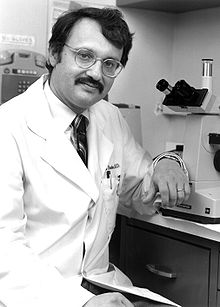 Samuel Broder合作论文数Celera Genomics1Paul J. Poppen合作论文数Department of Psychology, George Washington University1Ida Sue Baron合作论文数1Lauretta Safford合作论文数1
 Lore Dickey合作论文数1J. David Kennamer合作论文数1J. Claus合作论文数1S. Lisbeth Jarama合作论文数1Joyce P. Chu合作论文数University of California San Francisco1J. Honnold合作论文数1Walter O. Bockting合作论文数Department of Family Medicine and Community Health, University of Minnesota Medical School Program in Human Sexuality1E Mohr合作论文数1




