The application of nonlinear control schemes to electrohydraulic actuators (EHAs) often requires several alterations in the design of the controllers during their implementation. This is to overcome challenges that frequently arise in such control algorithms due to model nonlinearities. Moreover, advanced control solutions for this type of system often introduce input algebraic loops that pose significant design and tuning difficulties. Conventional methods to avoid such loops introduce chatter, which considerably degrades tracking performance and has oil degradation and wear as side effects. This study presents a nonlinear control architecture for hydraulic actuators that comprises low-complexity modules that facilitate robust high performance in tracking and avoids the drawbacks of chatter. The salient feature is a dynamic input mapping inversion (MI) module that avoids algebraic loops in the control input and is followed by dedicated position control. The stability of the closed-loop system is analyzed using arguments from Lyapunov theory for cascaded nonautonomous nonlinear systems. The effectiveness of the proposed solution is evaluated on a high-fidelity simulator of a wind-turbine pitch system and validated on a full-scale laboratory setup that includes a hydraulic pitch system and blade bearing. Appropriate quantitative metrics are used to evaluate the closed-loop system performance in comparison to a state-of-the-art nonlinear design.
Hydraulic pitch actuators in offshore wind turbines are prone to wear that eventually may develop into failure of blade pitch control. This would leave the turbine nonoperational, causing significant loss in revenue while the defect remains. This paper proposes a technique for detecting early signs of increased friction within the hydraulic actuator, as an indicator of wear. The method utilizes a temporal convolutional network to reconstruct essential signals, which are fed into a modified least squares algorithm to estimate the Coulomb friction coefficient and continuously track friction magnitude. The robustness and accuracy of the approach is validated by high-fidelity simulations.
Wind energy is the leading non-hydro renewable technology. Increasing reliability is a key factor in reducing the downtime of high-power wind turbines installed in remote off-shore places, where maintenance is costly and less reactive. Defects in the pitch system are responsible for up to 20% of a wind turbine downtime. Thus, monitoring such defects is essential for avoiding it. This paper presents a generic assessment of the diagnosis capabilities in hydraulic pitch systems, which are used in high-power wind turbines. A mathematical model of the non-linear system dynamics is presented along with a description of the most frequent faults that occur. Structural analysis is used to assess which defects can be detected in the pitch system. The structural properties are furthermore explored to investigate the possibility of reducing the amount of sensors without compromising the fault diagnosis capabilities. Robustness to model uncertainty is finally addressed and generic principles for estimating the detectable magnitude of wear and tear are presented.
Despite the great potential of sliding mode controllers due to their inherent robustness properties, their utilization at the industrial level is still limited because of their complicated design and tuning. This study offers a Model-Free version of the well-established Super-Twisting algorithm for a class of electro-hydraulic systems, characterized by strong load forces. The design of a standard version of the controller is used as a starting point for its derivation, by matching the performance under certain hypotheses. The effectiveness of the solution is tested in simulation with an industrial case study, proving the effectiveness of the control action in a setup where realistic experimental conditions are utilized. The performance of the controller is evaluated under two tuning conditions, to assess the controller from both theoretical and practical perspectives, and its limits are explored.
The encounter situation between marine vessels determines how they should navigate to obey COLREGs, but time-varying and stochastic uncertainty in estimation of angles of encounter, and of closest point of approach, easily give rise to different assessment of situation at two approaching vessels. This may lead to high-risk conditions and could cause collision. This article considers decision making under uncertainty and suggests a novel method for probabilistic interpretation of vessel encounters that is explainable and provides a measure of uncertainty in the evaluation. The method is equally useful for decision support on a manned bridge as on Marine Autonomous Surface Ships (MASS) where it provides input for automated navigation. The method makes formal safety assessment and validation feasible. We obtain a resilient algorithm for machine interpretation of COLREGs under uncertainty and show its efficacy by simulations.
Faults and wear in hydraulic pitch actuators of wind turbines significantly contribute to downtime of remote off-shore wind farms. This study presents a method for estimating incipient friction in the hydraulic actuator, which is directly associated with faults and wear in the pitch system. An additional sensor and a sliding mode differentiator are employed to estimate the total friction, which is then used in a modified least-squares scheme to obtain the Coulomb friction coefficient. Statistical change detection is used to robustify the friction monitoring scheme against model uncertainty and sensor noise. Simulation tests demonstrate the efficacy of the proposed method. Copyright (c) 2024 The Authors.
GreenHopper is the first Danish zero-emission ferry developed as a test platform for autonomous waterborne navigation technologies. The paper presents technology development within the innovation project ShippingLab Autonomy, which led to the commissioning of GreenHopper at Limfjorden (DK) in December 2022. The technology research resulted in a holistic system architecture for surface vessel autonomy, based on distribution of functionality and responsibility on software modules, similar to the structure observed in the International Maritime Organization (IMO) Seafarers Training Certification and Watch-keeping (STCW) regulatory framework. The paper shows how this approach results in an architecture that supports safe behaviours of individual modules and of autonomous navigation at a system level. The paper presents the individual modules, specific features and benefits. Elements of the regulatory framework are highlighted to poise technology approval by maritime authorities. The paper reflects on lessons learned, discusses continued technology validation in dedicated operational scenarios.
This paper provides a collision avoidance perspective to maritime autonomy, in the shift towards Maritime Autonomous Surface Ships (MASS). In particular, the paper presents the developments related to the Greenhopper, Denmark's first autonomous harbour bus. The collision and grounding avoidance scheme, called the Short Horizon Planner (SHP), is described and discussed in detail. Furthermore, the required autonomy stack for facilitating safe and rule-compliant collision avoidance is presented. The inherent difficulties related to adhering to the COLREGs are outlined, highlighting some of the operational constraints and challenges within the space of autonomous ferries and harbour buses. Finally, collision and grounding avoidance is demonstrated using a simulation of the whole Greenhopper autonomy stack.
Propeller performance prediction is traditionally based on open water calm model basin tests. In waves, and during vessel manoeuvring, inflow to the propeller changes signifi-cantly, i.e. the shape of the wake field will change and propeller load and efficiency are impacted. This paper focus on the changes in wake fraction that can be identified in dynamic conditions. The effects on wake fraction of ship maneuvering and the effects of waves’ orbital velocity are investigated from experimental data. Model basin tests with a free sailing container ship model provide data for identification of propeller load and mean wake fraction during manoeuvring and during passage of waves. The results are verified with analysis during maneuvering in calm sea with a scale model and with the full-scale version of a 45.000 m3 container ship. Experimental results show the wake fraction variation during maneuvering, and estimates of wake fraction derivatives are found with respect to the relative sway velocity at the propeller. The contribution of the paper is to provide evidence for the magnitude of propeller shaft loads that can be expected during passage in a seaway and during manoeuvring.
Digital Twins have much attention in the shipping industry, attempting to support all phases of a vessel's life cycle. With several tools appearing in Digital Twin software suites, high-quality manoeuvring and performance prediction remain cornerstones. Propulsion efficiency is in focus while in service. Simulator-based training is in focus to ensure safety of manoeuvring in confined waters and harbours. Prediction of ships' velocity and turn rate are essential for correct look and feel during training, but phenomena like dynamic inflow to propellers, bank and shallow water effects limit simulators' accuracy, and master mariners often comment that simulations could be in better agreement with actual behaviours of their vessel. This paper focuses on digital twin enhancements to better match reality. Using data logged during in-service operation, we first consider a system identification perspective, employing a first-principles model structure. Showing that a complete first-principles model is not identifiable under the excitation met in service, we employ a Recurrent Neural Network to predict deviations between measured velocities and the model output. The outcome is a hybrid of a first-principles model with a machine learning generic approximator add-on. The paper demonstrates significant improvements in prediction accuracy of both in-harbour manoeuvring and shallow water passage conditions.
Safe navigation at sea depends on reliable position information. The easy to use and readily available navigation satellite systems are providing round the clock position information for seafarers, but denial of these services by jamming or spoofing techniques have become frequent, and other means are needed to validate critical navigation information. This paper revisits traditional methods to estimate position and heading of a vessel and offers a framework for computerized calculation of these basic observables without the use of radio-borne external information. Using radar and sea chart information, the paper investigates the quality of navigation information based on observed location of beacons, landmarks, coastlines and buoys. The paper demonstrates convincing accuracy in both position and heading estimation.
Fully or partial autonomous marine vessels are actively being developed by many industry actors. In many cases, the autonomous vessels will be operating close to shore, and within range of a Remote Control Center (RCC). Close to shore operation requires that the autonomous vessel is able to navigate in close proximity to other autonomous or manned vessels, and possibly in confined waters, while obeying the COLREGs on equal terms as any other vessel at sea. In confined waters however, certain COLREGs rules apply, which might alter the expected actions (give-way or stand-on), depending on the manoeuvrability of the vessels. This paper presents a Situation Awareness (SAS) framework for autonomous navigation that complies with COLREGs rule 9 (Narrow Channels). The proposed solution comprises a method for evaluating the manoeuvrability of a vessel in confined waters, for assessing the applicability of COLREGs rule 9. This feature is then integrated into an already existing SAS framework for facilitating COLREGs-compliant navigation in restricted waters. The applicability of the proposed method is demonstrated in simulation using a case study of a small autonomous passenger ferry.
Collisions and groundings account for a great deal of fiscal losses and human risks in the statistics of marine accidents related to ocean going vessels. With highly automated vessels offering a high degree of situational awareness, algorithms can anticipate developments and suggest timely actions to avoid or deconflict critical events, in accordance to safe navigational practices and in compliance with the Convention on the International Regulations for Preventing Collisions at Sea (COLREGs). To avoid such accidents related to navigation, this article proposes a Short Horizon Planner (SHP) for decision support or automated route deviations, as a means to mitigate prevailing risks. The planner adopts a sampling-based planning framework that uses the concepts of cross-track error and speed loss during a steady turn, together with sampling spaces directly extracted from the electronic navigational chart to compute optimal and COLREGs compliant paths with the least deviation from the ship's nominal route. COLREGs compliance (rules 8, 13–17) is achieved through an elliptical-like representations of the given COLREGs, which rejects samples based on modified ship domains. High fidelity simulations show properties of the method and the information made available to human- or automated execution of route alterations.
Autonomous marine surface vehicles rely on computer systems with computer intelligence making decisions to assist or replace the navigating officer. A fundamental requirement for the design and implementation of such a cyber-physical system is seamless, predictable, and secure interoperability between vendor-specific hardware and software subsystems. The article describes a system design that includes mechanisms to mitigate the risks and consequences of software defects, individual component malfunction, and harmful cyber interference. It addresses international regulations in the field and demonstrates a system design that can meet the requirements for safe behaviour in foreseeable events while also having the ability to call for human assistance if the autonomous system is unable to handle a situation. The paper presents a design for highly automated vessels with several inherent risk-reducing features, including the ability to isolate and encapsulate abnormal behaviours, built-in features to support resilience to unexpected events, and mechanisms for internal defence against cyber-attacks. The article shows how this is provided by a novel middleware that supports risk mitigation, dependability, and resilience.
Highly reliable situation awareness is a main driver to enhance safety via autonomous technology in the marine industry. Groundings, ship collisions and collisions with bridges illustrate the need for enhanced safety. Authority for a computer to suggest actions or to take command, would be able to avoid some accidents where human misjudgement was a core reason. Autonomous situation awareness need be conducted with extreme confidence to let a computer algorithm take command. The anticipation of how a situation can develop is by far the most difficult step in situation awareness, and anticipation is the subject of this article. The IMO International Regulations for Preventing Collisions at Sea (COLREGS), describe the regulatory behaviours of marine vessels relative to each other, and correct interpretation of situations is instrumental to safe navigation. Based on a breakdown of COLREGS rules, this article presents a framework to represent manoeuvring behaviours that are expected when all vessels obey the rules. The article shows how nested finite automata can segregate situation assessment from decision making and provide a testable and repeatable algorithm. The suggested method makes it possible to anticipate own ship and other vessels’ manoeuvring in a multi-vessel scenario. The framework is validated using scenarios from a full-mission simulator.
Cyber-resilience is an increasing concern for autonomous navigation of marine vessels. This paper scrutinizes cyber-resilience properties of marine navigation through a prism with three edges: multiple sensor information fusion, diagnosis of not-normal behaviours, and change detection. It proposes a two-stage estimator for diagnosis and mitigation of sensor signals used for coastal navigation. Developing a Likelihood Field approach, the first stage extracts shoreline features from radar and matches them to the electronic navigation chart. The second stage associates buoy and beacon features from the radar with chart information. Using real data logged at sea tests combined with simulated spoofing, the paper verifies the ability to timely diagnose and isolate an attempt to compromise position measurements. A new approach is suggested for high level processing of received data to evaluate their consistency, which is agnostic to the underlying technology of the individual sensory input. A combined generalized likelihood ratio test using both parametric Gaussian modelling and Kernel Density Estimation is suggested and compared with a detector using only either of two. The paper shows how the detection of deviations from nominal behaviour is possible when the navigation sensor is under attack or defects occur.
In near coast navigation, buoys and beacons convey essential information about dangers. At night-time, selected buoys send out individual blink-sequences that are marked in sea charts. International regulations require that navigation officer on watch makes visual confirmation of objects and their type in order to navigate safely. With rapid developments of highly automated vessels, this duty needs be carried out by algorithms that detect and locate objects without human intervention. At night-time, this requires algorithms that decode blink sequences and are able to classify from this information. The paper investigates this problem and suggests an algorithm that solves the problem. Convolutional Neural Networks (CNN) with Gated Recurrent Units (GRU) are developed for classification. A dedicated architecture is suggested that includes both temporal and color decoding to obtain unique precision. We demonstrate how networks are trained on synthetically generated data, and the paper shows, on real-world data, how the suggested approach yields 100.0% accurate results on 44 real-world recordings while being robust to inaccuracy in actual blink sequences. Comparison with baseline signal processing and with a recent state-of-the-art 3D CNN model shows that the new blink-sequence classifier outperforms alternative algorithms. A showcase of the results of this work is available in this video: https://youtu.be/KEi8qNnKV2w .
For autonomy in the maritime domain, object detection is a very important task, as one needs to perceive the surroundings to take appropriate action decisions. A large issue in maritime object detection and classification is the shortage of thorough datasets. In this work, our aim is to reduce this problem by introducing a pipeline for the generation of simulated data that matches the target domain, thereby achieving a more reliable and robust performance of our object detector. This data generation pipeline is easily modifiable and allows for varying setups that would be hard or dangerous to collect in real life. Furthermore, it enables the introduction of new classes without issue.
Autonomous surface vessels comprise complex automated systems with advanced onboard sensors. These help establish situation awareness and perform many of the complex tasks required for safe navigation. However, situations occur that require assistance by a human proxy. If not physically present on board, information digestion and sharing between human and machine become crucial to maintain safe operation. This paper addresses the co-design of on-board systems and a Remote Control Centre (RCC). Using the international regulations on watch-keeping (STCW) as a basis, the paper discuss how an autonomous system is designed to meet the STCW requirements. It is discussed how the autonomous system is made aware of the state of the vessel, its surroundings, on-board defects or navigational challenges and shared with the RCC in a collaborating system perspective.
Autonomous systems strive to obtain salient features that include computer intelligence for obtaining situation awareness, decision support to a human navigator, or for facilitating autonomous decision-making in unmanned vehicles. This paper considers the case of autonomous marine surface vehicles, where high-quality decision support will be instrumental for obtaining a periodically unattended bridge and for approval of unmanned bridge operation with fallback through remote operation. The proposed design focuses on a sovereign-based architecture that facilitates safety, resilience and cyber-security. We address central elements of risk in the development and approval of autonomous systems; we analyze the challenges associated with testing, commissioning and maintenance of a highly complex cyber-physical system, and describe design principles for the sovereign agents architecture.
 Roberto Galeazzi合作论文数35
 Michel Kinnaert合作论文数Université libre de Bruxelles20
 Marcel Staroswiecki合作论文数Ecole Polytechnique Universitaire de Lille, Villeneuve d'Ascq20
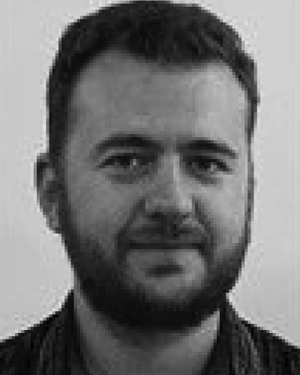 Dimitrios Papageorgiou合作论文数18
 Jan Lunze合作论文数Fakultat fur Elektrotechnik und Informationstechnik, Ruhr-Universitat Bochum18
 Hans Henrik Niemann合作论文数Department of Electrical Engineering, Technical University of Denmark17
 Soren Hansen合作论文数16
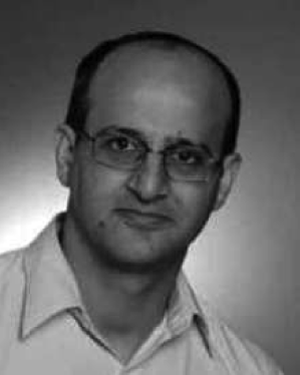 Roozbeh Izadi-Zamanabadi合作论文数Aalborg University;Department of Control Engineering;Department of Control Engineering, Aalborg University16
 Niels Kjolstad Poulsen合作论文数Department of Applied Mathematics and Computer Science, Technical University of Denmark13
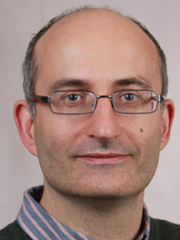 Rafael Wisniewski合作论文数Department of Electronic Systems, Technical Faculty of IT and Design, Aalborg University12
 Morten Rufus Blas合作论文数10Torsten Lorentzen合作论文数8
 Frederik E. T. Scholler合作论文数Automation and Control Group, Technical University of Denmark7
 Jens Christian Andersen合作论文数Automation Ørsted∙DTU DTU-build. 326, Technical University of Denmark7Shao-Ji Fang合作论文数7
 Tristan Perez合作论文数Boeing Research and Technology7s a bogh合作论文数6
 Bernt Johan Leira合作论文数Department of Marine Technology, Faculty of Engineering, Norwegian University of Science and Technology6
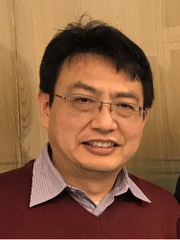 Zhenyu Yang合作论文数Department of Energy Technology, Aalborg University;The Faculty of Engineering and Science, Aalborg University6
 Nils Axel Andersen合作论文数Automation, Technical University of Denmark6
 Lazaros Nalpantidis合作论文数Robotics and Automation Lab., Democritus University of Thrace6
 Peter Hansen合作论文数6
 Jan H. Richter合作论文数I IA ATS, Siemens AG6morten vejlgaardlaursen合作论文数5
 Kjeld Dittmann合作论文数5
 Mikkel Cornelius Nielsen合作论文数5
 Anders Willersrud合作论文数Dept. of Eng. Cybern., Norwegian Univ. of Sci. & Technol.;c;Dept. of Eng. Cybern., Norwegian Univ. of Sci. & Technol.5
 Imsland, L.合作论文数Dept. of Eng. Cybern., Norwegian Univ. of Sci. & Technol.;c;Dept. of Eng. Cybern., Norwegian Univ. of Sci. & Technol.5
 Torgeir Moan (托盖尔·蒙恩)合作论文数Norwegian University of Science and Technology5
 Zhen Gao (高震)合作论文数Department of Naval Architecture and Ocean Engineering, School of Naval Architecture, Ocean and Civil Engineering, Shanghai Jiao Tong University5
 Thomas B. Moeslund合作论文数Department of Architecture, Design and Media Technology, The Technical Faculty of IT and Design, Aalborg University;Visual Analysis and Perception Lab, Aalborg University5Fabio Caponetti合作论文数5
 Tor Arne Johansen合作论文数Department of Engineering Cybernetics, Norwegian University of Science and Technology;Centre for Autonomous Marine Operations and Systems, Norwegian University of Science and Technology5
 Ron Patton合作论文数School of Control and Intelligent Systems Engineering, University of Hull5
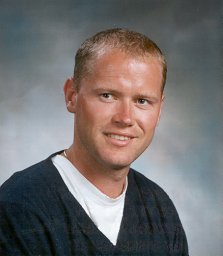 Roger Skjetne合作论文数Department of Engineering;Norwegian University of Science and Technology;Department of Engineering, Norwegian University of Science and Technology5Alessio Dallabona合作论文数4rikke jorgensen合作论文数4ragnar ingi jonsson合作论文数4
 Dimitrios Dagdilelis合作论文数4Martin K. Plenge-Feidenhans'l合作论文数4Kræn Vodder Nielsen合作论文数4
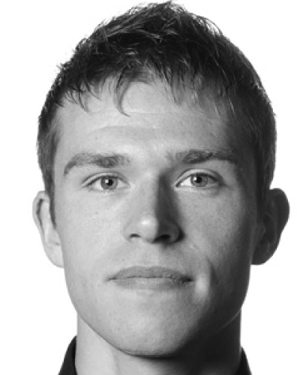 Ulrik Dam Nielsen合作论文数4
 Jonathan Becktor合作论文数Technical University of Denmark4
 Thomas Thuesen Enevoldsen合作论文数Automation and Control4Gryning, M.P.S.合作论文数4
 Seyed Mojtaba Tabatabaeipour合作论文数4
 Remus Mihail Prunescu合作论文数Department of Electrical Engineering, Automation and Control Group, Technical University of Denmark4
 Bo Zhao (赵博)合作论文数College of Intelligent Systems Science and Engineering, Harbin Engineering University4
 Lars Eriksson合作论文数Department of Electrical Engineering, Linköping University4




