We present a spread-spectrum time-domain diffuse optical spectroscopy (TD DOS) system utilizing a commercially available dual-polarization coherent optical modem operating at a wavelength of 1547.7 nm. The modem features a sampling rate of 114.6 GSa/s, enabling a temporal resolution of 17.5 ps. Our findings demonstrate that for low received optical powers (< -72 dBm), the scattering and absorption parameters of two studied tissue phantoms can be estimated with less than 12% fitting error within an exposure time of under 6 ms.
Free-space optical communication (FSOC) links are susceptible to outages caused by atmospheric turbulence-induced fading. Wavelength diversity can mitigate fading by transmitting correlated information across substantially uncorrelated channels. In this study, we demonstrate a wavelength diversity system to mitigate the effects of turbulence on a signal propagated in free space. A modified polarization-multiplexed coherent optical transceiver transmits a 56.8 GBaud signal at a client rate of 200 Gbps across two carrier frequencies within the C-band over a bench-top free-space link with a turbulence emulator. Two synchronized single-wavelength coherent receivers capture the received waveforms at each carrier frequency, which are subsequently digitally combined using maximal ratio combining for offline processing. Our results demonstrate a reduction in outage probability by nearly a factor of 20 compared to the single carrier transmission scenario. Finally, we observe fading-dependent correlation between wavelengths in the C-band, which is exploited to reduce the outage probability by 86%.
We report vibration detection and localization over a 482km bidirectional coherent optical transmission system operating error-free at 200GBd-1.6Tb/s and 200GBd-1.2Tb/s. Localization is achieved with mean offset and standard deviation of 11m and 10m, respectively.
We demonstrate a method for mitigating the effects of laser phase noise on the detection and localization of vibrations in a bidirectional coherent optical fiber transmission system. By introducing a relative delay between the two frequency tones generated at the transmitter, we retrieve an estimate of the transmitter laser phase noise at the coherent receiver. We demonstrate 200 Gbps, 16 QAM error-free transmission over 80 km while simultaneously detecting and localizing a 3 kHz vibration with 24 rad peak-to-peak phase swing. Compared to conventional methods, our method results in a reduction of localization error by 58%, from 102 m to 43 m, and a reduction in standard deviation of estimated locations by 81%, from 355 m to 67 m.
We demonstrate digitally recovered carrier laser phase noise corrupted by vibration induced phase perturbations on signaling data without introducing ultranarrow linewidth lasers. We show >10 dB improvements in vibro-perturbation SNR versus bandpass filtering methods.
The advent of the digital age has driven the development of coherent optical modems—devices that modulate the amplitude and phase of light in multiple polarization states. These modems transmit data through fiber optic cables that are thousands of kilometers in length at data rates exceeding one terabit per second. This remarkable technology is made possible through near-THz-rate programmable control and sensing of the full optical wavefield. While coherent optical modems form the backbone of telecommunications networks around the world, their extraordinary capabilities also provide unique opportunities for imaging. Here, we repurpose off-the-shelf coherent optical modems to introduce full-wavefield lidar: a type of random modulation continuous wave lidar that simultaneously measures depth, axial velocity, and polarization. We demonstrate this modality by combining a 74 GHz-bandwidth coherent optical modem with free-space coupling optics and scanning mirrors. We develop a time-resolved image formation model for this system and formulate a maximum-likelihood reconstruction algorithm to recover depth, velocity, and polarization information at each scene point from the modem’s raw transmitted and received symbols. Compared to existing lidars, full-wavefield lidar promises improved mm-scale ranging accuracy from brief, microsecond exposure times, reliable velocimetry, and robustness to interference from ambient light or other lidar signals.
The fast growth of data traffic in short-reach optical communications drives the demand for high-speed and low-cost optical modules. Here we demonstrate a silicon photonic (SiP) phase-diverse receiver based on our recently proposed asymmetric self-coherent detection (ASCD) scheme with Mach-Zehnder interferometers (MZI). The SiP MZI-ASCD receiver has a hardware-efficient architecture and recovers complex double-sideband signals via the beatings between a signal portion and a delayed signal portion from an asymmetric MZI using only 2 single-ended photodiodes and 2 analog-to-digital converters. The removal of the local oscillator in the direct detection receiver enables low-cost uncooled lasers, whereas the phase diversity closes the gap with coherent detection in terms of electrical spectral efficiency (ESE). Using a SiP MZI-ASCD receiver with a 15 ps delay, we detect a 60 Gbaud single-polarization 16-QAM signal transmitted over 40 km of single-mode fiber (SMF) below 20% overhead (OH) SD-FEC threshold of 2 × 10 −2 with a net bit rate of 200 Gbps and a record net ESE of 5.86 b/s/Hz per wavelength per polarization. Using a SiP MZI-ASCD receiver with a different delay of 7.5 ps, transmission of single-polarization 16-QAM DSB signal up to 80 Gbaud over 40 km is achieved below 24% OH SD-FEC threshold of 4.5 × 10 −2 with a record net bit rate of 258 Gbps and a net ESE of 5.31 b/s/Hz per wavelength per polarization.
We experimentally demonstrate a 34 GHz integrated silicon photonic asymmetric self-coherent detection receiver enabling net 200 Gbps 16-QAM signal transmission over 40 km of SSMF below the soft decision FEC threshold.
We propose an asymmetric self-coherent detection scheme (ASCD) based on Mach-Zehnder interferometers (MZI) for the field reconstruction of self-coherent (SC) complex double-sideband (DSB) signals. The MZI-ASCD scheme approaches the high electrical spectral efficiency (ESE) of homodyne coherent detection via a direct detection (DD) receiver having only two photodiodes (PD) and two analog-to-digital converters. The incoming SC-DSB signal is split into two parts at the receiver in this approach, one of which is delayed and beats with the other part at the outputs of an MZI. We show that the field reconstruction can be performed from the two tributaries of photocurrents. In addition, we present a modified MZI-ASCD scheme referred to as AUX-ASCD which introduces an auxiliary DD branch to improve the SNR of the detected signal. It is found that both the MZI-ASCD scheme and the AUX-ASCD scheme achieve higher OSNR sensitivity compared to the Kramers-Kronig scheme and in the meantime increases the ESE by a factor of 2 using a cost-effective DD receiver. These advantages make the ASCD scheme attractive for short-reach optical communications including edge cloud connections and mobile X-haul systems.
We present an RF-delay assisted cost-effective WDM-SSB transmitter using a single DAC per wavelength, and experimentally demonstrate the transmission of net 4×200 Gbit/s DWDM SSB PS-PAM-8 signals over 40 km of SSMF in the C-band.
The bandwidth upgrade required in short-reach optical communications has prompted the need for detection schemes that combine field reconstruction with a cost-effective subsystem architecture. Here we propose an asymmetric self-coherent detection (ASCD) scheme for the field reconstruction of self-coherent (SC) complex double-sideband (DSB) signals based on a direct-detection (DD) receiver with two reception paths. Each reception path consists of a photodiode (PD) and an analog-to-digital converter for the detection of a part of the received optical signal that experiences a different optical transfer function via the configuration of an optical filter. We derive an analytical solution to reconstructing the signal field and show the optimal filter response in optimizing the signal SNR. Further, we numerically characterize the theoretical performance of a specific ASCD scheme based on a chromatic dispersion filter and validate the principle of the ASCD scheme in a proof-of-concept experiment. The ASCD scheme approaches the electrical spectral efficiency of coherent detection with a cost-effective DD receiver, which shows the potential for high-speed short-reach links required by edge cloud communications and mobile X-haul systems.
We report order-of-magnitude improvements in performance of field-deployable hollow-core fiber cables evidenced by a 38.4Tb/s (800Gb/s-x-48WDM-channels) 20.5km lab-trial using commercial terminal equipment and the demonstration of 1128km/126km reach in full-fill 400/800Gb/s WDM recirculating-loop experiments.
A method for in-service OSNR measurement with a coherent transceiver is presented and experimentally verified. A neural network is employed to identify and remove the nonlinear noise contribution to the estimated OSNR.
We propose a filter response aware iterative KK algorithm to improve the accuracy of SSB signal reconstruction in a vestigial sideband (VSB) system. We experimentally and numerically show that this algorithm outperforms conventional KK algorithms in a 100 Gb/s VSB system.
We determine that with frequency-domain implementation of digital resampling, upsampling-free KK algorithm achieves lower computational complexity than conventional KK algorithm in a SP-SSB short-reach link.
100 G/λ amplifier-free direct detection (DD) systems beyond 40-km reach are desirable to enable the next generation cost- and power-efficient 800 G-ER optical modules. Though such systems in the O-band have been demonstrated, an interest remains to leverage the investment in long haul C-band transceivers. To our knowledge, this article reports the first C-band amplifier-free DD system at beyond 100 G throughput over reaches of 40 and 60-km using a high-power single-sideband transmitter (HPSSBT). This transmitter configuration allows for a cost-efficient 100 G transceiver for the datacenter interconnect requiring only a single digital-to-analog converter (DAC), a Mach-Zehnder modulator, a single-ended photodiode with integrated trans-impedance amplifier (PD+TIA), and an analog-to-digital converter (ADC). In this article, we studied the performance impact of key system parameters including the digitally regenerated DC component of the photocurrent, the driving voltage, and the launch power. We also characterized the sensitivity impact of the system nonlinearity and demonstrated the transmission of 155.14 Gb/s and 104.67 Gb/s net rate single sideband (SSB) PAM-4 signals over 40-km and 60-km of single-mode fiber (SMF) below the HD-FEC threshold of 3.8 × 10 -3 , respectively. Due to the colored SNR, we further approached the system capacity by transmitting a probabilistically-shaped multi-subcarrier (PS-MSC) signal, allowing a throughput of 176 Gb/s over a 40-km SMF assuming an SD-FEC with a normalized general mutual information (NGMI) threshold of 0.88.
We report the influence of carrier phase recovery on the subcarrier baud that minimizes Kerr-related nonlinear noise.
We report on an experimental investigation of the intra-channel nonlinearity effects in single-band 100G coherent optical orthogonal frequency division multiplexing (CO)-OFDM systems. We first show that instead of using traditional single-polarization training symbols (TS's), which suffer from nonlinearity-induced nonuniform phase shifts, correlated dual-polarization TS's should be used in reduced-guard-interval CO-OFDM systems with short symbol durations. Next, we demonstrate that the intra-channel nonlinearity tolerance in CO-OFDM systems can be improved by employing fewer subcarriers for signal generation.
We experimentally investigate the performance of a low-complexity non-iterative phase noise induced inter-carrier interference (ICI) compensation algorithm in reduced-guard-interval dual-polarization coherent-optical orthogonal-frequency-division-multiplexing (RGI-DP-CO-OFDM) transport systems. This interpolation-based ICI compensator estimates the time-domain phase noise samples by a linear interpolation between the CPE estimates of the consecutive OFDM symbols. We experimentally study the performance of this scheme for a 28 Gbaud QPSK RGI-DP-CO-OFDM employing a low cost distributed feedback (DFB) laser. Experimental results using a DFB laser with the linewidth of 2.6 MHz demonstrate 24% and 13% improvement in transmission reach with respect to the conventional equalizer (CE) in presence of weak and strong dispersion-enhanced-phase-noise (DEPN), respectively. A brief analysis of the computational complexity of this scheme in terms of the number of required complex multiplications is provided. This practical approach does not suffer from error propagation while enjoying low computational complexity.
We demonstrate a transmission of 8×256 Gb/s WDM 64 Gbaud QPSK signals over 2880 km of standard single mode fiber (SSMF) with erbium doped fiber amplifier (EDFA)-only amplification and coherent detection.
 David V. Plant合作论文数The Photonics Systems Group, Department of Electrical & Computer Engineering, McGill University;STARaCom28
 Qunbi Zhuge (诸葛群碧)合作论文数School of Integrated Circuit, Shanghai Jiao Tong University;Ecole d'Ingénieurs Paris, Shanghai Jiao Tong University14
 Xian Xu合作论文数13Maurice O'Sullivan合作论文数Ciena Corp13
 Mathieu Chagnon合作论文数Nokia Bell Labs12
 Ziad A. El-Sahn合作论文数11
 Mohamed Morsy-Osman合作论文数10Xueyang Li合作论文数McGill University8Zhenping Xing合作论文数6
 Md Samiul Alam合作论文数McGill Univ, Dept Elect & Comp Engn, Montreal, PQ H3A 0E9, Canada5Yixiang Hu合作论文数4Jinsong Zhang合作论文数Photon Syst Grp, McGill Univ3
 Brandon Buscaino合作论文数Edward L Ginzton Lab, Stanford Univ3
 Sophie LaRochelle合作论文数Departement de Genie Electrique et de Genie Informatique, Faculte des Sciences et de Genie, Universite Laval3
 Leslie Rusch合作论文数Department of Electrical and Computer Engineering, Université Laval;Optical Communications Laboratory, Université Laval3
 Marco Michele Sisto合作论文数Université Laval3Michael Hubbard合作论文数2Santiago Bernal合作论文数Dept Elect & Comp Engn, McGill Univ2
 Essam Berikaa合作论文数Photonic Systems Group, McGill University2
 Deng Mao合作论文数Photon Syst Grp, McGill Univ2
 Mohamed Osman合作论文数2Meng Qiu合作论文数Dept. of Electr. & Comput. Eng., McGill Univ.;c;Dept. of Electr. & Comput. Eng., McGill Univ.2
 Alireza Samani合作论文数Dept. of Electr. & Comput. Eng., McGill Univ.;c;Dept. of Electr. & Comput. Eng., McGill Univ.2
 Ramon Gutierrez-Castrejon合作论文数Instituto de Ingeniería, Universidad Nacional Autónoma de México2
 Michael Reimer合作论文数Department of Electrical and Computer Engineering, Engineering School, University of Waterloo;Quantum Photonic Devices Laboratory, Institute for Quantum Computing, University of Waterloo2Charles Laperle合作论文数Ciena Corporation2Serge Doucet合作论文数2m fake合作论文数1Charles St-Arnault合作论文数1Maxx Wu合作论文数1
 Marcelo Alonso Gouveia合作论文数Lumenisity Ltd1Hooper, L.E.合作论文数Dept. of Phys., Univ. of Bath;c;Dept. of Phys., Univ. of Bath1
 Gregory Jasion合作论文数The Optoelectronics Research Centre, Zepler Institute, Faculty of Engineering and Physical Sciences, University of Southampton1Andrew D Shiner合作论文数1
 John R. Hayes合作论文数1
 Arsalan Saljoghei合作论文数RINCE Inst., Dublin City Univ.;c;RINCE Inst., Dublin City Univ.1
 Parsa Mirdehghan合作论文数Dynamic Graphics Project Lab, University of Toronto;Department of Computer Science, University of Toronto;Massey College;Vector Institute1Yong Chen合作论文数1
 Hesham Sakr合作论文数1
 Tom Bradley合作论文数Department of Applied Physics and Science Education, Eindhoven University of Technology;Department of Electrical Engineering, Eindhoven University of Technology1Eric Rodrigue Numkam Fokoua合作论文数Optoelectronics Research Centre1
 David Richardson合作论文数Microsoft1
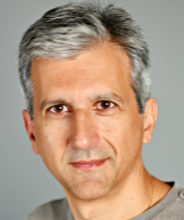 Kyros Kutulakos合作论文数Department of Computer Science, University of Toronto;Vector Institute1
 Javad Haghighat合作论文数1
 David B. Lindell合作论文数Department of Computer Science, University of Toronto1
 Benoît Châtelain合作论文数Min Lin Hsieh1
 Youngjae Kim合作论文数Data-Intensive Computing & Systems Laboratory, Department of Computer Science & Engineering, Sogang University;Soteria Systems, LLC.1
 Francesco Poletti合作论文数Optoelectronics Research Centre, University of Southampton1




