A max-log-MAP detector based on the sphere decoder is proposed and is shown to provide significant complexity reduction compared to the brute-force method for an equivalent channel coded BER performance. The algorithm is analysed for multiple antenna systems where the performance is compared to a list sphere decoder with bounded complexity for practical implementation.
M-BCJR algorithm is a reduced state version of the BCJR algorithm and selects a set of active states in the forward recursion based on an estimation of the filtered probability distribution of states at each time. We propose to use instead an estimation of the fixed-lag smoothed probability distribution of states with a non zero lag. Our-implementation uses a Gaussian approximation to estimate these distributions with a low complexity, using the principle of Probabilistic Data Association (PDA). The performance of the M-BCJR can be seen to be greatly improved as a result while remaining robust against changes in the channel multipath profile.
In this contribution a range of coded modulation (CM)-assisted radial basis function (RBF)-based turbo equalization (TEQ) schemes are investigated when communicating over dispersive Rayleigh-fading channels. Specifically, 16 quadrature amplitude modulation-based trellis coded modulation (TCM), turbo TCM (TTCM), bit-interleaved coded modulation (BICM), and iteratively decoded BICM (BICM-ID) are evaluated in the context of an RBF-based TEQ scheme and a reduced-complexity RBF based in-phase/quadrature-phase (I/Q) TEQ scheme. The least mean square (LMS) algorithm was employed for channel estimation, where the initial estimation step-size used was 0.05, which was reduced to 0.01 for the second and the subsequent TEQ iterations. The achievable coding gain of the various CM schemes was significantly increased, when employing the proposed RBF-TEQ or RBF-I/Q-TEQ rather than the conventional noniterative decision feedback equalizer (DFE). Explicitly, the reduced-complexity RBF-I/Q-TEQ-CM achieved a similar performance to the full-complexity RBF-TEQ-CM, while attaining a significant complexity reduction. The best overall performer was the RBF-I/Q-TEQ-TTCM scheme, requiring only 1.88 dB higher signal-to-noise ratio at BER=10/sup -5/, than the identical throughput 3 b/symbol uncoded 8 PSK scheme communicating over an additive white Gaussian noise channel. The coding gain of the scheme was 16.78 dB.
The mobility and ubiquitous access afforded by wireless local area networks (WLANs) and high-performance portable products promise to revolutionize the way we live, work, and play. However, sustained improvements in the throughput of WLANs, while also supporting robust long-range operation, requires the use of multiple antennas at both the mobile terminal and the access point. This article reviews the various space-time coding and decoding technologies employed for capitalizing on the increased capacity of the multiple-input multiple-output (MIMO) radio channel. Also described is a channel sounding campaign performed in the office environments used to scope the expected performance of these space-time codes in realistic deployments.
Multiple-input-multiple-output (MIMO) systems promise to provide significant increases in system capacity for future wireless communication systems. However, realization of the highest potential capacity of a MIMO system requires a high signal-to-noise ratio and, even more practically, any interference from other access points or other systems has to be considered. The unpredicted interference is normally treated as additional noise (colored-noise) in a MIMO system and this significantly reduces the expected system capacity. An architecture for MIMO iterative array processing with LMMSE turbo equalization is proposed to eliminate cochannel interference (CCI), multiple antenna interference (MAI) and intersymbol interference (ISI) in order to maintain the high capacity of the MIMO system. This architecture performs iterative operations between MIMO beamforming, soft interference cancellation, channel estimation and turbo equalization. Also, a theoretical study of MIMO capacity with beamforming under CCI is presented.
The paper provides a comparison study of the channel coded multi-carrier OFDM and single-carrier systems with iterative space time decoder and turbo frequency domain equalization, respectively, for spatially-multiplexed data transmission in terms of packet error rate performance and computational complexity.
Following a brief portrayal of the state-of-the-art a range of Coded Modulation (CM) assisted Radial Basis Function (RBF) based Turbo Equalisation (TEQ) schemes are investigated when communicating over dispersive Rayleigh fading channels. Furthermore, a reduced complexity RBF TEQ is proposed, which is referred to as an In-phase/Quadrature-phase RBF Turbo Equaliser (I/Q-RBF-TEQ). It is demonstrated that the I/Q-RBF-TEQ is capable of reducing the associated implementational complexity by equalising the I and Q components of a complex-valued phasor constellation separately. It is demonstrated that the detrimental effects of this seemingly flawed simplification may be eliminated with the aid of the proposed low-complexity turbo equaliser. The I/Q-RBF-TEQ employs iterative channel estimation and it is capable of attaining the same performance, as the significantly more complex conventional turbo equaliser. The attainable coding gain of the various CM schemes increased substantially, when employing the proposed RBF-TEQ or RBF-I/Q-TEQ, rather than the conventional non-iterative Decision Feedback Equaliser (DFE). The best overall performer was the RBF-I/Q-TEQ-TTCM scheme, requiring only 1.88~dB higher SNR at a BER of 10$^{-5}$, than the identical throughput 3~BPS uncoded 8PSK scheme communicating over an AWGN channel. The coding gain of the scheme was 16.78~dB.
A radial basis function (RBF) assisted reduced complexity in-phase/quadrature-phase (I/Q) turbo equalisation (TEQ) scheme is investigated in the context of trellis coded modulation (TCM), turbo TCM (TTCM), bit-interleaved coded modulation (BICM) and iteratively decoded BICM (BICM-ID). The proposed schemes are characterised in performance terms, when communicating over frequency selective Rayleigh fading channels. The RBF-I/Q-TEQ-TTCM achieved a similar performance to the full-complexity RBF-TEQ-TTCM, while attaining a complexity reduction factor of 36 in terms of the required additions/subtractions and a factor 9 in terms of the multiplications/divisions necessitated.
This paper presents a novel turbo equalisation scheme, which employs a radial basis function (RBF) decision feedback equaliser (DFE) and the so-called Jacobian logarithmic complexity reduction technique instead of the conventional trellis-based equaliser. The proposed turbo equaliser is shown to achieve identical bit error rate (BER) performance to the conventional turbo equaliser, while incurring a factor 4.4 lower `per-iteration' complexity in the context of 4-level quadrature amplitude modulation (4-QAM)
This chapter contains sections titled: Introduction to Turbo equalization RBF Assisted Turbo equalization Comparison of the RBF and MAP Equaliser Comparison of the Jacobian RBF and Log-MAP Equaliser RBF Turbo Equaliser Performance Reduced-complexity RBF Assisted Turbo equalization Reduced Complexity In-Phase/Quadrature-Phase Turbo equalization Using Radial Basis Functions Turbo Equalization of Convolutional Coded and Concatenated Space Time Trellis Coded Systems using Radial Basis Function Aided Equalizers Review and Discussion
A radial basis function (RBF) assisted turbo equaliser (TEQ) scheme, applied to various coded modulation schemes, is investigated. Specifically, trellis coded modulation (TCM), turbo trellis coded modulation (TTCM), bit-interleaved coded modulation (BICM) and BICM with iterative decoding (BICM-ID) are studied, when communicating over frequency selective fading channels. At a given complexity, the TTCM RBF-TEQ provides the best bit error ratio (BER) and frame error ratio (FER) performance. The RBF-TEQ structure is shown to provide an SNR performance improvement of about 5.5 dB at a BER of 10/sup -4/ in comparison to the conventional non-iterative DFE scheme.
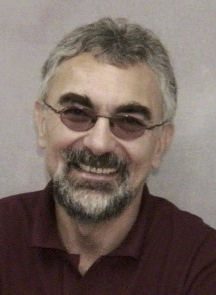 Lajos Hanzo合作论文数University of Southampton30
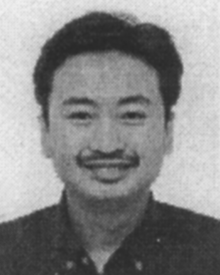 C. H. Wong合作论文数9
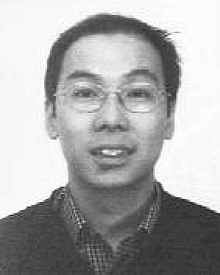 Bee Leong Yeap合作论文数School . of ECS;University of Southampton;School . of ECS, University of Southampton5
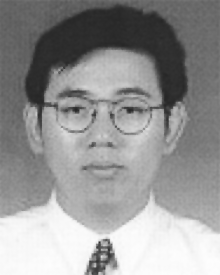 Th Liew合作论文数2
 Mikael Sandell合作论文数2Christophe Andrieu合作论文数School of Mathematics, University of Bristol2
 Robert Piechocki合作论文数School of Computer Science, Electrical and Electronic Engineering, and Engineering Maths, Faculty of Science and Engineering, University of Bristol2
 Soon Xin Ng合作论文数School of Electronics and Computer Science
University of Southampton2
Soon Xin Ng合作论文数School of Electronics and Computer Science
University of Southampton2 Cheran M. Vithanage合作论文数Telecommunications Research Laboratory, Toshiba Research Europe Limited2
 Yong Sun合作论文数1Parker, S.合作论文数1Sun, Y.合作论文数1M. Ismail合作论文数1P. Strauch合作论文数1Hua Wei合作论文数1
 T. Liew合作论文数1J. Mcgeehan合作论文数1




