In the course of seven year's astronomical project launched by King Sejong (r. 1418-50) of the Joseon dynasty (1392-1910); beginning in 1432, the Royal Observatory installed fifteen kinds of astronomical equipment and timekeeping devices in the main palace grounds. Among these, five kinds were astronomical instruments. Ten kinds were timekeeping devices. Jang Yeong-sil (Unknown) invented two Striking Clepsydras: Ball-powered Striking Palace Clepsydra employed as a standard timekeeper, and Water-and ball-operated Striking Heavenly Clepsydra as an instrument to edify Neo-Confucian ideology. The Sun-and-Star Time-determining Instrument and its smaller version consisted of a sun- and star-dial mounting equatorial-polar alignment and thread gnomons. Two Small Simplified Armilla were used to observe celestial bodies and/or timekeeping at the palace observatory and Astro-calendric Office, respectively. The sundials, mounting an equatorial-polar alignment and/or all thread-gnomons Scaphe-, Plummet-, Horizontal-, and South-determining, were new and used at the observatory, Astro-claendric Office, military camps, public places and palaces. A portable water-clock, Traveling Clepsydra, was used for the royal family, the Astro-claendric Office and military camps. The Striking Clepsydras, the Sun-and-Star Time-determining Instrument and the Small Simplified Armilla were evaluated as Korean originals in the world history of astronomical instruments and clocks. Inventions and innovations in constructing the timekeeping device at the Royal Observatory attribute in large measure to King Sejong's state-supported science policies. Time-measuring devices are reviewed from the contemporary official records with extant relics and reconstructions.
The fourth monarch King Sejong (r. 1418-50) of the Joseon dynasty (1392-1910) launched a program to equip the Royal Observatory (Ganui-dae) during 1432-38 to establish Neo-Confucian political ideology, and to promote agriculture and social culture. The project was focused on adjusting the Season-granting system fitting to the latitude of Hanyang (now Seoul). And it was also aimed on making observational equipments for calculating astronomical constants fitting to Hanyang as well as timekeeping devices for civil services. Sejong constructed five kinds of astronomical equipment in the main palace grounds: the Simplified Armilla and its platform, the forty-cheok -high (828 cm) Template and Bronze Tall Gnomon with Shadow Aligner, the Direction-determining Square Table and the Water-operated Armillary Sphere and Celestial Globe. To do this, the Korean version of the Chinese Zhou Foot-Rule (Ju-cheok) which is equivalent to 20.7 cm employed as standard measure for scaling. In 1442, the first Joseon native calendar Calculations on the Celestial Motions of Seven Regulators (Chiljeong-san) came into use. Moreover, the Rain-gauge (Cheugu-gi), the oldest known philosophical instrument for measuring precipitation, was invented at this time and put into use. The new system of observing the rule of heaven enabled the king to implement the ruling by Neo-Confucian rites and virtues following the practices of the Yao and Shun. The Observatory provided the momentum to lay the groundwork for scientific and social norm in fifteenth century Korea. Sejong's achievements not only helped to advance East Asian astronomy, but also set a milestone in the world history of astronomy.
Yeong-sil Jang (called Jang Yeong-sil in the Korean style, Unknown) was a Korean inventor and mechanical engineer who served as chief court engineer under King Sejong of the Joseon dynasty (AD 1392-1910). He made two Striking Clepsydras (Jagyeong-nu) in the course of equipping the Royal Observatory in AD 1432-38. He invented liquid-driven discrete ball-falling mechanisms and ball-driven discrete motion control mechanisms for operating dual-time-announcing devices, and applied these towards making the Striking Palace Clepsydra. He developed the mechanisms and employed them to make a functional astronomical clock, the Striking Heavenly Clepsydra, which worked in conjunction with a water-powered wheel drive. The clepsydra was a standard timekeeper capable of announcing twelve double-hours with a bell simultaneous with a visual display indicating the current time. Five night-watches and their twenty-five points could also be announced by way of a drum and gong without human involvement. The stories of his works are told in the Annals of Sejong issued in 1454 and are supplemented by accounts in the dynastic documents afterwards. His innovations on mechanism design led to subsequent astronomical clocks from the seventeenth century onwards in Korea. Not only did he assimilate the techniques of his Korean, Chinese and Islamic predecessors, but was also creative and innovative in the history of mechanism and machine design.
Jang Yeong-sil was the Chief Royal Engineer in charge of the engineering and construction project for re-equipping the Royal Observatory during the reign of King Sejong (世宗 r. 1432-1438). Jang devoted himself to making five kinds of astronomical instruments and ten timekeepers. In this paper the life and contributions of Jang are introduced along with his major invention: the striking clepsydra. This paper also discusses how the clepsydras were handed down and utilized by Jang’s successors in the making of astronomical clocks in Joseon. Not only did Jang assimilate the techniques of his Korean, Chinese and Islamic predecessors, but he also was a creative and innovative engineer. Jang is in some ways the most articulate among those in a long tradition of “automation” in Asian science and technology, where automation is a matter of submission to the laws of nature rather than the means of controlling nature, as seen in our time. This paper positions Jang’s work as a catalyst for new directions in automation and robotic arts. He was one of those mechanical geniuses who contributed to the advancement of pre-modern science and technology
This paper attempted to serve as a research for the revival of the electric light plant (Jeondeungso) erected at the Gyeongbokgung Palace in 1887. This report provided a chronological overview of the development of electric light and power in late Joseon dynasty (Korea) before 1900’s. It mainly focused on the establishment of light plant in the palace and the erection of new plant for lighting a detached palace Changdeokgung in 1894. Major installations in the first plant were inferred and set up for reconstruction. The powerhouse was a one-story building divided into an engine and dynamo room, and a boiler room. It consisted of the Edison central station lighting system: two 3kW Edison dynamo belted to a high-speed engine which supplied from a coal-fired boiler. Dynamo had capacity of 60, 16-candlepower lamps, thus giving a capacity of 120 incandescent lamps to the station. The new plant was located about midway between the palaces stood apart one-mile, and had capacity of 2,000, 16-candlepower lamps. It is revealed that electric lighting in the palaces has effected nation modernization and finally led the Emperor Gojong to establish Seoul Electric Company in 1898.
This study is about , which constitutes Honcheonui(an armillary sphere) part of "Uigijipseol" (Volume I) together with and -dealt with earlier than this subject. The study's construction on the text of is organized into 15 categories, including installation, observations, instructions for use, astronomical theories and formulas, etc. This study provides easy-to-understand illustrations of the figures shown in the original and contains detailed descriptions of the related calculation procedures. In the ``Instructions for Use of Honcheonui" discussed here, the readers are introduced to astronomical computation systems, mainly based on spherical trigonometry and proportional methods. The section also provides systematic and detailed reviews of astronomical theories and calculation procedures, allowing you to assess the level of astronomy knowledge at that time.
Unlike other clepsydras, King Sejong’s Jagyongnu is an automatic striking clepsydra famous for its digital time announcing mechanisms with number of the sound and corresponding puppets. Recently, based solely upon Borugakgi in Sejong Sillok, the whole time annunciator of Jagyongnu, the Automatic Striking Clepsydra was reconstructed successfully by the authors. A brief description of the result, regarded fully coincident with the descriptions in the Veritable Records, is presented in this paper.
A transformer filter is fabricated with three piezoelectric ceramic disk transducers and two sheets of thin insulator. Its equivalent circuit is derived from the Mason's model of a thickness-driven piezoelectric transducer. The electric input near its fundamental resonance frequency is applied to the center transducer and the output voltages across the left and right transducers are connected in parallel or in series to the resistor load. The load characteristics at resonance frequencies under various resistor loads and the frequency characteristics near the resonance frequency under no load have been investigated. Moreover, symbolic expressions for input impedances, voltage ratios, resonance frequencies, phase angles between the input and output voltages, and bandwidths have been derived. The values calculated from those symbolic expressions are shown to agree well with the measurement values.< >
Ensemble averaging after pre-editing of surface EMG potentials has enabled construction of underlying controller signals from stereotyped head movements. Carefully controlled, intended time-optimal movements by trained, actively participating human subjects have been found to yield repeatable, multi-pulse controller signals. Also, adaptive changes in these horizontal head movements in response to added viscous loads showed further causal relationships between movement dynamics and EMG signals from left and right splenius muscles. These experimental results are a base from which modeling studies can be performed to explicate the neurological control strategies used in the performance of this class of movements.
An ongoing controversy has to do with the interactions between “fast” (saccadic, quick phase) and “slow” (all other) eye movements. By attacking such issues with both experimental and especially simulation studies using our nonlinear sixth order reciprocally innervated model of the eye mechanical system, insights can be gained into the nature of these nontrivial phenomena. In our present study we relied both (1) on simulation of saccades under a wide range of experimental conditions [vestibular ocular reflex (VOR) velocities from -100 to 100 deg/sec, VOR induced position ranges from -30 to 30 degrees, time-optimal saccades ranging from 2 to 40 degrees], and (2) on using a wide variety of computer simulation of eye movement models, ranging from nonlinear ones with first and especially second order multipulse step controller signal structures, to different controller signal interaction schemes, to simulation using linearized models. We have isolated two important nonlinear phenomena: a level I nonlinear mechanical interaction, dependent not only on the initial velocity but also on the “position effect,” a new finding; and a level II nonlinear neurological interaction, close to “squelching” of the VOR controller signals by the dominating saccadic signal. Furthermore, we have used our simulation findings to reinterpret others' experimental data on eye movement interactions, including saccadic-smooth pursuit, saccadic-vergence, and vestibular nystagmus.
Quantitative measurements of horizontal head rotation were obtained from normal human subjects intending to make "time optimal" trajectories between targets. By mounting large, lightweight vanes on the head, viscous damping B, up to 15 times normal could be added to the usual mechanical load of the head.
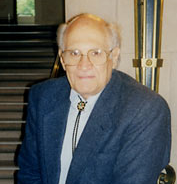 Lawrence W. Stark合作论文数Department of Physiological Optics and Engineering, University of California, Berkeley4
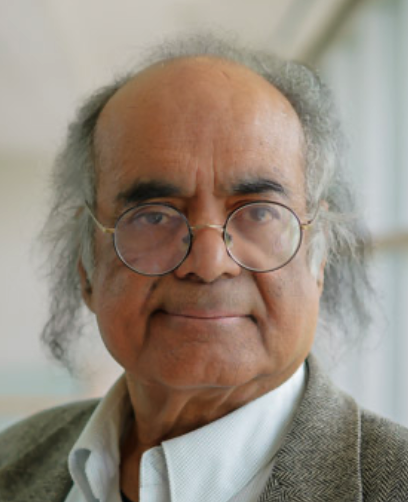 Vasudevan Lakshminarayanan合作论文数School of Optometry & Vision Science, University of Waterloo3
 Jai-Hyo Lee合作论文数2youngho hahn合作论文数2
 Jack M. Winters合作论文数Joint Department of Biomedical Engineering, Opus College of Engineering, Marquette University2Yong-Sam Lee合作论文数2
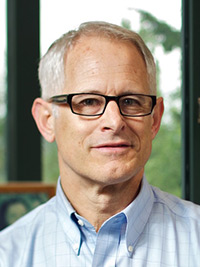 Blake Hannaford合作论文数Between Jobs Engineering;Department of Electrical & Computer Engineering, University of Washington;Applied Dexterity Inc.;Blake Hannaford Consulting;SPI Surgical2L Stark合作论文数1Jung-Hyun Kim合作论文数1Il-Seong Nha合作论文数1Deuk-Young Han合作论文数1Sang-Hyuk Kim合作论文数1Sang Hyuk Kim合作论文数1
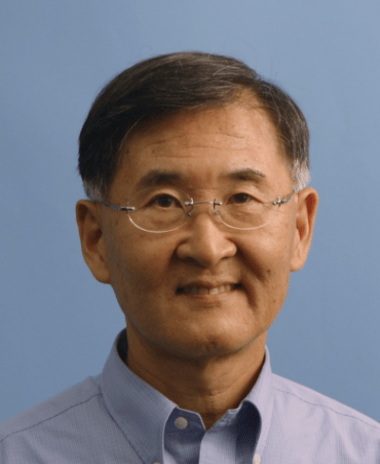 Sung-Mo (Steve) Kang合作论文数Department of Electrical and Computer Engineering, Baskin School of Engineering, University of California, Santa Cruz;Nanoelectronic Integrated Systems Laboratory, University of California, Santa Cruz1
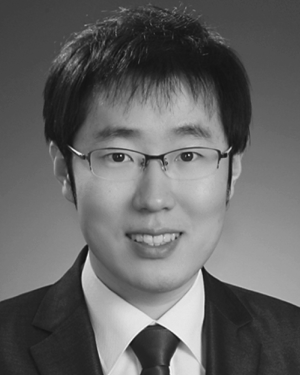 Sungwoo Hong合作论文数1Seong-Hyon Ji合作论文数1




