Summary form only given. Recent progresses in hollow-core photonic crystal fibers (HC-PCF) renewed interest for resonant fiber optic gyroscope (R-FOG) [1]. Indeed, hollow-core fibers, where light propagates mostly in air, have the advantage of significantly reducing the Kerr effect, known as a strong limitation on the bias stability of the R-FOG [2]. However, Rayleigh backscattering is still an important source of noise as it forbids the measurements of low rotation rates ['].We report here results on the measurements of backscattering in photonic bandgap (PBG) HC-PCF based resonant cavities. The setup consists of a semi-bulk cavity as shown in Fig. 1 (a) allowing us to compare different fibers. When the laser frequency is scanned, the reflected and backscattered power measured respectively on PD1 and PD2 evolve as shown in Fig. 1 (b).
The gas Ring Laser Gyroscope is an excellent inertial rotation sensor. Nevertheless, its accuracy at low angular velocities is limited by the (very small) imperfections of the mirrors forming its optical cavity. In this paper, we propose to compensate the effect of these imperfections thanks to an online estimation of the system parameters. The estimator is designed on a suitable simplification of the model, in which the parameters appear linearly, and its convergence is proved. The relevance of the approach is illustrated in simulation; in particular, it is seen that good performance can be achieved even with lower quality mirrors.
Over the last few years, there has been an increasing demand for medium-grade gyroscopes to fill the gap (in terms of cost and performance) between MEMS and current optical devices. There has also been a longstanding quest for a compact high-grade gyroscope to reduce the size of current inertial navigation units and make them available for most carriers (extending their time of GPS-free autonomous navigation). In this paper, we will describe two approaches we are following towards these goals, with support from the European Space Agency: the solid-state ring laser gyroscope and the resonant hollow-core fiber optic gyroscope.
In this paper, we report our recent progress towards a solid-state ring laser gyroscope (RLG), where mode competition is circumvented by active control of differential losses, and nonlinear effects are mitigated by longitudinal vibration of the gain medium. The resulting dynamics is significantly different from that of a classical helium-neon RLG, owing in particular to parametric resonances that occur when the Sagnac frequency is an integer multiple of the crystal vibration frequency. We describe the main experimental and theoretical results obtained so far, and the prospects of practical applications in the near future. Published by Elsevier Masson SAS on behalf of Academie des sciences.
The key point to widen the viewing angle of a TN-LCD is to realize a birefringent film with its optical axis tilted with respect to the display plane. We performed a negative tilted uniaxial film with holographically recorded volume index gratings in the form birefringence regime and studied the characteristics of such compensator in terms of viewing angle of a TN-LCD.
An in-flight laser anemometer developed by CROUZET for true air speed measurements and aircraft certification has been used to provide new informations about the aerosols backscatter coefficient at 10 pm in the lower atmosphere. The CO2 laser anemometer has been flown on a Mirage III up to an altitude of 13 km. In 1987, 10 flights over the central part of France were taken from May through October during various meteorological conditions.
 Gilles Feugnet合作论文数Thales Research and Technology4
 Fabien Bretenaker合作论文数Centre National de la Recherche Scientifique;Université Paris-Saclay;Indian Institute of Technology, Kharagpur3Sylvain Schwartz合作论文数3Pierre Rouchon合作论文数Centre Automatique et Systèmes, Mines ParisTech/PSL Research University2
 Philippe Martin合作论文数Centre Automatique Et Systèmes, MINES ParisTech2
 Georges Humbert合作论文数Laboratoire d'Electronique Microtechnologies et Instrumentations, Université de Rouen2
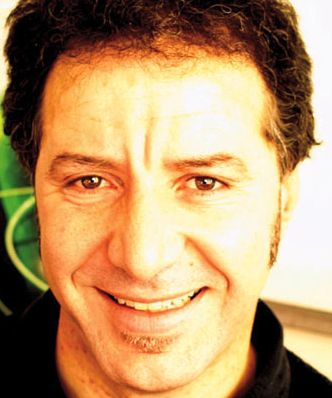 Fetah Benabid合作论文数Département Vie Universitaire & Animation du Territoire, Universite de Limoges2
 Ihsan Fsaifes合作论文数2Jc Lehureau合作论文数1f gerome合作论文数1A. Dolfi-Bouteyre合作论文数1jeanpaul pocholle合作论文数1Alexia Ravaille合作论文数1cecile joubert合作论文数1Francois Gutty合作论文数1
 Assaad Baz合作论文数Lab. de Phys. des Lasers, Univ. Lille 1;c;Lab. de Phys. des Lasers, Univ. Lille 11
 Benoit Debord合作论文数Xlim Research Institute1
 Pierre Flamant合作论文数1
 Lin-shan Lee (李琳山)合作论文数Department of Electrical Engineering, National Taiwan University;Department of Computer Science and Information Engineering, National Taiwan University;Center for Artificial Intelligence and Advanced Robotics, National Taiwan University1John B. Mandle合作论文数1




