Background:The standardized letter of evaluation (SLOE) for emergency medicine (EM) is a well-established tool for residency selection. While previous work characterizes the utility and outcomes related to SLOE use, less is known about SLOE authorship patterns and trends. Objective:The objective was to measure the prevalence of group SLOEs in EM over time, characterize the role groups represented in group SLOEs, and compare the rating practices of groups of authors versus single authors. Methods:SLOE data from 2016 through 2021 were obtained from the CORD database. An algorithm was developed to process SLOE author fields to accomplish three tasks: (1) determine whether the SLOE was written by an individual or a group, (2) determine the number of named letter writers on group SLOEs, and (3) identify roles of individuals listed on group SLOEs. A total of 150 SLOEs were randomly selected for review by the study team to use as a standard to which algorithm performance was compared. Mean ratings were compared for (1) individual versus group SLOEs and (2) individual SLOEs from clerkship directors (CDs) versus others. Results:A total of 40,218 SLOEs met inclusion criteria. The algorithm performed well in detecting group SLOEs, authors, and titles. Institutions submitting only SLOEs written by a group of authors increased from 31.4% to 54.5%. Authors per group SLOE increased from 3.4 in 2016 to 4.0 in 2021. Mean ratings were slightly higher in individual SLOEs compared to group SLOEs. Individual SLOEs from non-CDs had higher ratings compared to those from CDs. Conclusions:The proportion of SLOEs authored by groups increased over the study interval. Grading practices are similar between group SLOEs and individual SLOEs authored by CDs. Individual SLOEs from non-CDs had slightly higher ratings compared to the other groups.
Background Standardized letters of evaluation (SLOE) are becoming more widely incorporated into the residency application process to make the letter of recommendation, an already critical component in a residency application packet, more objective. However, it is not currently known if the reviewers of these letters share consensus regarding the strength of an applicant determined by their SLOE. Objective We measured the level of faculty agreement regarding applicant competitiveness as determined by SLOEs and the ability of 2 algorithms to predict faculty consensus rankings. Methods Using data from the 2021-2022 Match cycle from the Council of Residency Directors in Emergency Medicine SLOE Database as a blueprint, authors created 50 fictional SLOEs representative of the national data. Seven faculty then rated these SLOEs in order of applicant competitiveness, defined as suggested rank position. Consensus was evaluated using cutoffs established a priori, and 2 prediction models, a point-based system and a linear regression model, were tested to determine their ability to predict consensus rankings. Results There was strong faculty consensus regarding the interpretation of SLOEs. Within narrow windows of agreement, faculty demonstrated similar ranking patterns with 83% and 93% agreement for "close" and "loose" agreement, respectively. Predictive models yielded a strong correlation with the consensus ranking (point-based system r=0.97, linear regression r=0.97). Conclusions Faculty displayed strong consensus regarding the competitiveness of applicants via SLOEs, adding further support to the use of SLOEs for selection and advising. Two models predicted consensus competitiveness rankings with a high degree of accuracy.
Background:Given the importance of the standardized letter of evaluation (SLOE) for application to emergency medicine (EM) residency, it is important that SLOE developers and authors understand how reviewers determine SLOE competitiveness. To inform SLOE design and authorship, the authors set out to build a novel theory to explain how faculty holistically interpret SLOE competitiveness. Methods:The authors used constructivist grounded theory to explore how EM faculty determine SLOE competitiveness. They used purposive sampling to recruit EM faculty participants with at least 1 year of experience in scoring SLOEs. One author conducted hour-long, semistructured interviews over Zoom between August 2023 and March 2024. Two authors iteratively coded the data to develop the initial codebook, organize codes into categories, and build connections to construct the resulting theory. Results:The authors interviewed 11 EM faculty from throughout the United States. Participants described a complex process to determine SLOE competitiveness. They began by contextualizing the SLOE to determine its trustworthiness and value before using various components of the SLOE to stratify and refine their understanding of competitiveness. Finally, when participants noted the inconsistency between different aspects of the SLOE, they used various methods to reconcile discordances and determine competitiveness. Conclusions:This study illuminates the framework used by EM faculty to determine applicant competitiveness based on the SLOE and highlights several factors that SLOE authors should consider to ensure the accurate and efficient transfer of information.
Background:While faculty have previously been shown to have high levels of agreement about the competitiveness of emergency medicine (EM) standardized letters of evaluation (SLOEs), reviewing SLOEs remains a highly time-intensive process for faculty. Artificial intelligence large language models (LLMs) have shown promise for effectively analyzing large volumes of data across a variety of contexts, but their ability to interpret SLOEs is unknown. Objective:The objective was to evaluate the ability of LLMs to rate EM SLOEs on competitiveness compared to faculty consensus and previously developed algorithms. Methods:Fifty mock SLOE letters were drafted and analyzed seven times by a data-focused LLM with instructions to rank them based on desirability for residency. The LLM was also asked to use its own criteria to decide which characteristics are most important for residency and revise its ranking of the SLOEs. LLM-generated rank lists were compared with faculty consensus rankings. Results:There was a high degree of correlation (r = 0.96) between the rank list initially generated by LLM consensus and the rank list generated by trained faculty. The correlation between the revised list generated by the LLM and the faculty consensus was lower (r = 0.86). Conclusions:The LLM generated rankings showed strong correlation with expert faculty consensus rankings with minimal input of faculty time and effort.
Background: There is a lack of current high quality compensation data for Emergency Medicine (EM) Clerkship Directors (CDs) across the United States (US), despite an expansion of medical schools, EM residency programs and economic inflation.Objectives: To report US EM CD compensation during the academic year 2022-23.Methods: We performed a cross-sectional study of EM CDs.We identified 355 EM CDs using publicly available data from medical school, residency program, and AAMC websites and invited them to complete a confidential electronic survey, consisting of multiple choice and completion items, after piloting prior to use.Descriptive statistics were reported, and we compared categorical variables with χ-squared tests and continuous variables with t-tests.Results: 157 CDs (44%), including those from university, county, community, and rural sites, responded from all US regions.For the CD role, 62% receive full time equivalent (FTE) support (mean 21% +/-17% FTE, 1 SD) and 28% receive a stipend (mean $31,959 +/-$29,076).A wide range of total compensation was reported (mean $257,689 +/-$123,650).There was no correlation between FTE support, stipend, or total compensation and the number of rotating students, training, experience, site, or region.Total compensation was significantly higher in men (mean $278,964) than women (mean $222,140) (p=0.009),despite no significant gender difference in CD FTE reduction or stipend.Conclusions: FTE reduction, stipends and total compensation vary highly amongst EM CDs, without correlation to the number of rotating students, training/ experience, type of site (university vs. county vs. community) or US region.Female EM CDs report significantly lower total compensation nationally than men, despite no significant gender difference in FTE support or stipend for the CD role itself.
Background:Standardized letters of evaluation (SLOEs) are an important part of residency recruitment, particularly given the limited availability of other discerning factors in residency applications. While consensus regarding SLOE competitiveness has been studied within a small group of academic faculty, it remains unexplored how a more diverse group of letter readers interpret SLOEs in terms of competitiveness. Methods:A sample of 50 real SLOEs in the new SLOE format (2022 eSLOE 2.0) were selected to match the national rating distribution and anonymized. These SLOEs were ranked in order of competitiveness by 25 faculty members representing diverse demographics, geographic regions, and practice settings. Consensus levels were assessed using previously defined criteria and compared to prior results using a cutoff of ±10% to define a significant difference in consensus levels. Two models were tested to determine their ability to predict consensus rankings: a point-based system and a linear regression model. Results:Faculty consensus in this diverse cohort was slightly below the level measured among academic emergency medicine faculty in the prior study, though no differences were greater than the ±10% cutoff. Prediction models also performed similarly to a previous study except at the tight level of agreement, where consensus was stronger in this study compared to previous results. There is greater consensus among faculty at academic institutions than at community institutions, and years of experience was not correlated with higher consensus. Conclusions:The degree of consensus regarding competitiveness using real SLOEs was similar in this diverse national sample compared to a prior study in a smaller and more homogenous group ranking mock SLOEs. Consensus ranks were predicted with good accuracy using both the point system and the regression model.
Background:Emergency medicine (EM) has introduced a new, competency-based standardized letter of evaluation (SLOE) template. While a previous version of the SLOE has been shown to promote a high degree of faculty consensus regarding competitiveness, this has not been shown for the new SLOE template. Objective:The objective was to evaluate faculty consensus on competitiveness for the new EM SLOE 2.0. Methods:Fifty mock SLOE 2.0 letters using the new template were drafted and sent to a group of experienced EM educators. The 50 letters were ranked by the experienced faculty as well as a point-based prediction model and a regression model and the results were compared. Results:Faculty consensus on competitiveness remained strong when using the new SLOE 2.0 format. The points-based prediction model and regression model both demonstrated a high level of agreement with faculty consensus rankings for the SLOE 2.0. Conclusions:Introduction of the new, competency-based SLOE 2.0 format did not have a deleterious effect on faculty consensus rankings of competitiveness.
Chalk talks are a ubiquitous teaching strategy in both pulmonary, critical care, and sleep medicine and medicine in general; yet, trainees and early career faculty are rarely taught how to design, prepare, and present a chalk talk. Skills necessary to deliver a chalk talk are transferable to other settings, such as the bedside, wards during rounds, and virtual classrooms. As a teaching strategy, the chalk talk can involve learners at multiple levels, foster practical knowledge, stimulate self-assessment, encourage the generation of broad differential diagnoses, and promote an interactive learning environment. Suited for both formal and informal learning, the chalk talk can be prepared well in advance or, after some practice, can be presented "on the fly." Furthermore, often on the wards or in the intensive care unit, team members are asked to "teach the rest of the team" at some point during rounds. There is little guidance in medical education for students and trainees to prepare for how to do this, and the chalk talk can serve as an excellent format and teaching strategy to "teach the team" when tasked to do so. To highlight our perspectives on best practices in using the chalk talk format effectively, we first briefly review the literature surrounding this very common yet understudied teaching strategy. We then provide a primer on how to design, develop, and deliver a chalk talk as a resource for how we teach residents, fellows, and early career attendings to deliver their own chalk talks.
Introduction:Acute pain is one of the most common complaints that presents to the emergency department. Despite its ubiquity, oligoanalgesia, or the undertreatment of pain, remains a problem in medicine, possibly due to minimal dedicated pain teaching for senior medical students transitioning to residency.Methods:We designed a 2.5-hour interactive seminar for senior medical students transitioning into residency. The seminar included a chalk talk and case-based discussion, reviewed pain physiology, revisited pain assessment, and introduced pain management strategies using a novel acute pain plan to organize an analgesic approach from presentation through disposition from the emergency department. The didactic chalk talk was interwoven with a case of acute pain. Seminar materials promoted a near-peer teaching opportunity for future facilitators. Learners completed open-ended pre-/postsession knowledge assessments.Results:Data were obtained from 19 fourth-year medical students enrolled in three iterations of a preinternship course at Harvard Medical School. Prior to the seminar, learners scored an average of 23.0 out of 53.0 points (SD = 9.0) on the knowledge assessment, which improved to 36.6 out of 53.0 points (SD = 6.7) following the seminar (paired t test p < .001). Learner satisfaction data revealed a positive response to the seminar: Learners felt more confident managing pain and highly recommended the seminar's continuation in the future.Discussion:Initial data from this seminar suggest a need for and benefit of targeted pain education for senior medical students. Seminar materials can easily be adapted for learners in other departments or in early graduate medical education.
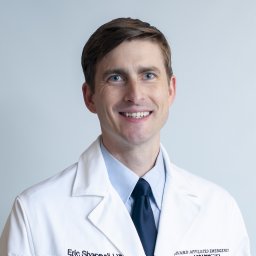 Eric Shappell合作论文数Harvard Medical School, Massachusetts General Hospital8
 Sharon P Bord合作论文数Department of Otolaryngology-Head and Neck Surgery, School of Medicine, Johns Hopkins University8
 Caitlin Schrepel合作论文数Department of Emergency Medicine, University of Washington7
 Al'ai Alvarez合作论文数Sch Med, Stanford Univ7
 Alexis Pelletier-Bui合作论文数7
 Benjamin Schnapp合作论文数Univ Wisconsin, BerbeeWalsh Dept Emergency Med, 800 Univ Bay Dr, Madison, WI 53705 USA7
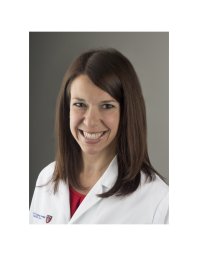 Dubosh Nicole合作论文数Department of Emergency Medicine, Beth Israel Deaconess Medical Center;Harvard Medical School, Boston, Massachusetts.;Harvard Medical School, Beth Israel Deaconess Medical Center7
 Yoon Soo Park合作论文数6Hegarty Cullen B合作论文数2Antje Barreveld合作论文数1
 Richards Jeremy B合作论文数Department of Internal Medicine, Beth Israel Deaconess Medical Center1
 Daniel Egan合作论文数1
 Jason S. Lewis合作论文数Department of Radiology, Memorial Sloan Kettering Cancer Center/Program of Molecular Pharmacology and Chemistry, Memorial Sloan Kettering Cancer Center/Department of Pharmacology, Weill Cornell Medical College/Radiochemistry and Molecular Imaging Probes Core, Memorial Sloan Kettering Cancer Center1




