We develop a framework to describe gravitational wave propagation through a stochastic distribution of weak gravitational lenses beyond the geometric optics limit. We model the lens distribution as a static random background field and formulate the problem in the language of quenched disorder, treating the disorder averaged density matrix as the fundamental object from which observables are computed. Using the Schwinger Keldysh formalism, we construct a path-integral representation of the averaged density matrix and derive its explicit form perturbatively for a suitable class of couplings. The result naturally separates into a quadratic exponential term, which governs the suppression of phase sensitive contributions in the averaged description, and a purely oscillatory contribution, which modifies coherent propagation through a disorder-induced correction to the propagation kernel. This provides a unified description of interference, diffraction, and statistical fluctuations of the lens distribution within a single framework. We also identify the physical scales controlling the onset of coherence loss and illustrate the formalism in the case of Gaussian wave packets. More generally, the derivation applies to any system described by the same class of actions, making the framework relevant beyond gravitational wave lensing to wave propagation in disordered media.
The current standard model of cosmology successfully describes a variety of measurements, but the nature of its main ingredients, dark matter and dark energy, remains unknown. Euclid is a medium-class mission in the Cosmic Vision 2015-2025 programme of the European Space Agency (ESA) that will provide high-resolution optical imaging, as well as near-infrared imaging and spectroscopy, over about 14,000 deg^2 of extragalactic sky. In addition to accurate weak lensing and clustering measurements that probe structure formation over half of the age of the Universe, its primary probes for cosmology, these exquisite data will enable a wide range of science. This paper provides a high-level overview of the mission, summarising the survey characteristics, the various data-processing steps, and data products. We also highlight the main science objectives and expected performance.
The detection of primordial B modes of the cosmic microwave background (CMB) could provide information about the early stages of the Universe's evolution. The faintness of this signal requires exquisite calibration accuracy and control of instrumental systematic effects which otherwise could bias the measurements. In this work, we study the impact of an imperfect relative polarisation gain calibration on the recovered value of the tensor-toscalar ratio r for the LiteBIRD experiment, through the application of the blind Needlet Internal Linear Combination (NILC) foreground-cleaning method. We derive requirements on the relative calibration accuracy of the overall polarisation gain (Delta g(v)) for each LiteBIRD frequency channel. Our results show that minimum variance techniques, as NILC, are less sensitive to systematic gain calibration uncertainties compared to a parametric approach, if the latter is not equipped with a proper modelling of these instrumental effects. In this study, the most stringent requirements are found in the channels where the CMB signal is relatively brighter, with the tightest constraints at 166GHz (Delta g(v) similar to 0.16%). This differs from the outcome of an analogous analysis performed with a parametric method, where the tightest requirements are obtained for the foreground-dominated channels. Gain calibration uncertainties, corresponding to the derived requirements, are then simultaneously propagated into all frequency channels. By doing so, we find that the overall impact on estimated r is lower than the total gain systematic budget for LiteBIRD approximately by a factor 5, due to the correlations of the impacts of gain calibration uncertainties in different frequency channels. In order to decouple the systematic effect from the specific choice of the model, we derive the requirements assuming constant spectral parameters for the foreground emission. To assess the robustness of the obtained results against more realistic scenarios, we repeat the analysis assuming sky models of intermediate and high complexity. In these further cases, we adopt an optimised NILC pipeline, called the Multi-Clustering NILC (MC-NILC). We find that the impact of gain calibration uncertainties on r is lower than the LiteBIRD gain systematics budget for the intermediate-complexity sky model. For the high-complexity case, instead, it would be necessary to tighten the requirements by a factor 1.8.
Unveiling the dark sector of the Universe is one of the leading efforts in theoretical physics. Among the many models proposed, axions and axion-like particles stand out due to their solid theoretical foundation, capacity to contribute significantly to both dark matter and dark energy, and potential to address the small-scale crisis of Lambda CDM. Moreover, these pseudo-scalar fields couple to the electromagnetic sector through a Chern-Simons parity- violating term, leading to a rotation of the plane of linearly polarized waves, namely cosmic birefringence. We explore the impact of the axion-parameters on anisotropic birefringence and study, for the first time, its cross-correlation with the spatial distribution of galaxies, focusing on ultralight axions with masses 10-33 eV <= m phi <= 10-28 eV. Through this novel approach, we investigate the axion-parameter space in the mass m phi and initial misalignment angle theta i , within the framework of early dark energy models, and constrain the axion-photon coupling g a gamma required to achieve unity in the signal-to-noise ratio of the underlying cross-correlation, computed with the instrument specifications of Euclid and forthcoming CMB-polarization data. Our findings reveal that for masses below 10-32 eV and initial misalignment angles greater in absolute value than pi / 4, the signal-to-noise ratio not only exceeds unity but also surpasses that achievable from the auto-correlation of birefringence alone (up to a factor 7), highlighting the informative potential of this new probe. Additionally, given the late-time evolution of these low-mass axions, the signal stems from the epoch of reionization, providing an excellent tool to single out the birefringence generated during this period.
We explore the capability of measuring lensing signals in $LiteBIRD$ full-sky polarization maps. With a $30$ arcmin beam width and an impressively low polarization noise of $2.16\,\mu$K-arcmin, $LiteBIRD$ will be able to measure the full-sky polarization of the cosmic microwave background (CMB) very precisely. This unique sensitivity also enables the reconstruction of a nearly full-sky lensing map using only polarization data, even considering its limited capability to capture small-scale CMB anisotropies. In this paper, we investigate the ability to construct a full-sky lensing measurement in the presence of Galactic foregrounds, finding that several possible biases from Galactic foregrounds should be negligible after component separation by harmonic-space internal linear combination. We find that the signal-to-noise ratio of the lensing is approximately $40$ using only polarization data measured over $90\%$ of the sky. This achievement is comparable to $Planck$'s recent lensing measurement with both temperature and polarization and represents a four-fold improvement over $Planck$'s polarization-only lensing measurement. The $LiteBIRD$ lensing map will complement the $Planck$ lensing map and provide several opportunities for cross-correlation science, especially in the northern hemisphere.
We present a study of the impact of a beam far side-lobe lack of knowledge on the measurement of the Cosmic Microwave Background B-mode signal at large scale. Beam far side-lobes induce a mismatch in the transfer function of Galactic foregrounds between the dipole and higher multipoles which degrads the performances of component separation methods. This leads to foreground residuals in the CMB map. It is expected to be one of the main source of systematic effects in future CMB polarization observations. Thus, it becomes crucial for all-sky survey missions to take into account the interplays between beam systematic effects and all the data analysis steps. LiteBIRD is the ISAS/JAXA second strategic large-class satellite mission and is dedicated to target the measurement of CMB primordial B modes by reaching a sensitivity on the tensor-to-scalar ratio r of sigma (r) <= 10(-3) assuming r = 0. The primary goal of this paper is to provide the methodology and develop the framework to carry out the end-to-end study of beam far side-lobe effects for a space-borne CMB experiment. We introduce uncertainties in the beam model, and propagate the beam effects through all the steps of the analysis pipeline, most importantly including component separation, up to the cosmological results in the form of a bias delta r. As a demonstration of our framework, we derive requirements on the calibration and modeling for the LiteBIRD's beams under given assumptions on design, simulation, component separation method and allocated error budget. In particular, we assume a parametric method of component separation with no mitigation of the far side-lobes effect at any stage of the analysis pipeline. We show that delta r is mostly due to the integrated fractional power difference between the estimated beams and the true beams in the far side-lobes region, with little dependence on the actual shape of the beams, for low enough delta r. Under our set of assumptions, in particular considering the specific foreground cleaning method we used, we find that the integrated fractional power in the far side-lobes should be known at the level of similar to 10(-4), to achieve the required limit on the bias delta r < 1.9 x 10(-5). The framework and tools developed for this study can be easily adapted to provide requirements under different design, data analysis frameworks and for other future space-borne experiments, such as PICO or CMB-Bharat. We further discuss the limitations of this framework and potential extensions to circumvent them.
Primordial features, in particular oscillatory signals, imprinted in the primordial power spectrum of density perturbations represent a clear window of opportunity for detecting new physics at high-energy scales. Future spectroscopic and photometric measurements from the $Euclid$ space mission will provide unique constraints on the primordial power spectrum, thanks to the redshift coverage and high-accuracy measurement of nonlinear scales, thus allowing us to investigate deviations from the standard power-law primordial power spectrum. We consider two models with primordial undamped oscillations superimposed on the matter power spectrum, one linearly spaced in $k$-space the other logarithmically spaced in $k$-space. We forecast uncertainties applying a Fisher matrix method to spectroscopic galaxy clustering, weak lensing, photometric galaxy clustering, cross correlation between photometric probes, spectroscopic galaxy clustering bispectrum, CMB temperature and $E$-mode polarization, temperature-polarization cross correlation, and CMB weak lensing. We also study a nonlinear density reconstruction method to retrieve the oscillatory signals in the primordial power spectrum. We find the following percentage relative errors in the feature amplitude with $Euclid$ primary probes for the linear (logarithmic) feature model: 21% (22%) in the pessimistic settings and 18% (18%) in the optimistic settings at 68.3% confidence level (CL) using GC$_{\rm sp}$+WL+GC$_{\rm ph}$+XC. Combining all the sources of information explored expected from $Euclid$ in combination with future SO-like CMB experiment, we forecast ${\cal A}_{\rm lin} \simeq 0.010 \pm 0.001$ at 68.3% CL and ${\cal A}_{\rm log} \simeq 0.010 \pm 0.001$ for GC$_{\rm sp}$(PS rec + BS)+WL+GC$_{\rm ph}$+XC+SO-like both for the optimistic and pessimistic settings over the frequency range $(1,\,10^{2.1})$.
We assess the capabilities of the LiteBIRD mission to map the hot gas distribution in the Universe through the thermal Sunyaev-Zeldovich (SZ) effect. Our analysis relies on comprehensive simulations incorporating various sources of Galactic and extragalactic foreground emission, while accounting for the specific instrumental characteristics of the LiteBIRD mission, such as detector sensitivities, frequency-dependent beam convolution, inhomogeneous sky scanning, and 1/ f noise. We implement a tailored component-separation pipeline to map the thermal SZ Compton y-parameter over 98% of the sky. Despite lower angular resolution for galaxy cluster science, LiteBIRD provides full-sky coverage and, compared to the Planck satellite, enhanced sensitivity, as well as more frequency bands to enable the construction of an all-sky thermal SZ y-map, with reduced foreground contamination at large and intermediate angular scales. By combining LiteBIRD and Planck channels in the component-separation pipeline, we also obtain an optimal y-map that leverages the advantages of both experiments, with the higher angular resolution of the Planck channels enabling the recovery of compact clusters beyond the LiteBIRD beam limitations, and the numerous sensitive LiteBIRD channels further mitigating foregrounds. The added value of LiteBIRD is highlighted through the examination of maps, power spectra, and one-point statistics of the various sky components. After component separation, the 1/f noise from LiteBIRD's intensity channels is effectively mitigated below the level of the thermal SZ signal at all multipoles. Cosmological constraints on S-8 = sigma(8) (Omega(m)/0.3)(0.5) obtained from the LiteBIRDPlanck combined y-map power spectrum exhibits a 15% reduction in uncertainty compared to constraints derived from Planck alone. This improvement can be attributed to the increased portion of uncontaminated sky available in the LiteBIRD-Planck combined y-map.
The future Euclid space satellite mission will offer an invaluable opportunity to constrain modifications to general relativity at cosmic scales. We focus on modified gravity models characterised, at linear scales, by a scale-independent growth of perturbations while featuring different testable types of derivative screening mechanisms at smaller nonlinear scales. We consider 3 specific models, namely Jordan-Brans-Dicke (JBD), the normal branch of Dvali-Gabadadze-Porrati (nDGP) gravity and $k$-mouflage (KM) gravity. We provide forecasts from spectroscopic and photometric primary probes by Euclid on the cosmological parameters and the extra parameters of the models, respectively, $\omega_{\rm BD}$, $\Omega_{\rm rc}$ and $\epsilon_{2,0}$, which quantify the deviations from general relativity. This analysis will improve our knowledge of the cosmology of these modified gravity models. The forecasts analysis employs the Fisher matrix method applied to weak lensing (WL); photometric galaxy clustering (GC$_{ph}$); spectroscopic galaxy clustering (GC$_{sp}$) and the cross-correlation (XC) between GC$_{ph}$ and WL. For the Euclid survey specifications we define three scenarios, characterised by different cuts in $\ell$ and $k$, to assess the constraining power of nonlinear scales. For each model we consider two fiducial values for the corresponding model parameter. In an optimistic setting at 68.3\% confidence interval, with Euclid alone we find the following percentage relative errors: for $\log_{10}{\omega_{\rm BD}}$, with a fiducial value of $\omega_{\rm BD}=800$, 35% using GC$_{sp}$ alone, 3.6% using GC$_{ph}$+WL+XC and 3.3% using GC$_{ph}$+WL+XC+GC$_{sp}$; for $\log_{10}{\Omega_{\rm rc}}$, with a fiducial value of $\Omega_{\rm rc}=0.25$, we find respectively 90%, 20% and 17%; finally, for $\epsilon_{2,0}=-0.04$ respectively 5%, 0.15% and 0.14%. (abridged)
Future cosmic microwave background (CMB) experiments are primarily targeting a detection of the primordial B-mode polarisation. The faintness of this signal requires exquisite control of systematic effects which may bias the measurements. In this work, we derive requirements on the relative calibration accuracy of the overall polarisation gain (Δ g_ν) for LiteBIRD experiment, through the application of the blind Needlet Internal Linear Combination (NILC) foreground-cleaning method. We find that minimum variance techniques, as NILC, are less affected by gain calibration uncertainties than a parametric approach, which requires a proper modelling of these instrumental effects. The tightest constraints are obtained for frequency channels where the CMB signal is relatively brighter (166 GHz channel, Δg_ν≈ 0.16 %), while, with a parametric approach, the strictest requirements were on foreground-dominated channels. We then propagate gain calibration uncertainties, corresponding to the derived requirements, into all frequency channels simultaneously. We find that the overall impact on the estimated r is lower than the required budget for LiteBIRD by almost a factor 5. The adopted procedure to derive requirements assumes a simple Galactic model. We therefore assess the robustness of obtained results against more realistic scenarios by injecting the gain calibration uncertainties, according to the requirements, into LiteBIRD simulated maps and assuming intermediate- and high-complexity sky models. In this case, we employ the so-called Multi-Clustering NILC (MC-NILC) foreground-cleaning pipeline and obtain that the impact of gain calibration uncertainties on r is lower than the LiteBIRD gain systematics budget for the intermediate-complexity sky model. For the high-complexity case, instead, it would be necessary to tighten the requirements by a factor 1.8.
LiteBIRD, the next-generation cosmic microwave background (CMB) experiment, aims for a launch in Japan's fiscal year 2032, marking a major advancement in the exploration of primordial cosmology and fundamental physics. Orbiting the Sun-Earth Lagrangian point L2, this JAXA-led strategic L-class mission will conduct a comprehensive mapping of the CMB polarization across the entire sky. During its 3-year mission, LiteBIRD will employ three telescopes within 15 unique frequency bands (ranging from 34 through 448 GHz), targeting a sensitivity of 2.2 mu K-arcmin and a resolution of 0.5 degrees at 100 GHz. Its primary goal is to measure the tensor-to-scalar ratio r with an uncertainty delta r = 0.001, including systematic errors and margin. If r >= 0.01, LiteBIRD expects to achieve a > 5 sigma detection in the l = 2-10 and l = 11-200 ranges separately, providing crucial insight into the early Universe. We describe LiteBIRD's scientific objectives, the application of systems engineering to mission requirements, the anticipated scientific impact, and the operations and scanning strategies vital to minimizing systematic effects. We will also highlight LiteBIRD's synergies with concurrent CMB projects.
We estimate the efficiency of mitigating the lensing B -mode polarization, the so-called delensing, for the LiteBIRD experiment with multiple external data sets of lensing-mass tracers. The current best bound on the tensor-to-scalar ratio, r , is limited by lensing rather than Galactic foregrounds. Delensing will be a critical step to improve sensitivity to r as measurements of r become more and more limited by lensing. In this paper, we extend the analysis of the recent LiteBIRD forecast paper to include multiple mass tracers, i.e., the CMB lensing maps from LiteBIRD and CMB-S4-like experiment, cosmic infrared background, and galaxy number density from Euclid - and LSST-like survey. We find that multi-tracer delensing will further improve the constraint on r by about 20%. In LiteBIRD , the residual Galactic foregrounds also significantly contribute to uncertainties of the B -modes, and delensing becomes more important if the residual foregrounds are further reduced by an improved component separation method.
We study the possibility of using the $LiteBIRD$ satellite $B$-mode survey to constrain models of inflation producing specific features in CMB angular power spectra. We explore a particular model example, i.e. spectator axion-SU(2) gauge field inflation. This model can source parity-violating gravitational waves from the amplification of gauge field fluctuations driven by a pseudoscalar "axionlike" field, rolling for a few e-folds during inflation. The sourced gravitational waves can exceed the vacuum contribution at reionization bump scales by about an order of magnitude and can be comparable to the vacuum contribution at recombination bump scales. We argue that a satellite mission with full sky coverage and access to the reionization bump scales is necessary to understand the origin of the primordial gravitational wave signal and distinguish among two production mechanisms: quantum vacuum fluctuations of spacetime and matter sources during inflation. We present the expected constraints on model parameters from $LiteBIRD$ satellite simulations, which complement and expand previous studies in the literature. We find that $LiteBIRD$ will be able to exclude with high significance standard single-field slow-roll models, such as the Starobinsky model, if the true model is the axion-SU(2) model with a feature at CMB scales. We further investigate the possibility of using the parity-violating signature of the model, such as the $TB$ and $EB$ angular power spectra, to disentangle it from the standard single-field slow-roll scenario. We find that most of the discriminating power of $LiteBIRD$ will reside in $BB$ angular power spectra rather than in $TB$ and $EB$ correlations.
We present detailed forecasts for the constraints on the characteristics of primordial magnetic fields (PMFs) generated prior to recombination that will be obtained with the LiteBIRD satellite. The constraints are driven by some of the main physical effects of PMFs on the CMB anisotropies: the gravitational effects of magnetically-induced perturbations; the effects on the thermal and ionization history of the Universe; the Faraday rotation imprint on the CMB polarization spectra; and the non-Gaussianities induced in polarization anisotropies. LiteBIRD represents a sensitive probe for PMFs. We explore different levels of complexity, for LiteBIRD data and PMF configurations, accounting for possible degeneracies with primordial gravitational waves from inflation. By exploiting all the physical effects, LiteBIRD will be able to improve the current limit on PMFs at intermediate and large scales coming from Planck. In particular, thanks to its accurate B-mode polarization measurement, LiteBIRD will improve the constraints on infrared configurations for the gravitational effect, giving B-1Mpc(nB) =-2.9 < 0.8 nG at 95% C.L., potentially opening the possibility to detect nanogauss fields with high significance. We also observe a significant improvement in the limits when marginalized over the spectral index, B-1 Mpc(marg) < 2.2 nG at 95% C.L. From the thermal history effect, which relies mainly on E-mode polarization data, we obtain a significant improvement for all PMF configurations, with the marginalized case, root < B-2 >(marg) < 0.50 nG at 95% C.L. Faraday rotation constraints will take advantage of the wide frequency coverage of LiteBIRD and the high sensitivity in B modes, improving the limits by orders of magnitude with respect to current results, B-1 Mpc(n) B =-2.9 < 3.2nG at 95% C.L. Finally, non-Gaussianities of the B-mode polarization can probe PMFs at the level of 1 nG, again significantly improving the current bounds from Planck. Altogether our forecasts represent a broad collection of complementary probes based on widely tested methodologies, providing conservative limits on PMF characteristics that will be achieved with the LiteBIRD satellite.
Large angular scale surveys in the absence of atmosphere are essential for measuring the primordial B-mode power spectrum of the Cosmic Microwave Background (CMB). Since this proposed measurement is about three to four orders of magnitude fainter than the temperature anisotropies of the CMB, in-flight calibration of the instruments and active suppression of systematic effects are crucial. We investigate the effect of changing the parameters of the scanning strategy on the in-flight calibration effectiveness, the suppression of the systematic effects themselves, and the ability to distinguish systematic effects by null-tests. Next-generation missions such as LiteBIRD, modulated by a Half-Wave Plate (HWP), will be able to observe polarisation using a single detector, eliminating the need to combine several detectors to measure polarisation, as done in many previous experiments and hence avoiding the consequent systematic effects. While the HWP is expected to suppress many systematic effects, some of them will remain. We use an analytical approach to comprehensively address the mitigation of these systematic effects and identify the characteristics of scanning strategies that are the most effective for implementing a variety of calibration strategies in the multi-dimensional space of common spacecraft scan parameters. We also present Falcons, a fast spacecraft scanning simulator that we developed to investigate this scanning parameter space.
The theory of inflation provides a mechanism to explain the structures we observe today in the Universe, starting from quantum-mechanically generated fluctuations. However, this leaves the question of: how did the quantum-to-classical transition, occur? During inflation, tensor perturbations interact (at least gravitationally) with other fields, meaning that we need to view these perturbations as an open system that interacts with an environment. In this paper, the evolution of the system is described using a Lindblad equation, which describes the quantum decoherence of the system. This is a possible mechanism for explaining the quantum-to-classical transition. We show that this quantum decoherence leads to a scale-dependent increase of the gravitational wave power spectrum, depending on the strength and time dependence of the interaction between the system and the environment. By using current upper bounds on the gravitational wave power spectrum from inflation, obtained from CMB and the LIGO-Virgo-KAGRA constraints, we find an upper bound on the interaction strength. Furthermore, we compute the decoherence criterion, which indicates the minimal interaction strength needed for a specific scale to have successfully decohered by the end of inflation. Assuming that the CMB modes have completely decohered, we indicate a lower bound on the interaction strength. In addition, this decoherence criterion allows us to look at which scales might not have fully decohered and could still show some relic quantum signatures. Lastly, we use sensitivity forecasts to study how future gravitational-wave detectors, such as LISA and ET, could constrain the decoherence parameter space. Due to the scale-dependence of the power spectrum, LISA could only have a very small impact. However, ET will be able to significantly improve our current constraints for specific decoherence scenarios.
The imprint of gravitational waves (GWs) on large-scale structures (LSS) is a useful and promising way to detect or to constrain them. Tensor fossils have been largely studied in the literature as an indirect way to detect primordial GWs. In this paper we analyze a new effect induced by primordial GWs: a correction to the density contrast of the underlying matter distribution of LSS, as well as its radiation counterpart, induced by the energy density fluctuation of the gravitational radiation. We perform our derivation of the full analytical solution of the density contrast for waves entering the horizon during radiation dominance. We account for two phases in the radiation era, depending on the main contributor to the perturbed energy density of the Universe. By comparing the density contrast of cold dark matter and radiation -- sourced by linear gravitational waves only -- we conclude that the former overcomes the latter at some time in the radiation era, a behaviour analogous to their linear counterpart. Then we conclude by discussing the case of density perturbations produced by GWs entering the Hubble radius during the matter era as well as their evolution in the late dark-energy dominated phase.
LiteBIRD, the Lite (Light) satellite for the study of B-mode polarization and Inflation from cosmic background Radiation Detection, is a space mission for primordial cosmology and fundamental physics. The Japan Aerospace Exploration Agency (JAXA) selected LiteBIRD in May 2019 as a strategic large-class (L-class) mission, with an expected launch in the late 2020s using JAXA's H3 rocket. LiteBIRD is planned to orbit the Sun-Earth Lagrangian point L2, where it will map the cosmic microwave background (CMB) polarization over the entire sky for three years, with three telescopes in 15 frequency bands between 34 and 448 GHz, to achieve an unprecedented total sensitivity of 2.2$\mu$K-arcmin, with a typical angular resolution of 0.5$^\circ$ at 100 GHz. The primary scientific objective of LiteBIRD is to search for the signal from cosmic inflation, either making a discovery or ruling out well-motivated inflationary models. The measurements of LiteBIRD will also provide us with insight into the quantum nature of gravity and other new physics beyond the standard models of particle physics and cosmology. We provide an overview of the LiteBIRD project, including scientific objectives, mission and system requirements, operation concept, spacecraft and payload module design, expected scientific outcomes, potential design extensions and synergies with other projects.
LiteBIRD is a planned JAXA-led CMB B-mode satellite experiment aiming for launch in the late 2020s, with a primary goal of detecting the imprint of primordial inflationary gravitational waves. Its current baseline focal-plane configuration includes 15 frequency bands between 40 and 402 GHz, fulfilling the mission requirements to detect the amplitude of gravitational waves with the total uncertainty on the tensor-to-scalar ratio, $\delta r$, down to $\delta r<0.001$. A key aspect of this performance is accurate astrophysical component separation, and the ability to remove polarized thermal dust emission is particularly important. In this paper we note that the CMB frequency spectrum falls off nearly exponentially above 300 GHz relative to the thermal dust SED, and a relatively minor high frequency extension can therefore result in even lower uncertainties and better model reconstructions. Specifically, we compare the baseline design with five extended configurations, while varying the underlying dust modeling, in each of which the HFT (High-Frequency Telescope) frequency range is shifted logarithmically towards higher frequencies, with an upper cutoff ranging between 400 and 600 GHz. In each case, we measure the tensor-to-scalar ratio $r$ uncertainty and bias using both parametric and minimum-variance component-separation algorithms. When the thermal dust sky model includes a spatially varying spectral index and temperature, we find that the statistical uncertainty on $r$ after foreground cleaning may be reduced by as much as 30--50 % by extending the upper limit of the frequency range from 400 to 600 GHz, with most of the improvement already gained at 500 GHz. We also note that a broader frequency range leads to better ability to discriminate between models through higher $\chi^2$ sensitivity. (abridged)
The anisotropies of the Cosmological Gravitational Wave Background (CGWB) retain information about the primordial mechanisms that source the gravitational waves and about the geometry and the particle content of the universe at early times. In this work, we discuss in detail the computation of the angular power spectra of CGWB anisotropies and of their cross correlation with Cosmic Microwave Background (CMB) anisotropies, assuming different processes for the generation of these primordial signals. We present an efficient implementation of our results in a modified version of CLASS which will be publicly available. By combining our new code GW_CLASS with MontePython , we forecast the combined sensitivity of future gravitational wave interferometers and CMB experiments to the cosmological parameters that characterize the cosmological gravitational wave background.
 Fabio Finelli合作论文数Istituto Nazionale Dl Astrofisica, Osservatorio di Astrofsica e Scienza dello Spazio di Bologna113
 Marco Bersanelli合作论文数Dipartimento di Fisica;Universita degli Studi di Milano;Dipartimento di Fisica, Universita degli Studi di Milano112
 Patricio Vielva合作论文数Instituto de Fisica de Cantabria111Gustavo Polenta合作论文数Dipartimento di Fisica, Universitá di Roma La Sapienza111
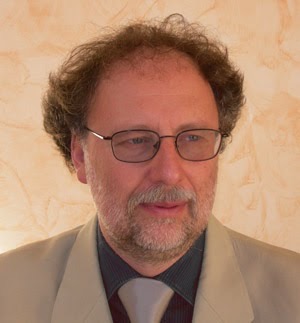 Paolo de Bernardis合作论文数Dipartimento di Fisica, Sapienza Università di Roma111
 Paolo Natoli合作论文数Dipartimento di Fisica e Scienze della Terra, Università degli Studi di Ferrara111D. Paoletti合作论文数110
 Sabino Matarrese合作论文数Department of Physics and Astronomy, University of Padua106
 Alessandro Gruppuso合作论文数INAF OAS Bologna105
 R. Belén Barreiro合作论文数Instituto de Física de Cantabria, Joint Centre with the combined effort of Spanish National Research Council and University of Cantabria104
 Francesco Piacentini合作论文数Dipartimento di Fisica, Sapienza - Università di Roma104
 Gianluca Morgante合作论文数104Luca Pagano合作论文数Physics Department;Universita ' di Roma;Physics Department, Universita ' di Roma103
 Maurizio Tomasi合作论文数Laboratorio di Strumentazione Spaziale, Dipartimento di Fisica Aldo Pontremoli, Università degli Studi di Milano103
 Carlo Baccigalupi合作论文数SISSA102Aj Banday合作论文数101
 Mathieu Remazeilles合作论文数Consejo Superior de Investigaciones Científicas, Institute of Physics of Cantabria, University of Cantabria101Eric Hivon合作论文数Institut d'Astrophysique de Paris, CNRS Délégation Paris B100
 Douglas Scott合作论文数Department of Physics & Astronomy, The University of British Columbia100
 Jonathan Aumont合作论文数Institut de Recherche en Astrophysique et Planétologie100M. Liguori合作论文数99L. A. Montier合作论文数99
 Hannu Kurki-Suonio合作论文数Division of Particle Physics and Astrophysics, Department of Physics, Faculty of Science, University of Helsinki;Helsinki Institute of Physics, Faculty of Science, University of Helsinki98
 Massimiliano Lattanzi合作论文数INFN98Carlo Burigana合作论文数INAF97
 Gianfranco De Zotti合作论文数INAF - Astronomical Observatory of Padova96
 Jussi Valiviita合作论文数Dept Phys, Univ Helsinki;Helsinki Inst Phys, Univ Helsinki;Univ Helsinki, Univ Helsinki96
 François Bouchet合作论文数Laboratoire d'Informatique de Paris 6, Sorbonne Université;CNRS;Institut d'Astrophysique de Paris96
 Martin Kunz合作论文数Institute for Theoretical Physics, University of Geneva;Department of Theoretical Physics, University of Geneva95
 Reijo Keskitalo合作论文数Lawrence Berkeley National Laboratory94
 Francesco Cuttaia合作论文数INAF-IASF94
 Erminia Calabrese合作论文数94
 Diego Herranz Muñoz合作论文数Universidad de Cantabria;Instituto de Física de Cantabria93
 Andrea Zacchei合作论文数Osservatorio Astronomico di Trieste92
 Aniello Mennella合作论文数Universitá di Milano;Dipartimento di Fisica;Dipartimento di Fisica, Universitá di Milano92
 Jacques Delabrouille合作论文数Astronomy Department, Shanghai Jiao Tong University;Laboratoire AstroParticule et Cosmologie92
 Hans Kristian Eriksen合作论文数Institute of Theoretical Astrophysics, The Faculty of Mathematics and Natural Sciences, University of Oslo91
 Enrico Franceschi合作论文数Osservatorio di Astrofisica e Scienza dello Spazio di Bologna, Istituto Nazionale di Astrofisica91
 M. Tristram合作论文数College de France90
 Samuele Galeotta合作论文数Osservatorio Astronomico di Trieste, Istituto Nazionale di Astrofisica90A. Lasenby合作论文数89
 Francois Levrier合作论文数89
 P. B. Lilje合作论文数89
 Andrea Zonca合作论文数San Diego Supercomputer Center, University of California San Diego89
 Julian Borrill合作论文数Computational Cosmology Center, Lawrence Berkeley National Laboratory;Space Sciences Laboratory, UC Berkeley89M. Reinecke合作论文数88
 Alessandro Melchiorri合作论文数Dipartimento di Fisica, Sapienza Universita di Roma88
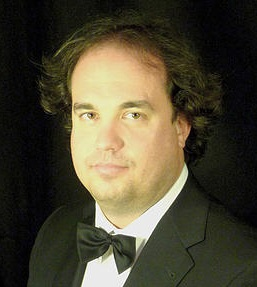 Xavier Dupac合作论文数European Space Agency88
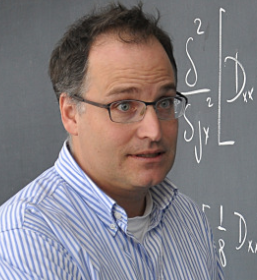 Torsten Enßlin合作论文数Max-Planck-Institut für Astrophysik;The International Max Planck Research School on Astrophysics, Ludwig Maximilians University88




