Summary: Purpose: We describe a family with hereditary spastic paraparesis (HSP) in which 4 of 6 affected members also have epilepsy. Methods: All family members were examined by 2 neurologists. Four affected and 3 unaffected family members had EEG recordings. Four affected members were investigated for other causes of spastic paraparesis and epilepsy. Results: Epileptic symptoms varied among family members: 1 had complex partial seizures, another had focal myoclonic epilepsy, and 2 had simple partial seizures secondarily generalized. All 4 had clinical or EEG evidence to support a focal origin for the epilepsy, and 2 had photoparoxysal responses on EEG. Symptoms were more severe and occurred earlier in the younger generation, suggesting genetic anticipation in this family. The onset of epilepsy developed simultaneously with, or ≤18 years before, onset of gait disturbance. Three unaffected family members had normal EEGs. Conclusions: The association of HSP and epilepsy should no longer be assumed to be fortuitous.
Acute adrenal crisis in patients with unrecognized chronic adrenocortical failure is difficult to diagnose and potentially fatal. We describe 2 patients with acute adrenal crisis whose diagnoses were hindered because of concomitant glucocorticoid treatment. Acute adrenal insufficiency is primarily a state of mineralocorticoid deficiency. Prednisolone and prednisone, the most frequently prescribed anti-inflammatory corticosteroid agents, have minimal mineralocorticoid activity. Several conditions that may be treated with pharmacological glucocorticoids are associated with an increased risk of Addison disease. An acute adrenal crisis, against which concurrent glucocorticoid therapy does not confer adequate protection, may develop in such patients.
Employment, marital, educational and social status in epileptic patients attending a seizure clinic were assessed. A total of 343 patients were evaluated. The social group, employment and marital status did not compare favourably with the overall population. Forty per cent of patients belonged to social group five and six compared with 14% of the population. Thirty three per cent of male patients aged 20 years or more were married, compared with 65% in the community. The corresponding statistics for females were 46% and 73% respectively. The male unemployment rate of 34% compared poorly with the unemployment rate of 13% for the period during which the study data was collected. Patients with lower educational attainments were significantly more likely to have poor seizure control (P less than 0.001), or required polypharmacy. A similar situation was found between seizure control and social status, with poor seizure control occurring in patients in social group six.
The dose of vitamin D3 required to maintain normal serum 25-hydroxyvitamin D levels in epileptic patients was evaluated in a prospective study. Patients were divided into two groups, comprising 14 institutionalized and 18 non-institutionalized subjects; they were taking carbamazepine, phenytoin and phenobarbitone, alone or in combination. The study was divided into a dose titration stage and a further period of assessment on a fixed dose after attainment of normal serum 25-hydroxyvitamin D levels. Seventeen of the 18 non-institutionalized patients achieved normal levels over a period of 12 months; the remaining patient became normal after 15 months. The dose required to achieve normal levels ranged from 400 to 4000 IU/day; three patients required less than 2400 IU vitamin D3, 12 required 2400 IU and three required greater than 2400 IU. All institutionalized patients achieved normal levels over a period of 12 months; six patients required less than 2400 IU, six required 2400 IU and two required greater than 2400 IU vitamin D3. Raised alkaline phosphatase levels occurred in 11 patients, and reverted to normal in six patients during the initial return of 25-hydroxyvitamin D levels to normal. During the second 12 months, when patients were taking a fixed dose of vitamin D3, alkaline phosphatase increased in five patients who had achieved normal levels. During this phase normal 25-hydroxyvitamin D levels were not maintained in five patients. There was a significant seasonal variation of 25-hydroxyvitamin D levels institutionalized patients, being highest in June and lowest in December. Our findings show that while there was a wide range in the dose required to achieve normal serum 25-hydroxyvitamin D levels--between 400 and 4000 IU/day--78 per cent of patients responded to a dose of 2400 IU/day.
Summary: The incidence of reduced bilirubin levels in 168 outpatients with epilepsy, compared with levels in 69 controls, has been investigated. Highly significant (p < 0.001) reductions in average bilirubin levels were noted for carbamazepine (CBZ), phenytoin (PUT), phenobarbi‐tal (PB), and multiple drug groups. A marginally significant (p < 0.05) reduction in bilirubin levels occurred in patients treated with valproate (VPA) which, unlike the other drugs, has not been shown to induce hepatic enzymes.RÉSUMÉL'incidence d'un abaissement des taux sanguins de bilirubine chez 168 consultants épileptiques a été compareée avec les taux observés chez 69 sujets contrôles. Les taux moyens de Bilirubine étaient trés significativement abaissés (p < 0.001) parmi les patients traités par carbamazépine, phénytoine, phénobarbital et polythérapie. line diminution à peine significative (p < 0.05) des taux de Bilirubine a été constatée chez les patients traités par valproate, médicament qui, à l'inverse des autres, n'est pas in‐ducteur enzymatique.RESUMENSe ha investigado la incidencia de los niveles de bilirrubina reducida en 168 pacientes con epilepsyía compareándolos con 69 controles. Se observaron reducciones áltamente significativas (p < 0.01) en la bilirrubina media, en los tratamientos con carbam‐acepina, fenitoina, fenobarbital o múltiples drogas. Se encon‐traron reducciones marginalmente significativas (p < 0.05) de los niveles de bilirrubina en pacientes tratados con valproate el cual, contrariamente a las otras medicaciones, no ha mostrado ca‐pacidad de inducir enzimas hepáticas.ZUSAMMENFASSUNGDie Häufigkeit verminderter Bilirubinwerte bei 168 ambu‐lanten Patienten mit Epilepsie und von 69 Kontrollpersonen wurde untersucht. Eine hochsignifikante Reduktion der durchschnittlichen Bilirubinwerte (p < 0.001), wurde bei Car‐bamazepin, Phenytoin, Phaenobarbital und Kombinationen ge‐funden. Als gering signifikant (p < 0.05) wurden erniedrigte Bilirubinwerte bei Valproattherapie festgestellt. Im Gegensatz zu den anderen Substanzen scheint Valproat keine Enzyminduktion zu bewirken.
Summary: : It is now established that the overall prognosis for epilepsy is good and that remission will occur in at least 75% of patients following adequate treatment with monotherapy. Patients who fail to respond to monotherapy, who are not suitable for surgery, and who continue to have frequent seizures may have to be considered for an alternative drug regimen. A review of the literature indicates that complete seizure control with adjunctive treatment is rare, but improved seizure control can be obtained in up to 40% of patients. In a study of clobazam as adjunctive treatment, 60% (N = 20) of our patients responded to treatment initially and 33% maintained an improvement over an 18‐month period. In 31 patients who failed to respond to carbamazepine as monotherapy, primidone (N = 16) or valproate (N = 15) were prescribed as adjunctive treatment. One patient obtained complete freedom from seizures and 14 (45%) had a > 50% reduction in seizure frequency. Suggested indications for the use of additive treatment in epilepsy are discussed.
We discontinued anticonvulsant drugs in 92 patients who had been free of seizures during two years of treatment with a single drug. All the patients had epilepsy that had previously been untreated, and had been randomly assigned to receive carbamazepine, phenytoin, or sodium valproate. Thirty-one patients relapsed, and 61 remained free of seizures. The mean duration of the follow-up in the patients remaining free of seizures was 35 months (range, 6 to 62). There was no significant difference between the relapse rate among adults (35 percent) and that among children (31 percent). Our results suggest that the number of seizures a patient had before control was achieved, the number of drugs tried as single-drug therapy, and the type of treatment withdrawn all influenced the outcome. Among the various types of seizures, complex partial seizures with secondary generalization carried the worst prognosis. In comparison, the risk of relapse was 65 percent lower in patients with generalized seizures and 97 percent lower in patients with complex or simple partial seizures in the absence of secondary generalized attacks. Among the four electroencephalographic classes, class 4 (abnormal before treatment and unchanged before withdrawal) carried the worst prognosis. The risk of relapse was 94 to 99 percent lower in patients in the other three electroencephalographic classes. Among the three anticonvulsants, withdrawal of sodium valproate carried the worst prognosis. In comparison, the odds of relapsing were 28 percent lower after withdrawal of phenytoin and 85 percent lower after withdrawal of carbamazepine. We conclude that withdrawal of anticonvulsant medication should be considered in patients free of seizures for two years.
In a survey of the red cell folate status of 200 patients with epilepsy, compared to 72 controls, we found that median red cell folate levels were reduced significantly in patients treated with phenytoin (p less than 0.01) or carbamazepine (p less than 0.001) alone. Patients taking more than one drug had reduced levels also (p less than 0.001), but in patients treated with sodium valproate alone there was no significant decrease in red cell folate levels compared to controls. Twenty-two per cent of patients in the group taking more than one drug had reduced levels of red cell folate compared with 17 per cent of those taking carbamazepine alone, 13 per cent of those taking phenytoin only, and 9 per cent of those taking sodium valproate only. Dietary folate intake was significantly reduced in all the patient groups compared with controls (p less than 0.001 for the carbamazepine and phenytoin groups, p less than 0.01 for the polypharmacy and sodium valproate groups); a significant correlation between red cell folate levels and dietary folate was not established. Significant negative relationships were established between carbamazepine dose (r = -0.35, p less than 0.01) or serum level (r = -0.27, p less than 0.05) and red cell folate level in patients on one drug only. The correlation between dose or serum level of phenytoin and red cell folate level was also negative but did not reach significance. Our findings show that all anticonvulsant drugs interfere with folate metabolism.(ABSTRACT TRUNCATED AT 250 WORDS)
A case of idiopathic hypoparathyroidism associated with epilepsy, psychosis and elevated creatinine kinase is presented. Achievement of normocalcaemia was associated with a positive clinical response. In the evaluation of idiopathic hypoparathyroidism, it is important to be aware of its variable clinical presentation.
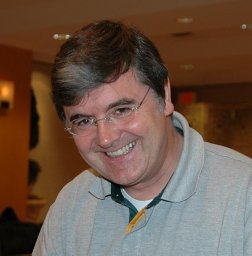 Timothy Goggin合作论文数Regional Hospital Cork24
 Michael Hutchinson合作论文数St. Vincent's University Hospital;School of Medicine, University College Dublin14
 M Crowley合作论文数11E. A. Martin合作论文数11M Baker合作论文数9Michael P Feely合作论文数9Hugh Staunton合作论文数9J. Phillips合作论文数9Dp Byrnes合作论文数8C. Keohane合作论文数8William J Gray合作论文数8Sf Murphy合作论文数7
 James Patrick Phillips合作论文数Sch Med & Hlth Sci, George Washington Univ7Victor Patterson合作论文数Department of Neurology, Ulster Hospital7
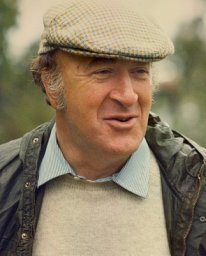 P. O. Behan合作论文数Institute of Neurological Sciences, Southern General Hospital. Glasgow7Gerald Curzon合作论文数Department of Neurochemistry, Institute of Neurology, Queen Square, London WC1N 3BG, U.K.7
 Alan Thompson合作论文数Department of Neuroinflammation, Queens Square Institute of Neurology, Faculty of Brain Sciences, University College London6
 Conleth Feighery合作论文数Department of Immunology, St. James's Hospital;Department of Immunology, Trinity College Dublin6J. J. Dinn合作论文数6S. A. O’Laoire合作论文数6B O'Moore合作论文数5H Gough合作论文数5Dj Murnaghan合作论文数5J. Murphy合作论文数5Rose Anne Kenny合作论文数5Davis Coakley合作论文数5J. A. O’Dwyer合作论文数5W. M. H. Behan合作论文数5Brian O Neill合作论文数Department of Neurology, Cork Regonal Hospital5BD KANTAMANENI合作论文数5
 Stanley A Hawkins合作论文数5J. Aidan Twomey合作论文数4GF KAAR合作论文数4Tf Fannin合作论文数4
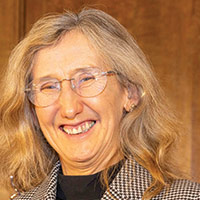 Orla Hardiman合作论文数Trinity College Institute of Neuroscience, Trinity College Dublin, The University of Dublin;RCSI Clinical Research Centre, Royal College of Surgeons in Ireland4P. Sullivan合作论文数4E. Gaffney合作论文数4P. Carey合作论文数4A. Bissessar合作论文数4Barry Bresnihan合作论文数4
 Peter James Kearney合作论文数4
 Michael Farrell合作论文数Department of Neuropathology, Beaumont Hospital Dublin4T. A. Mcneill合作论文数4John Ludgate合作论文数4N Macdermott合作论文数4Ingrid V Allen合作论文数4E. A. Bissessar合作论文数4J. Moran合作论文数3H Mcphillips合作论文数3




