Energetic particle populations are ubiquitous throughout the Universe. In our solar system, the most prominent sources of energetic particles are solar flares or collisionless shocks often driven by huge eruptions of magnetised plasma called coronal mass ejections (CMEs). Remotely, low energy electrons from the Sun can be observed as solar radio bursts that are produced by accelerated electron beams undergoing beam-plasma interactions. There are still many open questions on the generation of solar energetic particles (SEP): how and where are SEPs accelerated during solar flares and CMEs and how they escape the solar atmosphere? Another important question is: what is the link between the solar radio bursts and the observed SEPs at spacecraft? SKA can provide high-resolution radio images combined with spectroscopic observations to determine the acceleration time, trajectory and escape of low energy electrons from the solar corona. The synergy between SKA and current space missions will help investigate solar activity and energetic particles across a wide range of wavelengths and particle energies. Particle data from spacecraft can be used to make a connection between radio bursts and SEPs by comparing SEP inferred injection times and energies to those of electrons generating radio bursts at the Sun. Radio observations in turn can be used to distinguish between flare and shock acceleration since different radio bursts pinpoint towards different energetic processes. Since the acceleration region and origin of SEPs of various properties is still largely debated, radio observations have the potential to be an invaluable tool in unraveling these processes.
The Sun is the most efficient particle accelerator in the solar system, capable of accelerating particles such as electrons and protons to relativistic energies. Solar Energetic Particles (SEPs) are known to be accelerated both at solar flare reconnection sites and by shocks driven by coronal mass ejections. One way to distinguish between these two SEP acceleration mechanisms is through their energy spectra, either fluence or peak intensity.While the spectral breaks commonly observed in solar energetic electron (SEE) spectra may represent signatures of the acceleration process, several transport-related effects have also been proposed as their origin. In this study, we analyse the energy spectra of intense SEE events measured by Solar Orbiter’s Energetic Particle Detector (EPD) between December 2020 and December 2022. EPD’s unprecedented energy resolution enables us to identify spectral features with greater detail than previously possible.We investigate the shape of SEE spectra by fitting them with a range of mathematical models. Our results are compared with previous studies, and we explore possible connections to transport-related effects. In addition, we examine potential correlations between spectral features and parameters such as radial distance or properties of the associated solar events.Our analysis reveals four distinct spectral shapes: single power-law, double power-law, and two types of triple power-law spectra, namely knee–knee (KK) and ankle–knee (AK) forms. No significant correlations with radial distance are found. However, the observed spectral shapes exhibit an ordering with respect to the longitudinal separation between the spacecraft and the associated solar flare.We conclude that multiple processes likely contribute to shaping SEE spectra. Our results suggest that the two breaks observed in KK triple power-law spectra arise from distinct physical effects, namely Langmuir-wave generation and pitch-angle scattering. Furthermore, the break in double power-law spectra may represent a merger of the first and second breaks seen in KK triple power-law spectra.
Solar eruptions comprise of a multitude of phenomena such as flares, coronal mass ejections (CMEs), large-scale coronal waves, radio bursts, and energetic particles traveling through interplanetary space. These phenomena are observed with a variety of instrumentation, including remote sensing and in-situ detectors. Obtaining a global understanding of a solar eruption often requires the analysis of various of these different datasets, including a multitude of analysis and modeling tools and a wide range of expertise. Usually, such a comprehensive analysis can only be achieved by a skilled and broad team. The Energetic Solar Eruptions: Data and Analysis Tools (SOLER) project aims at creating a comprehensive analysis platform for the study of solar eruptions that allows a single user to easily apply analysis methods addressing various counterparts of the solar event. Therefore, each partner of the project developed Python-based software, including interfaces in the form of Jupyter Notebooks, which provides application examples and concise step-to-step documentation. In this paper we introduce the comprehensive solar-eruption-analysis infrastructure developed within the SOLER project. We explain where to find the software, how to use it, and give dedicated use-case examples of how to employ selected tools in a combined manner.
The BepiColombo Environment Radiation Monitor (BERM) is a housekeeping instrument onboard the BepiColombo mission, capable of measuring electron, proton, and heavy-ion fluxes. Due to its quasi-continuous data acquisition throughout all mission phases, BERM provides valuable contributions to both mission operations and scientific analysis of the space radiation environment. This study presents the calibration methodology applied to the electron and proton channels of BERM, along with its validation and cross-calibration with the solar intensity and X-ray spectrometer (SIXS), also onboard of BepiColombo mission. The bow–tie method was employed to calibrate each channel by determining its effective energy and geometric factor enabling the conversion of count rates into physical fluxes. The calibration validation with SIXS data of BERM proton channels P1 to P5 result in a mean deviation in the flux lower than 6
Context. The energy spectra of energetic particles offer valuable insights into particle acceleration processes. While the commonly observed spectral breaks in solar energetic electron (SEE) spectra could serve as fingerprints of the acceleration process, several transport-related effects have been proposed to be responsible as well. Here, we analyse the energy spectra of intense SEE events measured with Solar Orbiter’s Energetic Particle Detector (EPD) between December 2020 and December 2022. Aims. We investigate the shape of SEE spectra by fitting them with various mathematical models. We compare our results with previous studies and explore possible links to transport-related effects. We aim to identify potential correlations between spectral features and meaningful parameters, such as the radial distance, or the properties of associated solar events. Methods. We determined the background-subtracted peak-intensity spectra as observed by EPD, accounting for velocity dispersion. We fit the spectra of STEP and EPT with various mathematical models, using an automated method that chooses the best possible fit. Results. We found four different spectral shapes in our analysis: single power law, double power law and two types of triple power law: a knee-knee (KK) and an ankle-knee (AK) triple power law. No significant correlations with radial distance were identified; although the observed spectral shapes display an ordering with the longitudinal separation between the spacecraft and the associated solar flare. We also observed a correlation between the spectral index in the intermediate energy range at 70 keV and the strength of the associated solar flare. The correlation disappears at lower and higher energies, suggesting a stronger influence of transport effects at those energies. Conclusions. We conclude that multiple processes are likely involved in shaping SEE spectra. Our results suggest that the two breaks of the KK triple power law spectra arise from distinct effects, Langmuir-wave generation, and pitch-angle scattering, respectively. Our results also suggest that the break in the double power laws could represent a merger between the first and second breaks of KK triple power laws.
We present a study that combines remote-sensing and in situ observations of coronal mass ejections (CMEs) interacting with the nearby heliospheric current sheet (HCS). The sequence of eruptive events under study culminates in the largest directly observed flare of solar cycle 25 on 2024 October 3, producing a fast halo CME. Their source region can be linked to a so-called nested active region (or active longitude) that persisted over several solar rotations. Such long-lived regions reflect deep-seated magnetic structures that shape the global magnetic field configuration. By applying the drag-based CME propagation model, we connect the near-Sun observations from several CMEs during that activity period with in situ measurements. While one of the CMEs propagated on the opposite side of the HCS from Earth, and therefore did not produce in situ signatures near Earth, we detect, over the period 2024 October 5-10, a complex of HCS and CME structures propagating together with a shock ahead of them. The HCS seems to be locally replaced by the CME signatures, leading to a long-duration sector reversal of more than 48 hr. This event highlights the intrinsic connection between solar surface structures, the global magnetic field, and the evolution of complex eruptive events.
The role of large-scale pre-existing interplanetary structures, including preceding coronal mass ejections (CMEs) and stream interaction regions (SIRs), in shaping the shock acceleration environment for energetic electrons remains not fully understood. In this study, we investigate nine interplanetary shocks observed by the Solar Terrestrial Relations Observatory (STEREO) that are associated with significant MeV electron enhancements, as such enhancements are rarely observed at interplanetary shocks. We combine remote-sensing observations, drag-based modeling, and in-situ measurements to analyze the shock propagation through pre-existing interplanetary structures. Eight of the nine events are associated with a preceding slow or intermediate-speed CME, while six shocks are in-situ observed propagating within preceding ICMEs, indicating that large-scale upstream trapping structures are a common feature of these events. Further analysis identifies three distinct scenarios associated with enhanced electron acceleration: shocks propagating through preceding ICMEs, shock-SIR interactions, and direct injection of flare-accelerated electrons into SIRs. As a representative shock-in-ICME event, the 2012 January 29 low-β, quasi-perpendicular shock (θ_Bn∼87^∘) is further investigated using observations together with one-dimensional Monte Carlo test-particle simulations of a shock propagating into a large-scale upstream magnetic loop. The simulation suggests that the upstream loop prolongs electron residence near the shock and substantially enhances acceleration efficiency. These results demonstrate that large-scale interplanetary structures can precondition the upstream magnetic environment, providing favorable conditions for prolonged electron residence and efficient shock acceleration.
Solar energetic particles (SEPs) are highly energetic charged particles that have their origin of acceleration in strong space-weather driving phenomena that the Sun produces, e.g., solar flares and coronal mass ejections. These particles pose a radiation hazard to both technological equipment and living organisms in space, which is why the nature of these events is an important subject of study in the modern age where space technology is being applied more and more every day.An SEP event is the result of a burst of SEPs arriving at an observer. Especially the onset time of an SEP event at varying energies is a key piece of information in relating the in-situ particle measurements to the remote-sensing observations of solar eruptions. Accurate knowledge of the onset time is an indispensable requirement for identifying the acceleration mechanisms and the source of the energetic particles. What traditional methods lack, however, is the assessment of the uncertainty related to the onset time.Our method employs a unique combination of a statistical quality control scheme, Poisson-CUSUM, coupled with statistical bootstrapping. By choosing random samples from the background intensity preceding an SEP event and varying the integration time of the data, the method is able to produce a set of distributions of possible onset times. From this set of distributions we extract the most probable onset time and uncertainty intervals relating to this set of distributions. The uncertainty of onset times in a range of different energies is also in a direct connection to the uncertainty of a derived path length and inferred solar injection time of the particles, two extremely important pieces of information that velocity dispersion analysis yields, which is yet another motivator behind developing the method presented hereThis research has received funding from the European Union’s Horizon 2020 research and innovation programme under grant agreement No 101004159 (SERPENTINE).
On 13 March 2023, when the Parker Solar Probe was situated on the far side of the Sun as seen from Earth, a large solar eruption took place creating a strong solar energetic particle (SEP) event observed by multiple spacecraft (S/C). The energetic event was observed at six well-separated locations: Parker Solar Probe, Solar Orbiter, BepiColombo, STEREO A, near-Earth S/C, and MAVEN. An in-situ shock crossing and a related energetic storm particle (ESP) event were observed at all inner-heliospheric S/C, suggesting that the interplanetary coronal mass ejection (CME)-driven shock extended all around the Sun. However, the solar event was accompanied by a series of pre-event CMEs. We aim to characterize this extreme widespread SEP event and to provide an explanation for the unusual observation of a circumsolar interplanetary shock and corresponding circumsolar ESP event. We analyse data from seven space missions to characterize the solar eruption at the Sun, the energetic particle event, and the interplanetary context at each observer location as well as the magnetic connectivity of each observer to the Sun. We employ magnetohydrodynamic simulations of the solar wind in which we inject various CMEs that were launched before as well as contemporaneously with the solar eruption under study. In particular, we test two different scenarios that could have produced the observed global ESP event: 1) a single circumsolar blast-wave-like shock launched by the associated solar eruption, and 2) the combination of multiple CMEs driving shocks into different directions. By comparing the simulations of the two scenarios with observations we find that both settings are able to explain the observations. However, the blast-wave scenario performs slightly better in terms of the predicted shock arrival times at the various observers.
Solar energetic particle (SEP) events, particularly those of significant magnitude, are commonly associated with fast and wide coronal mass ejections (CMEs). These CMEs generate and drive shock waves in the solar corona, proving to be highly efficient in particle acceleration to high energies. Understanding the intricate connections between shock wave properties and SEP characteristics is crucial for advancing Space Weather forecasting.To achieve this objective, we employ a methodology to analyze a SEP event involving a coronal shock wave, observed by several spacecraft well distributed around the Sun. Initially, we reconstruct the 3D ellipsoidal shape of the expanding shock, enabling the extraction of its geometry and kinematic properties. Using magneto-hydrodynamics (MHD) cubes, we then reconstruct the magnetic connectivity of spacecrafts and retrieve the MHD properties of the shock wave at the intersections with these magnetic field lines. The temporal correlations between the shock properties and the SEPs recorded by individual spacecraft can finally be compared.Through the application of this methodology, we identify enhanced correlation coefficients between SEPs and shock parameters, such as speed, Alfvénic Mach Number, and theta_BN (the angle between the shock's normal and the magnetic field line). This work is funded by the H2020 SERPENTINE project.
Solar energetic particles (SEPs) are high-energy charged particles associated with solar eruptions. They constitute a major component of the heliospheric radiation environment, presenting a key space weather hazard. SEPs are accelerated at solar flares and at shock waves driven by coronal mass ejections, but the relative importance of these sources is not fully understood — particularly in the case of electrons. In addition to the underlying acceleration mechanisms, the evolution of a SEP event is highly influenced by transport in the interplanetary space. Anisotropy of the intensity-pitch-angle distribution is an important quantity that can be used to infer information about these effects, especially when multi-spacecraft observations are available. We investigate the first-order anisotropy of electrons and protons in SEP events of the solar cycle 25 using observations from multiple spacecraft of the inner-heliospheric fleet. We pay special attention to the methodology of determining anisotropy and its uncertainty from four-sector telescope (SOLO EPD/EPT and STEREO SEPT) measurements, in which pitch-angle coverage of the telescopes significantly influences the observed anisotropy. We present our methodology and the preliminary results of our statistical analysis, where we study the peaks and durations of anisotropic periods in high-energy electron and proton events as a function of particle energy and longitudinal separation.
Collisionless fast-magnetosonic shocks are often treated as smooth, planar boundaries, yet observations point to organized corrugation of the shock surface. A plausible driver is upstream turbulence. Broadband fluctuations arriving at the front can continually wrinkle it, changing the local shock geometry and, in turn, conditions for particle injection and radiation. We develop a linear-MHD formulation that treats the shock as a moving interface rather than a fixed boundary. In this approach the shock response can be summarized by an effective impedance determined by the Rankine-Hugoniot base state and the shock geometry, while the upstream turbulence enters only through its statistics. This provides a practical mapping from an assumed incident spectrum to the corrugation amplitude, its drift along the surface, and a coherence scale set by weak damping or leakage. The response is largest when the transmitted downstream fast mode propagates nearly parallel to the shock in the shock frame, which produces a Lorentzian-type enhancement controlled by the downstream normal group speed. We examine how compression, plasma β, and obliquity affect these corrugation properties and discuss implications for fine structure in heliospheric and supernova-remnant shock emission.
We report on multi-spacecraft measurements of a solar energetic particle (SEP) event that occurred on 13 March 2023. The Parker Solar Probe (PSP) mission was situated on the far side of the Sun as seen from Earth at a radial distance of only 49 solar radii and observed a very strong event including the associated CME and its shock passing over the spacecraft only four hours after the solar eruption. Solar Orbiter, BepiColombo, STEREO A, near-Earth spacecraft, and MAVEN at Mars were all situated within 50 degrees in longitude, and observed the event as well, proving its widespread character. Clear signatures of shock-driven energetic storm particle events were present at Solar Orbiter, STEREO A, and near-Earth spacecraft suggesting that the interplanetary CME-driven shock had a longitudinal extent of about 160 degrees. However, the solar event was accompanied by a series of pre-event CMEs and comparison with ENLIL simulation results suggest that the ESP events were associated with shocks driven by other CMEs. This scenario of particle re-acceleration at different pre-event-associated shocks, provides a new scenario for the generation of widespread SEP events.
On 2022 January 20, the Energetic Particle Detector on board Solar Orbiter detected a solar energetic particle (SEP) event showing unusual sunward-directed fluxes. Near-Earth spacecraft separated by 17° in longitude from Solar Orbiter measured classic antisunward-directed fluxes. Parker Solar Probe and MAVEN, separated by 130° and 216° respectively from Solar Orbiter, observed the particle event as well, suggesting a widespread event of nearly 360° in the heliosphere. The SEP event was associated with an M5-class X-ray flare and a CME with a speed of 1400 km/s. The energetic particles reached 3 MeV and 100 MeV energies for electrons and protons, respectively.The aim of this study is to disentangle how the particles are able to spread throughout the heliosphere and how the local heliospheric conditions affect the acceleration and transport of the particles at different spacecraft locations. This work presents the observations and analyses that lead to a scenario in which the solar source injected energetic particles into the solar wind and within a preceding interplanetary coronal mass ejection (ICME) that was already present in the heliosphere at the time of the SEP event onset. In particular, Solar Orbiter measured the particles injected along the longest leg of an ICME still connected to the Sun at the time of the particle release.
Particle acceleration and radiation are fundamental cosmic processes that significantly contribute to the universe’s energy density, driven by phenomena ranging from solar flares to supernova explosions. Shock waves, prevalent across various spatial scales, play a key role in converting kinetic energy into plasma heating and particle acceleration. Recent advancements from missions such as the Parker Solar Probe (PSP) have provided unprecedented insights into the dynamics of shock waves within the heliosphere, thereby enhancing our understanding of these critical energy conversion mechanisms.In this talk, I will present findings from two recent studies that leverage the PSP’s unique proximity to the Sun and its advanced, high-fidelity instrumentation. First, we analyzed one of the fastest shocks ever observed on March 13, 2023, revealing the efficient acceleration of electrons up to and exceeding 6 MeV and the collective acceleration of ions from the thermal solar wind. Second, we made the surprising discovery of synchrotron radiation emanating from ultra-relativistic electrons in both a quasi-parallel and a quasi-perpendicular shock, with the quasi-parallel shock exhibiting significantly higher radiation intensities due to more effective electron acceleration. These results are consistent not just with theoretical models of strong cosmic shocks, but also observations. This offers an unprecedented opportunity to bridge in situ heliospheric observations with remote observations of phenomena such as supernova remnants.
Fast Coronal Mass Ejections (CMEs) gather compressed and heated solar wind ahead of them to for turbulent sheath regions. In this presentation we will first demonstrate with recent examples (using e.g. Parker Solar Probe and Solar Orbiter measurements) and the results from a statistical analysis (the ACE spacecraft data) that CME-driven sheath regions can significantly contribute to the acceleration of charged particles in interplanetary space, independent from the effect of the leading shock wave. Then, we will present the key characteristics of sheath regions, e.g., variations of magnetic fied fluctuation and key turbulent properties across the sheath, that can have the key importance for the particle energization.
Solar energetic particle (SEP) events are major outbursts of energetic charged particle radiation from the Sun. These events are related to solar flares and fast coronal mass ejections (CMEs). Flares are presumed to accelerate particles in magnetic reconnection processes, whereas fast (speeds > 1000 km s–1) CMEs drive shock waves through the corona that are known to be able to accelerate particles. Electron acceleration has traditionally been ascribed to reconnection in flares whereas proton acceleration is believed to be efficient in CME-driven shocks. Recent observational evidence [1], however, suggests that shocks may be important in electron acceleration as well. Almost all major eruptions are related to both flares and CMEs so the association of the accelerated particles to these eruptive phenomena is often subject to debate. Using novel spacecraft observations of strong SEP events detected in solar cycle 25, we aim at identifying the parent acceleration region of the observed electron and proton events.We have analyzed a set of 45 SEP events between Nov 2020 and May 2023 using data from multiple spacecraft including Solar Orbiter, near-Earth spacecraft (SOHO and Wind), STEREO-A and BepiColombo. We make use of peak intensities of >25-MeV protons and ~100 keV and ~1 MeV electrons and perform correlation studies of these peak intensities with each other as well as with the associated flare intensity. We separate the events into those that are well-connected (angular separation ≤ 35°) or poorly-connected (angular separation > 35°) to the flare by the interplanetary magnetic field.We find significant correlations between electron and proton peak intensities. While events detected by poorly-connected observers show a single population of events, consistent with the idea that these particles are all accelerated by the spatially-extended CME-driven shock, events observed in well-connected regions show two populations: One population has higher proton peak intensities that correlate with electron peak intensities similarly to the poorly-connected events. These are most likely shock associated. The other population has low proton intensities that are less well correlated with electron peak intensities. This population is suggested to show a dominant contribution of the flare.References:[1] Dresing, N. Kouloumvakos, A., Vainio, R., Rouillard, A., Astrophys. J. Lett., 925, L2
Predictions of the intensities of solar particle events are often fraught with uncertainties. Insufficient knowledge and understanding of the solar sources of the particles, and the conditions in the corona and in the inner heliosphere, as well as magnetic connectivity, have been limiting factors in making further progress. This presentation covers a study done by one of the Work Packages of the SERPENTINE project, and is based on the analysis of lists prepared by two other work packages of the same project, and logically consists of two parts. In the first part we performed a statistical analysis of a list of 45 multi-spacecraft events in solar cycle 25 observed by five spacecraft located in the inner Heliosphere (Solar Orbiter, Parker Solar Probe, Stereo A, Bepi Colombo), and one located at 1 AU close to the Earth (SOHO or Wind). The list, while prepared with a focus on the detection of protons above 25 MeV by two or more spacecraft, contains also information about electron observations around 100 keV and 1 MeV, respectively. Aiming to investigate the processes which are responsible for spreading energetic particles in longitude and latitude, and to estimate the importance of perpendicular diffusion in the latitudinal direction, we considered, together with other parameters, not only the longitudinal distances to the source, but also the differences in the total angle. In this part of our study we used methods such as correlation analysis and principal component analysis, and applied them to the list as a whole, as well as to different types of events. For example, we found that in the case of narrow-spread events perpendicular diffusion is sufficient to explain the spreading of particles from the solar source into the heliosphere, while in the case of wide-spread events an additional acceleration source is needed. We also evaluated the role of the speeds and sizes of the associated coronal mass ejections, as well as features of EUV waves appearing in the events, and relate different types of microwave (radio) emission to different groups of events. In the second part of this work we performed a statistical analysis of a list of 61 interplanetary shocks, observed by Solar Orbiter. By using a superposed epoch analysis, we built a statistical picture of ion time profiles around the shock front in several energy ranges. We also investigated which shock parameters are more important for particle energization by propagating interplanetary shocks, particularly in the case of an overlap in these lists.This study has received funding from the European Union’s Horizon 2020 research and innovation program under grant agreement No. 101004159 (SERPENTINE).
Context. Solar energetic particles in the heliosphere are produced by flaring processes on the Sun or by shocks driven by coronal mass ejections. These particles are regularly detected remotely as electromagnetic radiation (X-rays or radio emission), which they generate through various processes, or in situ by spacecraft monitoring the Sun and the heliosphere. Aims. Our aim is to combine remote-sensing and in situ observations of energetic electrons to determine the origin and acceleration mechanism of these particles. Methods. Here we investigate the acceleration location, escape, and propagation directions of electron beams producing radio bursts observed with the Low Frequency Array (LOFAR), hard X-ray (HXR) emission, and in situ electrons observed at Solar Orbiter on 3 October 2023. These observations are combined with a three-dimensional (3D) representation of the electron acceleration locations and results from a magnetohydrodynamic (MHD) model of the solar corona in order to investigate the origin and connectivity of electrons observed remotely at the Sun to in situ electrons. Results. We observed a type II radio burst with good connectivity to Solar Orbiter, where a significant electron event was detected. However, type III radio bursts and hard X-rays were also observed co-temporally with the electron event, but likely connected to Solar Orbiter by different far-side field lines. The injection times of the Solar Orbiter electrons are simultaneous with both the onset of the type II radio burst, the group of type III bursts, and the presence of a second HXR peak; however, the most direct connection to Solar Orbiter is that of the type II burst location. The in situ electron spectra point to shock acceleration of electrons with a short-term connection to the source region. Conclusions. We propose that there are two contributions to the Solar Orbiter electron fluxes based on the results and magnetic connectivity determined from remote-sensing data: a smaller flare contribution from the far-side of the Sun and a main shock contribution from the region close to the eastern limb as viewed from Earth. We note that these two electron acceleration regions are distinct and separated by a large distance and are connected via two separate field lines to Solar Orbiter.
 Bernd Heber合作论文数Christian-Albrechts-Universität80
 R. Gómez‐Herrero合作论文数67
 Rami Vainio合作论文数Department of Physics and Astronomy, University of Turku;Space Research Laboratory, University of Turku;Centre of Excellence in Research of Sustainable Space, University of Turku62Andreas Klassen合作论文数57
 Emilia Kilpua合作论文数Department of Physics, Faculty of Science, University of Helsinki37
 J. Gieseler合作论文数Institute of Technology36
 Olga E. Malandraki合作论文数Natl Observ Athens, IAASARS36Raul Gomez-Herrero合作论文数35
 Robert F. Wimmer-Schweingruber合作论文数Institut für Experimentelle und Angewandte Physik, Universität Kiel;Mathematisch-Naturwissenschaftliche Fakultät, Christian-Albrechts-Universität zu Kiel30David Lario合作论文数Potchefstroom University29J. Rodríguez‐Pacheco合作论文数22
 C. M. S. Cohen合作论文数CALTECH, Pasadena, CA 91125 USA22
 D. Trotta合作论文数Queen Mary Univ London, Sch Phys & Astron, London E1 4NS, England21F. Espinosa Lara合作论文数Laboratoire d'Astrophysique de Toulouse et Tarbes21
 Immanuel Christopher Jebaraj合作论文数20
 Christian Palmroos合作论文数19Timothy S Horbury合作论文数Department of Physics, Faculty of Natural Sciences, Imperial College London19
 A. Warmuth合作论文数Astrophysikalisches Institut Potsdam19George C. Ho合作论文数18
 F. Carcaboso合作论文数Goddard Space Flight Ctr, Heliophys Sci Div17
 Erika Palmerio合作论文数17
 D. Pacheco合作论文数Inst Expt & Angew Phys IEAP, Christian Albrechts Univ Kiel16Alexander Kollhoff合作论文数15a kouloumvakos合作论文数15
 N. Wijsen合作论文数Dept Math, Katholieke Univ Leuven14Yulia Kartavykh合作论文数14Laura A. Balmaceda合作论文数Instituto Nacional de Pesquisas Espaciais14L. Rodriguez-Garcia合作论文数12L. Rodríguez-García合作论文数Space Res Grp, Univ Alcala12
 Eleanna Asvestari合作论文数12Karl-Ludwig Klein合作论文数12J. Rodríguez-Pacheco合作论文数Departamento de Física, Universidad de Alcalá12Ignacio Cernuda合作论文数12wolfgang droege合作论文数11
 Beatriz Sanchez-Cano合作论文数Sch Phys & Astron, Univ Leicester11
 Frederic Schuller合作论文数11Sandra Eldrum合作论文数10
 Daniel Heyner合作论文数Tech Univ Carolo Wilhelmina Braunschweig10Laura Vuorinen合作论文数10
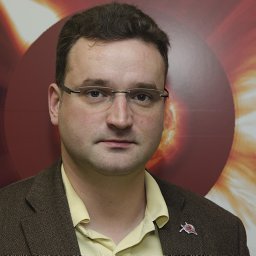 Vratislav Krupar合作论文数Inst. of Atmos. Phys., Prague, Czech Republic;c;Inst. of Atmos. Phys., Prague, Czech Republic|c|10
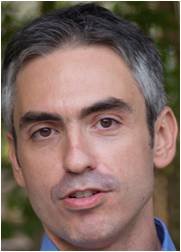 A. Papaioannou合作论文数Physics Department, National and Kapodistrian University of Athens10
 Angels Aran合作论文数Departament d’Astronomia i Meteorologia, Universitat de Barcelona10Jens Pomoell合作论文数10
 Astrid Veronig合作论文数Institute for Physics, University of Graz;Faculty of Sciences, University of Graz;Kanzelhohe Observatory for Solar and Environmental Research, University of Graz10R. F. Wimmer‐Schweingruber合作论文数9C. Palmroos合作论文数9A. Kollhoff合作论文数9
 Zigong Xu合作论文数9L. Berger合作论文数9




