Photo-electrons and secondary electrons from particle precipitation enhance the incoherent scatter plasma line to levels sufficient for detection. When detectable the plasma line gives accurate measure of the electron density and can potentially be used to constrain incoherent scatter estimates of electron temperature. We investigate the statistical occurrence of plasma line enhancements with data from the high-latitude EISCAT Svalbard Radar obtained during the International Polar Year (IPY, 2007–2008). A computationally fast method was implemented to recover the range-frequency dependence of the plasma line. Plasma line backscatter strength strongly depends on time of day, season, altitude, and geomagnetic activity, and the backscatter is detectable in 22.6 % of the total measurements during the IPY. As expected, maximum detection is achieved when photo-electrons due to the Sun's EUV radiation are present. During summer daytime hours the occurrence of detectable plasma lines at altitudes below the F-region peak is up to 90 %. During wintertime the occurrence is a few percent. Electron density profiles recovered from the plasma line show great detail of density variations in height and time. For example, effects of inertial gravity waves on the electron density are observed.
Non-thermal echoes in incoherent scatter radar observations are occasionally seen in the high-latitude ionosphere. Such anomalous echoes are a manifestation of plasma instabilities on spatial scales matching the radar wavelength. Here we investigate the occurrence of a class of spatially localized anomalous echoes with an enhanced zero Doppler frequency feature and their relation to auroral particle precipitation. The ionization profile of the E region is used to parametrize the precipitation, with nmE and hmE being the E region peak electron density and the altitude of the peak, respectively. We find the occurrence rate of the echoes to generally increase with nmE and decrease with hmE, thereby indicating a correlation between the echoes and high-energy flux precipitation of particles with a high characteristic energy. The highest occurrence rate of > 20 % is found for hmE = 109 km and nmE = 1011. 9 m−3, averaged over the radar observation volume.
ABSTRACT We report far-ultraviolet observations of Europa in transit of Jupiter obtained with the Space Telescope Imaging Spectrograph of the Hubble Space Telescope on six occasions between 2014 December and 2015 March. Absorption of Jupiter’s bright hydrogen Lyα dayglow is detected in a region several moon radii above the limb in all observations. The observed extended absorption provides the first detection of an atomic hydrogen corona around Europa. Molecular constituents in Europa’s global sputtered atmosphere are shown to be optically thin to Lyα. The observations are consistent with a radially escaping H corona with maximum densities at the surface in the range of (1.5–2.2) × 103 cm−3, confirming the abundances predicted by Monte Carlo simulations. In addition, we search for anomalies around the limb of Europa from absorption by localized high H2O abundances from active plumes. No significant local absorption features are detected. We find that an H2O plume with line-of-sight column density in the order of 1016 cm−2, as inferred by Roth et al. would not be detectable based on the statistical fluctuations of the transit measurements, and hence is not excluded or further constrained. The presence of plumes with line-of-sight column densities of >2 × 1017 cm−2 can be excluded at a 3-σ level during five of our six observations.
Measurements of naturally enhanced ion acoustic line (NEIAL) echoes obtained with a five-antenna interferometric imaging radar system are presented. The observations were conducted with the European Incoherent SCATter (EISCAT) radar on Svalbard and the EISCAT Aperture Synthesis Imaging receivers (EASI) installed at the radar site. Four baselines of the interferometer are used in the analysis. Based on the coherence estimates derived from the measurements, we show that the enhanced backscattering region is of limited extent in the plane perpendicular to the geomagnetic field. Previously it has been argued that the enhanced backscatter region is limited in size; however, here the first unambiguous observations are presented. The size of the enhanced backscatter region is determined to be less than 900 × 500 m, and at times less than 160 m in the direction of the longest antenna separation, assuming the scattering region to have a Gaussian scattering cross section in the plane perpendicular to the geomagnetic field. Using aperture synthesis imaging methods volumetric images of the NEIAL echo are obtained showing the enhanced backscattering region to be aligned with the geomagnetic field. Although optical auroral emissions are observed outside the radar look direction, our observations are consistent with the NEIAL echo occurring on field lines with particle precipitation.
To study the physical mechanisms of phenomena such as polar mesospheric summer echoes, the SCRAP (Scattering of Radar waves on Aerosols in Plasmas) experiment aimed to validate theories on density fluctuations in dusty plasmas. The SCRAP team developed two identical free falling units (FFUs) designed to create a cloud of copper particles once they eject from the REXUS17 sounding rocket 124 seconds after launch. By using the EISCAT incoherent scatter radar system to observe the cloud, the SCRAP experiment proposed to relate theoretical predictions to a controlled object. The SCRAP experiment was launched from ESRANGE on March the 17th 2015. The FFUs GPS signal was lost during launch and the units were therefore not found. Moreover, no backscattering from the copper cloud was observed by the radar.
Incoherent scatter radars are powerful ground based instruments for ionospheric measurements. By analysis of the Doppler shifted backscatter spectrum, containing the signature of electrostatic plasma waves, plasma bulk properties are estimated. At high latitudes the backscattered radar power is occasionally enhanced several orders of magnitude above the thermal backscatter level. These enhancements occur during geomagnetic disturbed conditions and are referred to as naturally enhanced ion acoustic echoes (NEIALs). NEIALs are linked to auroral activity with optical auroral emission observed in the vicinity of the radar measurement volume simultaneously to NEIALs. The backscatter enhancements are thought to be caused by wave activity above thermal level due to instability. A number of theories have been put forward including streaming instabilities and Langmuir turbulence to explain NEIAL observations. NEIALs occur in two classes distinct by their Doppler features. Observations of the first type, which has been studied more extensively, are generally modelled well by the Langmuir turbulence model. The difficulty in trying to understand the driving mechanism of the instability is the limited spatial resolution of the radar measurements. Observations of the second type, reported on more recently, have been interpreted as evidence for naturally occurring strong Langmuir turbulence by means of their Doppler features.Aperture synthesis is a technique to increase the spatial resolution of the radar measurements to below beam width of the single receiver antennas. The technique is employed to investigate the structure of NEIALs in the plane perpendicular to the magnetic field at sub-degree scale corresponding to hundreds of meters to a few kilometres at ionospheric altitudes. Calibration of the radar interferometer is necessary and a calibration technique is presented in paper I. Interferometry observations of a NEIAL event with receivers deployed at the EISCAT incoherent scatter radar on Svalbard are presented in paper II. The size of the enhanced backscatter region is found to be limited to 900 x 500m in the plane perpendicular to the geomagnetic field. These observations constitute the first unambiguous measurements giving evidence for the limited size of the enhanced backscatter region.In paper III observations of strong Langmuir turbulence signatures are presented. The apparent turbulent region in these observations is limited to two narrow altitude regions, 2km extent, and electron density irregularities caused by the turbulence are thought to reach down to decimeter scale length. The turbulence observations were obtained during energetic electron precipitation thereby differing from other observations during which a low energy component in the electron precipitation is reported. In paper IV a statistical study of strong Langmuir turbulence radar signatures is presented. The study reveals differing local time distributions for these signatures from type I NEIALs indicating di_ering driving conditions for the two types of NEIALs. It is found that strong Langmuir turbulence signatures are predominantly observed in the pre-midnight sector where auroral break-up aurora prevails.
Attitude reconstruction of a free falling sphere for the experiment Multiple Spheres for Characterization of Atmosphere Temperatures (MUSCAT) is studied in this paper. The attitude dynamics is modeled through Euler's rotational equations of motion. To estimate uncertain parameters in this model such as the matrix of inertia and the lever arm for the dynamic pressure with respect to the center of mass, the dynamics reconstruction can be formulated as an optimization problem. The goal is to minimize the deviation between the measurements and the propagation from the system equations. This approach was tested against a couple of flight data sets which correspond to different periods of time. The result is very reasonable compared to the laboratory test. The estimate can be improved further through allowing drag coefficients variable and taking advantage of measurements from a magnetometer in numerical calculation.
Spectrographic airglow measurements were made during an ionospheric modification experiment at High Frequency Active Auroral Research Program on 12 March 2013. Artificial airglow enhancements at 427.8, 557.7, 630.0, 777.4, and 844.6 nm were observed. On the basis of these emissions and using a methodology based on the method of Backus and Gilbert (1968, 1970), we estimate the suprathermal electron population and the subsequent equilibrium electron density profile, including contributions from electron impact ionization. We find that the airglow is consistent with heater-induced ionization in view of the spatial intermittency of the airglow.
We present a statistical study of anomalous radar echoes observed in the auroral ionosphere thought to be signatures of Langmuir turbulence (LT). Data obtained with the European Incoherent Scatter Svalbard radar during the international polar year (IPY) were searched for these anomalous echoes in the auroral Fregion. In incoherent scatter radar experiments LT may in certain circumstances be observed as enhanced backscattered radar power at the ion line frequencies, plasma line frequencies, and at zero Doppler shift. The power enhancement at zero Doppler shift could arise due to Bragg scattering from nonpropagating density fluctuations caused by strong LT. In the IPY data set, around 0.02% of the data comply with our search criteria for altitudes above 190 km based on the ion line spectrum including enhancement at zero Doppler shift. The occurrence frequency of the identified events peaks in the premidnight sector and increases with local geomagnetic disturbance. Enhanced backscattered power is observed with limited altitude extent (below 20 km in 70% of the events), and the altitude distribution of identified radar signatures in the ion line channel has a peak at about 220 km. Enhancement of the plasma line is observed with the ion line enhancements in more than 60% of the events. Two classes of enhanced plasma lines occur. In the first class, plasma lines are limited in frequency and altitude and occur at altitudes of ion line enhancements. In the second class, the plasma lines are spread in frequency and range and are observed at lower altitudes than the first class (at about 170 km) with frequencies close to 3 MHz. Available optical data available indicate that the identified events to occur during auroral breakup with high-energy electron precipitation.
Enhancements were observed in backscattered radar power during an ionospheric heating experiment from two distinct altitude regions in the auroral E region above Tromsø. For the experiment the EISCAT Tromsø heater was operated with O mode and X mode alternated at 4.04 MHz, close to the 3rd electron gyroharmonic. Ion-line data recorded with the EISCAT UHF radar reveal different temporal evolutions as well as different ion-line characteristics for the enhancements from the two altitude regions. The upper layer is dominated by a strong central feature, whereas the lower layer has three peaks corresponding to the central feature and the two ion lines. The altitude region of the two closely spaced (altitude separation ~ 5 km) but distinct enhancements is close to the critical altitude for the heater wave.
Natural enhancements in the backscattered power of incoherent scatter radars up to 5 orders of magnitudes above the thermal backscatter are sometimes observed at high latitudes. Recently observations of enhancements in the backscattered power including a feature at zero Doppler shift have been reported. These enhancements are limited in altitude to tens of kilometers. The zero Doppler shift feature has been interpreted as a signature of electron density cavitation. Enhanced plasma lines during these observations have also been reported. We report on the first EISCAT UHF observations of enhanced backscattered radar power including a zero Doppler shift feature. The enhancements originated from two distinct and intermittent layers at about 200 km altitude. The altitude extent of the enhancements, observed during auroral high-energy electron precipitation, was < 2 km.
The EISCAT Svalbard Radar has two parabolic dishes. In order to attempt to implement radar aperture synthesis imaging methods three smaller, passive receive array antennas were built. Several science goals for this new receiver system exist, the primary of which is to study so called naturally enhanced ion acoustic lines. In order to compare radar aperture synthesis imaging results with measurements from optical imagers, calibration of the radar interferometer system is necessary. In this work we present the phase calibration of the EISCAT Svalbard interferometer including one array antenna. The calibration was done using the coherent scatter from satellites passing through the radar beam. Optical signatures of the satellite transits provide accurate position for the satellites. Using transits of a number of satellites sufficient for mapping the radar beam, the interferometric cross-phase was fitted within the radar beam. The calibration technique presented in this work will be applied to all antenna pairs of the antenna configuration for future interferometry studies.
Following the 38th Annual European Meeting on Atmospheric Studies by Optical Methods in Siuntio in Finland, an intercalibration workshop for optical low light calibration sources was held in Sodankylä, Finland. The main purpose of this workshop was to provide a comparable scale for absolute measurements of aurora and airglow. All sources brought to the intercalibration workshop were compared to the Fritz Peak reference source using the Lindau Calibration Photometer built by Wilhelm Barke and Hans Lauche in 1984. The results were compared to several earlier intercalibration workshops. It was found that most sources were fairly stable over time, with errors in the range of 5–25%. To further validate the results, two sources were also intercalibrated at UNIS, Longyearbyen, Svalbard. Preliminary analysis indicates agreement with the intercalibration in Sodankylä within about 15–25%.
 Mykola Ivchenko合作论文数Division of Space and Plasma Physics, Department of Electrical Engineering, School of Electrical Engineering and Computer Science, KTH Royal Institute of Technology7
 n ivchenko合作论文数6B. Gustavsson合作论文数6
 Vasyl Belyey合作论文数5
 Hanna Dahlgren合作论文数School of Electrical Engineering, KTH5s tuttle合作论文数3Daniel Whiter合作论文数3Tom Grydeland合作论文数3Alexander Karlsson合作论文数2
 Lorenz Roth合作论文数Division of Space and Plasma Physics, Department of Electrical Engineering, School of Electrical Engineering and Computer Science, KTH Royal Institute of Technology2
 Ingemar Häggström合作论文数European Incoherent Scatter Scientific Association2
 Urban Brandstrom合作论文数Swedish Institute of Space Physics2
 Gunnar Tibert合作论文数2r j miceli合作论文数1Yunxia Yuan合作论文数1rasmus bergstrom合作论文数1Ola Widell合作论文数1
 Teferi Demissie合作论文数Int Livestock Res Inst ILRI, CGIAR Res Program Climate Change Agr & Food Secur1Cesare Grava合作论文数1
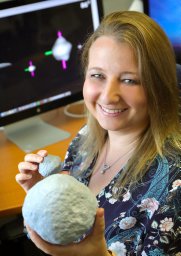 Tracy M. Becker合作论文数Southwest Research Institute;University of Texas at San Antonio;Southwest Research Institute, University of Texas at San Antonio1
 Linnea Persson合作论文数School of Electrical Engineering and Computer Science, KTH Royal Institute of Technology1
 J. P. Reistad合作论文数Birkeland Ctr Space Sci, Univ Bergen1Sato Yuka合作论文数1
 Owen Roberts合作论文数University of Wales Aberystwyth, University of Wales Aberystwyth1
 Darrell F. Strobel合作论文数Department of Earth and Planetary Science, Johns Hopkins University1
 James P. Sullivan合作论文数Jersey Shore University Medical Center;Ocean University Medical Center1
 David Lee Hysell合作论文数Department of Earth and Atmospheric Sciences, Cornell University1Todd Pedersen合作论文数1
 Yasunobu Ogawa (小川泰信)合作论文数National Institute of Polar Research1Thomas B. Leyser合作论文数Uppsala Division, Swedish Institute of Space Physics1Timothy Sergienko合作论文数1C. La Hoz合作论文数1
 Joseph Huba合作论文数Paul Alan Bernhardt's Lab;Syntek Technologies Inc;Naval Research Laboratory1Roger H. Varney合作论文数1Elizabeth a Kendall合作论文数1
 B. J. Watkins合作论文数1C.-F. Enell合作论文数1S. A. Chernouss合作论文数Polar Geophysical Institute1S. Mäkinen合作论文数1
 Kurt Retherford合作论文数Southwest Research Institute1L. Cai合作论文数Department of Geophysics, Peking University1
 Paul A. Bernhardt合作论文数1B. S. Lanchester合作论文数1
 F. Sigernes合作论文数1
 Michael Rietveld合作论文数Department of Physics and Technology, UiT The Arctic University of Norway1




