Molten salt reactors (MSRs) are a promising candidate for Generation IV reactor technologies, and the small modular molten salt reactor (SM-MSR), which utilizes low-enriched uranium and thorium fuels, is regarded as a wise development path to accelerate deployment time. Uncertainty and sensitivity analyses of accidents guide nuclear reactor design and safety analyses. Uncertainty analysis can ascertain the safety margin, and sensitivity analysis can reveal the correlation between accident consequences and input parameters. Loss of forced cooling (LOFC) represents an accident scenario of the SM-MSR, and the study of LOFC could offer useful information to improve physical thermohydraulic and structural designs. Therefore, this study investigates the uncertainty of LOFC consequences and the sensitivity of related parameters. The uncertainty of the LOFC consequences was analyzed using the Monte Carlo method, and multiple linear regression was employed to analyze the sensitivity of the input parameters. The uncertainty and sensitivity analyses showed that the maximum reactor outlet fuel salt temperature was 725.5 ^∘C , which is lower than the acceptable criterion, and five important parameters influencing LOFC consequences were identified.
Safety is of paramount importance in nuclear power plants. Accurate and reliable accident diagnosis is essential for ensuring operational safety in reactor systems. The convergence of Industry 4.0 technologies and deep learning methods has emerged as a promising approach for improving the operational safety of nuclear energy systems, particularly in fault detection and diagnosis (FDD) applications. This study proposes a novel adaptive accident diagnosis framework tailored for molten salt reactors (MSRs) based on an enhanced residual convolutional neural network (AM-RCNN). The AM-RCNN incorporates an anti-noise module implemented using the soft thresholding method, together with an attention mechanism, to improve robustness. Datasets representing eight distinct operational scenarios were generated using the RELAP5-TMSR simulation tool. An appropriate subset of input features for MSR accident diagnosis was selected using Pearson correlation analysis and random forest importance ranking. The models were subsequently trained, validated, optimized, and tested. Comparative analyses with conventional RCNN and CNN architectures demonstrate the diagnostic advantages of the proposed approach. In addition, the integration of Bayesian optimization further enhances the performance of the AM-RCNN. As a contribution to intelligent monitoring research for MSRs, the proposed method provides reliable decision support for nuclear system operation, particularly in autonomous scenarios.
BackgroundThe passive cooling system for the reactor cavity of the molten salt reactor (MSR) is an important guarantee to ensure the safe operation of the reactor, is one of the four engineered safety features for the MSR, and its structure design is an important part of the thermal hydraulic design.PurposeThis study aims to find out a suitable passive reactor cavity cooling system (RCCS) to meet the requirements of thermal shielding design for the lower reactor cavity of the MSR, and maximize the removal of reactor core decay heat under accident conditions.MethodsFirstly, based on the design parameters of a 153 MWt MSR, a 1/4 geometric model of the lower reactor cabin of this MSR was established. Then, ANSYS FLUENT 20.1 software was employed to conduct three-dimensional numerical simulation of the flow filed and temperature filed for the lower reactor cabin, the influence of thermal shielding of the lower cavity was analyzed by changing the structure and layout of the passive RCCS, the structure sizes of the passive RCCS with double channel, the thickness of thermal insulation cotton on the intermediate thermal shielding plate and the position of the air inlet pipe. Finally, a new and suitable structure of passive RCCS was proposed after step-by-step improvements for a 153 MWt MSR.ResultsThe simulation results show that the optimized new-style passive air-cooling system with a double channel in the lower reactor cavity is the best among the three structures. Changing the width of the RCCS has little effect on the thermal shielding results of the lower reactor cabin whilst increasing the thickness of thermal insulation cotton on the intermediate thermal shielding plate of the RCCS can significantly reduce the temperature of the inner surface of the concrete wall. The closer the inlet position of the air inlet pipe is to the top of the RCCS, the better the thermal shielding effect. Based on above results, a new-style passive air-cooling system with double channel in the lower cavity is designed to completely dsatisfy the requirements for shielding cooling for the lower reactor cavity of a 153 MWt MSR.ConclusionsThe results of this study provide an important reference for the further engineering optimization design of passive residual heat removal system in the hundred megawatt-scale molten salt reactor.
BackgroundWith advantages of low system pressure, stable operation and good economic performance, molten salt heat exchanger has recently been widely applied to the field of energy as concentrating solar power, nuclear power engineering, high temperature hydrogen production, and so on.PurposeThis study aims to analyze the thermal stress generated in the main components of the U-tube heat exchanger due to the high operating temperature of the molten salt and the large temperature difference between the hot and cold fluids.MethodsFluid-thermal-solid coupling method was adopted in this study. First of all, the main thermal performance parameters of the heat exchanger were obtained by using computational fluid dynamics (CFD) computation, and compared with experimental results to verify the accuracy of the CFD fluid simulation results. On this basis, the heat transfer process was analyzed in details for the molten salt tube-shell heat exchange under the operating condition, and the flow field and temperature field of the heat exchanger were obtained. Finally, the stress field generated by the coupling of flow field, pressure field and temperature field was calculated by Ansys workbench finite element software, and the stress distribution of the tube sheet connected with the heat exchange tube and shell was emphatically analyzed to find the maximum stress value of the tube sheet and the stress change rule of some paths.ResultsThe result shows that the CFD fluid simulation method is feasible with a maximum deviation of 3.07%. The larger stress is found at the connection area between the tube plate and the non-tube, which is located near the inner tube wall on the shell-side with about 2 mm away from the lower surface of tube plate.ConclusionsResults of this study provides important reference for the actual operation and structural deign of molten salt heat exchanger.
液态燃料熔盐堆具有较高的经济性、安全性及燃料在线处理等多种特点.紧急排盐非能动余热排出系统(Emergency Draining Salt Passive Residual Heat Removal System,EDS-PRHRS)是液态燃料熔盐堆独有的余热排出系统设计,其中排盐罐中熔盐能否安全导出余热是EDS-PRHRS设计的基础.为了研究EDS-PRHRS排盐罐运行过程中的瞬态特性,本文以30 MW熔盐堆紧急排盐罐为研究对象,通过计算流体力学分析软件Fluent对EDS-PRHRS排盐罐进行熔盐耦合换热元件的余热排出瞬态数值模拟,并针对排盐罐相关参数进行敏感性分析.分析结果表明:余热排出过程中换热元件外壁面和熔盐热点温度随时间变化存在峰值,且通过提高换热元件轴向高度、增强气隙层壁面发射率可以显著降低温度峰值,延后排盐时间可以略微降低峰值,此外采用三角形排布可以延缓局部凝固时间.研究结果可为EDS-PRHRS提供设计参考.
BackgroundThe activation method is taken to measure the in-core distribution of neutron spectrum for the designed 10 MW solid-fuel thorium molten-salt reactor (TMSR-SF1). The neutron activation foil sample is loaded outside the reactor and quickly transported to the measurement position in the reactor through the transmission device for irradiation, and then is transferred outside of reactor to the energy spectrum samples for de-spectrographic analysis.PurposeIn order to realize the rapid entry and exit of the neutron activation foil sample into and out of the reactor, a pneumatic conveying system with double-layer casing is designed in this research.MethodsThe principle of the conveying system and the structure of the double-casing tube were adopted in this study. ANSYS Fluent software and 6DOF dynamic grid technology were used to analyze the movement and stress of the sample under different pipe gaps, so as to determine the sample pipe gap value. Then the flow parameters and gas-solid two-phase flow resistance of the conveying system were calculated in detail using the pneumatic conveying theory. Finally, a prototype was developed for experiments to verify the principle of the conveying system.ResultsThe analysis results showed that the sample speed is decreased with the increase of the pipe gap. The experiments results show that the velocity of the sample and the pressure loss of the gas-solid two-phase flow increase with the increase of the gas flow rate. Under the same flow rate, the experimental speed of the sample movement and the pressure loss of the gas-solid two-phase flow are in good agreement with the theoretical calculations.ConclusionsThe pneumatic convey system with double-casing tube can be applied to transport the sample into and out of the reactor, and the theoretical calculations values of pneumatic conveying parameters in this study are reliable.
BackgroundThe pebble bed heat transfer experimental facilities in the high temperature test loop of HTS (Heat Transfer Salt) molten salt is designed to study the heat transfer characteristics of molten salt and fuel pebble. The intermediate frequency induction heating is adopted to provide the internal heat source in the graphite pebble bed, which simulates the heat released by the fuel pebbles in the core of the MSRs.PurposeThis study aims to get better heating effect by analyzing the internal heat source of electromagnetic induction heating.MethodsThe finite element method was used to numerically simulate the electromagnetic induction heating of the experimental device. By analyzing the distribution of eddy current power in the experimental device under different number of graphite pebbles and coil parameters, the influence law of different design parameters on the electromagnetic induction heating performance was obtained and compared with the experimental results.ResultsThe simulation results show that the eddy current power of the graphite pebble near the edge of the coil is obviously small. When the cross-sectional area of the induction coil of the heater is 40 mm2 and the number of winding turns is 31, the heating effect can meet the experimental requirements. In the current experiment, the close distance between the metal seal structure and the coil is easy to produce eddy current power, resulting in power loss.ConclusionsThe comparison with the experimental data shows that the numerical simulation can predict the experimental results well when considering the heat leakage of the experimental device, and provide some suggestions on the optimization of the current experimental device as well as design reference for the experimental study using electromagnetic induction heating.
In order to better understand the thermal performance of Fluoride salt-to-Air Heat Exchanger (FAHX), the heat transfer process of FAHX with multiple-tube banks staggered arrangement in a Fluoride-salt High Temperature Test Loop (FHTL) is studied experimentally and numerically. Results show that the temperature distribution obtained from CFD fit well with experiment measurements with a maximum deviation of 10%, which indicates that the CFD program is applicable. Then, the three-dimensional features of the FAHX in the tube-side and shell-side are analyzed. Results show that peripheral tube temperatures of the tube bundles are slightly lower than the center tubes, and all tubes temperature are obviously above the melting temperature of the fluoride-salt-454 degrees C, which implies that there will be less risk of fluoride-salt freezing in the FAHX. Finally, the heat transfer process related flow distributions are discussed, helpful guidance are proposed for the optimal design of the molten salt-to-air Heat exchanger.(c) 2021 Elsevier Ltd. All rights reserved.
In order to better characterize the transient thermal behavior of Fluoride salt-to-Air Cooler (FAC) and then to forecast the risk of freezing under variable load, the numerical and experimental studies of the cooling of fluoride salts have been performed. Results show that the simulated thermal parameter is in agreements with the experiment data with a maximum deviation below 20%, which validate the reliability of the CFD model. Then, a detailed 3D CFD transient thermal process related flow distributions are conducted. Results show that the air -outlet velocity has a sudden rise at the immediate blower operating condition, but the transient thermal pro-cess will be worked well. Finally, the air-temperature response and fluoride-salt minimum temperature are evaluated considering the transient progression. Results show that gentle changes to the blower flowrate can effectively mitigate potential to overcool the salt and avoid solidification. Which offer helpful guidance for FAC transient regulation and operation.
BackgroundThe high temperature molten salt is generally used as the heat transfer medium in molten salt reactor (MSR), and the molten salt leakage accident is a crucial issue for the safety of reactor operation.PurposeThis study aims to investigate the characteristics of molten salt leakage and solidification and to provide effective measures to reduce the risk of molten salt leakage accidents.MethodsBased on the computational fluid dynamics (CFD) model, the leakage of molten fluoride salt flow onto the quartz sand and subsequently phenomena including permeation, spreading, melting and solidification were studied by using ANSYS FLUENT code.ResultsThe results show that the molten salt diffuses both vertically and horizontally after contacting the sand, due to the cooling of ambient and temperature gradient of the sand, the bottom of molten salt in the sand will freeze, making the vertical permeation depth stabilized and the liquid molten salt will only spread horizontally on the top surface of sand. For a certain period of molten salt leakage, the higher the molten salt temperature and leakage flow rate, the larger the maximum diffusion radius of horizontal detection and permeation depth in vertical direction.ConclusionsBased on above analysis, a method with respect to the collection and thermal insulation of high temperature molten salt under leakage accident is proposed, and analyzed to verify the effectiveness of the method.
The cooling structural design and thermal analysis of three representative high heat load components, namely fixed maskers (FM1, FM2-1 and FM2-2) in the first ultra-high heat-load front-end of the ultra-hard multi-functional x-ray beamline (BL12SW) at SSRF are carried out based on finite element analysis (FEA). By establishing the finite element models, and combining with the performance acceptance criteria of the materials under high heat load, the temperature distribution and thermal stress distribution of the components are analyzed, respectively. In addition, the influence of applied processing materials (oxygen-free high conductivity copper (OFHC), Glidcop®AL-15 and CuCrZr) and convection heat transfer coefficient (i.e., film coefficient, which can be controlled by the adjustment of flow value or the specific structural design) on the thermo-dynamic performance of the high heat load components is also explored to guide the structural, parametric and performance design of the high heat load elements at the synchrotron front-end.
An explosion-welded technology was induced to manufacture the GH3535/316H bimetallic plates to provide a more cost-effective structural material for ultrahigh temperature, molten salt thermal storage systems. The microstructure of the bonding interfaces were extensively investigated by scanning electron microscopy, energy dispersive spectrometry, and an electron probe microanalyzer. The bonding interface possessed a periodic, wavy morphology and was adorned by peninsula- or island-like transition zones. At higher magnification, a matrix recrystallization region, fine grain region, columnar grain region, equiaxed grain region, and shrinkage porosity were observed in the transition zones and surrounding area. Electron backscattered diffraction demonstrated that the strain in the recrystallization region of the GH3535 matrix and transition zone was less than the substrate. Strain concentration occurred at the interface and the solidification defects in the transition zone. The dislocation substructure in 316H near the interface was characterized by electron channeling contrast imaging. A dislocation network was formed in the grains of 316H. The microhardness decreased as the distance from the welding interface increased and the lowest hardness was inside the transition zone.
对镍基合金管道环形焊缝进行焊接与焊后热处理模拟,为镍基合金焊接后处理工艺的优化提供有意义的参考.首先利用ABAQUS软件进行环形焊接模拟,考察管壁厚一定,随内径厚度比(D/B)变化时,轴向与周向焊接残余应力变化趋势;随后依据Norton蠕变准则,选取合适的蠕变激活能,考察相同保温时间下,不同保温温度对降低焊接残余应力的影响.焊接模拟结果显示,随着D/B值的增大,轴向焊接残余应力整体变化不明显,外表面有变小趋势,内表面有增大趋势,周向焊接残余应力变化明显,尤其是内表面,由压应力变成了拉应力.焊接后热处理模拟结果显示,对于同一种材料,适当升高保温温度可以在短时间内有效降低残余应力.
钍基熔盐堆核能系统(TMSR)计划建设热功率2 MW的液态燃料熔盐堆.在熔盐泵、换热器、冷冻阀等设备原理样机研制基础上,需要设计并建造高温氟盐回路对上述设备进行运行考验.首先设定熔盐-空气换热器换热功率为200 kW,根据经典热量方程及预定流速法确定系统流量为15 m3/h、管径为DN50(公称直径为50 mm).采用Fluent数值计算确定系统压损为155kPa,考虑一定裕量后熔盐泵扬程确定为20 m.为解决管道在高温工况下热应力集中问题,除熔盐泵固定安装外,加热器及换热器设计采用了万向球移动支承结构以增加系统柔性.自建成以来,回路累计运行超过4000 h,相关设备及系统结构设计得到验证.系统实际压损为110~120kPa,仍需采用差压计进行实测验证.熔盐杂质含量分析表明,系统运行后Cr、Mo等杂质元素含量提高了2个数量级,说明存在材料腐蚀.回路内水氧含量控制水平需要在100 μL/L设计限值基础上进一步提高.
为了满足钍基熔盐堆对核数据的需求,中国科学院上海应用物理研究所自行设计并建造了紧凑型的15 MeV电子加速器驱动的白光中子源.电子直线加速器、中子产生靶以及探测器系统处于同一个实验大厅,中子/伽马射线本底较高,原有屏蔽并不能满足在低能区进行热中子物理实验测量的低中子本底需求.为了降低热中子本底,提高在热区的测量能力,需要对中子源进行局部屏蔽.根据调试运行经验以及模拟计算结果,分析了中子伽马射线本底的来源,利用MCNP5模拟计算了混凝土、铅、含硼聚乙烯对中子/伽马射线的屏蔽效果,优化设计了局部屏蔽方案.模拟计算结果显示,该屏蔽方案可将热中子本底降低三个量级,伽马本底降低两个量级.屏蔽后的实验测量结果表明,探测器处的有效热中子与本底热中子的比值达到约100:1,屏蔽效果显著,为后续在热中子能区顺利开展中子物理测量实验奠定了基础.
To improve the reliability and reduce energy consumption, a conceptual design of a freeze valve is proposed for the thorium-based molten salt reactor (TMSR) concept. Fins were utilized in this new design to enhance heat transfer and realize passive shut-off function, which could not be realized by the previous design. An experimental apparatus using the fluoride salt FLiNaK was constructed to conduct a series of preliminary solidification and melting experiments. In addition, the enthalpy-porosity method of ANSYS® Fluent solver was applied to simulate the solidification process of the salt at a specified operating temperature. Temperature distributions of the fluoride salt, solidification/melting time, and frozen plug effect were analyzed under natural convection heat transfer in an open space. The calculated salt temperatures exhibited good agreement with the experimental values. The results indicated that the range of effective operating temperature is 530–600 °C for the finned freeze valve. In this study, the ideal set operating temperature of the finned freeze valve was chosen as 560 °C to achieve competent performance. Moreover, 560 °C is additionally the highest set operating temperature for maintaining excellent cooling performance and sustaining deep-frozen condition of the salt plug. At this set operating temperature, the simulation data indicated that the molten salt in the flat part of the finned freeze valve will completely solidify at 10.5 min. The percentage of solid salt in the flat and lower transitional parts of the valve reaches 29.60% in 30.0 min. Furthermore, the surface temperature of the proposed freeze valve is 11.10% lower compared with that of the TMSR freeze valve at a cooling gas supply of 173 m3/h. Therefore, the new freeze valve was proven to be capable of reducing the energy consumption and realizing the passive shut-off function.
核材料中热中子吸收截面高的杂质会引起堆芯反应性的变化,一般用硼当量表示这些杂质对热中子的吸收,硼当量是衡量核材料纯度的重要指标之一.热中子宏观吸收截面法是硼当量测量的方法之一,测量时采用同位素中子源则精度低,而白光中子源产生的中子强度高、方向性好,且可慢化为热谱,能有效提高硼当量测量精度.本文基于15 MeV电子加速器驱动的白光中子源开展核石墨硼当量测量的研究,利用蒙特卡罗模拟并优化实验方案,对实验数据进行检验与修正,建立核石墨硼当量测量定量分析方法.该方法能快速、准确检测核材料的硼当量,对反应堆的物理设计、安全性评估等具有重要意义.
[Background] The 10 MW thorium-based molten salt reactor with solid fuel (TMSR-SF), designed by Shanghai Institute of Applied Physics, is a pebble bed fluoride salt cooled high temperature reactor in the world. The three-dimensional random packing structure has an important influence on the reactivity and fuel management scheme in the neutron physics as well as the heat transfer in thermal-hydraulic analysis. [Purpose] This study aims at the simulation analysis of the structural characteristics of the random packing pebble bed in TMSR-SF by discrete element method (DEM). [Method] The particle flow code 3 dimensional (PFC3D) was employed to simulate the particle motion under buoyancy effects of particle size, friction coefficient, and number of particles on the steady state packing structures. Radial porosity distribution of stochastic accumulation pebble bed generated by DEM was verified. [Results and Conclusion] The simulation results show that packed bed with smaller particle diameter can weaken the oscillation of the axial and radial porosity, which will help to smooth the power distribution in the reactor core. By reducing the friction between particles, the vibration process can be well reflected. The relationship between the friction coefficient and packing porosity as well as the coordination numbers of the filler is in accordance with the negative exponential distribution. When the filled particles number exceeds 8 000, the bed average porosity and coordination numbers tend to be constant with the value of 0.43 and 5.6 respectively, the influence of particle number was minimized. Then the packing bed with 8 000 filled particles can be used as a representative of the full packed pebble bed to study the thermal-hydraulic numerical analysis of the natural circulation in TMSR-SF, which will help saving the computational resources.
The pebble-bed reactor is one of the most promising designs for the nuclear energy industry. In this paper, a discrete element method–computational fluid dynamics (DEM–CFD) approach that includes thermal conduction, radiation, and natural convection mechanisms was proposed to simulate the thermal-fluid phenomena after the failure of forced circulation cooling system in a pebble-bed core. The whole large-scale packed bed was created using the DEM technique, and the calculated radial porosity of the bed was validated with empirical correlations reported by researchers. To reduce computational costs, a segment of the bed was extracted, which served as a good representative of the large-scale packed bed for CFD calculation. The temperature distributions simulated with two different fluids in this DEM–CFD approach were in good agreement with SANA experimental data. The influence of the natural convection mechanism on heat transfer must be taken into account for coolants with strong convective capacity. The proposed DEM–CFD methodology offers a computationally efficient and widely applied method for understanding the heat transfer process in a pebble-bed core. The method can also be easily extended to assess the passive safety features of newly designed fluoride-salt-cooled pebble-bed reactors.
In order to better understand the thermal performance and improve the thermal sizing design of molten salt-to-air heat exchanger, a serpentine coil cross flow heat exchanger with molten salt on tube side and air on shell side is designed and tested. A self-made program with specially selected heat transfer correlations is developed to design the heat exchanger. After that, experiments are conducted to verify the design and characterize the heat transfer behavior of the heat exchanger. Results show that the measured key parameters of the heat exchanger correspond well to the values from the self-made program. Further experimental studies on the thermal performances indicate that empirical correlations in the self-made program could adequately describe the heat transfer characteristics of the heat exchanger. Based on above studies, it is concluded that the self-made program can be well used for the thermal sizing design of molten salt-to-air heat exchanger. (C) 2019 Elsevier Ltd. All rights reserved.
 Yu-Shuang Chen合作论文数15Zhongmin Xu (徐中民)合作论文数Cold and Arid Regions Environmental and Engineering Research Institute, Chinese Academy of Sciences15Yuan Fu (傅远)合作论文数13Hai-Hua Zhu合作论文数9Jian Tian合作论文数9
 Zhongfeng Tang (唐忠锋)合作论文数Shanghai Institute of Applied Physics, Chinese Academy of Sciences;University of Chinese Academy of Sciences7Chong Zhou (周翀)合作论文数6
 Limin Jin (金利民)合作论文数University of Chinese Academy of Sciences;Shanghai Advanced Research Institute, Chinese Academy of Sciences5Xiangbo Kong (孔祥波)合作论文数5
 Yang Zou (邹杨)合作论文数Shanghai Institute of Applied Physics, Chinese Academy of Sciences;University of Chinese Academy of Sciences5Xikai Zhu合作论文数4guanyuan wu合作论文数4Huiju Lu合作论文数4Yonglin Chen合作论文数4Jie Wang合作论文数4Feng-Rui Liu合作论文数3Bo Su合作论文数3Yanze Tang合作论文数3Wanqian Zhu合作论文数3Haiwei ZHENG (郑海伟)合作论文数3Xiaohe WANG (王小鹤)合作论文数3DiKui Jiang (蒋迪奎)合作论文数3ShaoJian Xia (夏绍建)合作论文数3
 Hongwei Wang (王宏伟)合作论文数Shanghai Institute of Applied Physics, Chinese Academy of Sciences;University of Chinese Academy of Sciences3
 Jingen Chen (陈金根)合作论文数中国科学院大学核科学与技术学院3Shilei Liu合作论文数3
 Yao Xiao (肖瑶)合作论文数School of Mechanical Engineering, Shanghai Jiao Tong University3
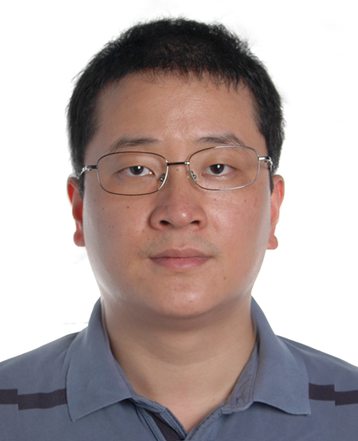 Xiangzhou Cai (蔡翔舟)合作论文数Shanghai Institute of Applied Physics, Chinese Academy of Sciences;University of Chinese Academy of Sciences3
 Jianlong Han (韩建龙)合作论文数Shanghai Institute of Applied Physics, Chinese Academy of Sciences;University of Chinese Academy of Sciences3
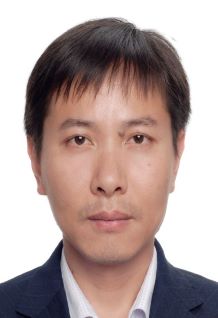 Jifeng Hu (胡继峰)合作论文数Institute of Quantum Matter, South China Normal University3
 Guanghui Su (苏光辉)合作论文数Department of Nuclear Science and Technology, School of Energy and Power Engineering, Xi'an Jiaotong University3Jianfeng Jin (金建峰)合作论文数3
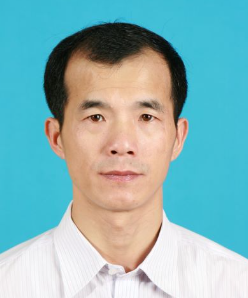 Haibo Chen (陈海波)合作论文数School of Engineering Science, University of Science and Technology of China3
 Charles W. Forsberg合作论文数Department of Nuclear Science & Engineering, Massachusetts Institute of Technology3Shanghai Synchrotron合作论文数3
 Lin-Wen Hu合作论文数Nuclear Reactor Laboratory, Massachusetts Institute of Technology3Z.F. Tang合作论文数2Weinan ZHOU (周慰囡)合作论文数2Weizhong Zhu合作论文数2Xu Xiangyi合作论文数2Dan Fa合作论文数2WANG Shanwu (王善武)合作论文数2Zhaozhong He合作论文数2Chen Kun合作论文数2
 Liu Longxiang合作论文数2Feng Shen合作论文数2Hongkang MIAO (缪洪康)合作论文数2SHENG Shugang (盛树刚)合作论文数2Zuokang Lin合作论文数2




