Problems of energy storage and rational use are of primary importance in all spheres of human activity. Passive thermal power systems acquire high importance in conditions of constant increase of energy consumption. Phasechange materials are already widely used in electronic devices, batteries, solar collectors, latent thermal energy storage systems, and others, but one of the negative aspects of phase change materials is low thermal conductivity. To improve the thermal conductivity of phase change materials, the metal foam inserts can be used, that can significantly increase thermal conductivity of the system. The porous structure provides a large area of contact with the environment, due to which the temperature difference between phase change material and the solid structure remains small. Consequently, the high thermal conductivity of the metal allows increasing the intensity of heat dissipation. In this numerical study, the process of heat and mass transfer and melting of PCM in a porous insert with anisotropic properties is considered, taking into account convective heat transfer in the melt region. Melting regimes in porous anisotropic media have been little studied and this problem is of interest for modeling and development thermal energy storage systems. The numerical solution is obtained based on the finite difference method using the local thermal equilibrium Darcy-Brinkmann approach and the enthalpy-porosity method to solve the energy equation. The developed computational code has been verified comprehensively. The numerical analysis has shown a significant effect of the anisotropic properties of the porous insert on the convective heat transfer modes and the intensity of material melting. It has been found that the greatest impact of the anisotropy parameters is observed when the heater is located at the top of the region where thermal conduction plays a major role in heat transfer performance. In this case, the anisotropic model shows a decrease in the source temperature by 8 degrees C compared to the isotropic model at high porosity. Furthermore, in almost all observed cases, the model with an anisotropy angle alpha = 0 degrees has demonstrated the best heat transfer performance.
An application of metal foams to improve the thermal energy transport in organic phase change materials such as paraffins, waxes and fatty acids is one of the most optimal ways to enhance the effective thermal conductivity of these materials. The possibilities of using metal foams can be improved with the combination of layers of different structural topology and thermophysical properties, which allows directing and distributing heat more uniformly throughout the volume. In this paper, computational research on convective thermal energy transfer and melting processes in a two-dimensional cavity including a porous copper medium saturated with a phase change material and heated by a volumetric heat source, is carried out. The results are received employing the finite difference technique, and the main equations are formulated within the framework of the local-equilibrium Darcy-Brinkman approach. The obtained data have allowed to conclude that the location of a foam layer with lower porosity allows more intensive heat dissipation, showing lower source temperatures; however, the best effect has been shown by vertical layers, with a gradient that creates uneven heating, which in turn results in the appearance of an extensive circulation zone and intensive heat removal from the local source.
Materials with low phase transition temperatures have proven themselves in the construction industry as a source of increased heat capacity and passive regulator of energy exchange. The scope of application covers air conditioning systems, thermal control, PV panels and others. This paper numerically investigates the heat transfer phenomena through a wall element containing air cavities and enclosures filled with technical paraffin. An algorithm based on the finite difference method is used as a tool for modeling the thermal and hydrodynamic processes. Non-stationary problems of conjugate convection with the phenomenon of phase transformation in phase change material (PCM) are solved and results have been obtained in a wide range of Rayleigh numbers for several configurations of the bricks with different volume fraction of air and Rubitherm of a melting point of 22 degrees C. Present study, for the first time, provides detailed examination of the influence of hydrodynamic phenomena in the melt on the ability of hollow brick containing PCM to smooth out daily temperature fluctuations. The effect of various convective heat transfer conditions depending on the volume of the material has been studied. It has been shown that with an increase in the outdoor temperature, the presence of solid PCM in the cavities significantly inhibits the growth of temperatures in the region, delaying and reducing temperature peaks on the indoor surface. At high thermal loads for the double PCM cavities in a brick, a reduction of 87% in daytime heat losses and a time delay of more than 4 h have been obtained. It has also been shown that natural convection, even in small cavities, can intensify the heat transfer due to heating of the upper part of the region. As a result of temperature stratification in the melt, it has been discovered that the surface temperature in the room can have a difference of 1.5 degrees C in height.
In the present work, a computational analysis of the combined energy transfer by free convection, radiation, and heat conduction in 2D hollow block with an inclined partition was carried out. The inclined partition was made of a heat-conducting material and had a finite thickness. The closed space inside the brick was filled with air (Pr = 0.71) and the airflow is laminar. The external surfaces of the vertical borders are considered to be isothermal, and the remaining horizontal surfaces are supposed to be adiabatic. The finite difference technique is employed to work out numerically the differential equations. The in-house computational code was verified in detail using various problems. The major characteristics that determine the considered phenomena are surface emissivity of internal walls, Ra number, and material of solid walls and partition. As a result of the research, the distributions of streamlines and isotherms combined with the average Nusselt numbers were obtained. Depending on the material of the partition, the flow structure in the cavity changes significantly, which reflects the distribution of streamlines, namely, for the materials with low thermal conductivity the convective cell in the upper part of the cavity is elongated, while in the lower part it is shifted to the lower and left borders. The isotherms reflect the more intensive heating in the left part of the area. With an increase in the thermal conductivity coefficient, the streamlines reflecting the nature of the flow are restructured. It was shown that the presence of an inclined partition significantly reduces the intensity of convective heat transfer.
Nowadays phase change materials are widely used in different engineering systems to perform effective cooling techniques for heat-generating elements or to accumulate the thermal energy effectively. The disadvantage of the phase change material is a low thermal conductivity, but it can be improved using porous media or metal nanoadditives of high thermal conductivity. The present research is devoted to the mathematical simulation of conjugate thermal convection in a closed chamber partially filled with metal foam saturated with nano-enhanced phase change material. The governing equations have been formulated using the Oberbeck-Boussinesq equations with the Stefan problem approach for the liquid phase and the heat conduction equation for the solid phase. The finite difference technique in combination with non-primitive variables has been used for numerical analysis. The developed in-house numerical program has been verified using the grid independence test as well as the experimental and theoretical outcomes of other authors. The effects of the metal foam properties and nanoadditives characteristics on melt behavior and thermal energy transport parameters have been studied. The main attention is paid to the influence of a filling height ratio of the metal foam on the heat transport process. It has been revealed that the impact of the metal foam on thermal dissipation is essentially higher compared to the nanoadditives influence. Therefore, in the case of full height foam, the effect of nanoparticles is weak, but in the cavity with a partial height of the porous medium, NePCM can be melted faster than pure PCM and has a negative effect on the heater temperature. It has been also found that changing the filling height ratio from 0.167 to 0.5 does not lead to a significant change in the temperature of the heater.
Highly thermally conductive elements such as metal foams and nanoparticles are often used as heat transfer enhancers for phase change materials. The influence of each factor separately has been well studied, but very few works have been devoted to the combined interaction of porous media and nanoparticles in PCM. Present study is devoted to the topic of phase transition intensification using the metal foam and nanoparticles. The melting process in a closed two-dimensional cavity with a porous copper insert filled with lauric acid has been numerically studied. The mathematical model has been formulated in terms of dimensionless stream function, vorticity and temperature. Using the finite difference technique in combination with enthalpy approach the local temperature and hydrodynamic characteristics of the process have been obtained, also the melting front has been traced. As a result of numerical simulation, the effects of the physical properties of the metal foam and the concentration of nanoparticles on the features of heat transfer and melting phenomenon have been analyzed. It has been shown that metal foam with low porosity can significantly reduce the temperature due to an increase in the thermal conductivity of the medium, however, depending on the structural properties of the metal foam at a high heat flux q = 4000 W/m2, the differentiation of local temperatures can reach 30 °C with a change in porosity and exceed 50 °C when changing the pore density. In this case, the addition of nanoparticles has an insignificant effect on the enhancement of heat transfer and, in some cases, increases the temperature of the heated surface.
Modern technologies of thermal power engineering make it possible to design and build systems using renewable energy sources. Often, energy accumulation and storage require the development and adaptation of appropriate systems, the simplest of which are passive systems based on phase-change materials. In this study, a numerical analysis of heat transfer in a brick wall containing several materials with different melting temperatures is carried out. The unsteady two-dimensional conjugate problem of phase transitions is considered, taking into account natural convection in the melt, which has been solved using the developed in-house finite difference technique. A numerical experiment has been carried out for a brick block with several rectangular inserts filled with PCMs under various external thermal conditions. As a result of the numerical analysis, it has been shown that the relative arrangement of materials with different melting points has a significant impact on the heat transfer and heat exchange between the environment and the room.
Passive temperature control and thermal storage systems using phase change materials are widespread and have a high potential in modern technologies. This research deals with the computational analysis of natural convection melting in a multi-PCM thermal sink heated from an element of volumetric energy production. The influence of the geometric parameters of the system and the arrangement of materials in it is analyzed. Numerical modeling has been carried out using the finite difference technique. Governing equations for the mass, momentum and energy transfer have been written employing stream function, vorticity and temperature. Based on the obtained distributions of local fields for energy and mass transference and changes in the average temperature of the heater, it is shown that, despite the smaller surface area, separation by vertical flat fins provides lower temperatures and longer melting when the source is located below.
The use of phase change materials in modern electronic technologies expands the range of problems of heat and mass transfer in systems with phase transitions. One of these tasks is the cooling of electronic units by the PCM heat sinks. Studying the effectiveness of PCM based systems is one of the most relevant topics in passive cooling. From the point of view of heat and mass transfer modeling, such systems are complex and, as a rule, are studied experimentally. The present numerical study is devoted to the impact of the geometric configuration of a copper profile on the phase change of lauric acid in the presence of volumetric heat generation element. Several profile models have been considered to increase the effective thermal conductivity of the system, including horizontal flat fins, vertical flat fins, and a profile divided into cells by vertical and horizontal plate fins, each cell is filled with the same volume of lauric acid. It should be noted that such analysis allows understanding the influence of vertical and horizontal orientations of fins on heat transfer enhancement within the heat sink. Moreover, a presence of a heater of constant volumetric heat generation illustrates features of heat removal from such an element. To obtain the most accurate solution, the equations of conjugate natural convection are formulated with the melting/solidification processes employing the non-primitive variables like stream function and vorticity. The finite difference technique is applied in modeling the thermohydrodynamic processes with phase transitions. The impact of the profile shape on the development of convective energy transport and phase transitions is analyzed. The novelty of the present study can be described by the following results. It has been shown that vertical plate fins promote faster thermal dissipation than horizontal fins within the metal structure, however, during phase transformations in cavities, the area enhancement ratio of the heat sink becomes the most important. A large number of cells increases the effective heat capacity of the system and reduces its temperature difference.
Recent developments in the field of net zero energy buildings are related to energy savings and solar energy conservation systems. The use of new materials, such as phase change materials, is one of the most promising directions of energy storage. In this paper, building element made of layers of concrete and heat-insulating material with a cavity filled with RT-25 as a PCM was considered. The process of heat transfer in a building element under non-stationary external thermal effect is investigated. The influence of the inclination angle of the element from 0 to 90 degrees on the melting process of the material and its ability to restrain the heating process under the condition of convective mixing of the melt are analyzed. The equations of heat and mass transfer are solved taking into account phase transitions and buoyancy forces in the melt. It is shown that the tilt angle of the block with the PCM insert determines the intensity of heat transfer due to convective mixing of the melt. Under the same external thermal conditions, PCM wall transmits more heat than PCM roof, the difference on the indoor surface at peak thermal conditions for different tilt angles can reach 4.5 degrees. (C) 2021 Elsevier B.V. All rights reserved.
Thermal control systems based on phase change materials have recently become more and more common in modern electronic and radio-electronic structures. In a wide range of power and sizes of such structures containing phase change materials, detailed studies are required due to the complexity of the processes occurring in the melt and the variety of shapes of profiles.
Nowadays, the heat transfer enhancement in electronic cabinets with heat-generating elements can be achieved using the phase change materials and finned heat sink. The latter allows to improve the energy transference surface and to augment the cooling effects for the heat sources. The present research deals with numerical analysis of phase change material behavior in an electronic cabinet with an energy-generating element. For an intensification of heat removal, the complex finned heat sink with overall width of 10 cm was introduced, having the complicated shape of the fins with width of 0.33 cm and height H = 5 cm. The fatty acid with melting temperature of 46 °C was considered as a phase change material. The considered two-dimensional challenge was formulated employing the non-primitive variables and solved using the finite difference method. Impacts of the volumetric heat flux of heat-generating element and sizes of the fins on phase change material circulation and energy transference within the chamber were studied. It was shown that the presence of transverse ribs makes it possible to accelerate the melting process and reduce the source temperature by more than 12 °C at a heat load of 1600 W/m. It should also be noted that the nature of melting depends on the hydrodynamics of the melt, so the horizontal partitions reduce the intensity of convective heat transfer between the upper part of the region and the lower part.
Phase change materials (PCM) occupy an important position in modern technologies. The use of PCMs in parts of a building structure is a new trend in energy efficient construction. In this study, a building block model with PCM inserts was considered. The influence of the position of the insert and the melting point of the material on the thermal performance of the block during unsteady heating and cooling is analyzed. A numerical model that describes the unsteady process of phase transitions taking into account natural convection, formulated in dimensionless temperature, stream function, vorticity is used. It is shown that, depending on the position of the phase change material, the temperature of the outer surface can vary within several degrees and on the inner surface within one degree. Moreover, it is demonstrated that at higher melting temperatures the material can give a positive result only during hot days. Namely, if the melting point of the material is close to the maximum ambient temperature or higher, then the effect will not be observed, since the material will not start to melt.
The constant growth of urban agglomerations with the development of transport networks requires the optimal use of energy and new ways of storing it. Energy efficiency is becoming one of the main challenges of modern engineering. The use of phase change materials in construction expands the possibilities of accumulating and storing solar energy, as well as reducing energy consumption. In this study, we consider the problem of the effect of natural convection on heat transfer in a building block containing a phase change material. Heat transfer, taking into account melting in brick, was analyzed at various temperature differences. The mathematical model was formulated in the form of time-dependent equations of conjugate natural convection using non-dimensional stream function, vorticity, and temperature. The equations describing melting, taking into account natural convection, were solved using the finite difference method. Smoothing parameters were used to describe phase transitions in the material. As a result of calculations, local characteristics of heat and mass transfer at various points in time were obtained, as well as changes in temperature profiles on the side surfaces. It is shown that with a large volume of melt, natural convection increases heat loss by more than 10%.
The problems of heat and mass transfer in phase change materials are of great engineering interest. The absorption and storage of energy in the form of latent heat makes it possible to use them in the construction industry to smooth out the effects of temperature transitions in the environment. This work is devoted to the study of heat transfer in a building block with paraffin inserts under unsteady external conditions. The influence of the geometric dimensions of the block and the volume fraction of the phase change material on the effect of restraining external temperature fluctuations was studied. The unsteady conjugate melting problem was solved in a closed rectangular region with two cavities filled with PCM. The temperature of the environment on the left boundary changes in harmonic law. Thermal distributions were obtained at various points in time.
The issue of thermal control plays an important role in the development of technical systems of computing and radio equipment. Temperature conditions are an important factor in the performance and durability of devices. New models of heat sink containing materials with phase transitions “solid body–liquid” are appeared. In the present paper, the numerical study of natural convection melting/solidification of phase change material inside a finned heat sink with a local heater having time-dependent volumetric heat flux has been carried out. An unsteady conjugate phase change problem has been solved taking into account natural convection in the melt, in the presence of a heat-dissipating copper profile. The energy equation has been formulated using a special smoothing function of temperature. The equations of hydrodynamics have been formulated using non-primitive variables, namely the stream function and vorticity. The system of transient differential equations of natural convection, taking into account the melting process and the heat-generating and heat-conducting element, has been solved using the finite-difference method. Analysis has been performed for different values of the volumetric heat generation within the heater and the periodic volumetric heat generation frequency. Obtained results have shown that a rise of the volumetric heat generation frequency leads to an increase in the amplitude of the average temperature within the heater that can have a negative effect on the system operation.
The cooling of electronic elements is one of the most important problems in the development of architecture in electronic technology. One promising developing cooling method is heat sinks based on the phase change materials (PCMs) enhanced by nano-sized solid particles. In this paper, the influence of the PCM’s physical properties and the concentration of nanoparticles on heat and mass transfer inside a closed radiator with fins, in the presence of a source of constant volumetric heat generation, is analyzed. The conjugate problem of nano-enhanced phase change materials (NePCMs) melting is considered, taking into account natural convection in the melt under the impact of the external convective cooling. A two-dimensional problem is formulated in the non-primitive variables, such as stream function and vorticity. A single-phase nano-liquid model is employed to describe the transport within NePCMs.
Creation of electronic equipment, heat exchangers, and thermal insulation of buildings is related to the development of effective cooling systems or heat storage systems. One of the solutions to the considered problem is the usage of phase change materials (PCMs) that can essentially enhance the characteristics of the developed system. Phase change materials are characterized by high phase transition heat at a fixed temperature, and these materials have a thermal capacity higher than the typical heat storage media. The aim of this study is a numerical simulation of free convection melting of PCM within a chamber with a heat-generating element of time-dependent volumetric thermal production and finned radiator system. The presented new numerical results for the effective cooling system for the heat-generating unit including the copper heat sink, n-octadecane as PCM have been analyzed.
 Mikhail Sheremet合作论文数Department of Theoretical Mechanics, Tomsk State University;Laboratory on Convective Heat and Mass Transfer, Tomsk State University40
 Hakan F. ÖZTOP合作论文数Fırat Üniversitesi;University of Sharjah7
 Nidal H. Abu-Hamdeh合作论文数King Abdulaziz Univ, Fac Engn, Ctr Res Excellence Renewable Energy & Power Syst, Jeddah 21589, Saudi Arabia6
 Oronzio Manca合作论文数Dipartimento di Ingegneria, Università degli Studi della Campania "Luigi Vanvitelli"3
 Bernardo Buonomo合作论文数3
 Nikita S. Gibanov合作论文数2
 Igor V. Miroshnichenko合作论文数1
 Mohsen Sheikholeslami Kandelousi合作论文数Faculty of Mechanical Engineering, Babol Noshirvani University of Technology1
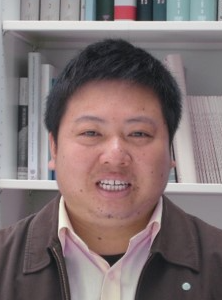 Fuyun Zhao (赵福云)合作论文数School of Power and Mechanical Engineering, Wuhan University1
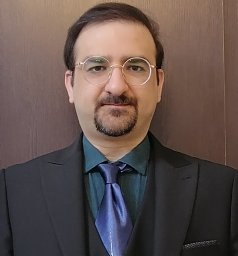 Mohammad Ghalambaz合作论文数Saveetha Institute of Medical and Technical Sciences;Laboratory on Convective Heat and Mass Transfer, Tomsk State University1




