Inspired by the flight behavior of albatrosses, dynamic soaring has emerged as a promising technique for energyefficient flight with unmanned aerial vehicles. However, the current implementation of dynamic soaring is restricted by the minimum wind shear requirement and makes limited use of the harvested energy. In this work, we investigate the combined use of thrust and regeneration in dynamic soaring, which gives UAVs more flexibility in energy management, allowing them to operate in a wider range of wind conditions and with a higher energy-harvesting efficiency. In addition, we explore the effect of drive train losses on the use of thrust and regeneration during dynamic soaring, providing insights into the deployment of such a strategy in practice. The results demonstrate the significant benefits of using both thrust and regeneration during dynamic soaring, especially in conditions with strong wind shear.
Autonomous dynamic soaring can be used to increase the endurance and range of unmanned aerial vehicles by harvesting energy from the vertical gradient of the horizontal wind. This study aims to develop a guidance and control strategy that allows precise following of an optimal dynamic-soaring path for a glider vehicle. The proposed control architecture combines a geometric path-following guidance law with an SO(3)-based attitude control law. High-fidelity six-degree-of-freedom simulation shows that the proposed method can achieve a position accuracy of 0.1 m for a glider with a wingspan of 2 m while adhering to the constraints present on a glider airframe. The high tracking accuracy makes it possible to conduct autonomous dynamic-soaring operations with patterns that were considered impossible in previous studies, such as a travel pattern mimicking the albatrosses’ dynamic-soaring pattern in close proximity to the ocean surface.
Recent advances in Unmanned Aerial Vehicle (UAV) designs have increasingly incorporated Distributed Electric Propulsion (DEP) systems, characterized by multiple propellers attached on the leading edge of the wing. The increased interest in DEP necessitates understanding the aerodynamic effect of such multi-propeller configurations on aircraft performance. The development of a propeller model using Computational Fluid Dynamics (CFD) ensures flexibility in simulating different situations and analyzing the flow around the wing. In the present study, a CFD model developed to simulate the propeller slipstream was validated in the presence of a wing in different configurations. Simulations were assessed by varying freestream velocity, propeller advance ratio, and wing geometry. The effects produced by a single propeller were examined first before extending the analysis to multi-propeller configurations. The aerodynamic coefficients, specifically lift and drag, were compared to existing experimental results, demonstrating good agreement.
New aircraft architectures are being proposed for unmanned aerial vehicles and air taxis, which include tilt-able motor and propellers. These propulsive units operate with a propeller axis at an angle oblique to the flight direction, and thus it is important to understand and model how thrust is produced by a propeller operating under these conditions. Propellers in oblique flow have been modeled using Blade Element Momentum Theory coupled to an inflow model, and the Vortex Lattice Method. In the present work, we develop a much simpler approach that neglects the crossflow component of the incoming air velocity. An advance ratio is developed based on the parallel inflow component, and is coupled to existing propeller data collected in axial flow conditions. The proposed model is evaluated using existing experimental data collected under oblique flow conditions, and is predicts thrust to within \(5\,\%\) of experimental values for most conditions. The greatest discrepancy between the model and experiments occurs in the pure crossflow case, which is of lesser importance in the application to unmanned aerial vehicles and air taxis.
The growing interest in electric powertrains for aircraft has led to new aircraft designs for air taxis and Unmanned Aerial Vehicles (UAVs), Electric powertrains allow aircraft designers to consider novel propulsion layouts such ones in which many motors/propellers are distributed along the wing's leading edge, known as Distributed Electric Propulsion (DEP). This configuration confers a number of advantages, including the mitigation of airflow separation. Understanding the wake of a propeller can allow us to develop a better understanding of the dynamical behaviour of DEP aircraft, where large parts of the wings are immersed in the propeller slipstream, which can have a large influence on the forces generated by the wing. In the present work, we describe a method for simulating the wake of a given propeller in the OpenFOAM Computational Fluid Dynamics (CFD) package. The propeller model uses body forces within a finite propeller region, acting as a momentum source for fluid passing through it. Simulations using this method were performed for various propeller geometries, rotation rates, and freestream velocities, and results were compared with experimental measurements from the literature, yielding good agreement.
The system under consideration comprises a flexible pipe and a coaxial rigid outer tube; the pipe and tube are vertically cantilevered from their top ends in a large fluid-filled cylindrical tank. The space between the pipe and tube forms an annulus around the upper portion of the pipe. The working fluid is water. The fluid enters the annulus from its top end with flow velocity Uo and is discharged from its bottom end; the fluid exits from the tank by flowing upwards in the pipe with velocity Ui.This flow configuration represents an idealized model of one of the modi operandi of 'salt mined caverns', which are large underground cavities created to store hydrocarbons, such as natural gas and oil, in large quantities. At sufficiently high flow velocities the central pipe, referred to as the 'brine-string', vibrates, and may impact on the rigid cemented casing around it; sometimes this impact results in damage or breakage of the brine-string.Numerous experiments were performed in a laboratory-scale apparatus for several flow velocity ratios Uo/Ui, ranging from 0.02 to 0.40 (approx.), for three different outer tubes, 300, 200 and 100 mm in length; an elastomer flexible pipe approximately 441 mm long, was used in this study throughout. In all these experiments, the pipe loses stability via first-mode flutter at a sufficiently high flow velocity Ui, and at relatively lower Ui with increasing flow velocity ratio Uo/Ui and outer tube length L '. For the 300 mm outer tube, a dynamical behaviour similar to that for 200 mm outer tube, comprising two different dynamical features referred to as low and high flow velocity ratio behaviours, was observed. Also, a limit cycle was observed in the experiments for the first time, for the system involving a pipe aspirating fluid. For the 100 mm outer tube, however, only the high flow velocity ratio dynamical behaviour was observed. Finally, the effect of varying the outer tube length L ' on the foregoing dynamics is presented by comparing the experimental results for all three outer tube lengths, L ' = 100, 200 and 300 mm.
The Blackbird vehicle is a wind-powered ground vehicle purported to be capable of propelling itself directly downwind faster than the wind. This capability, demonstrated in 2010, has proven to be controversial because it is difficult to understand how a vehicle travelling faster than the surrounding air can collect energy from that air. This paper presents a mathematical model and corresponding simulation of the Blackbird vehicle. Our simulation results demonstrate that this vehicle should, indeed, be capable of travelling directly downwind much faster than the ambient wind speed. The simulation results show good correspondence with the few available experimental results. The simulation is also used to provide pointers to further improve the vehicle's performance. It is found that using variable gearing could improve the vehicle's acceleration, though would not significantly improve its terminal velocity. A sensitivity analysis is performed on the losses (rolling resistance, air drag and transmission efficiency) and it is found that improvement in the transmission efficiency would lead to the greatest increase in terminal velocity.
When it comes to wildfire surveillance missions, Unmanned Aerial Vehicles (UAVs) offer a safer alternative over manned aircraft in such dangerous flight conditions. Furthermore, the efficiency of fixed-wing UAVs, as compared to multi-rotors platforms, makes them more desirable for prolonged missions with sustained surveillance. Therefore, while previous research has explored autonomous monitoring of fires with multi-rotor UAVs, this work focuses on developing an approach for fire monitoring with a fixed-wing UAV. In order to autonomously track the fire as it propagates, images of the fire from an on-board IR camera are first processed to extract an edge of the fire front. The proposed algorithm then guides the UAV to fly towards the fire front and track it, by obtaining a reference point located on the extracted fire edge, and using L-1 guidance law to command the aircraft. Furthermore, as the UAV navigates around the fire, a map of the fire is constructed on-board the vehicle, using a fire occupancy grid map to denote the probability of a fire in each cell. Results from two simulations, with fire data obtained from WRF-Fire simulations, demonstrate the ability for the UAV to autonomously track the propagating fire, regardless of its shape or scale, and maintain a map of the fire on-board the vehicle.
This paper presents a semi-empirical propeller slipstream model capable of predicting flow velocities far downstream of the propeller in forward flight conditions. The model is an extension of a model developed for static conditions, to include an incoming freestream flow. The effect of the aircraft's forward speed on the flow aft of the propeller is demonstrated and compared to that predicted by classical momentum theory. A small UAV platform is then instrumented to measure the slipstream flow at multiple locations behind the propeller. Tests were conducted in a level flight state with a constant propeller speed. In-flight measurements show that the semi-empirical model is significantly more accurate than classical momentum theory near the tail of the platform, with an RMS error of 0.7-2.0m/s. Measurements near the wing of the test platform at an axial location less than 2 propeller diameters downstream showed lower accuracy for both the semi-empirical and momentum theory models, possibly indicating strong unmodeled interference from the wing and ailerons or unknown effects of advancing flow conditions.
Agile, fixed-wing, aircraft have been proposed for diverse applications, due to their enhanced flight efficiency, compared to rotorcraft, and their superior maneuverability, relative to conventional, fixed-wing, aircraft. We present a novel, reactive, obstacle-avoidance algorithm that enables autonomous flight through unknown, cluttered environments using only on-board sensing and computation. The method selects a reference trajectory in real-time from a pre-computed library, based on goal location, instantaneous point cloud data, and the aircraft states. At each time-step, a cost is assigned to candidate trajectories that are collision-free and lead to the edge of the obstacle sensor’s field-of-view, with cost based on both distance to obstacles, and the goal. The lowest cost reference trajectory is then tracked. If all potential trajectories result in a collision, the aircraft has enough space to come to a stop, which theoretically guarantees collision-free flight. Our work demonstrates autonomous flight in unknown and unstructured environments using only on-board sensing (stereo camera, IMU, and GPS) and computation with an agile, fixed-wing, aircraft in both simulation and outdoor flight tests. During flight testing, the aircraft cumulatively flew 4.4km autonomously in outdoor environments with trees as obstacles with an average speed of 8.1ms−1 and a top speed of 14.4ms−1. To the best of our knowledge, ours is the first obstacle-avoidance algorithm suitable for agile, fixed-wing, aircraft that can theoretically guarantee collision-free flight and has been validated experimentally using only on-board sensing and computation in an unknown environment.
Unmanned Aerial Gliders form a subclass of fixed-wing Unmanned Aerial Vehicles which promise to offer sustained flight for a wide range of applications. Autonomous soaring allows these aircraft to detect and exploit rising air masses (thermals) without user input, which greatly simplifies their operation. While previous research has focused on the detection and exploitation of thermal updraft, the initial turn at the entry point into the thermal has been ignored. This paper explores the initial turn decision at the instant of thermal detection in order to improve soaring performance by flying directly into the thermal. A high-fidelity simulation of an off-the-shelf RC glider is constructed, along with the Weather Research and Forecasting model to capture realistic thermal convection. The effects of turn decisions on thermalling performance are examined through a large batch simulation on a Matlab/Simulink environment. Thermalling algorithms are subsequently integrated into the PX4 flight stack for Software-in-the-Loop simulations and flight tests using a Pixhawk flight controller. Simulated and experimental results demonstrate the importance of turn decisions for improved overall soaring performance.
This work presents a comprehensive semi-autonomous control system for agile fixed-wing unmanned aerial vehicles. These versatile platforms are capable of steady flight and thrust-borne hover, but owing to their design are challenging to control for a remote operator with limited visual feedback. The proposed pilot-assist solution uses a unified controller architecture that remains valid for all flight regimes, while accounting for different operating modes required by the pilot. The cascaded control structure consists of an attitude controller, developed directly on the Special Orthonormal Group SO(3), a nonlinear position control system capable of operating in position, velocity, or path following modes, and a reference generation system that enables smooth transitions between modes. The stability of the system dynamics together with the proposed control solution is analyzed through Lyapunov stability theory. In addition, to verify the viability of the developed system when operated by a human pilot, outdoor flight experiments are conducted with an experimental platform. Results show the control system enables the lightweight platform to fly stably outdoors while following pilot inputs, both in conventional steady flight, and in a thrust-borne flight regime.
This work presents a nonlinear path-following strategy designed to enable an agile fixed-wing UAV to follow three-dimensional geometric paths while simultaneously performing different aerobatic maneuvers about its thrust axis. While agile fixed-wings and similar platforms are designed expressly for aerobatic flight, these maneuvers are seldom used in autonomous operation due to their complexity. The proposed system expands the autonomous capabilities the platform by allowing an independent roll command to be prescribed while still ensuring the UAV follows the intended path. This controller is built around a geometric attitude control system, a roll-decoupling velocity control, and a guidance law that steers the UAV onto the intended path through velocity commands. To verify the properties of the proposed control system, experimental outdoor flight tests are conducted. Results show the versatility of the control system, since arbitrary roll maneuvers can be achieved without additional aerodynamic characterization.
This paper presents a modular feedforward wind rejection method for agile fixed-wing UAVs, designed to work in tandem with a thrust pointing position controller. The feedforward controller requires a trustworthy wind estimate, and is based on three components, a feedforward rotation on attitude and two feedforward components on thrust. The controller uses attitude trim conditions to reject wind disturbances near the cross-wind condition, while also adopting an airspeed-based feedforward on thrust to reduce disturbances when flying in-line with the wind vector. The feedforward controller was validated in simulation and outdoor flight tests. Simulated flights consisted of straight line and circular tracking in a constant wind-field, as well as frequency tests to examine the ability of the feedforward controller to reject wind fluctuations. Experimental flight tests tracking a circular path in a windy environment were conduced. The results of simulations and experimental flights show that the feedforward controller provides good wind rejection performance when compared to the feedback position controller operating on its own.
Moving path frames assigned to spatial curves are commonly used in the development of motion control laws for autonomous vehicles. This work presents the Gravity Normal frame, a novel navigation reference frame developed specifically for autonomous vehicle applications. This moving path frame incorporates the knowledge that many autonomous vehicles operate in a gravitational field, and control strategies must account for this. Given a curve in space that represents a desired trajectory, the proposed strategy generates a navigation frame that is well defined regardless of path curvature, while guaranteeing the normal vector is always normal to gravity and hence constrained to the horizontal plane, regardless of path torsion. Due to these characteristics, the Gravity Normal path frame is ideally suited for vehicles with distinct longitudinal and lateral dynamics since the resulting cross-track errors have a precise physical interpretation. The properties of the navigation frame are derived, and its usefulness is showcased through simulation. Finally, its applicability is demonstrated with flight experiments on a fixed-wing unmanned aerial vehicle.
We consider a vertical cantilevered pipe conveying fluid, located in a container filled with the same fluid; the upper portion of the pipe is surrounded by a rigid cylindrical tube of larger diameter, thus forming an annular fluid-filled region around the pipe. Two flow configurations are investigated: (a) the fluid enters the pipe at its clamped upper end and flows downwards, discharging at its free lower end into the container; the fluid exits the container by flowing upwards in the annulus and out; (b) the reverse flow arrangement, in which the fluid enters the system at the upper end of the annulus and exits by flowing upwards in the pipe. The dynamics of the system is studied theoretically for both configurations (a) and (b) and experimentally in an in-house bench-top apparatus. The analytical models utilized, with some CFD input, are outlined, and the bench-top experiments are described. For given parameters, both theory and experiment find that the system loses stability at sufficiently high flow velocity by flutter or static divergence. Finally, theory and experiment are compared, showing reasonable to good agreement for flow configuration (a), but less than satisfactory agreement for configuration (b).
Unmanned Aerial Gliders (UAGs), are a class fixed-wing Unmanned Aerial Vehicles (UAVs) that are particularly well-suited to applications involving long endurance and range. By relying on atmospheric energy, most commonly in the form of thermal updraft, UAGs are able to gain altitude and extend flight time while preserving on-board battery energy to further prolong the mission. While previous research has investigated autonomous soaring for UAGs, the focus has been on detecting and exploiting thermals while in gliding flight. In this work, soaring algorithms are adapted to detect the presence of thermal updraft while in either powered or gliding flight. This allows the aircraft to latch onto thermals at any point during flight and capitalize on atmospheric energy to preserve on-board battery energy. Furthermore, to generate a sink polar for use in the soaring algorithms, both analytically and experimentally, digital DATCOM is used to analyze the aerodynamics of the aircraft in the former case, and a Rauch-Tung-Striebel smoother is proposed to filter experimental flight data for postprocessing. The algorithm is subsequently integrated into the PX4 flight stack and testing is performed in a Software-in-the-Loop environment. Simulation results show the improvement in efficiency gained by using atmospheric energy through all phases of flight.
Unmanned aerial vehicles (UAVs) have become popular in a wide range of applications, including many military and civilian uses. State-of-the-art control strategies for these vehicles are typically tailored to a specific platform and are often limited to a portion of the vehicle's flight envelope. This article presents a single physics-based controller capable of aggressive maneuvering for the majority of UAVs. The controller is applicable to UAVs with the ability to apply a force along a body-fixed direction, and a moment about an arbitrary axis, which includes UAVs such as multi-copters, conventional fixed-wing, agile fixed-wing, most flying-wings, most tailsitters, some tilt-rotor/wing platforms, and some flapping-wing vehicles. We describe the implementation of this controller on numerous platforms, and demonstrate autonomous flight in outdoor flight tests for a quadrotor and an agile fixed-wing aircraft. To specifically demonstrate the extreme maneuvering capability of the control logic, we perform a rolling flip with the quadrotor and a rolling Harrier and an aggressive turnaround with the fixed-wing aircraft, all using a single controller.
 Inna Sharf合作论文数Department of Mechanical Engineering, McGill University22
 Juan A. Carretero合作论文数Department of Mechanical Engineering, University of New Brunswick13
 Frederick R. Driscoll合作论文数12
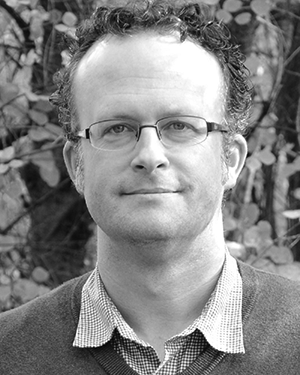 B. Buckham合作论文数Department of Mechanical Engineering, University of Victoria10Eitan Bulka合作论文数Department of Mechanical Engineering, McGill University8Juan Carlos Hernandez Ramirez合作论文数6Joshua M. Levin合作论文数McGill Univ, Dept Mech Engn, Montreal, PQ H3A 0G4, Canada6Al-Solihat, M.K.合作论文数6
 Khan, W.合作论文数Dept. of Mech. Eng., McGill, Montreal, QC, Canada;c;Dept. of Mech. Eng., McGill, Montreal, QC, Canada|c|6
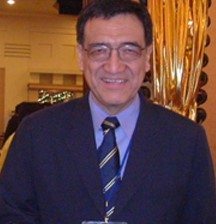 Jorge Angeles合作论文数Robotic Mechanical Systems Laboratory, Department of Mechanical Engineering, Faculty of Engineering, McGill University6Ron P. Podhorodeski合作论文数6
 Aditya A. Paranjape合作论文数Dept Aeronaut, Imperial Coll London6Fares El Tin合作论文数5
 Casey Lambert合作论文数5Nicolas Plamondon合作论文数5Dean Chalmers合作论文数4
 Rolf G. Lueck合作论文数4Marco Masciola合作论文数4M.F.J. Butt合作论文数4C. Lambert合作论文数4Lianzhen Luo合作论文数4
 Torsten Liesk合作论文数4
 Michael P. Paidoussis合作论文数Department of Mechanical Engineering, McGill University;Government of the Republic of Cyprus;Ecole de Technologie Sup´erieure ´ , Universit´e du Qu´ebec, D´epartement de G´enie de La Production Automatis´ee4
 Qiao Sun合作论文数Department of Mechanical and Manufacturing Engineering, Schulich School of Engineering, University of Calgary3Christian A. Patience合作论文数McGill University3Alexandre Borowczyk合作论文数3Romain Chiappinelli合作论文数Coriolis Games Corporation, Toronto3
 Benoit Boulet合作论文数Department of Electrical and Computer Engineering, Faculty of Engineering, McGill University;McGill Engine Centre for Technological Innovation and Entrepreneurship, McGill University3
 Hamid D. Taghirad合作论文数K. N. Toosi University of Technology3Gabriele Gilardi合作论文数Department of Mechanical Engineering;McGill University3
 Ou Ma合作论文数IRAS Lab, University of Cincinnati3
 Clément Gosselin合作论文数Département De Génie Mécanique Et De Génie Industriel, Faculté Des Sciences Et De Génie, Université Laval3Walter Jothiraj合作论文数2Adrian Battiston合作论文数2Jackson Empey合作论文数2michael trentini合作论文数2Hori, Noriyuki合作论文数Dept. of Mech. Eng., McGill Univ.;c;Dept. of Mech. Eng., McGill Univ.2Radanovic, B.合作论文数2
 Yuwen Li (李育文)合作论文数Department of Mechanical and Automation Engineering, Shanghai University2P. Coulombe-Pontbriand合作论文数2L. D. Reid合作论文数2
 Kamran Behdinan合作论文数Advanced Research Laboratory for Multifunctional Lightweight Structures, Department of Mechanical & Industrial Engineering, Faculty of Applied Science & Engineering, University of Toronto2
 Mae L. Seto合作论文数Def R&D Canada2Jacob Apkarian合作论文数Department of Electrical and Computer Engineering, University of Toronto2Aaron Saunders合作论文数2Doug Perrault合作论文数2Olivia Chiu合作论文数1C Damaren合作论文数1




