In anti-jamming wireless communications, single-channel mix source separation (SCMSS) is an effective way to combat full-band jamming. Conventional SCMSS methods typically depend on prior knowledge of jamming, and existing deep learning-based SCMSS methods require extensive training samples, limiting their applications in practical scenarios. Alternatively, we exploit large language models (LLMs) to design a novel SCMSS method, including a new LLM-based deep neural network (DNN), and a new fine-tuning algorithm. By harnessing the extremely powerful feature extraction and cross-domain knowledge transfer capabilities of LLMs, our method can effectively separate target signals from full-band jamming after fine-tuning with a small number of labeled data samples. Experimental results demonstrate superior bit error ratio (BER) and generalization performance over traditional and existing deep learning-based anti-jamming methods with significantly reduced training samples.
The unmanned aerial vehicle carrying mobile edge computing server (UAV-MEC) is expected to provide strong computational capability, reliable and flexible connectivity, and high adaptability to ground networks. Reducing energy consumption and improving information secrecy are severe challenges faced by emerging wireless communication systems. In this work, we investigate a secrecy energy efficiency (SEE) maximization problem in reconfigurable intelligent surface (RIS) assisted UAV-MEC networks by jointly optimizing the RIS phase shift, UAV trajectory, UAV cruising time, and the ground user (GU) scheduling. The block coordinate descent (BCD) approach is used to convert the optimization problem into two tractable subproblems, which can be solved by the Dinkelbach algorithm and the double deep Q-network (DDQN), respectively. Numerical results demonstrate that the proposed scheme significantly improves the secrecy energy efficiency compared to benchmark methods.
Unmanned Aerial Vehicle (UAV) swarms often encounter jamming regions, where strong interference disrupts communication links, leading to frequent failures. Existing anti-jamming routing protocols fail to utilize trajectory and jamming region information, resulting in suboptimal performance. To address this limitation, we propose a Trajectory-Aware Routing Protocol (TARP) for UAV swarms, which uses the spatial relationship between flight trajectories and jamming regions. TARP estimates link lifetime by analyzing the spatial geometry of UAV positions relative to jamming zones, dynamically adjusts link weights to favor longer-lifetime links, and selects optimal routes based on link weights. This approach ensures stable and efficient data transmission under jamming conditions. We implement TARP on the EXata network simulator and demonstrate its effectiveness through extensive simulations. Results show that TARP outperforms existing protocols in terms of throughput and packet delivery ratio, offering a robust solution for UAV swarm communication in jamming environments.
This paper investigates physical layer security in a simultaneously transmitting and reflecting reconfigurable intelligent surface (STAR-RIS)-assisted hybrid terahertz-underwater wireless optical communication (THz-UWOC) downlink system. The setup features an unmanned aerial vehicle (UAV)-mounted STAR-RIS relaying signals to surface-based decode-and-forward (DF) relays, which serve underwater users while a friendly jammer suppresses a potential eavesdropper (Eve) via artificial noise. After characterizing the statistical channel model for the cross-media link, we derive closed-form expressions for the cumulative distribution functions (CDFs) of the signal-to-interference-plus-noise ratio (SINR). By jointly optimizing relay selection and STAR-RIS phase configuration, an approximate closed-form expression for the ergodic secrecy sum rate is formulated. Numerical results confirm that our scheme significantly bolsters security in hybrid cross-medium networks.
Reliable and efficient resource optimization in cooperative multi-UAV communication networks is featured by the highly dynamic and unpredictable nature of electromagnetic interference. Most existing works treat interference as an instantaneous factor and adopt reactive resource allocation strategies, which are inherently limited in fast-varying environments. To address this issue, this paper establishes a prediction-guided cooperative resource optimization framework for multi-UAV communications, where interference dynamics are proactively captured and incorporated into the decision-making process. Specifically, a Transformer-based interference prediction model is developed to exploit temporal correlations and spectrum-image features of interference signals. Then a Double Deep Q-Network (DDQN)-based cooperative learning algorithm is designed to dynamically optimize communication resources. Simulation results demonstrate that the proposed prediction model achieves a normalized mean squared error (NMSE) of 0.012. Furthermore, compared with particle swarm optimization and random allocation schemes, the proposed framework significantly improves the average UAV-to-ground receiving node (U2G) link capacity and task success probability.
In an open electromagnetic environment, multi-unmanned aerial vehicle (UAV) communications may suffer from intermittent data transmissions, incomplete information on jammers and geographical obstacles. This deteriorates the UAV-ground and UAV-UAV wireless communications, potentially leading to physical collisions and posing significant safety risks. While existing studies rarely account for intermittent UAV connectivity and the associated communication costs, this paper proposes an effective cooperative approach utilizing grid map exploration and experience sharing. Specifically, game-theoretic methods are employed to facilitate distributed cooperative information exchange. Although each UAV seeks to maximize its individual utility, the proposed mechanism incentivizes cooperation to achieve the collective mission. To mitigate collaboration interruptions caused by intermittent transmission, we propose an opportunistic cooperative reinforcement learning framework combined with Long Short-Term Memory (LSTM)-based predictive learning, which explicitly accounts for the dynamic communication costs of UAVs. Empirical evaluations demonstrate that our algorithm significantly outperforms existing non-cooperative methods, with a 31% improvement in converged reward compared to the non-cooperative baseline. Furthermore, it exhibits superior stability and data collection efficiency compared to established multi-agent baselines (e.g., MADDPG, MAPPO). Particularly, the system’s performance robustness regarding the LSTM prediction accuracy is rigorously evaluated, confirming its resilience against intermittent communication.
Unmanned Aerial Vehicles (UAV) networks face numerous challenges in dynamic jamming environments, particularly when frequent short-term fluctuations in link quality occur. Traditional routing protocols operate at the network layer, and there is a latency in feedback on link quality. Frequent fluctuations may even lead to route oscillations and packet loss. To address this challenge, this paper proposes a cooperative cross-layer routing (CoRt), breaking away from traditional models by allowing the network layer routing protocol to plan multiple route paths and provide several candidate next hops to the link layer. The link layer dynamically selects the optimal next hop based on related jamming information, thus avoiding issues such as delayed link quality updates and route oscillations. Additionally, this approach offers greater flexibility for optimization at both the network and link layers. We implement the protocol on a commercial network simulator EXata. The results demonstrate the effectiveness of our routing protocol in complex dynamic environments, significantly improving the communication stability and efficiency of UAV networks.
The expansion of the low-altitude economy has underscored the significance of Low-Altitude Network Coverage (LANC) prediction for designing aerial corridors. While accurate LANC forecasting hinges on the antenna beam patterns of Base Stations (BSs), these patterns are typically proprietary and not readily accessible. Operational parameters of BSs, which inherently contain beam information, offer an opportunity for data-driven low-altitude coverage prediction. However, collecting extensive low-altitude road test data is cost-prohibitive, often yielding only sparse samples per BS. This scarcity results in two primary challenges: imbalanced feature sampling due to limited variability in high-dimensional operational parameters against the backdrop of substantial changes in low-dimensional sampling locations, and diminished generalizability stemming from insufficient data samples. To overcome these obstacles, we introduce a dual strategy comprising expert knowledge-based feature compression and disentangled representation learning. The former reduces feature space complexity by leveraging communications expertise, while the latter enhances model generalizability through the integration of propagation models and distinct subnetworks that capture and aggregate the semantic representations of latent features. Experimental evaluation con firms the efficacy of our framework, yielding a 7% reduction in error compared to the best baseline algorithm. Real-network validations further attest to its reliability, achieving practical prediction accuracy with MAE errors at the 5 dB level.
Integration of RIS in radio access networks requires signaling between edge units and the RIS microcontroller (MC). Unfortunately, in several practical scenarios, the signaling latency is higher than the communication channel coherence time, which causes outdated signaling at the RIS. To counterbalance this, we introduce a simultaneous information and control signaling (SICS) protocol that enables operation adaptation through wireless control signal transmission. SICS assumes that the MC is equipped with a single antenna that operates at the same frequency as the RIS. RIS operates in simultaneous transmission and reflection (STAR) mode, and the source employs non-orthogonal multiple access (NOMA) to superposition the information signal to the control signal. To maximize the achievable user data rate while ensuring the MC's ability to decode the control signal, we formulate and solve the corresponding optimization problem that returns RIS's reflection and transmission coefficients as well as the superposition coefficients of the NOMA scheme. Our results reveal the robustness of the SICS approach.
A mega hybrid constellation comprising low Earth orbit (LEO) and geostationary orbit (GEO) satellites represents a prevalent architecture for future space-based networks. However, the emergence of mega constellations has exacerbated the shortage of spectrum resources. To address this issue, this paper investigates a method for LEO satellites within such constellations to expand their available spectrum by sharing the downlink spectrum of GEO satellites. Firstly, to avoid interference with GEO satellites and optimize the beam coverage for LEO user (LU), a coalition formation game model for LU based on cooperation criteria is constructed, and the existence of a stable coalition structure is proven. Secondly, to determine this stable coalition structure, a coalition formation game algorithm based on the best response (BR) is proposed, and its convergence is theoretically validated. Additionally, to more efficiently determine the beam radius and center covering the LU in the coalition, an improved algorithm for solving the outer circle of LU in the coalition using a K-dimensional tree is presented. Simulation results demonstrate that the proposed method effectively balances convergence time and accuracy. Without affecting GEO satellite communications, LEO satellites can share the downlink spectrum of GEO satellites, thereby enhancing the utilization of spectrum resources within the hybrid constellation.
This paper proposes a novel coordinated movable antennas (MA)-assisted covert integrated sensing and communication (ISAC) strategy for low-altitude systems, where the transmitter not only emits ISAC signals, but also generates artificial noise (AN) to increase the uncertainty of the warden’s detection and enhance the sensing performance. We aim to maximize the sensing signal-to-clutter-plus-noise ratio (SCNR) by jointly optimizing the covariance matrix of the transmit signal/AN, positions of transmit/receive MA, and the receive filter. To solve the highly coupled nonconvex problem efficiently, a Dinkelbach–block successive upper-bound minimization (BSUM) algorithm is developed, which guarantees tractable block-wise updates and monotonic convergence. Simulation results verify the effectiveness of the proposed strategy, showing that coordinated MA arrays achieve an up to 3.6 dB sensing SCNR gain over the conventional fixed-position antenna scheme.
Reliable link maintenance is currently a critical bottleneck for unmanned aerial vehicle (UAV) swarm communications in complex electromagnetic environments where UAVs encounter both external malicious jamming and internal interference. Most recent studies have treated trajectory design and resource scheduling as decoupled problems or employed standard deep reinforcement learning methods to handle static spectral scenarios. However, these approaches lead to frequent link breakages and slow convergence when dealing with dynamic topologies and spatiotemporal interference. To tackle this challenge, we proposes a joint spatial-spectral adaptive coordination (JSSAC) framework and a deep recurrent attentionbased Q-network (DARQN) approach, utilizing a multi-head attention mechanism to intelligently aggregate heterogeneous neighbor features, thereby enhancing the swarm's adaptability to dynamic network topology. Moreover, considering that the spatial distribution of drones fundamentally determines the upper bound of the signal quality, we designed a communicationaware potential field mechanism that incorporates real-time signal-to-interference-plus-noise ratio feedback. Simulation results demonstrate that compared to DQN and DRQN algorithms, the proposed algorithm achieves transmission success rates of over 92%, representing improvements of 17% and 8% respectively, while also accelerating convergence speed.
Autonomous swarms can effectively improve the utility of tasks by collaboratively executing them in dynamic environments, but the heterogeneity of tasks and scarcity of spectrum resources lead to the dynamic matching of task resources becoming the core problem of improving utility. To address the interaction characteristics between the mission layer and the spectrum layer of an autonomous swarm, this article constructs a partially overlapping coalition formation game (POCFG) model, which is proposed to be an exact potential game with at least one Nash equilibrium (NE). Inspired by the idea of parallel search of quantum superposition states and cooperative decision making of entangled states, a dual-rationality-guided quantum-inspired partial overlapping coalition formation game (DRGQI-POCFG) algorithm is designed. The quantum entanglement state mechanism is utilized to correlate task allocation with the decision variables of spectrum resources. The simulation results show that the efficiency of joint task spectrum allocation is improved, and the computational complexity is reduced. Compared with the selfish criterion algorithm, the Pareto algorithm, and the nonjoint allocation algorithm, the utility has increased by 12.2%, 26.4%, and 34.6%, respectively.
To address the high deployment costs of access points (APs) and limited beamforming flexibility of conventional diagonal reconfigurable intelligent surfaces (RISs), this paper proposes a group-connected beyond diagonal RIS (BD-RIS) assisted framework to enhance the uplink performance of cell-free (CF) networks. We aim to maximize the uplink sum-rate by jointly designing receive beamforming vectors, reflecting coefficient matrices, and power allocation coefficients. An efficient iterative algorithm based on alternating optimization (AO) is proposed to solve the non-convex problem by decomposing it into three distinct subproblems. We first tackle the unitary constraint of the BD-RISs via a Riemannian manifold method. Subsequently, the receive beamforming vectors are updated by a closed-form solution derived from block coordinate descent (BCD) method. Finally, the power allocation subproblem is solved using successive convex approximation (SCA). Results demonstrate that the proposed algorithm yields a remarkable improvement in uplink sum-rate over ZF and traditional RIS benchmarks.
The low-altitude Internet of Things (IoT), supported by unmanned aerial vehicles (UAVs), provides ground sensing networks with advanced real-time monitoring and data collection. To maximize data collection volume from distributed IoT nodes, AI-powered data collection technology plays a critical role in enabling intelligent decision-making. Among them, deep reinforcement learning (DRL) has gained particular attention. However, existing DRL-based work on UAV-assisted IoT data collection rarely addresses challenges such as interference and dynamic data volume, while also suffering from high computational demands and slow convergence. To address these challenges, a hierarchical DRL (HDRL) is designed to optimize UAV trajectories and bandwidth allocation to maximize data collection volume. First, the proposed scenario incorporates interference, dynamic data volume of IoT nodes, and multiple types of obstacles. The entire task is hierarchically structured: the upper-level makes flight trajectory decisions at a coarse temporal granularity, while the lower-level makes bandwidth allocation decisions at a finer temporal granularity. Second, a trajectory and bandwidth allocation optimization algorithm based on hierarchical deep deterministic policy gradients (TBH-DDPG) is proposed to solve the problem. Finally, simulation results demonstrate that the proposed algorithm improves convergence speed by , and reduces computational cost by , compared to non-hierarchical algorithm.
Dynamic spectrum access enables efficient anti-jamming in cognitive radio systems. However, in a multi-user distributed decision scenario, differences in spectrum states make collaboration among users a major challenge, especially when the sensing devices are heterogeneous. In order to solve this issue, we propose a collaborative anti-jamming cognitive radio system architecture based on historical jamming knowledge. Devices exhibiting high sensing performance support those exhibiting low sensing performance. An online reinforcement learning algorithm is used to learn the jamming patterns in real time. Finally, a multi-user collaborative anti-jamming system is developed using a software-defined radio platform. The anti-jamming performance of the system is verified experimentally under both internal communication jamming and external malicious jamming scenarios, achieving a jamming probability below 0.1.
In agricultural and food production, sensors are widely used for real-time monitoring of the production process. These sensors transmit data to access points (APs) in wireless sensor networks (WSNs), forming an Internet of Things-empowered advanced production paradigm. Due to limited power, sensors have constrained transmission ranges, necessitating unmanned ground vehicles (UGVs) to assist in timely sensor data collection. A critical problem is the intelligent coordination among multiple UGVs to realize safe path planning, as well as fair and timely data collection. However, it encounters the following challenges: 1) realtime monitoring introduces the dynamics in the volume of sensor data; 2) unknown obstacles, such as mobile packaging containers and vehicles, complicate safe path planning and fair data collection in WSNs; and 3) inefficient action explorations deteriorate action selection. To address these challenges, we propose a multiagent path planning algorithm based on coalition formation game and Bayesian optimization (BO) (MAPP-CFGBO) to optimize UGVs paths and sensor association in industrial WSNs. First, we construct a dynamic data caching model and design a fairness index. Second, a cooperative communication coalition formation (C3F) algorithm is proposed to facilitate cooperation among UGVs. Next, the safe path planning problem is solved with our proposed BO algorithm, which addresses challenges 2 and 3. Extensive simulations are performed. Compared with the benchmark algorithms, the proposed algorithm improves the fairness of communication services by 39.20 % and increases the amount of collected data by 142.07 %.
Reconstructing accurate radio maps is crucial for optimizing wireless network performance and managing spectrum efficiently. In real-world scenarios, radio map data, often sparse and incompletely labelled, poses significant challenges to traditional learning techniques. Graph Neural Networks (GNNs) have become instrumental in efficiently reconstructing radio maps (RMR) in such environments by effectively encoding correlations in unstructured data. Existing GNN-based methods, however, are limited as they typically consider only single factors like location, environment, or transmitter characteristics during correlation encoding. To overcome this limitation, we introduce RadioGAT, a propagation model-based approach that comprehensively integrates these factors. We further utilize Graph Attention Networks to enable semi-supervised learning, enhancing the accuracy of radio map reconstruction. Our experimental results demonstrate the superiority and robustness of RadioGAT, particularly at low sampling rates, and highlight the importance of selecting appropriate correlation encoding methods based on the data availability for RMR.
By exploring spacial freedom, unmanned aerial vehicle (UAV) equipped with simultaneous transmission-reflection reconfigurable intelligent surfaces (STAR-RIS) can be used as airborne relay platforms to significantly improve the coverage and transmission performance of wireless networks. In this work, considering a UAV-STAR-RIS assisted multi-user network, we investigate the throughput maximization problem by jointly optimizing the beamforming (BF) vector, transmission-reflection coefficients (TRCs), and UAV trajectory. Since the throughput maximization problem is inherently NP-hard, we apply a two-step alternating optimization method (AOM) based algorithm using the penalty dual decomposition (PDD) and the successive convex approximation (SCA) to effectively solve the problem. Numerical results verify that the algorithms have better convergence and can improve the overall throughput.
Due to the inherently open and shared nature of the wireless channels, wireless communication networks are vulnerable to jamming attacks, and effective anti-jamming measures are of utmost importance to realize reliable communications. Game theory and reinforcement learning (RL) are powerful mathematical tools in anti-jamming field. This article investigates the anti-jamming problem from the perspective of game theory and RL. First, different anti-jamming domains and anti-jamming strategies are discussed, and technological challenges are globally analyzed from different perspectives. Second, an in-depth systematic and comprehensive survey of each kind of anti-jamming solutions (i.e., game theory and RL) is presented. To be specific, some game models are discussed for game theory based solutions, including Bayesian anti-jamming game, Stackelberg anti-jamming game, stochastic anti-jamming game, zero-sum anti-jamming game, graphical/hypergraphical anti-jamming game, etc. For RL-based anti-jamming solutions, different kinds of RL are given, including Q-learning, multi-armed bandit, deep RL and transfer RL. Third, the strengths and limitations are analyzed for each type of anti-jamming solutions. Finally, we discuss the deep integration of the game theory and RL in solving anti-jamming problems, and a few future research directions are illustrated.
 Rugui Yao (姚如贵)合作论文数School of Electronics and Information, Northwestern Polytechnical University27
 Luliang Jia合作论文数School of Space Information, Space Engineering University, Beijing, China24
 Theodoros Tsiftsis合作论文数Department of Informatics and Telecommunications, University of Thessaly;Industrial Systems Institute;Research Centre ATHENA24
 Ming Xiao合作论文数Department of Information Science and Engineering, School of Electrical Engineering and Computer Science, KTH Royal Institute of Technology17
 Qihui Wu (吴启晖)合作论文数College of Electronic and Information Engineering, Nanjing University of Aeronautics and Astronautics16
 Jiaxin Chen (陈佳馨)合作论文数10
 Wen-Jing Wang合作论文数Univ Victoria, Dept Elect & Comp Engn, Victoria, BC V8W 3P6, Canada10
 Xiaoya Zuo (左晓亚)合作论文数School of Electronics and Information, Northwestern Polytechnical University10
 Shi Jin (金石)合作论文数School of Information Science and Engineering, Southeast University10
 Y. Xu合作论文数College of Communications Engineering, Army Engineering University of PLA8
 Nikolaos I. Miridakis合作论文数Department of Computer Engineering, Piraeus University of Applied Sciences8
 Ye Fan (樊晔)合作论文数School of Electronics and Information, Northwestern Polytechnical University7
 Zanqi Huang合作论文数6
 Alexandros-Apostolos A. Boulogeorgos合作论文数Department of Electrical and Computer Engineering, Aristotle University of Thessaloniki6
 Xiaojie Li (李宵杰)合作论文数东南大学信息科学与工程学院5
 Kewei Wang合作论文数5Shengyao Wang合作论文数5Tao Fang合作论文数College of Communications Engineering, Army Engineering University of PLA, Nanjing, China5FeiHuang Chu (储飞黄)合作论文数5
 Chao Dong (董超)合作论文数College of Electronic and Information Engineering, Nanjing University of Aeronautics and Astronautics;Space Sky-ground Spectrum Cognitive Intelligence, Nanjing University of Aeronautics and Astronautics;Key Laboratory of Dynamic Cognitive System of Electromagnetic Spectrum Space, Nanjing University of Aeronautics and Astronautics5
 Lixin Li (李立欣)合作论文数School of Electronics and Information, Northwestern Polytechnical University5Zhe Su合作论文数Dell Medical School, The University of Texas at Austin5
 Xudong Li合作论文数4
 Mei Wang合作论文数4
 Yuxin Zhang合作论文数4
 Fuhui Zhou (周福辉)合作论文数College of Artificial Intelligence, Nanjing University of Aeronautics and Astronautics4
 Wei Wang (王威)合作论文数School of Information and Communications Engineering, Faculty of Electronic and Information Engineering, Xi'an Jiaotong University4
 Guangxu Zhu (朱光旭)合作论文数Network and Machine Intelligence Research Center, Shenzhen Research Institute of Big Data4
 Kai-Kit Wong (黃繼傑)合作论文数Department of Electronic and Electrical Engineering, University College London4Wen Sun合作论文数3
 Yuli Zhang合作论文数3
 Yifan Xu合作论文数School of Cyber Science and Engineering, Southeast University;Key Lab of CNII, MOE, Southeast University;University of Wollongong3
 Qingjiang Shi (史清江)合作论文数School of Software Engineering, Tongji University3Xinyu Zhang合作论文数2
 Yeting Huang合作论文数2Peijie Yan合作论文数2
 Wanning Liu合作论文数2Yunpeng Zhang合作论文数2Shengliang Fang合作论文数2Lukun Yao合作论文数2
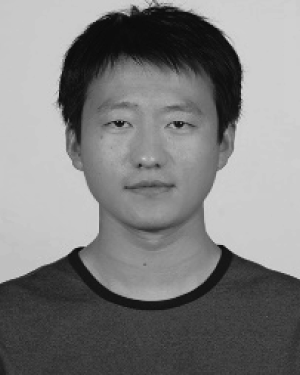 Xueqiang Chen合作论文数College of Communications Engineering, Army Engineering University of PLA, Nanjing, China2
 Yanan Lu合作论文数Northwestern Polytech Univ, Sch Elect & Informat, Xian 710072, Shaanxi, Peoples R China2
 Hang Li合作论文数Shenzhen Research Institute of Big Data, Shenzhen, China2
 Tamer Mekkawy合作论文数Northwestern Polytech Univ, Sch Elect & Informat, Xian, Shaanxi, Peoples R China2
 Phuong Le Cao合作论文数School of Electrical Engineering, Royal Institute of Technology2Juan Xu (徐娟)合作论文数长安大学电子与控制工程学院2
 Xiaoyu Dang (党小宇)合作论文数College of Electronic and Information Engineering, Nanjing University of Aeronautics and Astronautics2
 Guanghua Yang (杨光华)合作论文数School of Intelligent Systems Science and Engineering, Jinan University2




