The microscope imager CAM-M was developed for the Emirates Lunar Mission (ELM) program. This camera is part of the Rashid-1 lunar rover scientific instrument package. It is equipped with a three color RGB CMOS detector, delivering a spatial sampling varying between 20 and 27 μ m per pixel across its field of view. The viewing geometry of this camera was chosen such that its field of view on the ground is slightly ahead of the rover, thereby showing the undisturbed lunar surface. Its multi-purpose illumination system allows to acquire images in shadowed areas but as well to support the rover drive operations. Since CAM-M does not contain any moving parts, its imaging performance depends on suitable positioning of the rover with respect to the field of view. Hence, CAM-M should be seen as a scouting instrument which acquires images at every possible stop along its traverse. This paper provides a summarizing description of the instruments design, its operation concepts, and to illustrate this camera’s scientific capabilities by means of data collected during on-ground testing. Due to the unsuccessful landing attempt of the lunar lander which was carrying the Rashid-1 rover to the Moon, CAM-M was unable to collect any data on the lunar surface.
Free Space Optical Communications (FSOC) links with satellites are limited by atmospheric turbulence in up and downlink. Adaptive Optics (AO) systems at the Optical Ground Station (OGS) can mitigate the adverse effects on the uplink by "predistorting" the transmitted laser beam such that its wavefront is corrected by the turbulence. The Point Ahead Angle (PAA) means that the downlink light is not a perfect wavefront reference for the AO system. GEOStar is a project created to demonstrate the feasibility of using a Laser Guide Star (LGS) in the direction of the uplink path to enable better predistortion of the transmitted beam. A novel setup uses a sub-pupil of the 1m diameter ESA-OGS to transmit the communications light to the satellite and a sub-pupil on the opposite side of the telescope aperture is used to launch the LGS. An LGS WFS observes the light from the LGS whilst a similar Near Infra-Red WFS observes downlink light from the satellite such that the measurements can be directly compared. A deformable mirror is used to predistort the uplink beam. The system is currently being integrated ready for shipment to Tenerife and measurements with the optical terminal TDP-1 on AlphaSat are scheduled for Q2 2024.
The Detector Positioning System (DPS) is a cryogenic mechanism operating at 82 K installed in the cryostat of the Multi-AO Imaging Camera for Deep Observations ( MICADO) at the Extremely Large Telescope (ELT). The DPS mechanism will be exclusively utilized during the alignment and test phase. Upon completing the test phase, it will be mechanically locked at the best pre-determined focus so that it cannot be moved during the observation period. The DPS has been conceptualized as a fixed and reproducible interface to the Main Bench Structure in the MICADO cryostat and as an adjustable unit containing the Detector Array mounted on the DPS frame installed on a linear guide on the base plate. A cryogenic linear actuator further acts as the linear guide during the alignment phase to bring the focal plane array into focus.
By adding a dedicated coronagraph, ESO in collaboration with the Breakthrough Initiatives, modifies the Very Large Telescope mid-IR imager (VISIR) to further boost the high dynamic range imaging capability this instru- ment has. After the VISIR upgrade in 2012, where coronagraphic masks were first added to VISIR, it became evident that coronagraphy at a ground-based 8m-class telescope critically needs adaptive optics, even at wavelengths as long as 10μm. For VISIR, a work-horse observatory facility instrument in normal operations, this is "easiest" achieved by bringing VISIR as a visiting instrument to the ESO-VLT-UT4 having an adaptive M2. This "visit" enables a meaningful search for Earth-like planets in the habitable zone around both α-Cen1,2. Meaningful here means, achieving a contrast of ≈ 10-6 within ≈ 0.8arcsec from the star while maintaining basically the normal sensitivity of VISIR. This should allow to detect a planet twice the diameter of Earth. Key components will be a diffractive coronagraphic mask, the annular groove phase mask (AGPM), optimized for the most sensitive spectral band-pass in the N-band, complemented by a sophisticated apodizer at the level of the Lyot stop. For VISIR noise filtering based on fast chopping is required. A novel internal chopper system will be integrated into the cryostat. This chopper is based on the standard technique from early radio astronomy, conceived by the microwave pioneer Robert Dicke in 1946, which was instrumental for the discovery of the 3K radio background.
The commissioning of the telescope and its first instrument, a Nasmyth port mounted 0.5 degree CCD mosaic imager, started in November 2013. We will report about the results of astronomical tests of the integrated system including the achieved optical quality across the field of view, pointing and tracking quality and operational experiences with the observatory system. The special design features of this alt-az telescope are its compactness and the low-ghost wide field optics (0.7o f.o.v. diameter), and we will briefly report on the lessons learned especially for these special features. We will present an outlook on the further commissioning including the additional instruments which are all under construction or already finalized.
We present near-infrared JHKs imaging as well as K-band multi-object spectroscopy of the massive stellar content of W3 Main using LUCI at the LBT. We confirm 13 OB stars by their absorption line spectra in W3 Main and spectral types between O5V and B4V have been found. Three massive Young Stellar Objects are identified by their emission line spectra and near-infrared excess. From our spectrophotometric analysis of the massive stars and the nature of their surrounding HII regions we derive the evolutionary sequence of W3 Main and we find an age spread of 2-3 Myr.
LUCI (former LUCIFER) is the full cryogenic near-infrared multi-object spectrograph and imager at the LBT. It presently allows for seeing limited imaging and multi-object spectroscopy at R~2000-4000 in a 4x4arcmin2 FOV from 0.9 to 2.5 micron. We report on the instrument performance and the lessons learned during the first two years on sky from a technical and operational point of view. We present the upcoming detector upgrade to Hawaii-2 RG arrays and the operating modes to utilize the binocular mode, the LBT facility AO system for diffraction limited imaging as well as to use the wide-field AO correction afforded by the multi-laser GLAO System ARGOS in multi-object spectroscopy.
Due to the exposed location of the Wendelstein observatory on the steep summit of mount Wendelstein no road exists to transport telescope components and heavy equipment to the observatory in order to install the new 2m Fraunhofer Telescope Wendelstein (FTW) in its new dome. A two step installation concept was therefore followed to mitigate any risks that essential hardware would not work once installed on the mountain. This paper reports on the telescope factory assembly and tests, including on-sky tests, which were performed in early summer 2011 at the factory site to make sure, that the telescope and all essential subsystems are working properly before the telescope would be installed on the mountain. The telescope was disassembled again to be transported to the mountain in summer. Lifting of all structural subsystems and the optics up to the mountain observatory with the help of a heavy lift helicopter will be presented in detail, also looking at specific design drivers, logistic aspects and special tools for installation of the telescope and its mirrors in its new dome. Handling and transport concept for the M1 mirror installation, which also will have to be used when the mirror is disassembled for recoating, are presented. Up to end of 2011 the telescope installation and pre-alignment could be completed including first on-sky tests. The system will undergo a detailed performance test campaign in the first halve of 2012. Current performance results of these commissioning activities will be reported.
The successful roll-out of the control software for a complex NIR imager/spectrograph with MOS calls for flexible development strategies due to changing requirements during different phases of the project. A waterfall strategy used in the beginning has to change to a more iterative and agile process in the later stages. The choice of an appropriate program language as well as suitable software layout is crucial. For example the software has to accomplish multiple demands of different user groups, including a high level of flexibility for later changes and extensions. Different access levels to the instrument are mandatory to afford direct control mechanisms for lab operations and inspections of the instrument as well as tools to accomplish efficient science observations. Our hierarchical software structure with four layers of increasing abstract levels and the use of an object oriented language ideally supports these requirements. Here we describe our software architecture, the software development process, the different access levels and our commissioning experiences with LUCIFER 1.
LUCIFER1 is a NIR camera and spectrograph installed at the Large Binocular Telescope (LBT). Working in the wavelength range of 0.9-2.5micron, the instrument is designed for direct imaging and spectroscopy with 3 different cameras. A set of longslit masks as well as up to 23 user defined (MOS) masks are available. The set of user defined masks can be exchanged while the instrument is at operating temperature. Extensive tests have been done on the electro-mechanical functions, image motion due to flexure, optical quality, instrument software, calibration and especially on the multi-object spectroscopy. Also a detailed characterization of the instrument's properties in the different observing modes has been carried out. Results are presented and compared to the specifications.
Recently, with the goal to study multiplicity of chemically peculiar stars, we carried out a survey of 40 stars using diffraction limited near infrared (IR) imaging with NAOS-CONICA (NACO) at the VLT. Here, we announce the detection of 27 near IR companion candidates around 25 late B-type chemically peculiar stars exhibiting strong overabundances of the chemical elements Hg and Mn in their atmospheres. A key point for the understanding of the abundance patterns in these stars may be connected with binarity and multiplicity. It is intriguing that more than half of the sample of HgMn stars studied previously by speckle interferometry and recently using the adaptive optics system NACO belong to multiple systems.
The LUCIFER-MOS unit is the full cryogenic mask-exchange unit for the near-infrared multi-object spectrograph LUCIFER at the Large Binocular Telescope. We present the design and functionality of this unique device. In LUCIFER the masks are stored, handled, and placed in the focal plane under cryogenic conditions at all times, resulting in very low thermal background emission from the masks during observations. All mask manipulations are done by a novel cryogenic mask handling robot that can individually address up to 33 fixed and user-provided masks and place them in the focal plane with high accuracy. A complete mask exchange cycle is done in less than five minutes and can be run in every instrument position and state reducing instrument setup time during science observations to a minimum. Exchange of old and new MOS masks is likewise done under cryogenic conditions using a unique exchange drive mechanism and two auxiliary cryostats that attach to the main instrument cryostat.
We present rest-frame optical images and spectra of the gravitationally lensed, star-forming galaxy J0900+2234 (z = 2.03). The observations were performed with the newly commissioned LUCIFER1 near-infrared (NIR) instrument mounted on the Large Binocular Telescope. We fitted lens models to the rest-frame optical images and found that the galaxy has an intrinsic effective radius of 7.4 +/- 0.8 kpc with a lens magnification factor of about 5 for the A and B components. We also discovered a new arc belonging to another lensed high-z source galaxy, which makes this lens system a potential double Einstein ring system. Using the high signal-to-noise ratio rest-frame spectra covered by the H+K band, we detected H beta, [O III], H alpha, [N II], and [S II] emission lines. Detailed physical properties of this high-z galaxy were derived. The extinction toward the ionized H II regions (E-g (B - V)) was computed from the flux ratio of H alpha and H beta and appears to be much higher than that toward the stellar continuum (E-s (B - V)), derived from the optical and NIR broadband photometry fitting. The metallicity was estimated using N2 and O3N2 indices. It is in the range of 1/5-1/3 solar abundance, which is much lower than for typical z similar to 2 star-forming galaxies. From the flux ratio of [S II]lambda 6717 and [S II]lambda 6732, we found that the electron number density of the H II regions in the high-z galaxy was similar or equal to 1000 cm(-3), consistent with other z similar to 2 galaxies butmuch higher than that in local H II regions. The star formation rate was estimated via the Ha luminosity, after correction for the lens magnification, to be about 365 +/- 69 M-circle dot yr(-1). Combining the FWHM of Ha emission lines and the half-light radius, we found that the dynamical mass of the lensed galaxy is (5.8 +/- 0.9) x 10(10) M-circle dot. The gas mass is (5.1 +/- 1.1) x 10(10) M-circle dot from the Ha flux surface density using global Kennicutt-Schmidt law, indicating a very high gas fraction of 0.79 +/- 0.19 in J0900+2234.
LUCIFER is a NIR spectrograph and imager (wavelength range 0.9 to 2.5 micron) for the Large Binocular Telescope (LBT) on Mt. Graham, Arizona, working at cryogenic temperatures of less than 70K. Two instruments are built by a consortium of five German institutes and will be mounted at the bent Gregorian foci of the two individual telescope mirrors. Three exchangable cameras are available for imaging and spectroscopy: two of them are optimized for seeing-limited conditions, a third camera for the diffraction limited case will be used with the LBT adaptive secondary mirror working. Up to 33 exchangeable masks are available for longslit or multi-object spectroscopy (MOS) over the full field of view (FOV). Both MOS-units (LUCIFER 1 and LUCIFER 2) and the auxiliary cryostats together with the control electronics have been completed. The observational software-package is in its final stage of preparation. After the total integration of LUCIFER 1 extensive tests were done for all electro-mechanical functions and the verification of the instrument started. The results of the tests are presented in detail and are compared with the specifications.
We have developed an PSF reconstruction algorithm for the NAOS adaptive optics system that is coupled with CONICA at ESO/VLT. We have modified the algorithm of Veran et al. (1997), originally written for PUEO at CFHT, to make use of the specific real-time wavefront-related data that observers with NACO receive together with their scientific images. In addition, we use the V-ii algorithm introduced by Clenet et al. (2006) and Gendron et al. (2006) instead of the U-ij algorithm originally used by Veran et al. (1997).Until now, tests on NAOS has been undertaken during technical time thanks to the NACO team at Paranal. A first test has been successfully performed to calibrate the orientation of reconstructed PSFs with respect to NACO images. We have also obtained two sets of PSF reconstruction test data with NACO in November 2006 and September 2007 to reconstruct PSFs. Discrepancies exist between the observed and reconstructed PSFs: their Strehl ratios are similar to 31% and similar to 39% respectively in Nov. 2006, similar to 31% and similar to 19% respectively in Sept. 2007. These differences may be at least partly explained by reconstructions that either did not account for the aliasing contribution or poorly estimated the noise contribution with the available noise information at that time.We have additionally just started to test our algorithm using the AO bench Sesame, at LESIA. Results are promising but need to be extended to a larger set of atmospheric conditions or AO correction qualities.
This contribution shows why new standards are needed for near-infrared imaging polarimetry. The meaning of standards for this particular case is explained. Then an ESO project to find new "calibrators" is presented and put in perspective with other possibilities.
 Olivier Marco合作论文数European Southern Observatory13Eric Gendron合作论文数10
 Chris Lidman合作论文数Research School of Astronomy & Astrophysics, College of Science, Australian National University;Centre for Gravitational Astrophysics, College of Science, Australian National University10Walter Seifert合作论文数9
 Markus Kasper合作论文数9Yann Clenet合作论文数8Gerard Rousset合作论文数7Peter Buschkamp合作论文数7
 Thierry Fusco合作论文数ONERA - The French Aerospace Lab/Laboratoire d'Astrophysique de Marseille7Volker Knierim合作论文数6
 Kai Polsterer合作论文数Heidelberg Institute for Theoretical Studies5Dirk Kampf合作论文数KT-Optics5philippe rousselot合作论文数4hans gemperlein合作论文数4Marcus Juette合作论文数4
 Olivier Mousis合作论文数4Eric Pantin合作论文数4
 Ralf Bender合作论文数Max Planck Institute for Extraterrestrial Physics;Fakultät für Physik, Ludwig-Maximilians-Universität München4
 Jeremy Richard Walsh合作论文数4
 Bruno Sicardy合作论文数Université Pierre et Marie Curie;Observatoire de Paris4
 Sebastian Rabien合作论文数Max-Planck Institut für Extraterrestrische Physik4
 Frank Grupp合作论文数4Michael Lehmitz合作论文数4
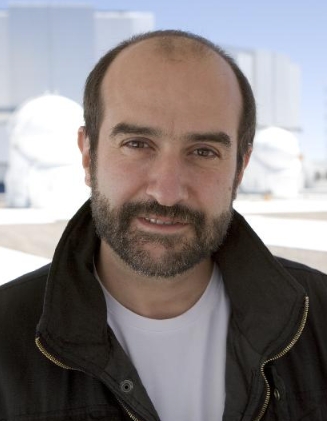 Olivier Hainaut合作论文数European Southern Observatory4
 Thomas Widemann合作论文数LESIA, Observatoire de Paris4
 Francoise Roques合作论文数4Norbert Hubin合作论文数4
 Damien Gratadour合作论文数4francois colas合作论文数3Sebastian Egner合作论文数3Yves Jung合作论文数3Reiner Hofmann合作论文数3Green Richard F.合作论文数3gerard zins合作论文数3r lederer合作论文数3Florian Lang-Bardl合作论文数3Frank Eisenhauer合作论文数3
 Xiaohui Fan合作论文数Department of Astronomy and Steward Observatory, College of Science, University of Arizona3Ulrich Hopp合作论文数3
 David Mouillet合作论文数3Jill Bechtold合作论文数3Wolfgang Brandner合作论文数Max-Planck-Institut fur Astronomie3
 Anna Pasquali合作论文数Astronomisches Rechen Institut, University of Heidelberg;Centre for Astronomy, University of Heidelberg3Clemens Storz合作论文数3
 Dennis Just合作论文数3
 Fuyan Bian合作论文数Steward Observatory;University of Arizona;Steward Observatory, University of Arizona3Markus Hartung合作论文数3
 Florian Kerber合作论文数3




