ABSTRACTFor over a century researchers have marveled at the square‐shaped toe tips of several species of climbing salamanders (genus Aneides), speculating about the function of large blood sinuses therein. Wandering salamanders (Aneides vagrans) have been reported to exhibit exquisite locomotor control while climbing, jumping, and gliding high (88 m) within the redwood canopy; however, a detailed investigation of their digital vascular system has yet to be conducted. Here, we describe the vascular and osteological structure of, and blood circulation through, the distal regions of the toes of A. vagrans using histology in tandem with live‐animal videos. Specifically, we sectioned a toe of A. vagrans at 0.90 μm, embedded it in Spurrs resin, and stained the tissue with toluidine blue. An additional three toes were sectioned at 10 μm, embedded in paraffin, and after sectioning and mounting, treated with Verhoeff and Quad stains. For living salamanders, we recorded real‐time videos of blood flowing within individual toes upon a translucent surface oriented both horizontally (0°) and vertically (90°) to simulate both prostrate and vertical clinging scenarios, then analyzed the image sequences using ImageJ. We found that the vascularized toe tips have one large sinus cavity that is divided more proximally into two chambers via a septum, and there are mucous and granular glands in the dorsal and dorsolateral integument of the digit tips. Live‐animal trials revealed variable sinus‐filling both within and between toes, seemingly associated with variable pressure applied to the substrate when standing, stepping, clinging, and climbing. We conclude that A. vagrans, and likely other climbing salamanders, can functionally fill, trap, and drain the blood in their vascularized toe tips to optimize attachment, detachment, and complex arboreal locomotion (e.g., landing after gliding flight). Such an adaptation could provide insights for bioinspired designs.
Primarily undergraduate institutions (PUIs) are significant academic employers of Ph.D. recipients. Even though the focus of PUIs is undergraduate education, many Ph.D. faculty who teach at these institutions are research-active and conduct impactful work. Unfortunately, it has been our experience that many at funding agencies and research-intensive institutions hold the view that this is not the case. In this piece, 16 faculty members share their experiences and approaches to conducting research at PUIs.
The presence of androgens in female development is an important, yet often overlooked, topic. We tested for the presence of androgen receptors (ARs) in the dermal glands of male and female Desmognathus brimleyorum, a plethodontid salamander. This species engages in a courtship behavior called the tail-straddling walk. During this process, communication between males and females is hypothesized to be facilitated by pheromones secreted from modified granular glands (MGGs) on the dorsal tail base, where the female's chin is positioned. These glands are present not only dorsally but also laterally and ventrally on the tail of both males and females. Using immunohistochemistry with a polyclonal antibody, ARs were located in the MGGs of both sexes. Males had a higher percentage of immunopositive cells per MGG than females. The presence of ARs in both sexes highlights the similarity between MGGs in males and females and suggests androgens play a role in female gland function. Furthermore, our results suggest courtship communication is bidirectional, and females have a more active role, signaling the male, than previously described.
In some populations of the Two-Lined Salamander (Eurycea bislineata) species complex, males exhibit two alternative reproductive tactics: "searching" and "guarding." Searching males have secondary sexual characters—including a large, pheromone-producing mental gland—used in terrestrial courtship, whereas guarding males have hypertrophied jaw musculature used in mate-guarding behavior near aquatic nesting sites. Although this polymorphism occurs in at least four evolutionarily distinct lineages, previous histological studies have only focused on soft-tissue differences in one of these species and no studies have evaluated osteological differences between alternative reproductive tactics. Herein, we present new histological and osteological data from three evolutionarily distinct lineages within the E. bislineata species complex. We confirmed that traditional mental glands are restricted to searching males and that caudal courtship glands are present in both male phenotypes, but not in females. We also found variation in other skin glands that warrants further investigation. Cleared and stained specimens and microcomputed tomography data both revealed substantial osteological differences in skull morphology. Compared with searching males, guarding males have increased skull ossification, fewer and larger teeth, and more pronounced otic and squamosal crests. Together, these data expand our knowledge of morphological differences between alternative reproductive tactics, and we discuss the implications of our results for hypotheses regarding phenotypic plasticity throughout the lifetime of an individual male.
Derived monomorphism is a condition in which males and females are phenotypically similar, but the similarity is derived. Derived monomorphism typically evolves from sexual dimorphism or from a different monomorphic state. We examined the hormonal basis of derived monomorphism in the salamander genus Aneides (Plethodontidae). We reject our hypothesis that circulating levels of androgens explain the derived traits, such as enlarged jaw musculature, in females (some would call them "male-like traits"). There was no clear pattern of differences in androgen levels or degree of dimorphism in androgen levels, between the sexually dimorphic Aneides hardii and the other, derived monomorphic, species studied. Concentrations of testosterone and dihydrotestosterone were higher in males than in females in all species examined. The degree of sexual dimorphism in androgen level was also consistent among the species studied. Levels of androgens in female plethodontids have not been previously reported.
In May 2023, herpetologists from six countries converged at the 8th Conference on the Biology of Plethodontid Salamanders in Hammond, Louisiana to share their latest cutting-edge research. The conference was hosted by the Department of Biological Sciences at Southeastern Louisiana University. Dr. Richard Bruce was the honoree. The presentations covered a diverse array of topics from gene expression to behavior to speciation, illustrating the value of plethodontid salamander biology to a range of disciplines. This special issue of Herpetologica includes 16 papers highlighting a range of research on plethodontids and encouraging new approaches to tackle old and new questions.
Male Ensatina eschscholtzii do not have a mental gland, a macrogland used by males during courtship that is considered an ancestral character of plethodontids. We tested whether males and females have nonmental courtship glands associated with the integument of the rostrum and mentum (chin). We found that both male and female E. eschscholtzii possess courtship-like integumentary glands (modified granular glands) in the upper labia extending dorsally along the rostrum and lower labia extending ventrally across the mental region. These glands are sexually dimorphic in size (larger in females) and react positively with periodic acid-Schiff. We hypothesize that these glands are involved in courtship through production of pheromones that may or may not be similar to pheromones produced in courtship glands of other plethodontid salamanders. These rostral glands are structurally and chemically unique in comparison with glands of the rostrum that empty along the length of nasolabial grooves (nasolabial glands) of Ensatina, which do not appear to be involved in pheromone production. Both females and males have relatively few traditional mucous glands throughout the skin in comparison with other species of plethodontids, although some clusters are identified at the anterior edges of the labia.
Plethodontid salamanders are well known for their distinct courtship rituals and the associated pheromonal signaling. However, little is known about pheromones produced in the lone Asian plethodontid species Karsenia koreana . Here, we examined the localization patterns of proteins of the sodefrin precursor-like factor (SPF) pheromone system in K . koreana . Using an antibody generated against SPF proteins from another plethodontid, Desmognathus ocoee , we tested three types of skin glands in K . koreana males via immunohistochemistry: the mental gland and two types of dorsal tail base glands–caudal courtship glands and dorsal granular glands. SPF immunoreactivity was detected in the known courtship gland, the mental gland, as well as granular glands, but not in caudal courtship glands. Due to immunoreaction specificity, we hypothesize the proteins of the SPF system in K . koreana and D . ocoee are structurally and functionally related and are used as courtship pheromones in K . koreana . Also, we hypothesize that K . koreana males transmit SPF to the female during the tail-straddling walk via dorsal granular glands. Finally, K . koreana male caudal courtship glands may be producing SPF proteins that are not recognized by our SPF antibody or these glands may play a different role in courtship than anticipated.
Ichthyology & Herpetology (formerly Copeia) publishes work on the biology of fishes, amphibians, and reptiles, or work using those organisms as models for testing hypotheses of broad significance.
While sexual dimorphism has long received special attention from biologists, derived monomorphism, the condition in which both males and females express similar derived features has been less well studied. Historically, the appearance of "male-like" features in females has been explained by the genetic correlation between the sexes. Recent work emphasizes the importance of studying the independent selective forces on both females and males to understand sexual dimorphism. Sexual dimorphism and derived monomorphism in the genus Aneides are examined in light of predictions of social selection. Aneides hardii shows the greatest degree of sexual dimorphism in snout-vent length and head width, with the other species of Aneides less sexually dimorphic. This reduced dimorphism, however, is not a return to an ancestral monomorphic state, but rather exemplifies derived monomorphism because females express traits that were limited in expression to males of ancestral species. Instead of calling these "male-typical" traits in females, I suggest the term "derived monomorphic" traits as these traits are typical in these females, and "derived monomorphic" can apply to both sexes. Increased attention to studying the patterns and ecological significance of derived monomorphism will shed light on the underlying selective forces, including sexual selection, on both females and males.
Like many scientific disciplines, the field of reproductive biology is subject to biases in terminology and research foci. For example, females are often described as coy and passive players in reproductive behaviors and are termed "promiscuous" if they engage in extra-pair copulations. Males on the other hand are viewed as actively holding territories and fighting with other males. Males are termed "multiply mating" if they mate with multiple females. Similarly, textbooks often illustrate meiosis as it occurs in males but not females. This edition of Integrative and Comparative Biology (ICB) includes a series of papers that focus on reproduction from the female perspective. These papers represent a subset of the work presented in our symposium and complementary sessions on female reproductive biology. In this round table discussion, we use a question and answer format to leverage the diverse perspectives and voices involved with the symposium in an exploration of theoretical, cultural, pedagogical, and scientific issues related to the study of female biology. We hope this dialog will provide a stepping-stone toward moving reproductive science and teaching to a more inclusive and objective framework.
Courtship behavior in salamanders is often complex and involves well-documented communication from males to females in multiple sensory modalities. Historically, behaviors exhibited during the major stages of courtship have been predominately framed as a male acting and signaling to "persuade" a passive female to participate in courtship and remain with him until sperm release is completed. In this review, we use courtship descriptions for lungless salamanders (Plethodontidae) as a case study to illustrate this historical bias of a male-centered perspective. We then re-examine the literature and summarize the many ways females are active participants during plethodontid courtships. We also relate female behaviors to the types of female-to-male communication that may occur. For example, females have been documented to approach a male and initiate courtship, participate in mutual head rubbing, and step astride the male's tail to begin the tail-straddling walk (a key courtship behavior observed in all plethodontids). Additionally, females have glands that may produce chemical signals that males respond to during courtship. We conclude that communication during courtship is more accurately described as a two-way interaction where each partner's behavior is coordinated with the other's via multi-modal signaling. Shifting the lens through which we view courtship and behavior provides insight into which female behaviors and anatomical features are most likely to be used for communication with males.
Numerous national reports have called for reforming laboratory courses so that all students experience the research process. In response, many course-based research experiences (CREs) have been developed and implemented. Research on the impact of these CREs suggests that student benefits can be similar to those of traditional apprentice-model research experiences. However, most assessments of CREs have been in individual courses at individual institutions or across institutions using the same CRE model. Furthermore, which structures and components of CREs result in the greatest student gains is unknown. We explored the impact of different CRE models in different contexts on student self-reported gains in understanding, skills, and professional development using the Classroom Undergraduate Research Experience (CURE) survey. Our analysis included 49 courses developed and taught at seven diverse institutions. Overall, students reported greater gains for all benefits when compared with the reported national means for the Survey of Undergraduate Research Experiences (SURE). Two aspects of these CREs were associated with greater student gains: 1) CREs that were the focus of the entire course or that more fully integrated modules within a traditional laboratory and 2) CREs that had a higher degree of student input and results that were unknown to both students and faculty.
Plethodontid salamander courtship is an elaborate yet conserved set of behaviors that involve many different sensory signals. Exocrine glands in the skin produce pheromones that facilitate courtship. These glands, known as courtship glands, are described as being sexually dimorphic, only present in males. Thus, we were surprised to discover glands in female Desmognathus brimleyorum that are histochemically and morphologically similar to male courtship glands. These glands are on the dorsal tail base and are sexually dimorphic in size; male glands are larger than those in females. Granular and mucous glands are not sexually dimorphic. The function of these glands in females in unknown, but could be involved in pheromone delivery to the male during courtship. Glands that are histochemically similar to courtship glands are present on the ventral tail surface in males and females as well. This is the first description of dorsal courtship-like glands in females and of ventral courtship-like glands in male and female D. brimleyorum.
Ichthyology & Herpetology (formerly Copeia) publishes work on the biology of fishes, amphibians, and reptiles, or work using those organisms as models for testing hypotheses of broad significance.
 Mary F. Fontana合作论文数3
 Dustin S Siegel合作论文数Department of Biology, Saint Louis University3Sandra L. White合作论文数2Catherine Mader合作论文数2Rj Macdonald合作论文数2Ka Ask合作论文数2
 Robert E Rollins合作论文数Institute of Avian Research2Sever D M合作论文数2Delesalle Véronique A合作论文数Department of Biology, Gettysburg College2Griffin Gerald D合作论文数Tuskegee Institute, Tuskegee University AL2Hollowell Gail P合作论文数2
 Wendy Grillo合作论文数2Amanda Carnes合作论文数2
 Christopher W Beck合作论文数Institute of Ecology, University of Georgia;fax: (706) 542-6040 GE;Institute of Ecology, University of Georgia2
 Lawrence S. Blumer合作论文数Center for Behavioral Neuroscience, Morehouse College;Department of Biology2Mary T. Mendonca合作论文数Department of Zoology, University of California2A Kelsey Lewis合作论文数1Robert B. Merritt合作论文数1Christine Pribbenow合作论文数1
 Leslie Jaworski合作论文数1Marianne K Poxleitner合作论文数1scott r hippe合作论文数1
 Tyler L. Brock合作论文数Department of Biological Sciences, University of Southeastern Louisiana1
 Abigail A. Kimmitt合作论文数Dept Ecol & Evolutionary Biol, Univ Michigan1Christian E Brown合作论文数1
 Chloe C Josefson合作论文数Dept Anim Vet & Food Sci, Univ Idaho1
 Eric J. Gangloff合作论文数Department of Biological Sciences, Ohio Wesleyan University1
 Kristin A. Hook合作论文数Department of Biology, University of Maryland1
 Stephen Hayes合作论文数Sch Microbiol, Univ Coll Cork1Daniel J Stadtmauer合作论文数1
 C. N. Bradford合作论文数1Sirot Laura K合作论文数Dept Mol Biol & Genet, Cornell Univ1
 Mueller Rachel Lockridge合作论文数Dept Biol, Colorado State Univ1
 Mercedes M Burns合作论文数Department of Entomology, University of Maryland1
 Orr Teri J合作论文数Department of Biology, University of California, Riverside1Hennington Bettye Sue合作论文数1
 Todd W. Pierson合作论文数1
 Jennifer Deitloff合作论文数Department of Entomology, Iowa State University;Department of Biological Sciences, Lock Haven University;Iowa State University, Lock Haven University1
 Sara Lipshutz合作论文数1
 Damien Beau Wilburn合作论文数Dept Genome Sci, Univ Washington1
 Mary Kate O'Donnell合作论文数1
 Bauer Carolyn M合作论文数Department of Biology, Tufts University1
 Daniel J Paluh合作论文数Department of Biology, John Carroll University1
 Kay E. Holekamp合作论文数Holekamp Laboratory, Department of Integrative Biology, Michigan State University1
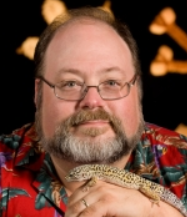 Aaron Bauer合作论文数Department of Biology, Villanova University;University of Stellenbosch;Harvard University;Department of Vertebrate Zoology, United States National Museum of Natural History;Department of Herpetology, California Academy of Sciences;Department of Vertebrate Zoology, Academy of Natural Sciences1
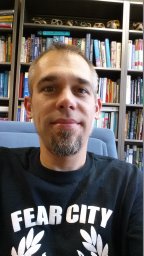 Jerry F. Husak合作论文数Department of Biological Sciences;Virginia Tech;Department of Biological Sciences, Virginia Tech1
 Jinghe Mao合作论文数Department of Biology, Tougaloo College1Daniel Pauw合作论文数1
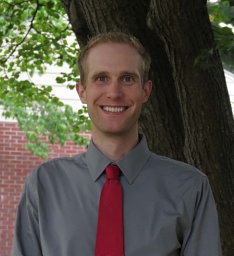 William Peterman合作论文数Sch Environm & Nat Resources, Ohio State Univ1




