In this paper, we introduce and develop the theory of weakly Arf rings, which is a generalization of Arf rings, initially defined by J. Lipman in 1971. We provide characterizations of weakly Arf rings and study the relation between these rings, the Arf rings, and the strict closedness of rings. Furthermore, we give various examples of weakly Arf rings that come from idealizations, fiber products, determinantal rings, and invariant subrings.
The notion of 2-almost Gorenstein local ring (2-AGL ring for short) is a generalization of the notion of almost Gorenstein local ring from the point of view of Sally modules of canonical ideals. In this paper, for further developments of the theory, we discuss three different topics on 2-AGL rings. The first one is to clarify the structure of minimal presentations of canonical ideals, and the second one is the study of the question of when certain fiber products, so called amalgamated duplications are 2-AGL rings. We also explore Ulrich ideals in 2-AGL rings, mainly two-generated ones.
In the present article, we investigate the following deformation problem. Let (R,m) be a local (graded local) Noetherian ring with a (homogeneous) regular element y∈m and assume that R/yR is quasi-Gorenstein. Then is R quasi-Gorenstein? We give positive answers to this problem under various assumptions, while we present a counter-example in general. We emphasize that absence of the Cohen-Macaulay condition requires delicate and subtle studies.
In this paper we generalize a result, concerning a depth equality over local rings, proved independently by Araya and Yoshino, and Iyengar. Our result exploits complexity, a concept which was initially defined by Alperin for finitely generated modules over group algebras, introduced and studied in local algebra by Avramov, and subsequently further developed by Bergh.
We explore the question of when the Rees algebra R(I)= circle plus I-n >= 0 (n) of I is an almost Gorenstein graded ring, where R is a 2-dimensional regular local ring and I is a contracted ideal of R. Recently, we showed that R(I) is an almost Gorenstein graded ring for every integrally closed ideal I of R. The main results of the present article show that if I is a contracted ideal with o(I) <= 2, then R.(I) is an almost Gorenstein graded ring, while if o(I) >= 3, then R.(I) is not necessarily an almost Gorenstein graded ring, even though I is a contracted stable ideal. Thus both affirmative and negative answers are given.
In this paper we study generalized Gorenstein Arf rings; a class of one-dimensional Cohen-Macaulay local Arf rings that is strictly contained in the class of Gorenstein rings.We obtain new characterizations and examples of Arf rings, and give applications of our argument to numerical semigroup rings and certain idealizations.In particular, we generalize a beautiful result of Barucci and Fröberg concerning Arf numerical semigroup rings.
AbstractA conjecture of Huneke and Wiegand claims that, over one-dimensional commutative Noetherian local domains, the tensor product of a finitely generated, non-free, torsion-free module with its algebraic dual always has torsion. Building on a beautiful result of Corso, Huneke, Katz and Vasconcelos, we prove that the conjecture is affirmative for a large class of ideals over arbitrary one-dimensional local domains. Furthermore, we study a higher-dimensional analogue of the conjecture for integrally closed ideals over Noetherian rings that are not necessarily local. We also consider a related question on the conjecture and give an affirmative answer for first syzygies of maximal Cohen–Macaulay modules.
In this paper, we study the two different topics related to sequentially Cohen-Macaulay modules. The questions are when the sequentially Cohen-Macaulay property preserve the localization and the module-finite extension of rings.
In this paper we investigate the question of when the determinantal ring $R$ over a field $k$ is an almost Gorenstein local/graded ring in the sense of Goto, Takahashi, and the author. As a consequence of the main result, we see that if $R$ is a non-Gorenstein almost Gorenstein local/graded ring, then the ring $R$ has a minimal multiplicity.
Let (A, m) be a Cohen Macaulay local ring, and let I be an ideal of A. We prove that the Rees algebra R(I) is an almost Gorenstein ring in the following cases: (1) (A, m) is a two-dimensional excellent Gorenstein normal domain over an algebraically closed field K congruent to A/m, and I is a p(g)-ideal; (2) (A, m) is a two-dimensional almost Gorenstein local ring having minimal multiplicity, and I = m(l) for all l >= 1; (3) (A, m) is a regular local ring of dimension d >= 2, and I = m(d-1). Conversely, if R(m(l)) is an Gorenstein graded ring for some l >= 2 and d >= 3, then t = d - 1.
The notion of generalized Gorenstein local ring (GGL ring for short) is one of the generalizations of Gorenstein rings. In this article, there is given a characterization of GGL rings in terms of their canonical ideals and related invariants.
This paper studies the question of when the Rees algebras associated to arbitrary filtration of ideals are sequentially Cohen-Macaulay. Although this problem has been already investigated by N. T. Cuong, S. Goto and H. L. Truong, their situation is quite a bit of restricted, so we are eager to try the generalization of their results.
The notion of $2$-almost Gorenstein ring is a generalization of the notion of almost Gorenstein ring in terms of Sally modules of canonical ideals. In this paper, we deal with two different topics related to $2$-almost Gorenstein rings. The purposes are to determine all the Ulrich ideals in $2$-almost Gorenstein rings and to clarify the structure of minimal free resolutions of $2$-almost Gorenstein rings.
Let A be a Cohen-Macaulay local ring with dim A = d >= 3, possessing the canonical module K-A. Let a(1), a(2),..., a(r),-(3 <= r <= d) be a subsystem of parameters of A, and set Q = (a(1), a(2),, a(r),.). We show that if the Rees algebra R(Q) of Q is an almost Gorenstein graded ring, then A is a regular local ring and a(1), a(2),, a(r),-is a part of a regular system of parameters of A.
Let (R,m) be a two-dimensional regular local ring with infinite residue class field. Then the Rees algebra R(I)=⨁n≥0In of I is an almost Gorenstein graded ring in the sense of [6] for every m-primary integrally closed ideal I in R.
The structure of the complex R H o m R ( R / I , R ) \mathrm {\textbf {R}Hom}_R(R/I,R) is explored for an Ulrich ideal I I in a Cohen–Macaulay local ring R R . As a consequence, it is proved that in a one-dimensional almost Gorenstein but non-Gorenstein local ring, the only possible Ulrich ideal is the maximal ideal. It is also studied when Ulrich ideals have the same minimal number of generators.
There is given a characterization for the Rees algebras of parameters in a Gorenstein local ring to be almost Gorenstein graded rings. A characterization is also given for the Rees algebras of socle ideals of parameters. The latter one shows almost Gorenstein Rees algebras rather rarely exist for socle ideals, if the dimension of the base local ring is greater than two.
This paper purposes to characterize Noetherian local rings (A, m) of positive dimension such that the first Hilbert coefficients of m-primary ideals in A range among only finitely many values. Examples are explored to illustrate our theorems.
Let $R$ be a Cohen-Macaulay local ring of dimension one with a canonical module $\rm{K_R}$. Let $I$ be a faithful ideal of $R$. We explore the problem of when $I \otimes_RI^{\vee}$ is torsionfree, where $I^{\vee} = \operatorname{Hom_R(I, \rm{K_R})}$. We prove that if $R$ has multiplicity at most $6$, then $I$ is isomorphic to $R$ or $\rm{K_R}$ as an $R$-module, once $I\otimes_RI^{\vee}$ is torsionfree. This result is applied to monomial ideals of numerical semigroup rings. A higher dimensional assertion is also discussed.
Let $(R,\mathfrak{m})$ be a two-dimensional regular local ring with infinite residue class field. Then the Rees algebra $\mathcal{R} (I)= \bigoplus_{n \ge 0}I^n$ of $I$ is an almost Gorenstein graded ring in the sense of Goto-Takahashi-Taniguchi for every $\mathfrak{m}$-primary integrally closed ideal $I$ in $R$.
 Shiro Goto合作论文数14
 Naoyuki Matsuoka合作论文数5
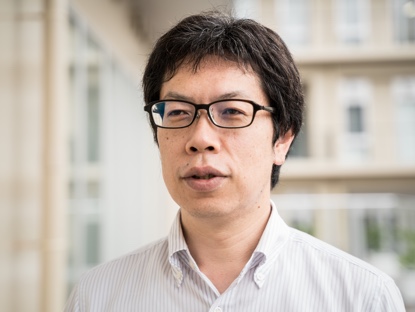 Ryo Takahashi (高橋亮)合作论文数Department of Mechanical and Electrical System Engineering, Faculty of Engineering, Kyoto University of Advanced Science4
 An Nguyen Tran合作论文数3
 Nguyen Thi Dung合作论文数National Hospital for Tropical Diseases3Olgur Celikbas合作论文数3
 Phuong Thi Tran合作论文数College of Pharmacy, Thai Nguyen university3asuki koura合作论文数2Ryotaro Isobe合作论文数2
 Ken-ichi Yoshida合作论文数Department of Biofunctional Chemistry, Faculty of Agriculture, Kobe University2
 Hoang Le Truong合作论文数Institute of Mathematics2Mehran Rahimi合作论文数1
 Ehsan Tavanfar合作论文数Inst Res Fundamental Sci IPM, Sch Math, POB 19395-5746, Tehran, Iran1
 Ela Celikbas合作论文数1
 Shinya Kumashiro合作论文数1Arash Sadeghi合作论文数1Kazuma Shimomoto合作论文数1
 Catalin Ciuperca合作论文数1




